





 Portuguese
  English
  Spanish
  3 min of reading


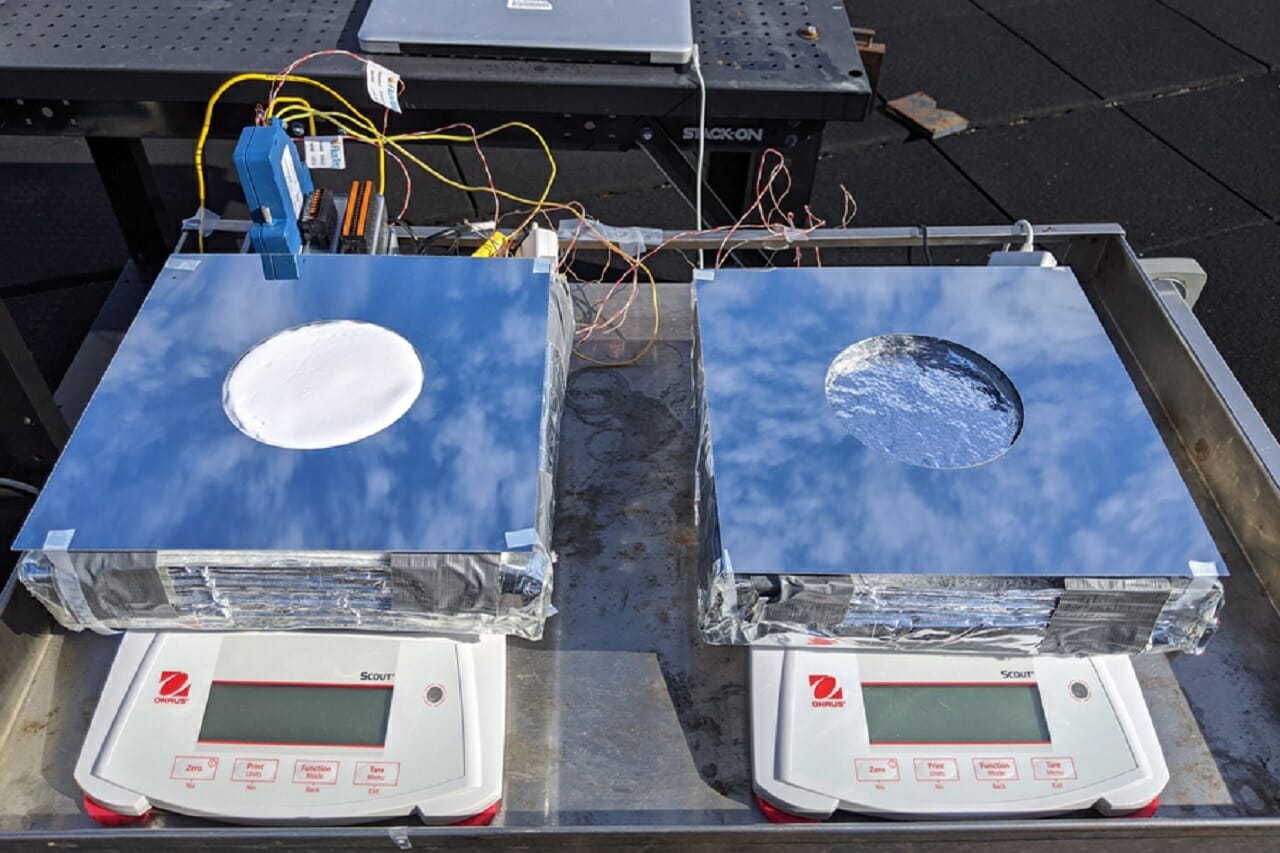
MIT Researchers Develop New Cooler To Combat Heat. It’s A Type Of Air Conditioner That Doesn’t Need Electricity To Function.
The entire world is facing major challenges currently, having to deal with the constant rise in temperatures, which has led to an increasing demand for efficient solutions to reduce heat and thermal discomfort. In this way, air conditioning has become a common means of reducing heat in enclosed spaces.
With this in mind, MIT researchers developed a type of air conditioner that works without the need for electricity.
MIT Researchers Develop New Cooler With Innovative Technology
Air conditioning is a solution that doesn’t come without concerns, given that its high electricity consumption and environmental impact associated with its operation have led researchers to seek more sustainable alternatives.
-
Starlink’s satellite internet is now bundled with mobile service: US Mobile aims to revolutionize the American connectivity market with an integrated plan starting at $50, but still leaves many questions unanswered about how it will work.
-
NASA advances in oxygen production on the Moon using concentrated solar energy, eliminating logistical barriers and bringing the scenario of permanent human bases closer with less dependence on Earth shipments.
-
How a central pivot works inside: from the pump house to the 500 m rotation, 150 hp motor, 75 hectares irrigated in 16 to 24 hours, sensors, nozzles, and maintenance.

-
Why is the ship’s command bridge located at the back: engine and rudder at the stern, more space for cargo, safer maneuvers, more stable crew, and laws that sometimes require it to be in the center or bow?

In light of this, scientists from the Massachusetts Institute of Technology (MIT) conducted research to develop a new cooling device that would effectively lower ambient temperatures without the use of electricity.
The new cooler features a passive system, combining three distinct methods: evaporative cooling, radiant cooling, and thermal insulation.
The innovative technology of this MIT air conditioner delivers incredible results, allowing for a reduction of up to 9.3 degrees Celsius in ambient temperature. Furthermore, its ability to operate without the need for energy makes it particularly attractive in areas where access to electricity is still limited, such as rural areas and small towns in tropical countries like Brazil.
The cooler designed by MIT engineers resembles a solar energy panel, composed of three distinct layers, each with specific functions for the cooling process. One of these layers is made of aerogel, a material known to be the lightest and least dense solid ever produced, as well as having a high insulating capacity.
Understand How The New MIT Air Conditioner Works
To better understand how this device works, it is necessary to examine each layer individually. The bottom layer has a high-capacity reflector that redirects all solar rays that hit it to the upper layers.
This action significantly reduces the thermal impact of solar radiation on the environment. In addition to MIT engineers, researchers from the University of Colorado have also created a more accessible form of cooler for everyone, a film capable of cooling environments, very similar to this new technology.
The film works in the process of filtering the rays that are released into the atmosphere, allowing some red wavelengths that generate heat to escape into space unhindered. What the researchers did was simply convert unwanted heat into infrared radiation at the exact wavelength that the planet sends back.
Other Technologies Available On The Market
A company from Japan has developed a rather unusual product. It is an air-conditioned clothing item to combat heat. The company, called Kuchofuku, has been trying to help reduce oppressive heat, energy shortages, and restrictions on energy use, for example. The demand for air-conditioned clothing is increasing due to earthquakes and tsunamis, alongside the shutdown of the Fukushima nuclear plant.
The product features an innovative design that offers two built-in fans on the sides, strategically positioned. The company has around 1,000 companies as clients.
These include steel, construction, and automobile manufacturing industries. The concept of the air-conditioned clothing arose after the Japanese government imposed a 15% restriction on energy use to avoid blackouts. The air-conditioned clothing is connected to a lithium-ion battery that manufacturers claim can last up to 11 hours.





Seja o primeiro a reagir!