





 Portuguese
  English
  Spanish
  5 min of reading
  0 comments


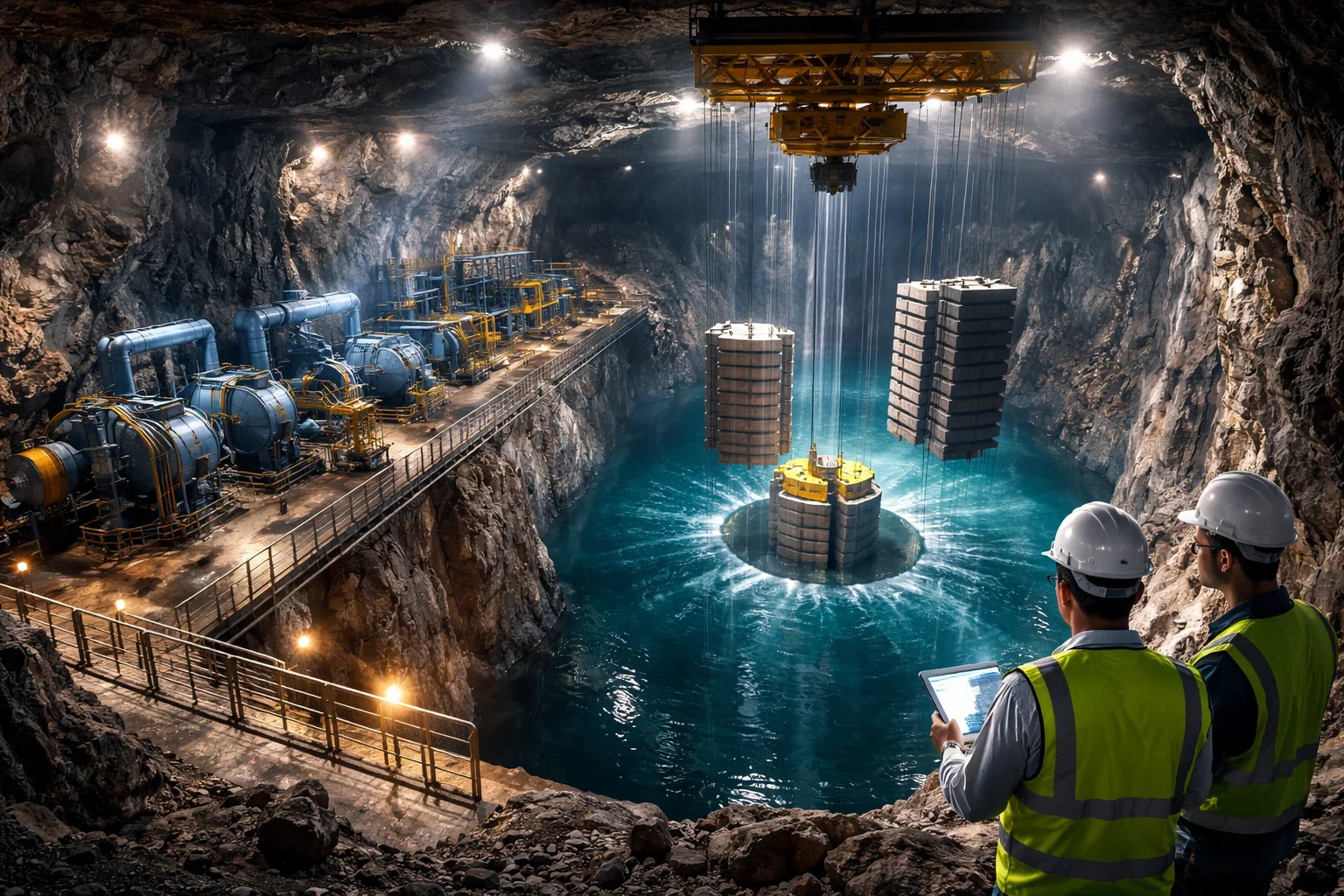
A Federal Laboratory Created Detailed Simulations to Predict What Happens When Filling Abandoned Tunnels and Mines with Water Under Pressure, and the Idea Aims for Long Storage, Lower Cost, and Use of Existing Structures
The scene seems like a movie script. Dark tunnels, abandoned mines, deep wells, and machines that have been idle for decades, all of this could regain value.
But not to extract coal. Now, the proposal is to store energy.
Scientists at the Oak Ridge National Laboratory, a laboratory in the United States, developed simulation tools to evaluate whether thousands of old mines could function as large underground water reservoirs.
-
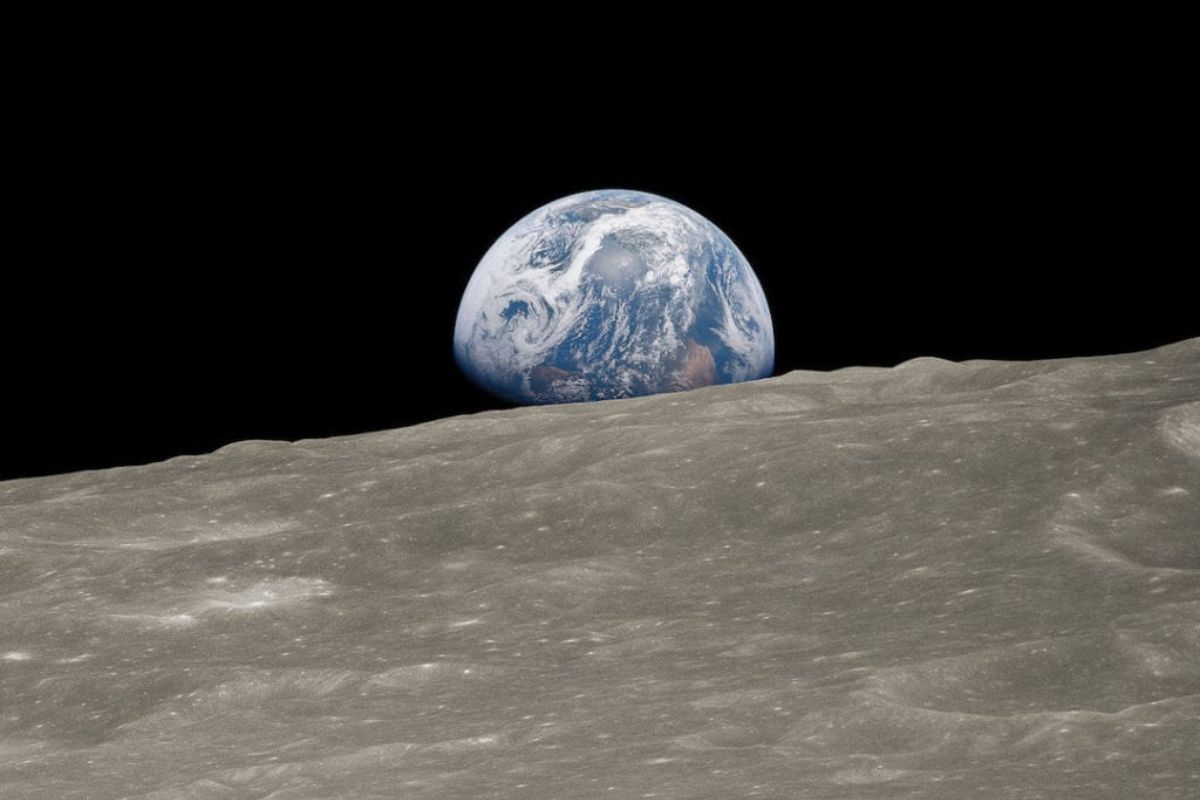
Four humans are flying towards the Moon inside the Orion capsule launched by the SLS rocket, and on April 6, Artemis II will disappear behind the far side of the Moon without communication with Earth for nearly an hour.
-
Worlds covered by water, atmospheres filled with hydrogen, and the possibility of life beyond Earth: ocean planets are rewriting the map of cosmic search and forcing scientists to rethink where to look.

-
Argentina achieves the unimaginable after more than 110 years and reintroduces the largest native herbivore of South America to the Chaco to restore a lost link in nature.

-
Returning to the Moon now costs a billion-dollar bill and reignites the competition between the USA and China for science, technology, and rare minerals on lunar soil.


The Problem That Hinders Clean Energy Appears in the Late Afternoon, When the Bill Rises and the Grid Calls for Help
Solar and wind energy have a detail that weighs on the wallet. It fluctuates significantly throughout the day.
When the sun is strong, there is a surplus of electricity in some places. In the late afternoon, when everyone turns on appliances at home and the sun sets, demand spikes.
The grid feels it. And prices usually follow.
That’s why storing energy for longer has become a coveted piece in the sector. Not to generate new energy but to maintain stability when consumption rises.
The Most Used Solution Already Exists, but It Almost Always Depends on High Hills, and This Limits the Entire Map
There is a known way to store energy using water, like a battery.
It works like this. When there is excess energy, pumps push water to a higher level. When demand increases, the water descends and passes through turbines, generating electricity.
This model already dominates large-scale storage in the United States. The bottleneck has always been location.
The traditional method usually requires two reservoirs and a significant height difference. Without this, the project becomes challenging.
And many flat areas miss out.
The Trick Is to Replace the Mountain with a Deep Well and Use What Is Already Open Underground
The new proposal changes the scenario by shifting the lower part of the system underground.
Instead of building everything from scratch, the idea is to use the deep wells and tunnels of abandoned mines as the lower reservoir.
This changes two noteworthy aspects in the sector.
First, it opens up space for projects in flatter areas that previously didn’t fit into this equation.
Second, it makes use of existing structures. According to experts, when repurposing what has already been excavated, the pathway for construction and licensing can become shorter, although each site has its own requirements.
Here’s the factor that catches the attention of those who love numbers, translated into real life. There isn’t an official number disclosed for how many mines would be used, but the United States has thousands of abandoned mines, and this means a network of holes and tunnels spread across the country, as if they were ready-made deposits waiting for a new function.
Water Doesn’t Enter Alone; It Reacts with What’s Left in the Abandoned Mines
The most delicate part is where almost no one imagines.
An old, abandoned mine is not a clean tank. Inside, there are minerals, exposed surfaces, and materials that have been in contact with the environment for years.

When water circulates, it can interact with these residues and carry substances that can damage equipment.
The laboratory claims to have created simulations to predict two main risks.
The first is the wear caused by reactions between water and what exists in the tunnel. If this isn’t anticipated, the damage might manifest just in the turbines, which are expensive and sensitive.
The second is the safety of the tunnel itself. The water goes back and forth under pressure, and the structure must endure without cracking or yielding.
An ORNL researcher, Thien Nguyen, cautioned cautiously. The idea is exciting, but it’s necessary to overcome challenges related to wear and stability before starting construction.
Who Gains and Who Loses with This Change? Flat Regions Enter the Game and the Old Model Loses Exclusivity
There’s a silent competition here.
On one side, the traditional model, tied to places with significant natural elevation changes.
On the other, the underground proposal, which seeks to open the map and bring large storage to where it wasn’t previously feasible.
If this path advances, regions with a history of mining could attract a new type of investment. Not as an empty promise, but as a new function for structures that today are a liability.
And there’s another point. When a technology can repurpose infrastructure, it affects costs and timelines. This pressures those who still rely only on new constructions and large, open areas.
The Numbers Need to Add Up, and Efficiency Must Prove That the Plan Can Withstand the Real World
The next step for the ORNL team is to run the idea through a real calculator.
They are moving towards analyses that combine technology and economics to understand if each mine can accommodate such a project.
The team also aims to analyze the efficiency of the system to define best practices for construction and operation, on a case-by-case basis.
A science writer at the laboratory, Galen Fader, stated that the simulations help industry partners assess risks and make more informed decisions regarding design, construction, and operation in specific locations.
Ultimately, what stands out is the shift in logic. A space created to fuel the industrial age may end up helping to stabilize a cleaner electrical grid, precisely when the system needs stability the most.
If this idea came to your region, would you see it as an opportunity or a risk due to happening underground? Share in the comments what caught your attention most about this proposal.







-

-

-

-

-

49 pessoas reagiram a isso.