





 Portuguese
  English
  Spanish
  5 min of reading
  0 comments


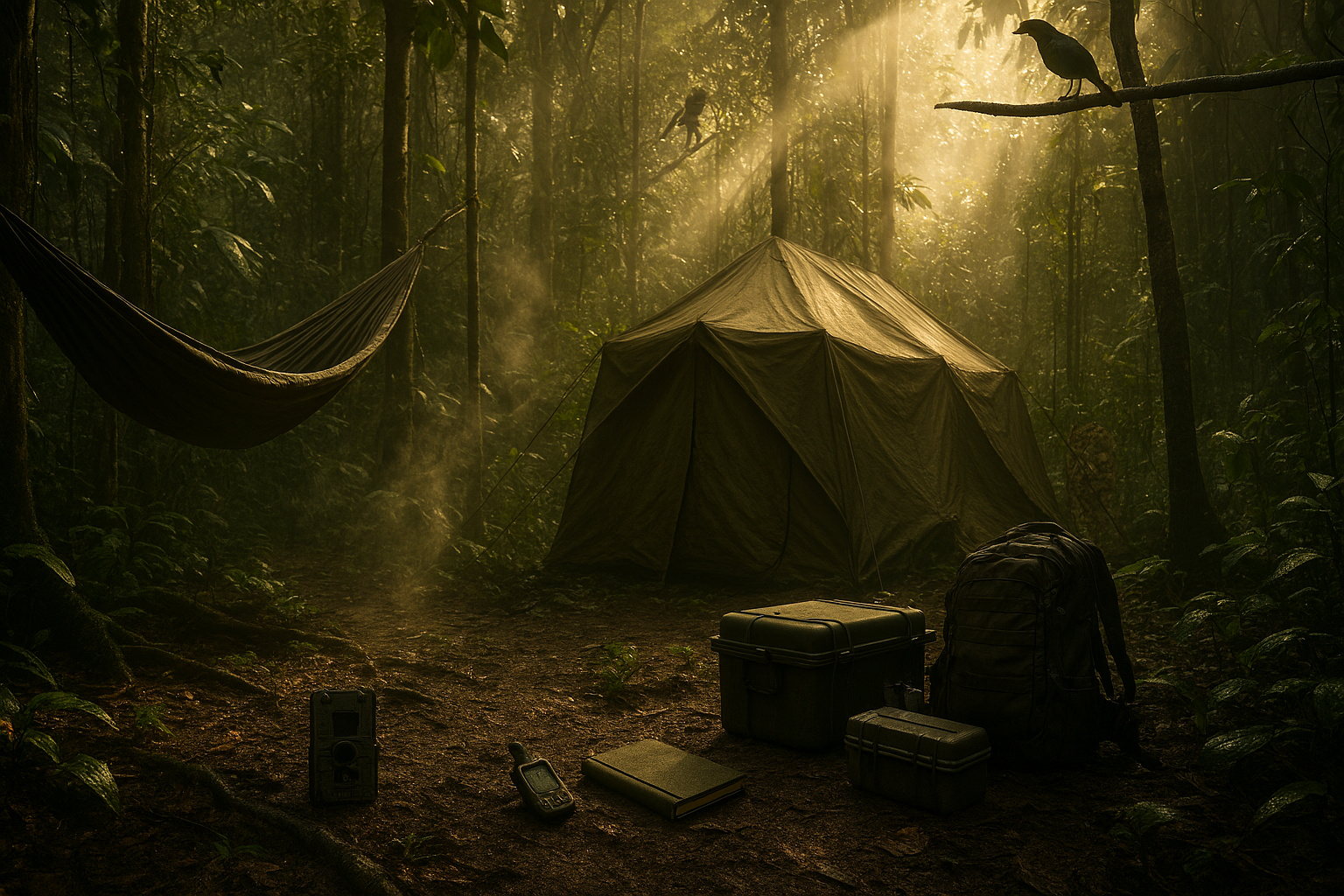
Researchers of INPA and Smithsonian Spend Weeks Isolated in the Amazon Monitoring Biodiversity and Recording Fauna on Scientific Expeditions.
Few people imagine what the routine of a field researcher is like in the forest, especially when the work requires weeks of isolation, long hours, and an absolute commitment to scientific observation. Since the 1980s, teams from the National Institute for Amazonian Research (INPA), in cooperation with international institutions such as the Smithsonian Institution, have conducted prolonged expeditions in remote areas of the Brazilian Amazon, where biodiversity defies comparison and environmental conditions test the limits of the human body.
These field campaigns are real, documented, and essential for understanding the ecological functioning of the world’s largest tropical forest. They take place in regions where there are no roads, where movement depends on boats and trails, and where meetings with jaguars, peccaries, spider monkeys, harpy eagles, and tapirs are not exceptions but part of the daily reality of research.
INPA, Smithsonian, and Fieldwork in the Amazon
The INPA, founded in 1952 and based in Manaus, is Brazil’s leading Amazonian research institution. In collaboration with the Smithsonian Institution and universities from several countries, it coordinates studies on forest dynamics, animal behavior, bioacoustics, insect ecology, carbon flow, and other topics of high global relevance.
-
China approves the 15th Five-Year Plan 2026-2030 to become a global power: prioritizes brain implants, 6G with AI, humanoid robots, flying cars, quantum technology, and nuclear fusion, while strengthening defense and the economy.

-
HONOR X80i arrives with a massive 7,000 mAh battery, a 120 Hz AMOLED display with a brightness of 6,500 nits, and the new Dimensity 6500 Elite chip, promising up to 22 hours of video playback and impressive performance in casual gaming.

-
Xiaomi TV Stick HD 2 is announced with Google TV and dual-band Wi-Fi, offering 38% superior performance, HDR10+, Dolby Atmos, a quad-core chip, Mali-G31 GPU, 1 GB RAM, and support for 1080p at 60 Hz.

-
Brazil joins the select group of countries by producing a supersonic fighter that reaches 2,400 km/h with advanced electronic warfare technology, US$ 4 billion in investments, 36 units planned, 350 trained engineers, and unprecedented national production by 2032.

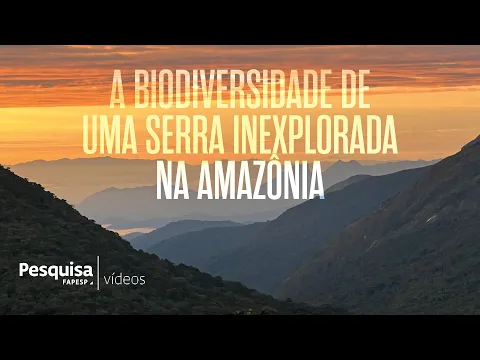

The scientists involved in these missions often spend two to four weeks camping at research bases deep in the forest, working under conditions very different from those observed in laboratories or universities.
The campaigns are designed to capture ecological processes in real-time, from the songs of birds at dawn to the movements of primates, felines, and ungulates throughout the day.
During the missions, researchers record climatic data, acoustic signals, animal movements, plant composition, soil parameters, and behavior of key species, as well as produce audiovisual material for scientific documentation and outreach.
The Forest as a Living and Unpredictable Laboratory
The Amazon is not just a “beautiful place”; it is a highly complex ecological system, where biological interactions occur at both microscopic and macroscopic scales. Researchers report that the environment is dynamic and unpredictable.
The heat and humidity can exceed 80% relative humidity and over 30 °C in temperature, creating a dense atmosphere that demands constant attention to hydration and activity planning.
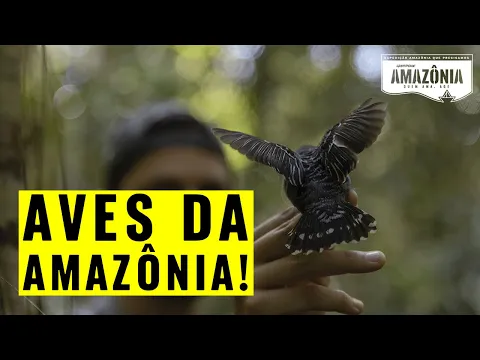
More than just the weather, the forest presents sounds, smells, and continuous movements, from the distant roar of a howler monkey to the silent flight of an adult harpy eagle, an aerial predator whose wingspan can exceed 2 meters.
Encounters with large mammals, such as the jaguar (Panthera onca), are rare but possible and are often detected by camera traps or through tracks recorded along the trails.
Audiovisual Documentation and High-Resolution Science
An essential part of these expeditions is audiovisual recording, whether via photos, videos, or automatic devices such as traps and bioacoustic recorders. These records serve to:
• Identify rare or nocturnal species,
• Study vocalizations and territoriality,
• Monitor movement patterns,
• Verify interactions between plants and animals.
In some cases, remote cameras have captured highly elusive species, such as the southern tapir, certain species of anteaters, wild cats, and birds that spend most of their time in the canopy, the upper layer where light is intense and competition for space is fierce.
Bioacoustics, the field that analyzes animal sounds, has become an indispensable tool for studying amphibians, birds, and insects, expanding understanding of behavior, reproduction, and territoriality. Institutions like the Smithsonian use this data to compare biomes and monitor the impacts of climate change and land use.
Logistics, Isolation, and Operational Challenges
Working in remote areas of the Amazon means accepting that there is no comfort, cell signal, internet, or urban infrastructure. Moving between bases can take hours or days, depending on the watershed and the time of year.
The rain, especially between December and May, can transform trails into temporary rivers, knock down trees, and alter the courses of streams.
The dry season, between June and November, exposes river beaches and stretches of floodplain, drastically altering animal behavior.
Despite not facing risks like unstable ice, avalanches, or polar storms as in the Arctic, Amazonian researchers encounter electrical storms, extreme heat, vector insects, venomous reptiles, and discreet predators. This combination of environmental pressures makes Amazonian expeditions an exercise in scientific focus and sensory adaptation, not an adventure for amateurs.
The Scientific and Global Impact of These Missions
The results accumulated over decades of these campaigns have generated articles in PNAS, Nature, Science, as well as reports that feed into climate monitoring programs, species conservation projects, and environmental policies in Brazil and abroad. They have also provided data to understand carbon and water flows, essential for global climate modeling.
In the field of conservation biology, these expeditions have helped quantify the effects of forest fragmentation, hunting, deforestation, river traffic, and contributed to the cataloging of new or little-known species.
From an institutional perspective, INPA and Smithsonian still maintain partnerships for the study of primates, birds, insects, large trees, biodiversity genetics, and land use changes, consolidating the Amazon as one of the most important and complex natural laboratories on the planet.
In an increasingly urban world, the work of these scientists reminds us that a fundamental part of our understanding of the planet depends on people who spend weeks in silence, inside the forest, studying organisms that no one sees.
This is not about a romantic adventure, but about applied science, conducted under harsh conditions that require method, patience, and a willingness to face an environment not designed for humans.
What these expeditions reveal, ultimately, is simple yet profound: the Amazon is not just a collection of trees and animals; it is a living system that regulates climate, water, energy, and biodiversity on a continental scale.
And the only way to understand it is by entering, living, and studying, as the researchers of the INPA and Smithsonian do, year after year, under one of the most complex forests on Earth.







-

-

-

-

-

38 pessoas reagiram a isso.