





 Portuguese
  English
  Spanish
  3 min of reading
  0 comments


Scientists Detected an Inclination of 31.5 Inches (0.8 m) on Planet Earth, a Phenomenon That Raises Questions About Natural Causes and Impacts on the Balance of the Planet.
Water, an essential resource for life, is showing its impact in surprising ways. Scientists have discovered that pumping groundwater is altering the orientation and rotation of Planet Earth. Moreover, this contributes to rising sea levels and may exacerbate the effects of climate change.
Significant Change in Earth’s Inclination
According to a recent study published in the journal Geophysical Research Letters, between 1993 and 2010, Earth tilted 31.5 inches (0.8 m) as a consequence of the pumping of 2,150 gigatons of groundwater. This equates to an increase of 0.24 inches (approx. 6 mm) in global sea level. One study suggests that the mass displacement caused by the redistribution of this water has a direct impact on the planet’s rotation.
“The rotational pole of the Earth really changes quite a bit,” explains Ki-Weon Seo, a geophysicist at Seoul National University and lead author of the study. “Our study shows that, among climate-related causes, the redistribution of groundwater actually has the largest impact on the drift of the rotational pole.”
-
Brazil has quietly developed an electric tactical drone that takes off and lands vertically without needing a runway, flies at 140 km/h in a fully autonomous manner, and can operate in forests, conflict zones, and remote areas.

-
Novo drone Guardian debuts in the United States with an 8-mile range, robotic battery swapping, and Starlink connectivity for continuous response.

-
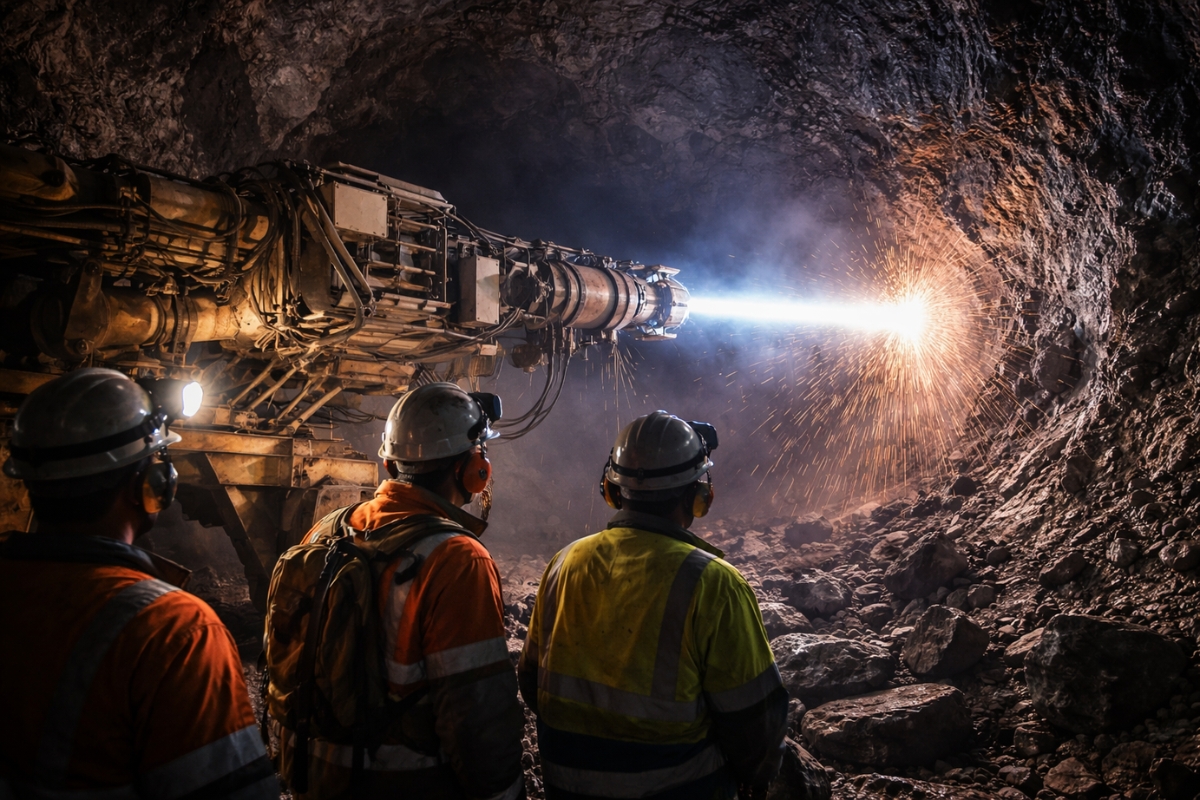
100 kW megalasers are already pointing to a new industrial phase, with enough power to cut thick steel, drill through rocks, accelerate mining, and increase productivity in operations previously considered too difficult.
-
Thousands of people in poor countries are paid cents to film household tasks, label images, and operate systems remotely all day long, and this invisible work fuels a $17 billion market that trains the artificial intelligences of Google, Tesla, and Meta.



The Science Behind the Phenomenon
The delivery of water on the planet alters mass distribution, affecting how the Earth rotates. Researchers compared this effect to placing weight on a top, which makes it carefully change its axis of rotation. This simple comparison helps illustrate how small changes can have global consequences.
While the idea that impactful water redistribution affects Earth’s rotation was already known, this study provides concrete numbers. For the authors, this is an important advance in better understanding the human impact on the natural balance of Planet Earth.
“I’m very happy to find the unexplained cause of the rotation pole drift,” said Seo. “On the other hand, as a resident of Earth and a father, I’m worried and surprised to see that pumping groundwater is another source of sea level rise.”
The Role of Irrigation Areas and Human Use
A large portion of the pumped water is used for human consumption and control. Eventually, this water reaches the oceans, intensifying sea level rise. Even more concerning, the areas from where the water is drawn — such as the western United States and northwestern India — play a crucial role, due to their location in mid-latitudes. This specific water displacement intensifies changes in the orientation of the Earth’s axis.
“The impact of this mass redistribution is significant,” emphasizes Surendra Adhikari, a scientist at NASA’s Jet Propulsion Laboratory, in a statement. He highlights that the study quantified for the first time the direct role of groundwater pumping in the movement of the rotational pole.
The Future of Research and Hope for Planet Earth
Despite the alarming discoveries, analyzing the movement of water on a global scale is an important step in understanding how Earth’s systems interact. Historical data can provide relevant insights into long-term trends and assist in planned measures to mitigate environmental impact.
“Observing changes in the rotational pole of Earth is useful,” said Seo, “to understand variations in water storage on a continental scale.” This information can help conservationists develop more effective strategies to curb sea level rise and minimize the impacts of climate change.
Although the findings are recent, they represent an important warning about human roles in transforming the planet. With coordinated actions and ongoing research, there is still hope to contain the damage and preserve Earth’s natural balance.






Seja o primeiro a reagir!