





 Portuguese
  English
  Spanish
  5 min of reading
  0 comments


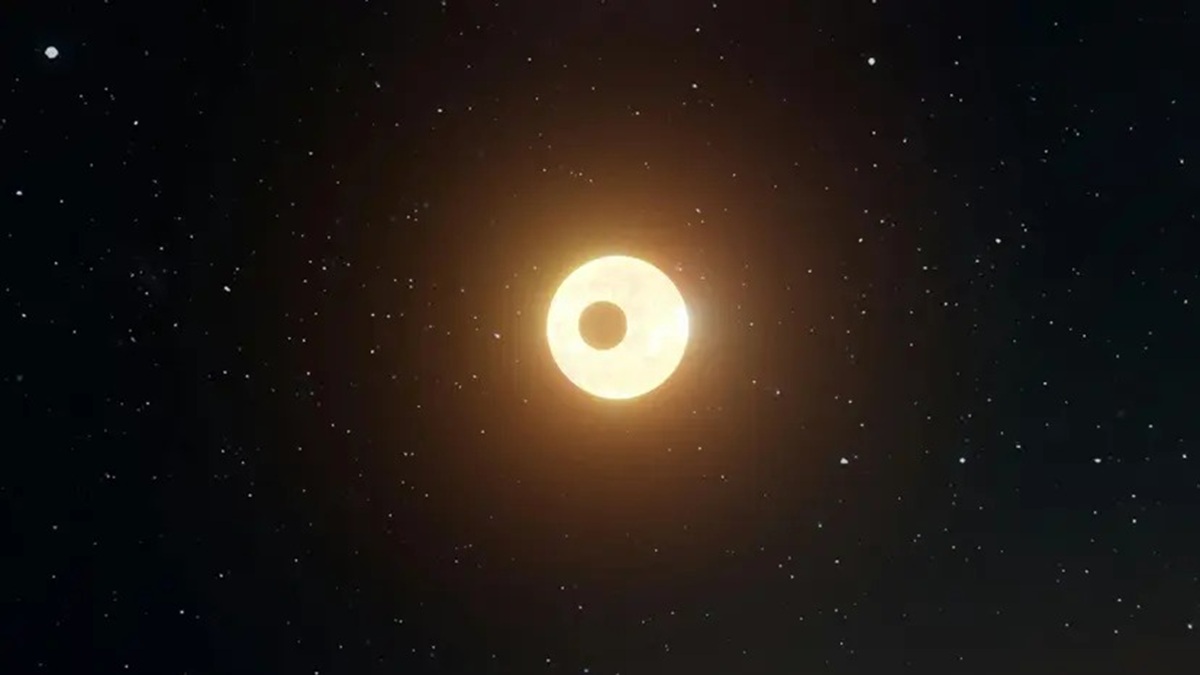
Study Conducted by Scientists at Nagoya University Used Magnetohydrodynamic Simulations Run on the Fugaku Supercomputer, with About 5.4 Billion Grid Points, and Indicated That Sun-like Stars Can Keep Their Equator Rotating Faster Than the Poles Throughout Their Life, Contradicting Theories Accepted for Nearly Five Decades About Stellar Rotation Inversion
A new study conducted by scientists at Nagoya University indicates that sun-like stars may maintain the same rotation pattern throughout their life. The conclusions arise after extremely detailed simulations that analyzed the internal behavior of these stars.
The research questions a theory accepted for nearly half a century in astronomy. For decades, scientists believed that sun-like stars would reverse their rotation pattern as they aged and gradually slowed their spin.
According to this traditional hypothesis, the poles of these stars would start rotating faster than the equator when the rotation became sufficiently slow. This state is known as antisolar differential rotation.
-
Airbnb now offers private car service to pick you up at the airport in 125 cities around the world with a fixed price and no extra fees: the platform aims to become a complete hotel within your smartphone.

-
Japan tests for the first time a hydrogen-powered engine for large cargo ships and achieves over 95% of the fuel’s energy at full load, paving the way to equip a 17,500-ton cargo ship already planned for 2027.

-
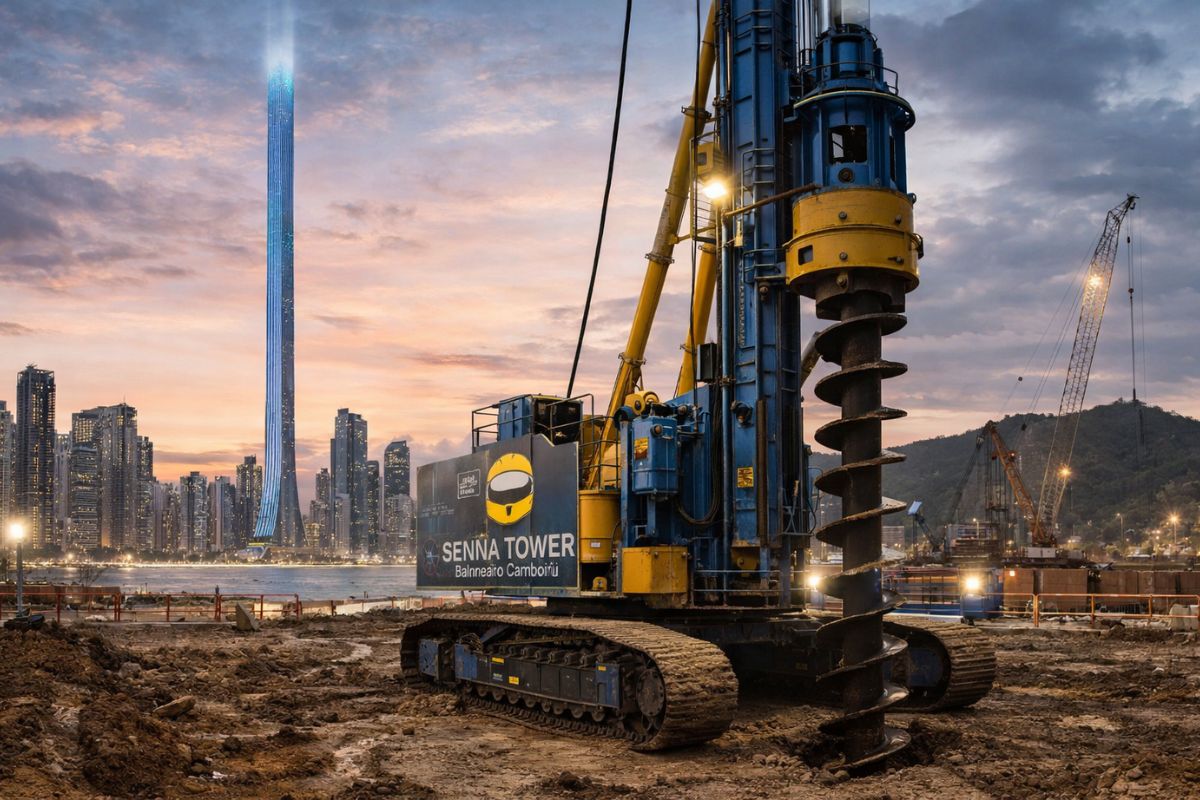
A mega drill costing R$ 50 million, weighing 130 tons, and the only one of its kind in Brazil has arrived in Balneário Camboriú to build the foundations of the Senna Tower, the skyscraper that honors Ayrton Senna.
-
The first cold front of autumn arrives in São Paulo this Tuesday with a risk of storms, hail, and gusts of wind, but the real cold is not coming now: April will be dominated by above-average heat and may even see a heatwave.


However, the new simulations indicate that this scenario may not occur. Instead, the equator continues to rotate faster than the poles, even when the star becomes much slower.
Simulations Show That Stars Like the Sun Can Maintain the Same Rotation Pattern
The study was conducted by researchers at Nagoya University in Japan, who performed some of the most detailed simulations ever conducted on the interior of sun-like stars. The goal was to understand more accurately how differential rotation occurs in these stellar structures.
According to Yoshiki Hatta, a professor at the university and co-author of the work, the results faithfully reproduced the rotation pattern observed in the sun. When the same model was applied to stars with slower rotation, the behavior remained similar to that of the sun.
This means that the inversion predicted by previous theories did not appear in the simulations. The results also coincided with astronomical observations already recorded.
How Differential Rotation Observed in the Sun Works
Unlike Earth, which rotates as a rigid body, stars are primarily composed of extremely hot gas in constant motion. This characteristic allows different regions of the star to rotate at different speeds.
This phenomenon is known as differential rotation. In the case of the sun, the equator completes a rotation in about 25 days.
On the other hand, regions near the poles take about 35 days to complete a full rotation. This speed difference has been known for decades in astronomy.
Based on this behavior, scientists imagined that the aging of stars would alter this pattern. The expectation was that changes in the internal gas flows would reorganize the movement of stellar plasma.
This reorganization would cause the poles to rotate faster than the equator. This hypothetical state was termed antisolar differential rotation.
Magnetohydrodynamic Simulations Investigated the Interior of Sun-like Stars
Despite the theoretical prediction, astronomers had never clearly observed stars with antisolar rotation. The phenomenon appeared in computational models, but was not confirmed by real observations.
To investigate this discrepancy, the researchers created a detailed model of the interior of sun-like stars. The study used magnetohydrodynamic simulations, capable of simultaneously calculating the movement of hot plasma and the behavior of magnetic fields.
These simulations analyze the interaction between turbulence, gas flow, and magnetism in the interiors of stars. This type of approach allows for the reproduction of extremely complex physical processes that occur in stellar interiors.
Fugaku Supercomputer Allowed Simulation with Billions of Points
The calculations were performed on the Fugaku supercomputer, considered one of the most powerful in the world. This resource allowed scientists to build a simulation with a level of detail far superior to that used in previous studies.
Each simulated star was divided into approximately 5.4 billion grid points. This level of resolution allowed tracking tiny turbulent movements and complex magnetic structures within the stars.
Previous simulations used a much smaller number of computational points. This limitation caused the magnetic fields to weaken artificially during calculations.
As a consequence, many models underestimated the role of magnetism in forming the stellar rotation pattern. The new high-resolution simulation avoided this problem.
When the detailed model was run, the magnetic fields remained strong and stable throughout the simulation. The results showed that magnetism plays a decisive role in the internal dynamics of stars.
Magnetism Prevents Rotation Inversion in Stars Like the Sun
According to researcher Hideyuki Hotta, one of the leaders of the study, two main processes maintain the observed pattern. Gas turbulence and magnetic fields work together to keep the equator rotating faster than the poles.
These mechanisms remain active throughout the life of the star. Even as rotation decreases over billions of years, the pattern does not invert.
The simulations also indicated another trend in stellar behavior. As the star ages, its magnetic field gradually weakens.
Previous theories suggested that this field could strengthen again if the rotation became antisolar. However, the new results showed no evidence of such a resurgence.
The authors claim that the magnetic field continuously decreases throughout the star’s life.
Results Could Influence Studies on Stellar Evolution and Planetary Environments
If confirmed by future observations, the study’s conclusions could change how scientists understand stellar evolution. Stellar rotation influences several important physical processes.
Among them are magnetic activity and the emission of energetic particles into space. These factors also affect the environments of the planets orbiting these stars.
Better understanding these mechanisms could help scientists predict how stellar systems evolve over billions of years. This includes understanding how the environments around stars can remain favorable to life.
Even so, the researchers themselves highlight an important limitation. The current conclusions are based on computational simulations.
Directly observing the internal rotation of distant stars is still an extremely challenging task for astronomers. Future research should test these predictions with more precise observations.
The study was published in the scientific journal Nature Astronomy.









-

-

-

-

-

10 pessoas reagiram a isso.