






 Portuguese
  Spanish
  4 min of reading
  0 comments


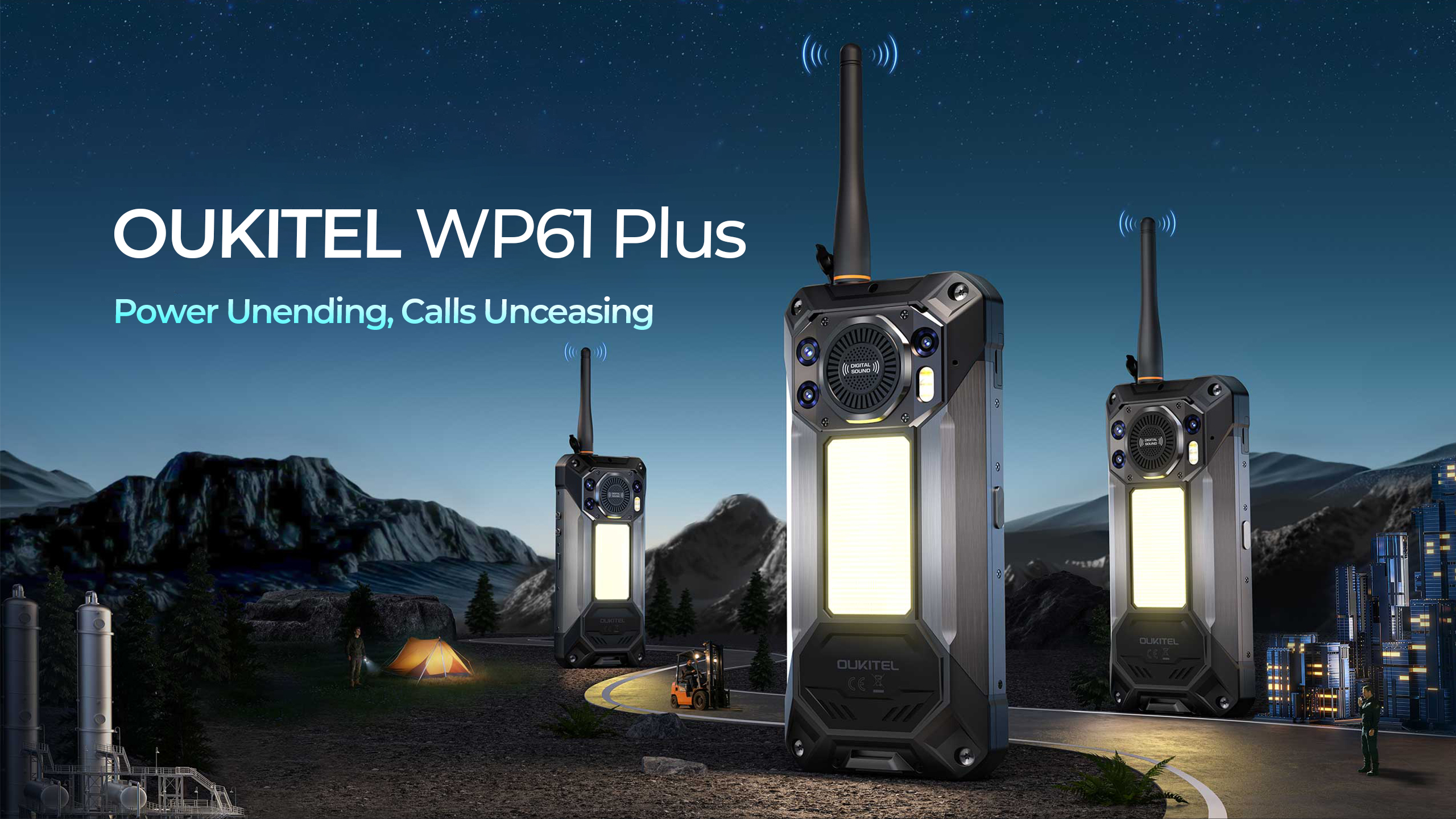
Oukitel presented the WP61 series, a rugged smartphone with a 20,000 mAh battery, satellite connection, DMR radio, and thermal imaging, bringing together in a single device features focused on rescue, mining, construction, security, and operations in remote or network-less areas
The Oukitel presented the WP61 series, a line of rugged smartphones aimed at extreme environments and designed to bring together, in a single device, satellite communication, walkie-talkie function, and thermal imaging. The Chinese manufacturer defines the launch as the world’s first rugged and professional smartphone to combine these three technologies in the same device.
The new series is targeted at professionals working in outdoor areas, rescue teams, and industrial users who rely on reliable communication and specialized tools in remote locations.
The proposal meets operations where safety, coordination, and equipment autonomy are central to daily work.
-
Invisible Induction Technology Enables Wireless Power for Blenders, Coffee Makers, and Air Fryers, Reducing Countertop Cables

-
Smart Outdoor Lighting Transforms Gardens into Living Spaces with Weather Resistance and App-Controlled Scenes

-
Green dot on top of smartphone intrigues users, signals privacy alert in Android 12 that experts say shouldn’t be ignored.
-
Humanoid Robot Climbs 6,263-Meter Volcano in Ecuador, Sets Sights on Everest Challenge



Rugged smartphone bets on communication for remote areas
The WP61 series was developed for situations where traditional mobile networks are unstable or simply non-existent. In these scenarios, satellite connectivity allows for communication in regions such as mountains, deserts, offshore platforms, and disaster zones.
The device also features an integrated DMR radio communication system, capable of enabling real-time communication several kilometers away. This feature enhances coordination among teams in field operations and reinforces the use of the device in activities where quick response is crucial.
This set makes the smartphone suitable for sectors such as construction, mining, search and rescue, security, and outdoor exploration. In all these environments, continuous communication is treated as an essential element for team organization and reduction of operational risks.
20,000 mAh battery extends autonomy in long operations
Another highlight of the WP61 series is the 20,000 mAh battery, designed for prolonged use in locations without access to the electrical grid. The high capacity was designed to allow long periods of operation without the need for frequent recharging.
In addition to extended autonomy, the device features reverse charging, allowing it to be used as a portable charger for other devices. This feature enhances the utility of the equipment in expeditions, rescue missions, and work conducted in isolated regions.
The proposal follows a growing trend in the rugged mobile device segment, which has begun to focus not only on durability and battery life but also on incorporating professional tools directly into the smartphone. As a result, the device becomes more than just a means of communication and takes on a broader role in the field.
Thermal imaging and certifications reinforce professional use
Among the central features of the WP61 series is thermography, used to detect thermal signatures and temperature differences. The function can be applied in industrial inspections, equipment maintenance, firefighting, wildlife tracking, and search operations.
Some models in the line include thermal sensors capable of generating detailed heat maps for professional applications. The inclusion of this technology positions the device as a technical support tool in activities that require precise reading of thermal variations.
The device also has IP68, IP69K, and MIL-STD-810H certifications, associated with resistance to water, dust, drops, and adverse environmental conditions. This profile aligns with the proposal of rugged smartphones, typically developed for users who work in physically demanding environments where conventional devices may fail.
The WP61 series also incorporates a high-power camping light, large speakers for noisy environments, and a night vision camera for low-light conditions. These features expand the use of the smartphone in industrial and outdoor operations, where visibility, loud audio, and additional lighting may be necessary.
Device brings together functions and targets specific niches
The WP61 line reflects a broader movement in the rugged smartphone market, which has been transforming into multifunctional platforms. Instead of competing with conventional models focused on performance and entertainment, these devices are aimed at professional niches and outdoor activities.
In this segment, durability, long-lasting battery, and specialized tools carry more weight than slim design or gaming performance. With the WP61 series, Oukitel positions the smartphone as a field equipment capable of replacing radios, thermal scanners, flashlights, and external batteries, reducing the number of items professionals need to carry in remote or hazardous environments.






Be the first to react!