





 Portuguese
  English
  Spanish
  3 min of reading
  77 comments


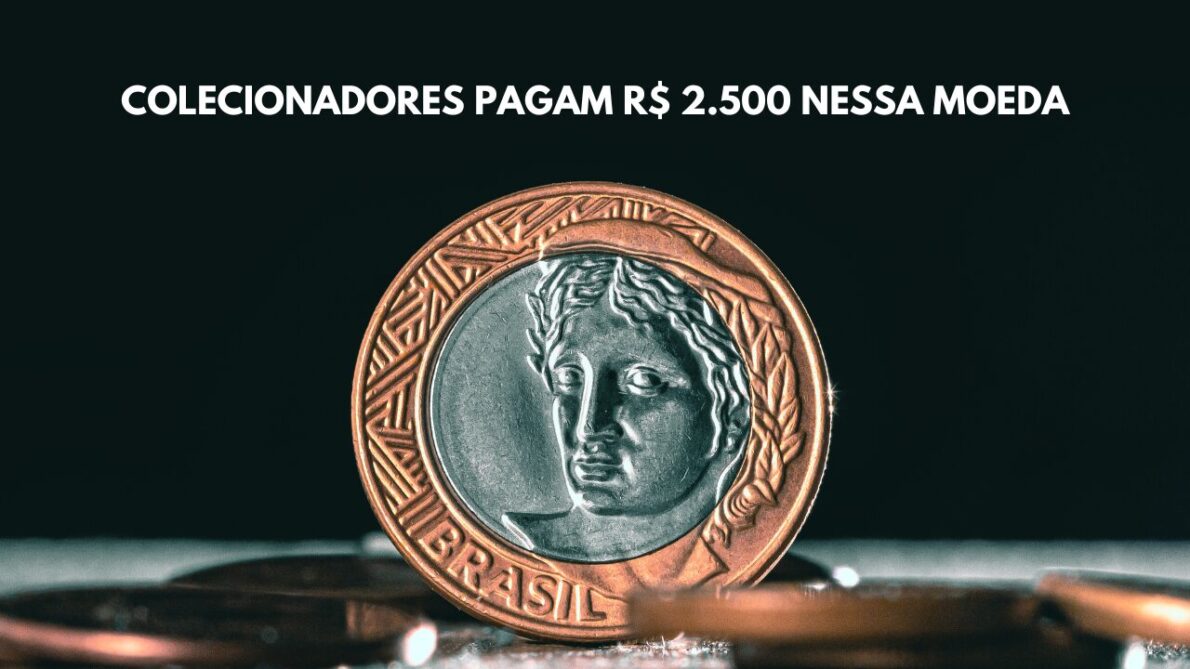


Coins of 1 Real With Inverted Reverse Error, Produced Between 1998 and 2022, Are Purchased by Collectors for Up to R$ 2.5 Thousand.
For many Brazilians, the 1 real coin is just another among many that go unnoticed in daily life. However, few know that some of these coins can be worth much more than their face value, attracting the interest of collectors and numismatic experts. If you are curious about the subject or wish to find out if you have one of these rarities at home, keep reading to understand what makes certain 1 real coins so valuable.
Numismatics and the Value of Rare Coins
Numismatics, the study of coins, reveals that Brazil, since the introduction of the Real Plan in 1994, has produced a series of coins that, due to minting errors or limited editions, have become sought-after items among collectors.
Among these, the 1 real coins with the so-called “inverted reverse” are the most sought after. But what is this minting error and why is it so valued?
-
The institute that trained the greatest aerospace engineers in Brazil has just opened its first campus outside São Paulo after 75 years: ITA Ceará will have R$ 445 million, new courses in energy and systems, and classes are expected to start in 2027.

-
Luciano Hang, owner of Havan, goes to Juiz de Fora after the tragedy in February, brings R$ 1 million, hands out R$ 2,000 cards, and donates up to R$ 15,000 to victims in the region.
-
The Brazilian passport allows legal residence in dozens of countries without the need for a prior visa, and most Brazilians are unaware that they can apply for residency directly upon arriving in nations in South America, Africa, and even Europe.

-
Petrobras sends a message to Brazilian truck drivers after fuel collapse and reveals plan to have 100% domestic diesel.


What Is a 1 Real Coin With Inverted Reverse?
The term “inverted reverse” refers to a flaw in the production process where the alignment of the sides of the coin does not follow the traditional pattern.
Normally, Brazilian coins are minted with a pattern called coin reverse, meaning that when the coin is turned horizontally, the two sides should be correctly aligned.
When this alignment is inverted — that is, when turning the coin, the opposite side appears upside down — the coin is considered a minting error.
This characteristic, although unintentional, causes these coins to be seen as rarities and thus command high values in the collector market.
The Rarity of 1 Real Coins With Inverted Reverse
These 1 real coins with inverted reverse, produced between 1998 and 2022, can still be found in circulation today, but they are extremely rare.
The existence of this error in specific years sparks the interest of collectors, who seek these pieces to complete their collections or simply to invest, given the high value they can achieve in the market.
How to Identify If Your Coin Is Valuable?
Identifying if a 1 real coin has the inverted reverse error is simple and can be done in a few steps.
First, you need to hold the coin with the face in the normal position, with the image of the Republic’s effigy facing you.
Next, rotate the coin vertically from bottom to top. If the other side, displaying the value and year of minting, appears upside down, you have in your hands a coin with an inverted reverse.
This small difference in alignment can turn an ordinary coin into a highly desired item for collectors.
Technical Characteristics of 1 Real Coins
Aside from the minting error, these coins maintain all the technical characteristics defined by the Central Bank of Brazil.
They are made of cupronickel and alpaca, have a diameter of 27 millimeters, weigh 7.84 grams, and have a thickness of 1.95 millimeters.
The edge is intermittently serrated, which is one of the security measures to prevent counterfeiting.
These coins have been in circulation since 1998 and can still be found today, although the chances of finding one with the inverted reverse error are small.
The Market Value of Rare Coins
The market value of these coins with minting errors can vary, but in some cases, collectors are willing to pay up to R$ 2.5 thousand for a 1 real coin that is in good condition and has the inverted reverse.
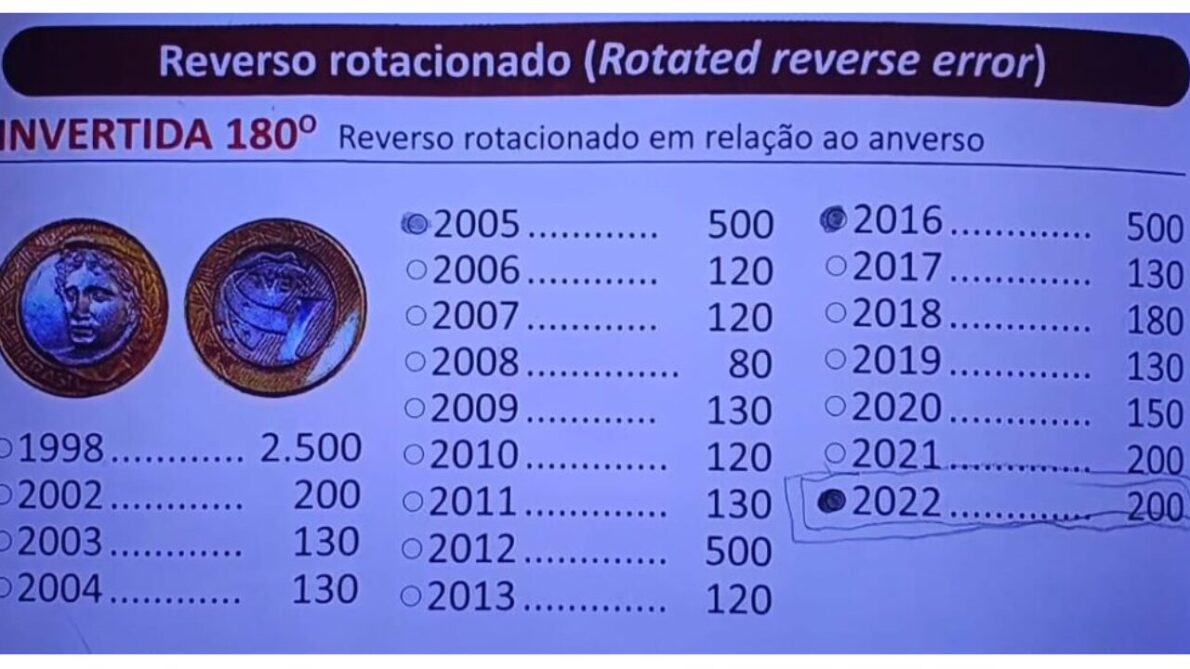
This value reflects not only the rarity of the piece but also the growing interest in numismatics, an area that, besides preserving the country’s history and culture, offers opportunities for valuable discoveries.
Stay Attentive to 1 Real Coins
Therefore, the next time a 1 real coin passes through your hands, do not disregard it without first checking its details.
It may be that you are holding a small fortune, a rare piece that, besides its historical value, can fetch a good sum in the collector market.
Numismatics is within everyone’s reach, and who knows, you might be the next one to discover a treasure among the change of daily life?








Tengo dos monedas de 1 Real de 1998 con error invertido 60205366
Hola tengo 2 monedas de 1 real..del año 2003 y 2013
Donde puedo venderlas tengo 2 monedas
con error reves invertido de 1 real 2002 y 2008 y con mas errores. 1 809 416 0735 guillermo ciprian