





 English
  Francês
  Alemão
  Italiano
  Japonês
  Norueguês
  Portuguese
  Spanish
  5 min of reading
  0 comments


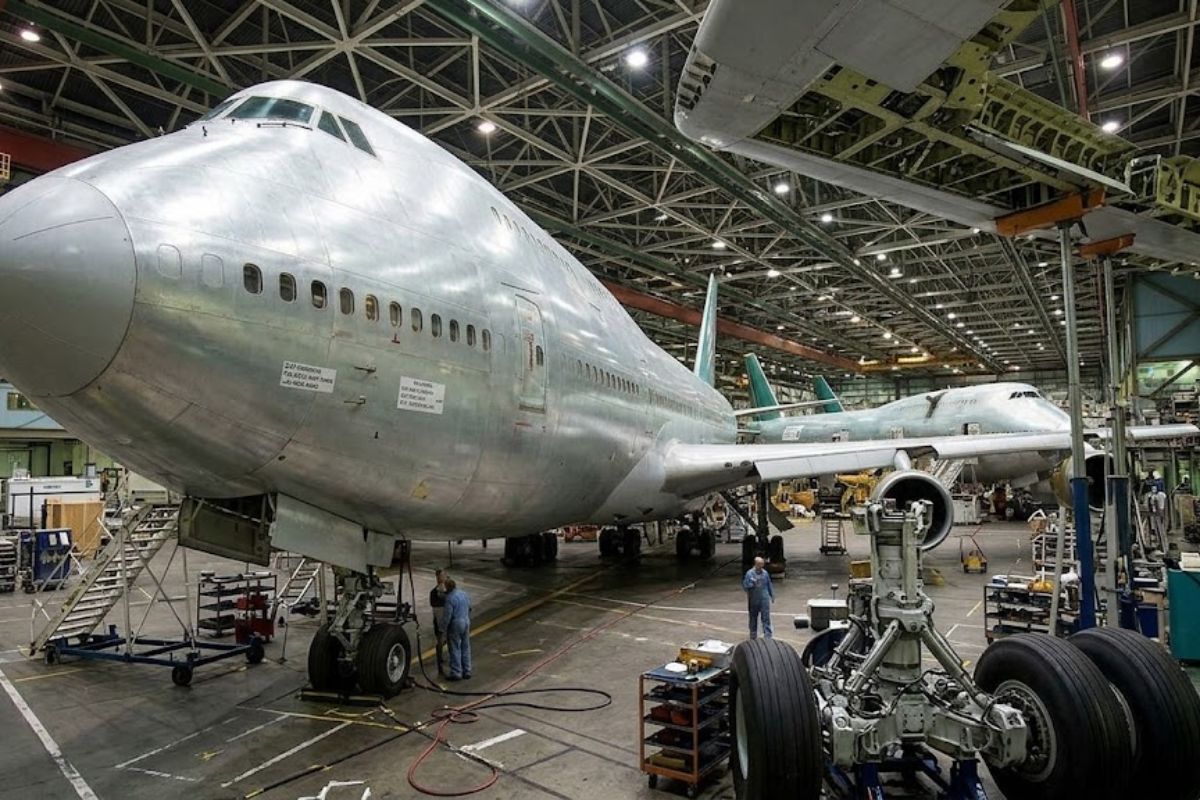
The Boeing Factory in Everett, Built in the United States to Assemble the Massive Boeing 747, Became One of the Largest Buildings in the World by Internal Volume and Marked an Era of Industrial Boldness That Almost Led the Company to Bankruptcy in the Early Years
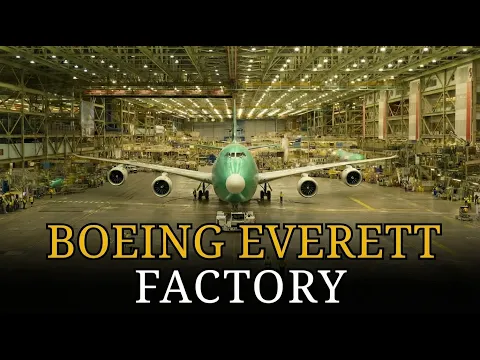
The Boeing factory in Everett, Washington, is one of the most impressive industrial structures ever built. With approximately 13.4 million cubic meters of internal volume and nearly 40 hectares of area, the complex remains among the largest buildings on the planet by capacity.
Originally designed to assemble the revolutionary Boeing 747, the Boeing factory not only changed the history of commercial aviation but also weathered an economic crisis that almost led the company to bankruptcy in the early 1970s.
The Construction of the Boeing Factory That Seemed Impossible
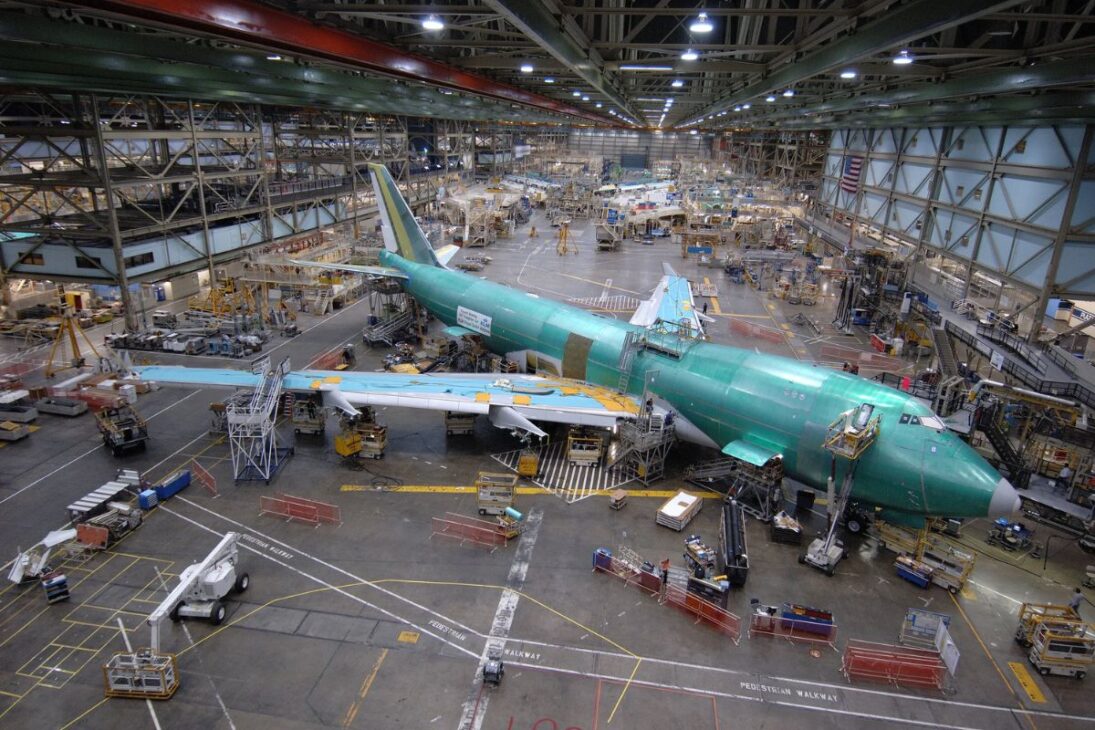
The story of the Boeing factory begins in the mid-1960s, when the company decided to embark on an extremely ambitious project.
-
The first commercial-scale hydrogen-powered brick factory will be established.
-
Goodbye to the noisy exhaust fan: silent and smart technology transforms modern kitchens with more comfort, design, and efficiency in everyday life.

-
At just 14 years old, a boy creates a system without energy, using steel pipes buried in the ground, that irrigates seedlings with moisture from the air, to combat the water scarcity threatening reforestation in northern China.

-
Anti-tank mines appear near a missile base in Iran, causing fatalities and raising suspicion of a new move to block underground launchers.

Boeing wanted to develop the Boeing 747, an aircraft much larger than any commercial aircraft existing at the time.
To assemble an airplane of this scale, the company’s facilities in Seattle were simply not sufficient.
The solution was to build an entirely new complex.
In 1966, Boeing chose a site of approximately 780 acres in the city of Everett, about 48 kilometers north of Seattle.
There the Boeing factory would rise, a building so large that it would quickly become the largest in the world by internal volume.
The covered area exceeded 98 acres, equivalent to more than 75 football fields under one roof.
A Giant Building Designed for an Airplane That Did Not Yet Exist
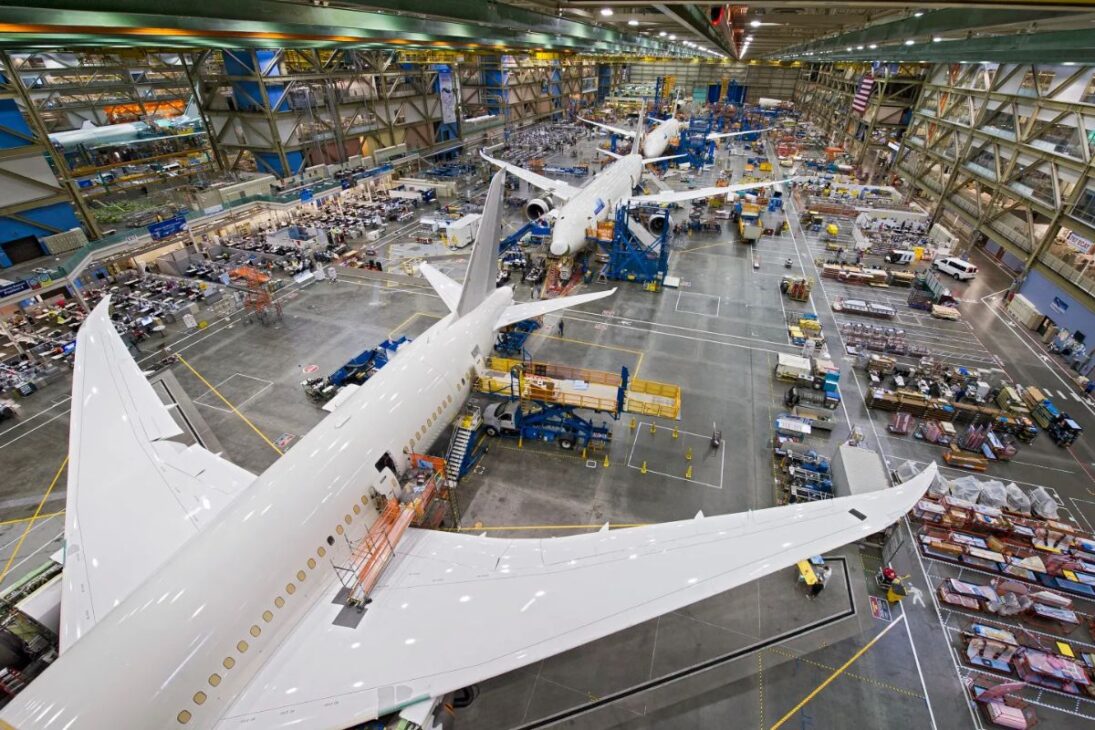
One detail makes the story of the Boeing factory even more surprising.
When construction began, the Boeing 747 was still being designed.
In other words, the company started building the assembly line even before finalizing the aircraft’s design.
The building was erected in record time.
More than 2,000 workers participated in the construction, which consumed enormous amounts of concrete and steel.
Special cranes were designed just to position gigantic metal beams.
All of this happened while engineers tried to solve the technical challenges of the largest passenger airplane ever conceived until then.
It was an unprecedented industrial project.
The Billion-Dollar Bet That Almost Destroyed the Company
The construction of the Boeing factory and the development of the Boeing 747 cost enormous amounts for the time.
It is estimated that the company spent more than 1 billion dollars on the 747 program, a figure far above initial projections.
Much of this investment was financed by loans.
At the same time, Boeing bet that airlines would buy hundreds of aircraft.
But by the end of the 1960s, the scenario changed.
The economy slowed down, airlines began to cancel or defer orders, and the company’s cash flow faced a crisis.
Boeing was just weeks away from running out of money to continue operating.
The Crisis That Devastated Seattle’s Economy

The impact of the crisis on the Boeing factory was not limited to the company.
At the time, Boeing was the main economic engine of the Seattle region.
In 1969, nearly 100,000 people worked for the company in the region.
Two years later, that number fell to around 38,000 employees.
More than 60,000 jobs disappeared in just two years.
Houses were left empty, businesses closed, and unemployment in the region reached 14%, the highest rate in the country at that moment.
A famous billboard appeared on the road near Seattle with a phrase that became a symbol of the crisis:
“Will the last person to leave Seattle please turn out the lights?”
How the Airplane Saved the Boeing Factory
Despite the initial crisis, the Boeing 747 eventually became a success.
The aircraft proved to be efficient, reliable, and capable of carrying many more passengers than previous airplanes.
Over time, airlines realized that the model could make international travel more accessible.
Orders began to grow again during the 1970s.
Gradually, production within the Boeing factory began to increase again.
The assembly line started to fill up again, and thousands of workers were rehired.
The airplane that nearly drove the company to bankruptcy became one of the greatest successes in aviation history.
The Boeing Factory Today
Decades later, the Boeing factory remains active and is still one of the largest industrial buildings on the planet.
The complex has undergone various expansions over the years.
Today, the site houses the assembly of aircraft such as the 767, 777, and 787 Dreamliner, as well as the last units of the 747.
The total built area exceeds 4 million square meters, and the complex employs tens of thousands of workers.
Every year, around 100,000 visitors take tours of the factory, curious to see one of the largest industrial structures ever erected.
Even so, the building still carries the memory of a time when it almost became a symbol of industrial failure.
The story of the Boeing factory shows how gigantic industrial projects can carry equally enormous risks.
The building was created to produce the largest passenger airplane in the world and nearly drove the company that built it to bankruptcy.
Decades later, however, the complex continues to operate and remains a hallmark of engineering and technological ambition.
It represents both an industrial triumph and a reminder that big bets can change the fate of companies, cities, and even entire sectors of the economy.
And you: if you had to bet billions on a giant project like the Boeing factory, would you have the courage to go ahead even with the risk of losing everything?







-

-

-

-

-

23 pessoas reagiram a isso.