





 Portuguese
  English
  Spanish
  4 min of reading
  8 comments





European Destination Combines Demand for Workers, High Income, and Public Structure That Support the Advancement of the Brazilian Community and Influence Long-Term Decisions Outside the Country, in a Scenario Marked by Population Aging and Changes in Immigration Rules.
Germany hosts one of the largest Brazilian communities abroad and ranks as the sixth main destination for the country in Europe, driven by labor demand and above-average salaries.
According to the latest estimates released by the consular network of the Ministry of Foreign Affairs, the contingent reaches 170,400 Brazilians living in German territory, a number comparable to that of a medium-sized city in Brazil.
The interest of foreign professionals, including Brazilians, intersects with a scenario described by authorities and organizations linked to the German labor market.
-
IPTU exemption for seniors in 2026: see how to secure the benefit.

-
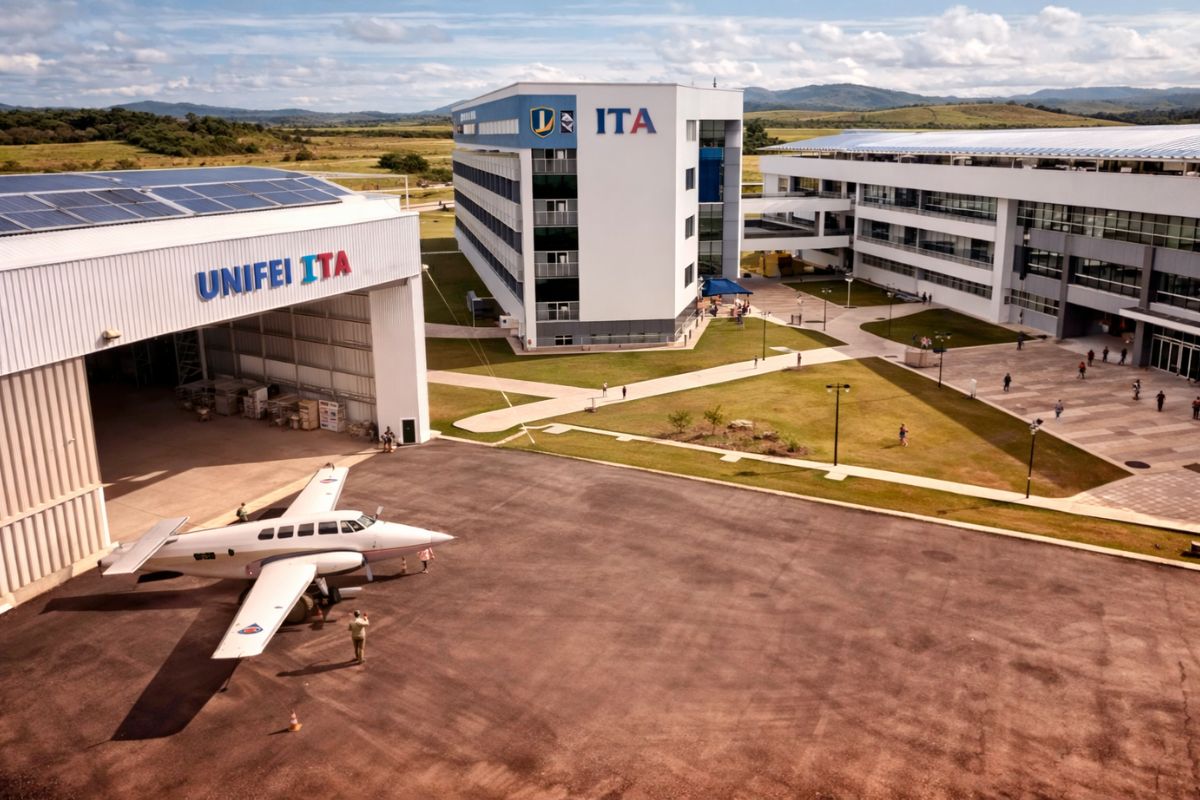
The institute that trained the greatest aerospace engineers in Brazil has just opened its first campus outside São Paulo after 75 years: ITA Ceará will have R$ 445 million, new courses in energy and systems, and classes are expected to start in 2027.
-
Luciano Hang, owner of Havan, goes to Juiz de Fora after the tragedy in February, brings R$ 1 million, hands out R$ 2,000 cards, and donates up to R$ 15,000 to victims in the region.

-
The Brazilian passport allows legal residence in dozens of countries without the need for a prior visa, and most Brazilians are unaware that they can apply for residency directly upon arriving in nations in South America, Africa, and even Europe.


There are vacancies that cannot be filled in certain regions and sectors, while the country attempts to respond to the impact of population aging on the workforce.
Concentration of Brazilians in Major German Cities
The Brazilian presence is primarily distributed across major urban and economic centers such as Berlin, Frankfurt, Munich, and Hamburg.
In these cities, Brazilians frequently appear in occupations related to information technology, engineering, healthcare, research, logistics, gastronomy, and services, areas where hiring tends to require technical training or prior experience.
Part of this movement is explained by Germany’s strategy to broaden legal pathways for labor immigration.
The reform of the skilled labor immigration law has made it easier for professionals with education and also for individuals with practical experience to enter under specific rules.
The measure aims to reduce persistent bottlenecks in the labor market.

Salaries in Germany and Comparison with Brazil
When it comes to remuneration, the most solid reference available in public statistics is the average salary of full-time workers in the country.
Data from the German federal statistics office indicates that the average gross monthly earnings of full-time employees reached € 4,479 in 2023.
In more recent data, the same source reports that, in April 2024, the average gross monthly earnings of full-time workers reached € 4,634.
This figure reinforces the perception of a high level compared to other European markets.
In direct conversion, the amount significantly exceeds R$ 29,000.
For the purpose of recent exchange comparison, the reference rate of the euro against the real was 1 euro = 6.5076 reais on December 24, 2025.
Still, individual income varies widely. Job function, length of experience, recognition of diplomas, German language proficiency, sector, and city change the final amount.
Additionally, mandatory deductions such as taxes and social contributions apply to gross salary.
Population Aging and Shortage of Professionals
The backdrop of international recruitment is demographic and economic.
Information compiled by European labor mobility networks indicates that the retirement of the “baby boomer” generation is likely to reduce the number of available workers.
This movement may pressure sectors unevenly depending on the region and type of occupation.
At the same time, the German government is linking attracting professionals to efforts to modernize processes.
Initiatives include digital tools for visa applications in some cases.
The German diplomacy has announced changes to facilitate applications and broaden entry pathways for skilled workers from outside the European Union.
The focus is especially on areas such as information technology, care, and specialized trades.
Even in an environment with unemployment, official analyses regarding a shortage of professionals indicate a market described as “two-tiered.”
There are people looking for work, but companies report difficulty in finding candidates with the required profile and qualifications for various occupations.
Prolonged Stay and Search for Stability

There is no single, consolidated, public-access, and standardized statistic that establishes the average length of stay of Brazilians in Germany.
Nevertheless, migratory behavior can be observed through administrative indications.
Among them are the increase in more stable residence permits and the pursuit of permanent integration.
In practice, reports from Brazilian communities and support networks typically indicate trajectories that exceed five or ten years.
This occurs especially when market insertion becomes established.
In these cases, family planning revolves around public services, income stability, and economic predictability.
On the other hand, the adaptation process tends to be gradual.
The language requirement in various careers, diploma validation, and documentation bureaucracy still appear as decisive steps.
These factors influence the transformation of the initial opportunity into long-term permanence.
Quality of Life and Long-Term Decisions
Migration also involves factors that go beyond the paycheck.
For many, daily life in Germany connects to the perception of structured public services and a work environment governed by more predictable rules.
This aspect weighs in comparison to previous experiences in Brazil. This set of elements does not signify a homogeneous reality.
There are Brazilians in technical and highly qualified positions.
On the other hand, there are also those who work in services and face integration difficulties, high housing costs, and cultural barriers.
These challenges are more frequent in large cities, where the demand for housing is intense.
With a community already totaling six digits and a market that continues to search for professionals in strategic areas, what is still lacking for more Brazilians to turn the German opportunity into a stable life project without completely severing ties with Brazil?







Parabens! As Fabricas Automotivas estao frente a novas expectativas de recolocacao de pessoal, jornada reduzida e flexivel, planos de carreira com capacitacao especializada aos cargos.
Agora contracoes de
babyboomers, estao preparados para nova fase a caminho da manutencao da velhice?
Quem acreditar nisso peço que se informe melhor tudo Fantasia
Mano do ceu .eu alema vivendo na alemanha rindo denials da reportagem e dks comentários .🤣🤣🤣 Pesquisem as reviews de hospitais alemaes feita por alemars e a db . Depois falem.com.brasileiros que vieram com fsmilia que vai morrer aqui pagando aluguel caro pois nao conseguem comprar casa. A aposentadoria aqui alem de ser la.pelos 68 anos corta tua renda pra metade e vc nao consegue pagar os custos. Alemanha eata usando de mao de obra brasileira tendo os brasileiros que pagar aluguel carisismo wue uma alemao nao paga e nao facilita em nada se vc tiver familia ou qusier comprar uma casa. Menos fantasia gente. Falem a realidade .