





 Portuguese
  English
  Spanish
  5 min of reading
  0 comments


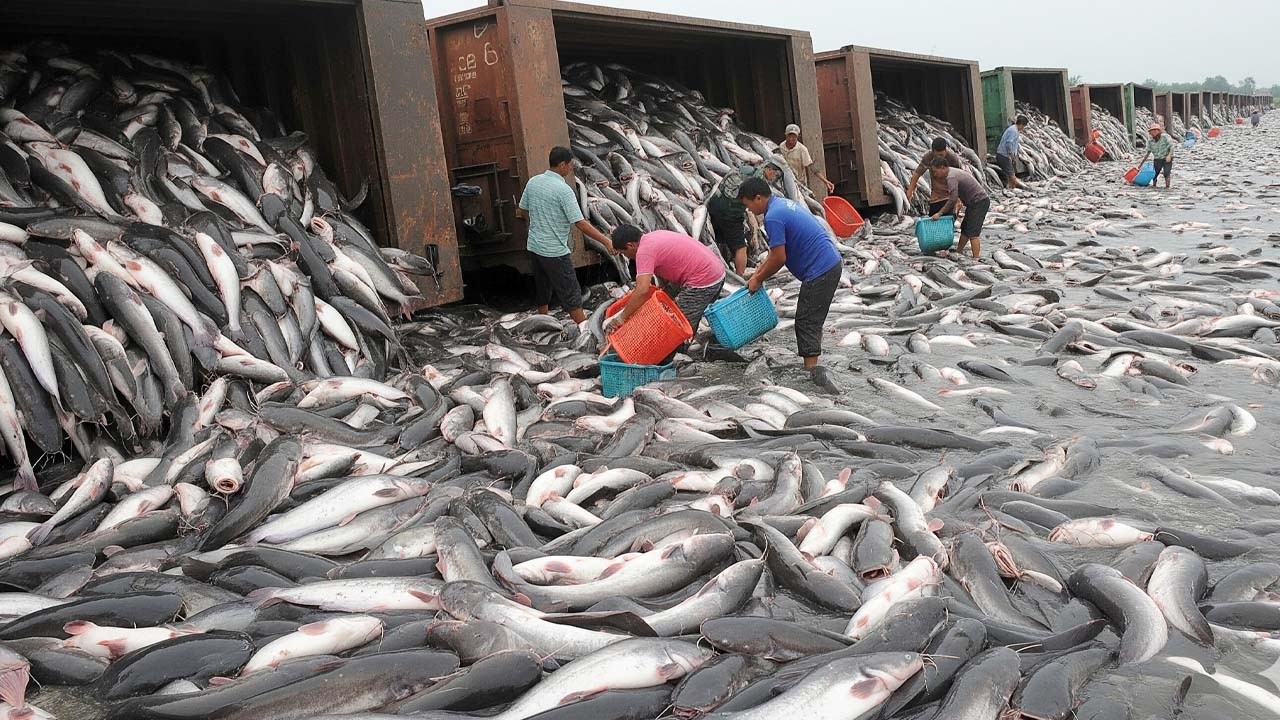
Vietnam Produces 1.75 Million Tons of Pangasius Per Year and Becomes a Global Aquaculture Power. See How the Country Dominated the Market with Industrial Production.
In 2024, FAO reports confirmed a transformation that has been quietly built over the last two decades: Vietnam surpassed 1.75 million tons of annual pangasius production, establishing itself as one of the largest hubs for farmed fish in the world. Although not as frequently mentioned as Norway, Chile, or China, the Asian country has created an intensive aquaculture system that today supplies dozens of international markets and supports one of the most aggressive and organized production chains in the modern fishing industry.
The pangasius — known in Brazil as panga or catfish, plays a central role in this growth. With white flesh, a mild flavor, and high yield per carcass, it has become a strategic export product. Mass production is made possible by excavated ponds, water recirculation systems, intensive tanks, and a standardized processing and filleting model that has turned farming into an almost industrial operation.
While many countries still primarily rely on extractive fishing, Vietnam bet on aquaculture as an economic engine. The strategy was successful. In 2023 and 2024, the Vietnamese government stated that the sector already accounts for billions of dollars in exports, with a significant portion of that value coming from pangasius.
-
Sleeping at different times each day can be a bomb for your heart and even double your risk of having a heart attack.

-
Without help and without heavy machinery, a woman builds a house from scratch with stone, wood, and cement, erects a chimney, creates a complete leisure area, and transforms an empty lot into her dream home.
-
Couple transforms abandoned house after years of being closed; residence was overgrown with weeds, had a green pool, and a deteriorated structure in the interior of Rio de Janeiro.

-
Hidden marks on the walls of the site associated with the Last Supper of Jesus for centuries have been deciphered in Jerusalem, revealing medieval inscriptions left by pilgrims, European nobles, and travelers from the Middle East.


How Vietnam Managed to Transform a Common Fish into a Global Product
The productive leap did not happen by chance. The Vietnamese industry relied on three pillars: intensification, standardization, and exportation. Unlike the dispersed and informal operations seen in various tropical countries, Vietnam structured farming centers that operate in an integrated manner.
Companies control everything from the genetic selection of breeders to feed factories, including larviculture, fattening, processing, and shipment to international markets.
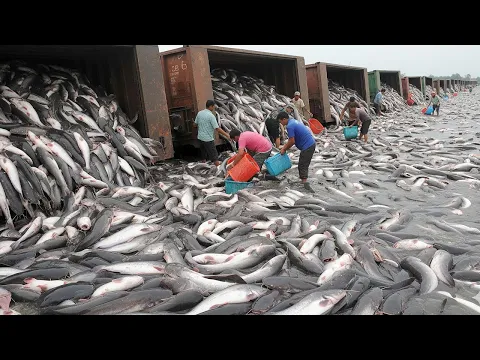

This vertical integration allowed for unprecedented efficiency. The pangasius production cycle is one of the shortest among farmed fish — around seven to nine months — and the yield after filleting exceeds 40%.
With proper management, ponds can achieve high densities without compromising quality, something that has only been made possible thanks to the development of water monitoring systems, dissolved oxygen sensors, and strict sanitary protocols.
The expansion took place in a territory naturally favorable to aquaculture, with stable temperatures year-round and abundant water availability. This combination of factors made continuous production possible, without seasonal interruptions, ensuring a permanent flow of young fish, adults, and processing plants operating almost uninterruptedly.
A Chain That Sustains Millions and Positions the Country in Global Trade
The consolidation of Vietnam as an aquaculture power is also associated with the economic importance of pangasius.
The species is present on menus in over 80 countries, according to data from VASEP (Vietnam Association of Seafood Exporters and Producers). Markets like the European Union, China, the Middle East, Brazil, and the United States regularly receive tons of frozen fillets, especially because the fish combines affordable pricing, ease of preparation, and simplified logistics.
The sector formally employs hundreds of thousands of workers, but the impact is even greater when considering family farmers, transporters, processors, and small service providers that orbit around the production chain.
Vietnamese authorities highlight that the growth of aquaculture has helped lift entire communities out of poverty, especially in rural areas that historically depended on subsistence farming.
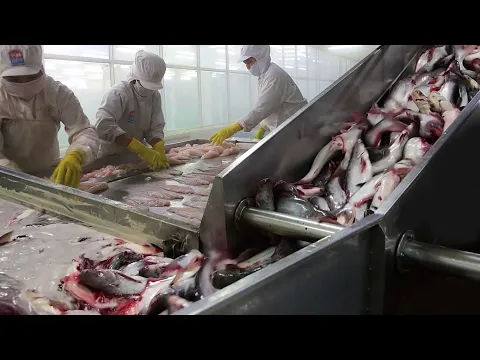
Exports gained momentum from the 2000s, when the country formed partnerships with international organizations to adapt its sanitary inspection systems.
Since then, pangasius has become a globalized product. The chain is audited by different sustainability seals and quality standards, and Vietnamese processing plants adhere to standards equivalent to those of some of the most demanding markets in the world.
Environmental Challenges and the Move Toward More Sustainable Systems
Like any large-scale intensive production, Vietnamese pangasius farming faced environmental scrutiny. International organizations called for greater control over water management, waste disposal, and the source of the feed used.
In recent years, the country has accelerated investments in biological purifiers, sedimentation ponds, partial water recirculation, and feed formulas with less dependence on fish meal — a sensitive point in the global sustainability debate.
Recent reports show that large producing groups are already able to operate in compliance with international sustainability standards, especially for markets like Europe and the United States, which require rigorous certifications.
This external pressure has driven innovations and made the chain more efficient, reducing costs and increasing yield per hectare.
Why Vietnamese Pangasius Dominates the Global Market
The Vietnamese dominance is not only explained by volume. Three factors are constantly cited by analysts:
- Extremely Competitive Production Costs — lower than tilapia, salmon, and shrimp.
- Industrialized and Predictable Supply Chain, with constant supply throughout the year.
- Standardization of the Final Product, with uniform fillets, high yield, and simplified logistics.
This has transformed pangasius into one of the most accessible proteins in the global seafood market. In many countries, including Brazil, panga has become a popular alternative in restaurants, schools, hospitals, and collective feeding programs.
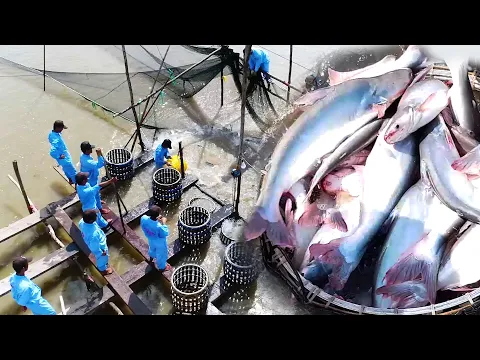
The trend points toward expansion. Projections from the Vietnamese Ministry of Agriculture indicate that production could exceed 2 million tons annually in the coming years, especially with the adoption of new automated fattening systems and deeper ponds that allow for greater densities without compromising fish welfare.
The Future of Vietnamese Aquaculture and Global Impact
As farmed seafood gains traction as a sustainable alternative to extractive fishing, countries that excel in this type of production occupy a strategic position in the global food landscape. Vietnam, with its consolidated structure, accessible technology, and skilled labor force, is already being pointed out by analysts as one of the most important centers of global aquaculture for the coming decades.
If it maintains its current pace, it could compete with giants like China, India, and Indonesia, becoming one of the pillars of Asian and global food security.
Pangasius, which was once just a common fish from Southeast Asia, has become the protagonist of a globalized chain, shaped by water engineering, intensive management, and highly efficient international logistics.
The rise of Vietnam shows that modern aquaculture is moving beyond being a complement to traditional fishing and is establishing itself as one of the most important engines of the food economy of the 21st century.








-

-

2 pessoas reagiram a isso.