





 Portuguese
  English
  Spanish
  3 min of reading
  0 comments



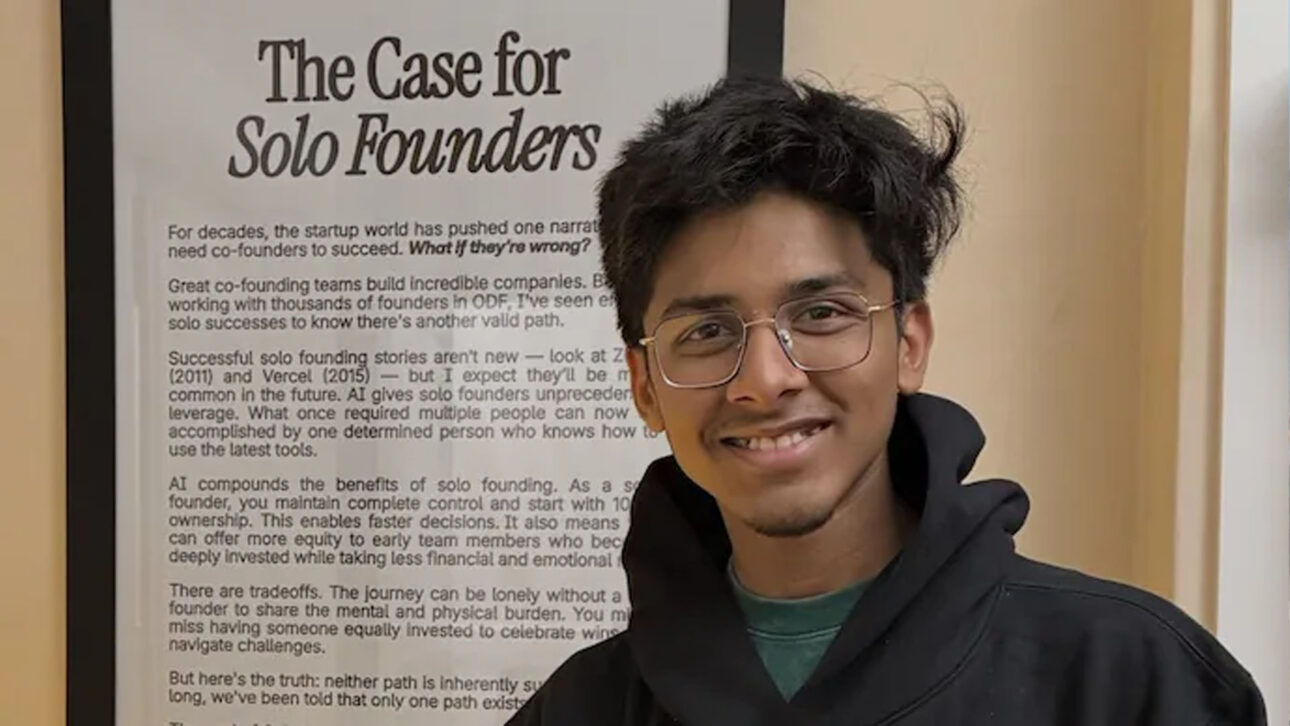
Dhravya Shah, 19, Raised A Seed Round For Supermemory, A Long-Term Memory API For AI Apps. Startup Already Has First Clients And Support From Big Tech Names.
The Supermemory aims to solve a problem that hinders the adoption of intelligent agents: AI that “forgets” between sessions. Founder Dhravya Shah, born in Mumbai, raised US$ 2.6 million to accelerate the platform that promises to provide persistent, fast, and contextual memory to products with language models. On October 6, 2025, TechCrunch detailed the funding round and the young man’s journey, now based in San Francisco.
Shah created bots and apps for consumers, sold a utility that transformed tweets into screenshots for Hypefury, and decided to swap the entrance exam for IIT for Arizona State University. There, he challenged himself to build something new every week for 40 weeks; from one of those projects was born the embryo of Supermemory, initially Any Context, which allowed conversations with Twitter bookmarks.
In 2024, the founder interned at Cloudflare in AI and infrastructure and later served as a developer relations lead. Advisors like Dane Knecht (CTO of Cloudflare) encouraged him to turn the project into a product. In 2025, Shah dedicated himself fully to the startup.
-
Eight out of ten Brazilian families are in debt, and the historical record of 80.4% in March 2026 worries even those earning more than ten minimum wages, with almost 30% of their income already committed to debts.

-
After being stalled for seven years in the desert, the 1 km skyscraper in Saudi Arabia has resumed construction, rising one floor every three days, and is now on track to surpass the Burj Khalifa by 2028.

-
Untouched for 2,200 years, the tomb of China’s first emperor hides up to 100 tons of mercury, lethal traps designed to kill invaders, and a mystery so dangerous that archaeology still refuses to uncover it.

-
With 220 meters, 721 feet, and 25 thousand gross tons, the world’s largest sailing cruise ship sets a record before its debut and promises to reinvent luxury at sea with giant sails and futuristic engineering.

The proposal interests those who build assistants, email, video editors, CRMs, and search tools. Supermemory promises multimodal ingestion and low latency querying over months of history.
How Supermemory Works And Why It Matters For AI
Supermemory defines itself as a “universal memory API”. The company describes a pipeline that ingests data (files, documents, chats, emails, PDFs, and app streams), generates embeddings, enriches with knowledge graph, and indexes for sub-300 ms recall via semantic search and keyword search. Connectors for Google Drive, OneDrive, and Notion facilitate synchronization.
According to the startup, the goal is for agents and applications to “remember” preferences and facts over the long term, maintaining context between sessions. This allows, for example, searching for old notes in writing/journal apps, locating relevant emails for a task, or bringing clips from a user’s on-demand video library.
The company also claims superior performance compared to alternatives, with “up to 10× faster than Zep and 25× than Mem0” and lower costs. These are claims from Supermemory itself, which the market will follow as more independent benchmarks emerge.
For corporate audiences, the promise includes SOC 2, encryption in transit and at rest, and options for cloud, hybrid, or on-premises deployment.

Seed Round, Who Invested And Who Is Already Using It
The US$ 2.6 million seed round was led by Susa Ventures, Browder Capital, and SF1.vc. Angels include Jeff Dean (Google AI), Logan Kilpatrick (DeepMind), Dane Knecht (Cloudflare), David Cramer (Sentry), and executives from OpenAI, Meta, and Google. Joshua Browder (DoNotPay), who leads Browder Capital, cited the founder’s execution speed as a differentiator.
Among the first clients, TechCrunch lists the desktop assistant Cluely (backed by a16z), the video editor Montra, the search tool Scira, the multi-MCP Rube (from Composio), and the real estate startup Rets. The company also collaborates with a robotics company to store visual memories captured by robots.
For context, Susa Ventures also invested in Memories.ai, which raised US$ 8 million for visual memory with support from Samsung Next, reinforcing investor interest in the “external brain” of AI apps.
In the short term, Supermemory seeks to establish itself as a plug-and-play memory layer for LLMs and agents, targeting developers and B2B products that depend on persistent context.
Do you think that persistent memory in AI improves service or raises privacy risks? Would you allow emails, documents, and video clips to feed an agent that “never forgets”? Comment if you would use Supermemory or prefer on-prem and open-source solutions.









-

-

-

-

13 pessoas reagiram a isso.