





 Portuguese
  English
  Spanish
  6 min of reading
  3 comments


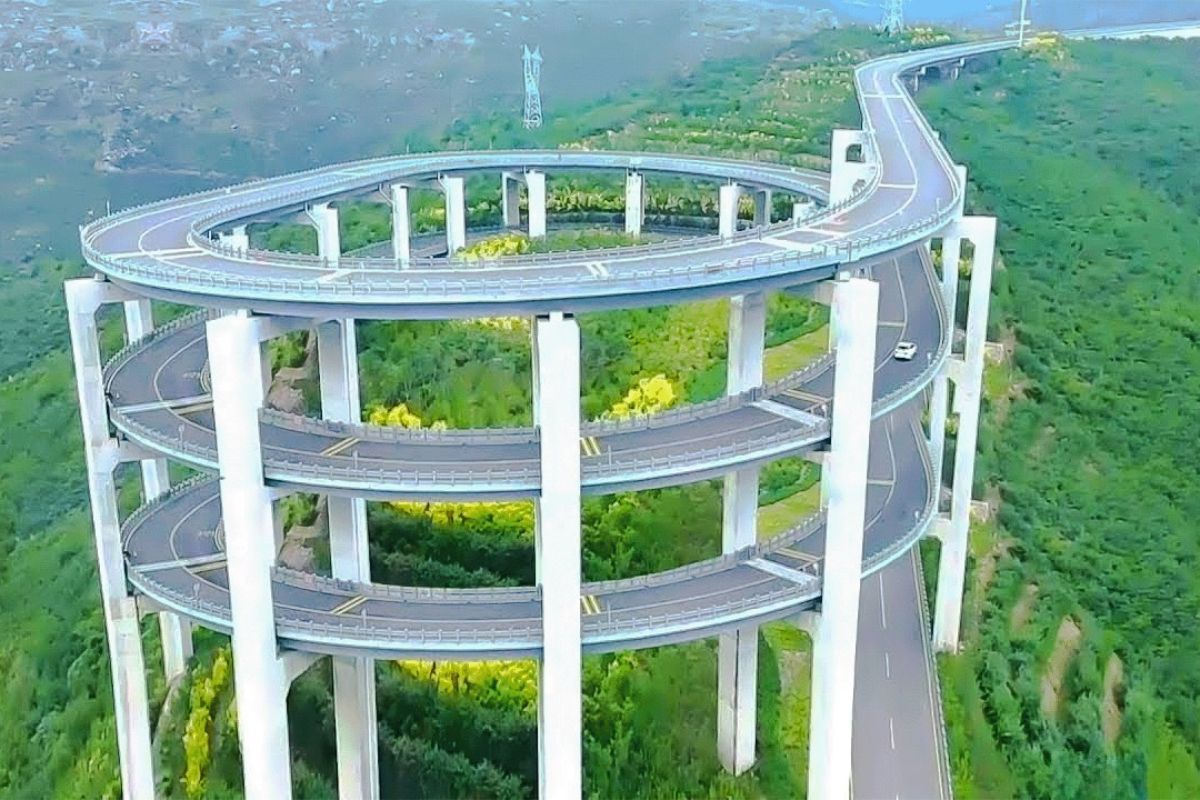


With 30 km, an altitude difference of 350 m and spiral curves over the Luian mountains, the three-level viaduct highway connects tourism, fire prevention, and demonstration of China’s technological power
Driving on a three-level viaduct that seems to float above the clouds, spiraling up the mountain as the 350-meter elevation disappears in the rearview mirror. This is the experience of the Taiwan Tianlong Mountain Highway, a 30 km road that has become a calling card of modern Chinese engineering.
More than just shortening paths, this road shows how China is using infrastructure to connect historical heritage, natural landscape, and high technology, with the three-level viaduct as the ultimate symbol of this strategy.
Where the Taiwan Tianlong Mountain Highway Is Located and Why It Impresses So Much
Located in the Changzhi Province, in the heart of China, the Taiwan Tianlong Mountain Highway winds through the Luian mountains, about 36 km southwest of the city of Taiwan.
-
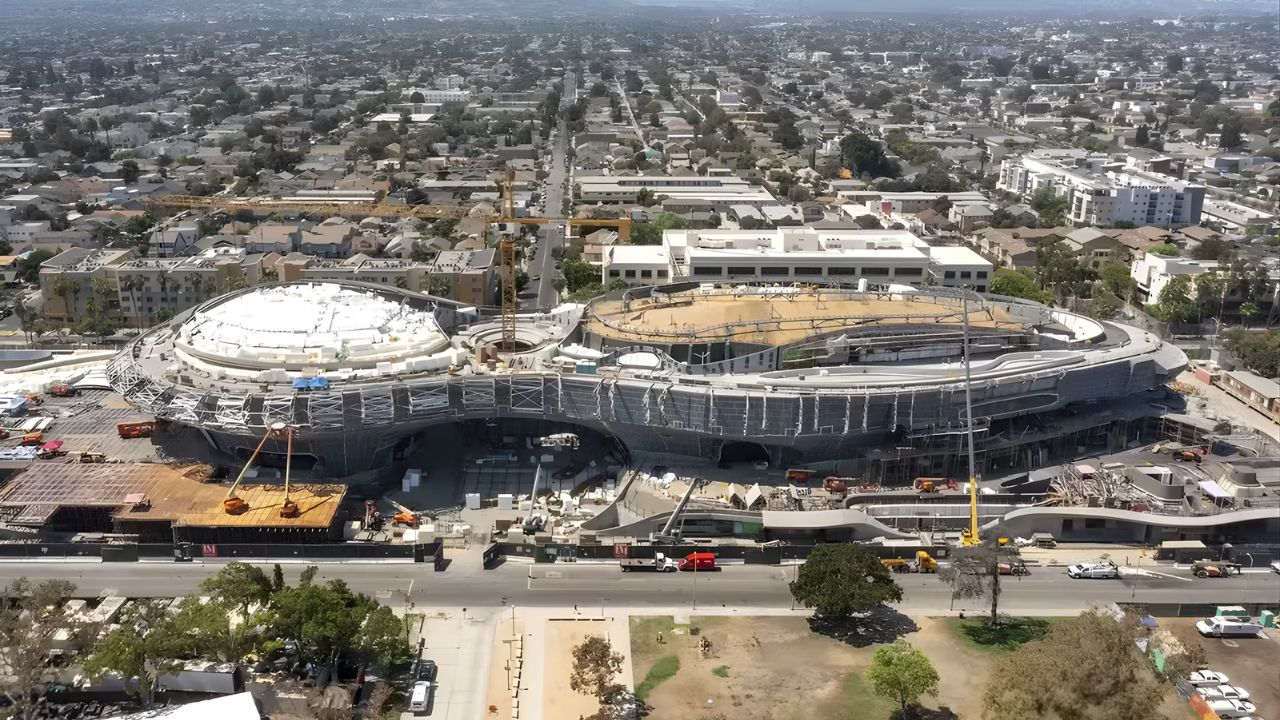
Created by George Lucas with over $1 billion, a futuristic museum in the shape of a spaceship with 1,500 curved panels is about to open in Los Angeles and will house one of the largest private collections of narrative art in the world.
-
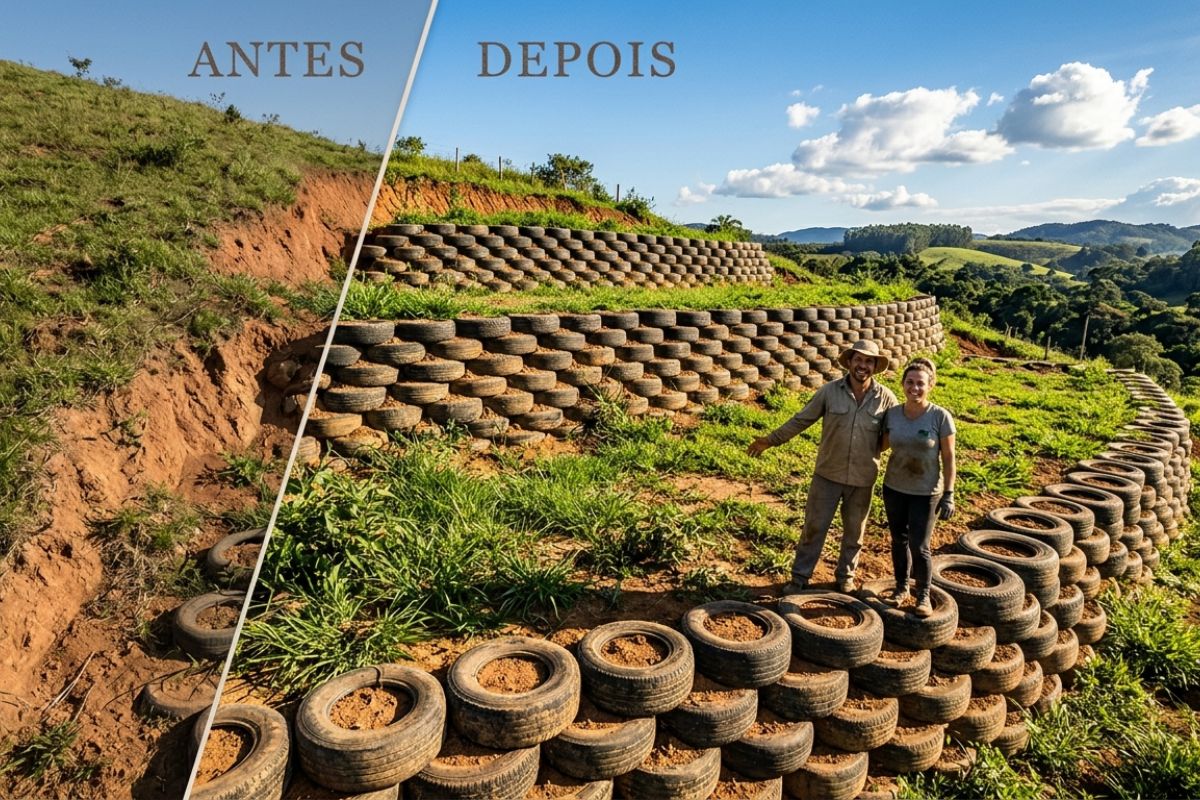
Couple shows how they built a retaining wall on their property using 400 old tires: sloped land turned into plateaus, tires are aligned, filled, and compacted with layers of soil, with grass helping in support and at almost zero cost.
-
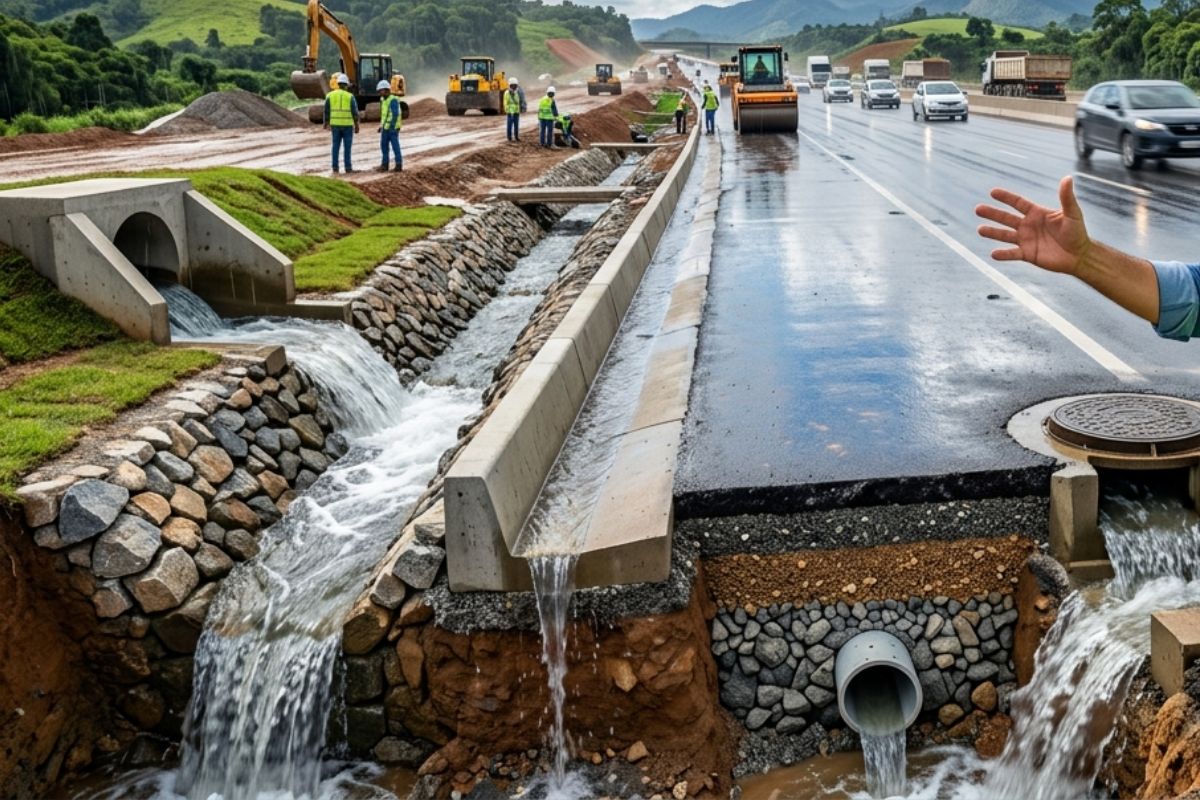
Engineer explains drainage during the rainy season: the difference between surface water and deep water, ditches, gutters, and water outlets on the road, as well as drains and drainage mattresses, to prevent erosion, aquaplaning, and flooding at the construction site today.
-
With 55 floors, 177 meters in height, a 15-meter walkway between the twin towers, ventilated facade, and 6,300 m² of leisure space, Ápice Towers already has one tower completed and another nearly at the top.

Dominating the landscape is Tianlong Mountain, which rises over 1700 meters above sea level and serves as the backdrop for the highway.
Along its 30 km, the road combines a tunnel and four viaducts, but it is the three-level viaduct that steals the show.
Built on a peak at approximately 1370 meters above sea level, it spirals up to overcome a total elevation of about 350 meters, equivalent to a building of over 100 floors.
From above, the Taiwan Tianlong Mountain Highway looks like a celestial dragon winding around the slopes, earning the work the nickname road in the clouds.
And it is precisely here that the three-level viaduct stands out: it is not only functional, but also a visual spectacle that has become a tourist attraction in its own right.
Historical Roots: From the Imperial Summer Palace to the Modern Tourist Corridor

The Tianlong Mountain area was not chosen by chance. Back in the Eastern Wei dynasty, over 1500 years ago, General Gao Huan chose this area to build his summer palace, attracted by the natural beauty and milder climate.
Later, during the Northern Qi dynasty, Emperor Gao Yan expanded the region’s legacy by ordering the construction of the Tianlong Temple and excavating caves in the slopes. And
this historical ensemble of temples, caves, towers, tombs, and murals transformed the mountain into a true open-air museum, giving rise to the name Tianlong, the celestial dragon.
For centuries, however, this heritage remained relatively isolated. Access was made via dangerous, winding mountain roads that were often damaged, which hindered tourism and also forest fire prevention.
It was in this context that starting in 2018, the authorities decided to transform the area into a tourist and environmental protection corridor, and the reconstruction of the highway became a central part of the plan.
The engineering response was direct: to use the Taiwan Tianlong Mountain Highway and its three-level viaduct as both a mobility solution and a technological showcase at the same time.
How the Three-Level Viaduct Overcomes 350 m of Elevation in a Spiral

The biggest challenge of the work was clear: to overcome 350 meters of height difference over a relatively short distance, in steep and mountainous terrain, without creating a dangerous or uncomfortable highway.
The solution was a spiral circulation design, in which the three-level viaduct functions as an elevated ramp that gradually ascends the slope.
Instead of a steep, straight climb, the road winds around the terrain with wide curves, distributing the elevation change and ensuring better safety and drivability.
At the three-level viaduct alone, more than 7,000 tons of steel were used, part of the 18,000 tons employed in the set of the four viaducts of the Taiwan Tianlong Mountain Highway.
The steel beams were fabricated off-site and assembled with the support of tracked and wheeled cranes, coordinating large pieces in a restricted and elevated environment.
For the pavement on the elevated section, engineers used epoxy asphalt, which offers greater grip on the steel beams, more ductility, and a lower risk of cracking over time.
As the steel structure expands and contracts with temperature changes, expansion joints with multidirectional displacement plates were installed, a technology that allows for accommodating movements without compromising the integrity of the three-level viaduct.
At the same time, a tunnel completed in 2019 connects the eastern and western sections of the highway, reducing the visual and physical impact on more sensitive areas of the mountain.
All this was executed with a workforce of nearly 3,000 workers, focused on the construction of bridges, viaducts, and paving the Taiwan Tianlong Mountain Highway in just a few months of intensive work.
Integration with the Environment: Reforestation and Landscape Protection
Although the Taiwan Tianlong Mountain Highway is a symbol of Chinese engineering, the project was not limited to heavy infrastructure.
To reduce the environmental impact of the highway and the three-level viaduct, a comprehensive reforestation and ecological restoration program was implemented.
Along the route, over 1.1 million trees and shrubs were planted, covering about 130 hectares with vegetation.
This green cover helps stabilize slopes, reduce erosion, restore habitat, and visually soften the presence of the road.
The result is a work where concrete, steel, and asphalt coexist side by side with green slopes and the historical heritage of Tianlong Mountain.
The three-level viaduct ceases to be just a technical element and serves as a moving viewpoint, from where drivers and passengers can see temples, caves, and deep valleys.
Comparisons with Other Iconic Highways and the Role of the Three-Level Viaduct

When comparing the Taiwan Tianlong Mountain Highway with other mountain roads and scenic roads around the world, several points stand out.
In terms of length, 30 km may not seem like much. The difference is in the density of engineering solutions in a short space and in the use of the three-level viaduct as the central piece to control the elevation change.
While many mountain roads spread tunnels and viaducts over several kilometers, here China concentrated vertical solutions in a spiral to overcome 350 m of height with fluidity.
Visually, the layout that winds around the mountain in overlapping loops creates a unique identity. The three-level viaduct has become a recurring figure in photos, videos, and social media, just like other infrastructure icons around the world.
But, unlike many works that are merely scenographic, here it simultaneously fulfills functions of mobility, tourism, and fire prevention.
Economic, Tourist, and Security Impacts in the Region
The arrival of the Taiwan Tianlong Mountain Highway changed the logic of access to the Changzhi region. Where there was once a risky and slow path, there is now a wide, safe, and scenic route, where the three-level viaduct is the most awaited point of the journey.
The highway has transformed Tianlong Mountain into a large-scale tourist destination, attracting visitors who want to experience both the historical heritage and the road in the clouds.
Hotels, restaurants, services, and small local businesses have begun to benefit from this new flow.
From an operational perspective, the Taiwan Tianlong Mountain Highway has strengthened forest fire prevention and combat, allowing for quick movement of teams and vehicles throughout the mountain area.
The combination of modern highway, constant access, and reforestation has expanded the region’s emergency response capacity.
At the same time, the project has shown how it is possible to use a three-level viaduct and a highly technically complex highway without abandoning minimal sustainability goals, offsetting impacts with tree planting and ecological restoration around the route.
Taiwan Tianlong Mountain Highway as a Showcase of Modern Chinese Engineering
The Taiwan Tianlong Mountain Highway and its three-level viaduct are not just another road among many. They serve as a showcase of what Chinese engineering is capable of today in challenging terrains, with tight deadlines, large volumes of materials, and the requirement for landscape integration.
What was once a geographical barrier has become an opportunity to showcase technology, enhance tourism, and value a historical ensemble that spans over 1500 years. The road thus becomes a symbol of how infrastructure, culture, and the environment can work together when the project is thoughtfully designed.
In the end, the Taiwan Tianlong Mountain Highway is not just a path between two points. It is an open-air laboratory for solutions in extreme elevation changes, a stage for the three-level viaduct, and a reminder that often the most interesting engineering is not found in megacities, but in the mountains.
After getting to know this road in the clouds and the impact of the three-level viaduct, would you dare to drive on it on a foggy day or would you prefer to admire the work only through photos and videos?
With information from Construction Time.








Engenharia Chinesa em Taiwan? Dasse, agora é apropriação técnica em cima de apropriação cultural.
Olha, faz-me um favor, fala mal do Xi Jin Ping e depois aplica a passaporte para a China e para Taiwan (só o facto de esta aplicação ser em dois sítios diferentes devia de ser prova que chegue).
o palhaço deixa de te submeter a tirania chinesa e diz a verdade, Taiwan não é a China continental nem de perto nem de longe, mais historicamente o Governo de Taiwan tem mais direito a China que a cccp uma vez que existe desde antes da cccp e por uma boa quantia de anos.
Shish, mais um parolo subornado ou ameaçado pela China sem tomates para dizer a verdade é vender mentiras da cccp.
Normal. Da mesma forma que tem engenharia brasileira na América do Sul, na África. É só a empresa ser chinesa.
Você não leu direito a reportagem,essa construção não é em Taiwan,a ilha,mas sim em uma província no centro da China.