





 Portuguese
  English
  Spanish
  6 min of reading
  0 comments


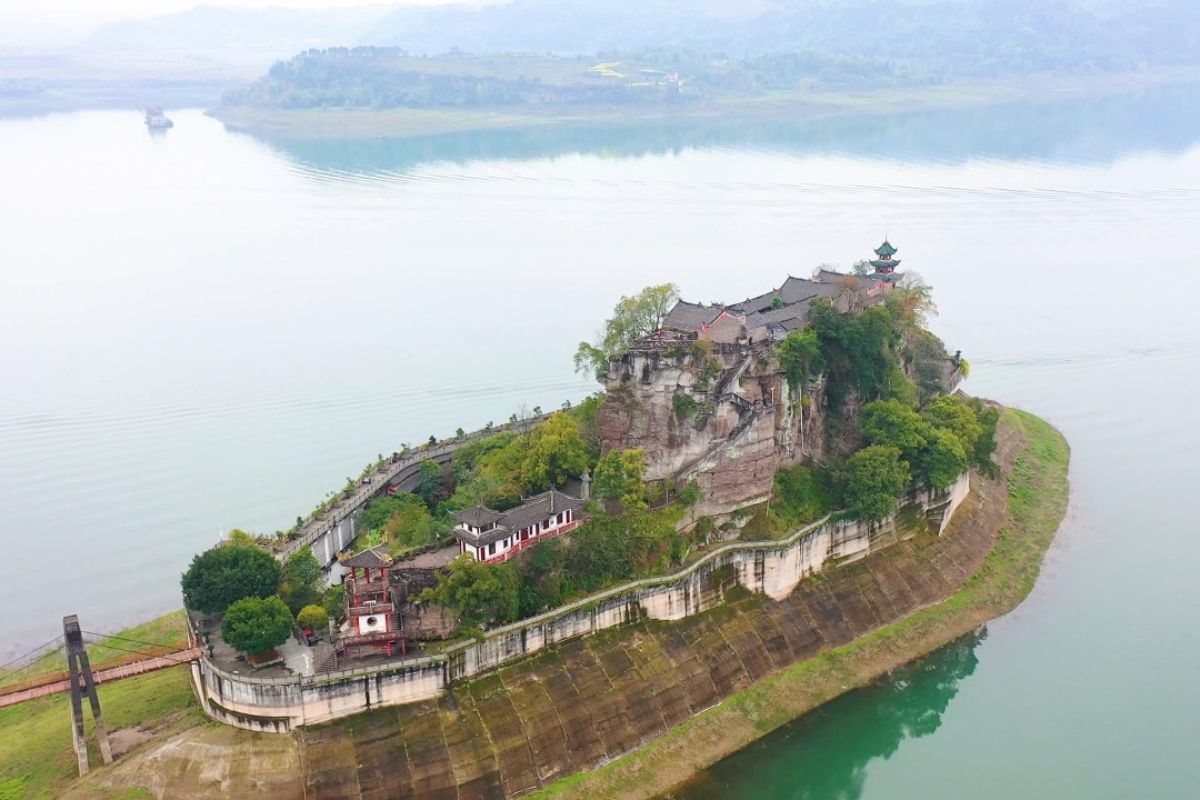
In Shibaozhai, a red wooden tower hugging the cliff rises from the level of the Yangtze without using nails, protects an ancient temple, guards walls against the dam, blends legends, suspension bridges and monumental views that attract curious travelers for architecture, spirituality, and dramatic landscape in a little-known Chinese village.
Shibaozhai looks like it came out of an ancient story: a giant rock in the middle of the Yangtze, a village stuck to the cliff and a wooden tower that climbs the mountain without using a single nail. With over 400 years of history, Shibaozhai combines temple, fortress, lookout, and sanctuary of legends in one place.
Upon arrival, visitors cross a bridge over the river, pass through protective walls against the dam’s water, and enter a complex that blends historical plaques, stone inscriptions, and narrow passages. Each staircase leads to a new level of Shibaozhai, with broader views of the Yangtze and the suspended village, on a path that is as physical as it is spiritual.
Where Is Shibaozhai and How Did It Come to Be

Shibaozhai is located in Shibao Town, Zhong County, Chongqing region, along the Yangtze River. At the center of it all is a large rock with over 50 meters in height, with a steep top and irregular walls, resembling a jade seal.
-
The narrowest house in the world is only 63 centimeters wide, but inside it can accommodate a bathroom, kitchen, bedroom, office, and even two staircases.

-
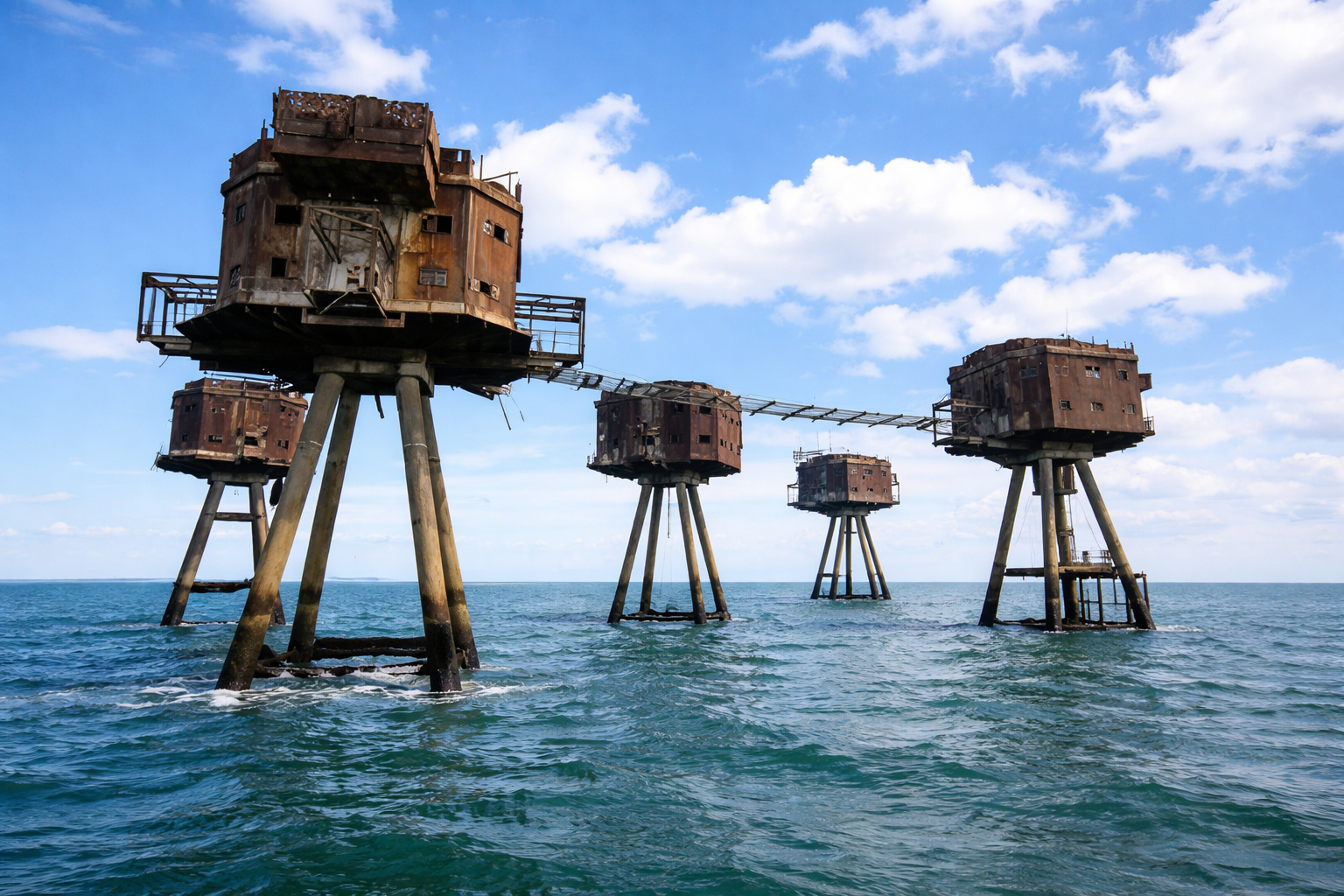
In the middle of the sea, these enormous concrete and steel structures, built by the British Navy to protect strategic maritime routes, look like they came straight out of a Star Wars movie.
-
For years, no one could cross a neighborhood in Tokyo because of the tracks, but an impressive solution changed mobility and completely transformed the local routine.

-
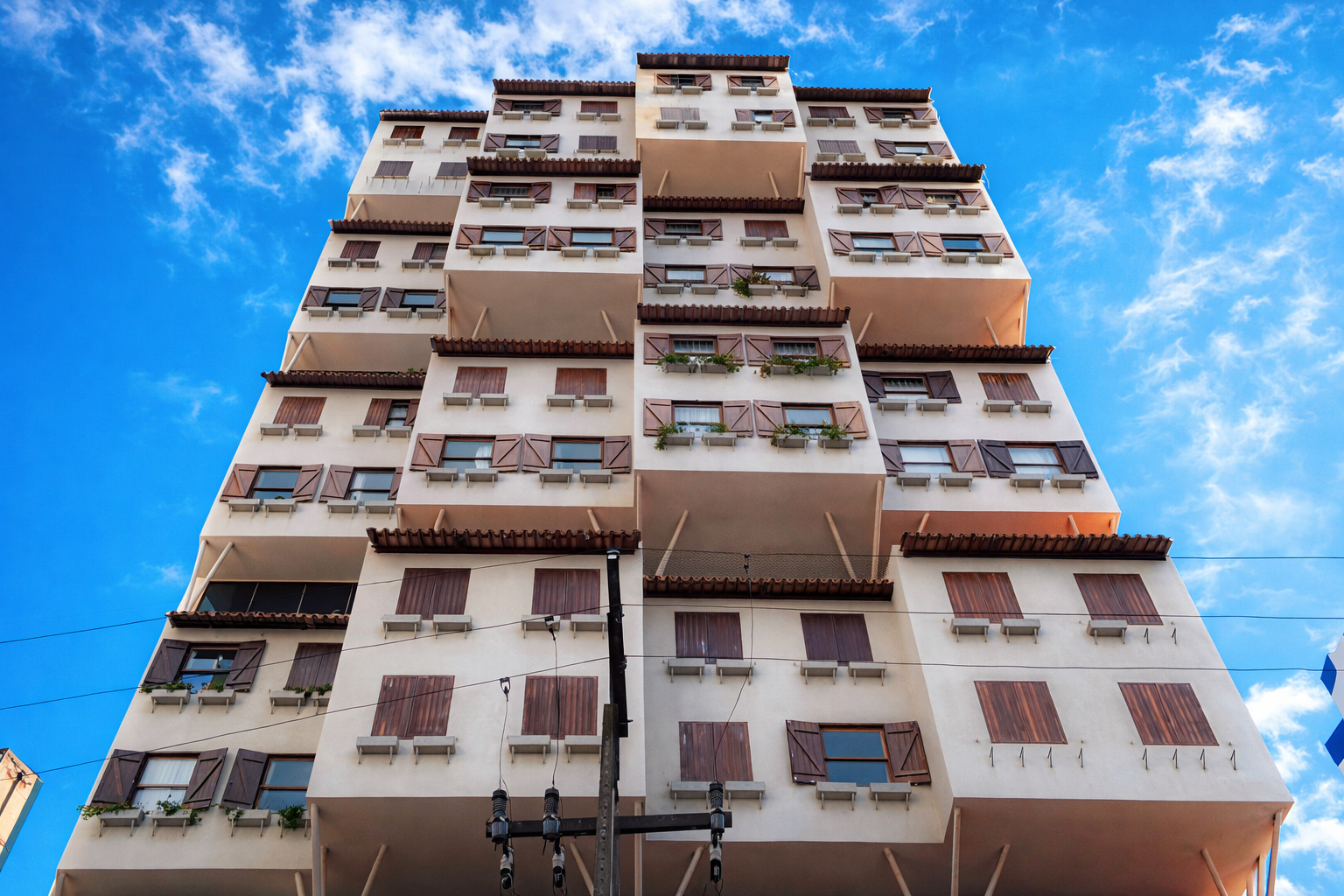
With 15 floors, an unusual building in Curitiba uses concrete, pilasters, and exposed roofs to create the effect of stacked houses.

For this reason, the place is also called Yuyin Mountain, the mountain of the jade seal.
According to local tradition, the huge stone block of Shibaozhai is said to be a colorful fragment used by Nüwa to mend the sky, which made the rock known as Shibao, the gem of stone.
Centuries later, during uprisings at the end of the Ming dynasty, the site became a fortress for a rebel leader, earning the name Shibaozhai, something like “stronghold of the precious stone”.
The Red Wooden Tower That Rises the Mountain

The most famous building in Shibaozhai is the village built in the shape of a red tower, directly against the cliff.
The structure began in the Wanli period of the Ming dynasty and was expanded during the Qing dynasty. Today, Shibaozhai features a wooden tower that reaches 12 stories, all connected by steep staircases and narrow hallways.

The most impressive aspect is the technique: Shibaozhai was built with a wooden mortise-and-tenon structure, without the use of nails, showcasing the classic style of traditional Chinese architecture.
Projecting cornices, blue tiles, red walls, and curved eaves create a unique silhouette that has been listed among the most curious buildings in the world.
The Wall That Protects Shibaozhai from the Yangtze Water

Before the construction of the Three Gorges Dam, it was possible to reach Shibaozhai via a road near the river level.
With the rise in water levels, that route has disappeared. To protect the rock, the tower, and the village, a wall was built around Shibaozhai, forming a sort of elevated island within the Yangtze.

Today, those who cross the bridge with the sign “Pearl over the river” enter Shibaozhai passing through this wall that follows the contour of the rock.
From above, it is possible to see the Yangtze flowing on both sides and understand why Shibaozhai is considered a naturally defensible and hard-to-conquer place, something that has reflected in its military history.
Climbing Shibaozhai Step by Step

Visiting Shibaozhai is, literally, climbing an entire story. After passing through the gates and plaques of national monument and 4A tourist area, the visitor arrives at the base of the tower.
The first flights of stairs already show how steep the interior of Shibaozhai is, with narrow steps that often force many people to climb almost bent over.
Floor after floor, Shibaozhai reveals small halls, round windows, hidden passages, and even an ancient route of chains and stone steps in the rock, known as Lianzikou.
There, residents and travelers of bygone times would scale the mountain using hands and feet, on a path even narrower and more worn than the current one.
Legends, Temples, and Signs of Time Inside Shibaozhai
At the top of the tower, Shibaozhai houses the so-called Emperor’s Palace, with gates, a central nave, and a rear hall.
There, figures such as Guan Sheng (Guan Gong) and the Jade Emperor himself are worshiped, surrounded by murals depicting scenes like the Eight Immortals crossing the sea and legendary celebrations.
Near this core are curious elements such as the “duck hole,” an opening surrounded by stones that, according to legend, connects to the Yangtze.
The story goes that a marked duck, placed in this hole, would have reappeared floating in the river, reinforcing the underground mystery surrounding Shibaozhai.
Bridges of Love, Clouds, and Weather Forecasts
Shibaozhai also holds a peculiar monument called Qingyu, a stone used to “predict” the weather.
When the limestone surface of the stone becomes wet and darkened, the locals interpret it as a sign of rain the next day; when it remains clear and dry, the weather tends to stay fair.
Another highlight is the love bridge, linked to Shibaozhai by the tradition of the Three Gorges of the Yangtze. While other bridges in the region would represent paths to the world of the living or the dead, the bridge of Shibaozhai is seen as a bridge to heaven and love.
The belief is that if a person crosses Shibaozhai via the bridge in odd steps, with a heart full of good intentions, their wishes are more likely to come true.
Forts, Cannons, and the Military Side of Shibaozhai
In addition to a temple and lookout, Shibaozhai also played a military role. On a wider platform behind the complex, there are remains of an old fort with a cannon, built during the Qing dynasty to resist invaders. The position of Shibaozhai, high, surrounded by water and with limited access, made it a strategic point for defense.
Even with rusted and broken parts, the remnants of the cannon and the fort help to understand why Shibaozhai has always been seen as a natural stronghold.
The combination of isolated rock, walls, and wooden tower makes Shibaozhai much more than a pretty scene, revealing layers of political, religious, and military history.
Why Shibaozhai Fascinates Modern Travelers

Today, Shibaozhai welcomes groups of tourists crossing the Yangtze on cruises or arriving by land to see up close the nail-free tower, the suspended village, and the temple on top of the rock.
The contrast between the river’s water, the red of the wood, the gray of the stone, and the surrounding green creates an almost theatrical scene.
For those who enjoy traditional architecture, Chinese legends, dramatic geography, and places that have survived radical changes in the surroundings, Shibaozhai is a rare synthesis of ancient engineering, popular faith, and adaptation to the forces of the river and time.
Each step tells a piece of this story, from the base of the wall to the last terrace with a panoramic view of the Yangtze.
Imagining this wooden tower without nails clinging to the cliff, surrounded by the Yangtze and ancient legends, would you dare to climb all the floors of Shibaozhai or would you just admire the suspended village from below?






-

-

-

-

-

-

24 pessoas reagiram a isso.