





 Português
  Inglês
  Espanhol
  4 min de leitura
  0 comentários


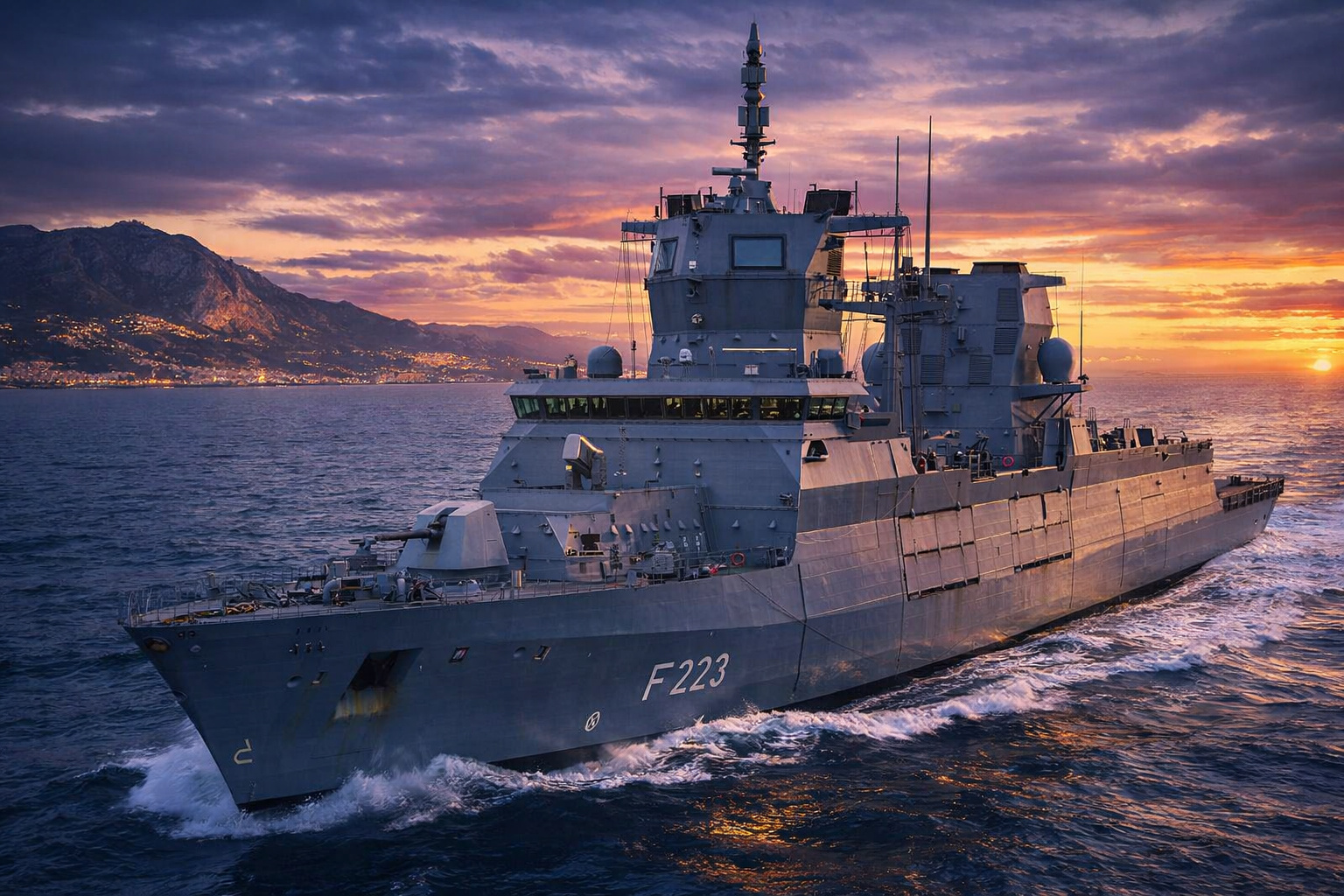
Baden-Württemberg-Class Warship Reinforces European Military Presence in the Eastern Mediterranean After Increase in Regional Tensions, Drone Attacks, and Growing Mobilization of Allied Naval Forces Near the Middle East
The arrival of the German frigate Nordrhein-Westfalen (F223) at the port of Limassol, Cyprus, marks another chapter in the growing international military mobilization in the Eastern Mediterranean, a region considered strategic for global trade and energy routes linking Europe to the Middle East.
The warship of the German Navy docked on the island on March 8, 2026, expanding the naval presence of European and allied countries in the area. The movement occurs amid increased regional tensions related to the conflict in the Middle East, which has led various nations to reinforce maritime surveillance and strategic security operations.
Furthermore, the presence of the German vessel is part of a broader effort for coordination among Western countries. The goal is to ensure greater monitoring and response capability in the face of possible threats that may affect maritime routes, strategic installations, or ongoing military operations in the region.
-
More tolls! The Anchieta-Imigrantes system will start implementing charges in both directions with free flow on July 1st, a fee of R$ 19.35 per segment, the end of toll plazas, and a project for a new 21.5 km lane.

-
A Brazilian city has a water park in the middle of the forest with tickets priced at R$ 29, over 300,000 m², 40 attractions, heated pools, and a record of 700,000 visitors in one year.

-
With an unusual prize, Japan transforms office chairs into a resistance race on the streets, ISU-1 Grand Prix grows, fills stages, and pays 90 kilograms of rice.

-
House in England with a 7.6-meter shark embedded in the roof attracts attention worldwide and becomes a curious attraction in Oxford.

According to Cypriot authorities, the dispatch of the frigate was decided after diplomatic contacts between Cyprus President Nikos Christodoulides and German Chancellor Friedrich Merz. The decision came in the context of preventive measures adopted after the island was targeted by a drone attack linked to regional tensions.
The information was disclosed by the portal Defense Forces, which monitors international military movements and highlighted that the dispatch of the vessel is part of a series of measures aimed at enhancing security and maritime surveillance in the Eastern Mediterranean.
International Naval Mobilization Grows in the Eastern Mediterranean
The deployment of the frigate Nordrhein-Westfalen did not occur in isolation. On the contrary, it is accompanied by a significant intensification of the military presence of European and allied countries in the region.
Among the military assets already positioned in the Eastern Mediterranean are the French frigate Languedoc and the naval group centered around the French aircraft carrier Charles de Gaulle, one of Europe’s main naval assets. In addition, other NATO and European Union countries also maintain vessels and maritime surveillance systems in the area.
This increase in naval presence has multiple strategic objectives. First, it aims to enhance surveillance over commercial maritime routes, deemed essential for global energy and goods transportation. Second, it aims to expand the response capability in the face of possible military incidents or attacks on strategic infrastructures.
Another important factor is the need to monitor naval traffic in sensitive areas, as the Eastern Mediterranean connects highly strategic regions from a geopolitical standpoint, including the Suez Canal, the Red Sea, and energy routes that supply a significant portion of Europe.
Thus, the presence of warships from different countries also serves as a mechanism of military deterrence, signaling that any attacks or threats to international navigation may face a coordinated response from multiple nations.

Characteristics of the German Frigate Nordrhein-Westfalen
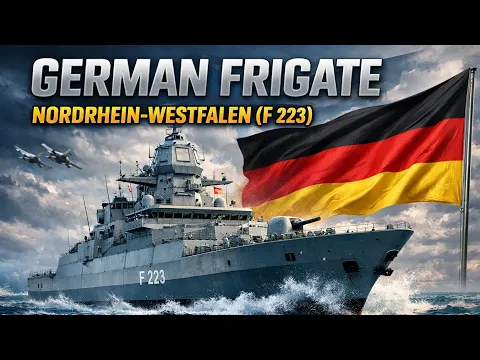
The Nordrhein-Westfalen (F223) belongs to the modern Baden-Württemberg class (F125) of the German Navy, one of the most advanced naval projects developed by Germany for long-duration international operations.
The ship entered service in 2020 and has a displacement of approximately 7,200 tons, along with a length of 149 meters. These dimensions allow the vessel to operate for extended periods on foreign missions, including in crisis scenarios and stabilization operations.
Among the frigate’s main capabilities are maritime surveillance missions, escort duties, protection of commercial routes, and participation in international security operations conducted by military coalitions.
From a technological standpoint, the ship is equipped with a 127 mm naval gun, as well as advanced short-range air defense systems RAM (Rolling Airframe Missile). These systems allow it to neutralize threats such as anti-ship missiles and hostile aircraft.
Additionally, the vessel features modern sensors, advanced radars, and electronic warfare equipment capable of detecting, monitoring, and responding to aerial or maritime threats in high-risk environments.
These capabilities make the frigate an important asset in the operations of protecting naval units, strategic surveillance, and maritime security in regions considered unstable.
Cyprus Gains Strategic Importance in Military Operations
The island of Cyprus has increasingly established itself as a relevant logistical and operational point for Western military forces in the Eastern Mediterranean.
Located close to unstable regions in the Middle East, the country occupies a strategic geographical position that allows it to support air and naval operations, in addition to serving as a base for monitoring military activities and commercial routes.
In recent years, Cyprus has been receiving with greater frequency warships, aircraft, and military teams from various allied countries. This presence has been interpreted as part of an effort to strengthen regional security and ensure stability in critical areas for international trade.
In this context, the reinforcement of allied naval presence in the region aims not only to monitor the development of the conflict in the Middle East. At the same time, it seeks to deter possible attacks, protect strategic infrastructures, and ensure freedom of navigation in one of the world’s most important regions for energy and goods transportation.
In your opinion, is the reinforcement of the naval presence of European countries and NATO in the Eastern Mediterranean sufficient to guarantee the security of the region’s strategic routes?
With information from: Naval Power







-

-

-

-

6 pessoas reagiram a isso.