





 Portuguese
  English
  Spanish
  5 min of reading
  35 comments


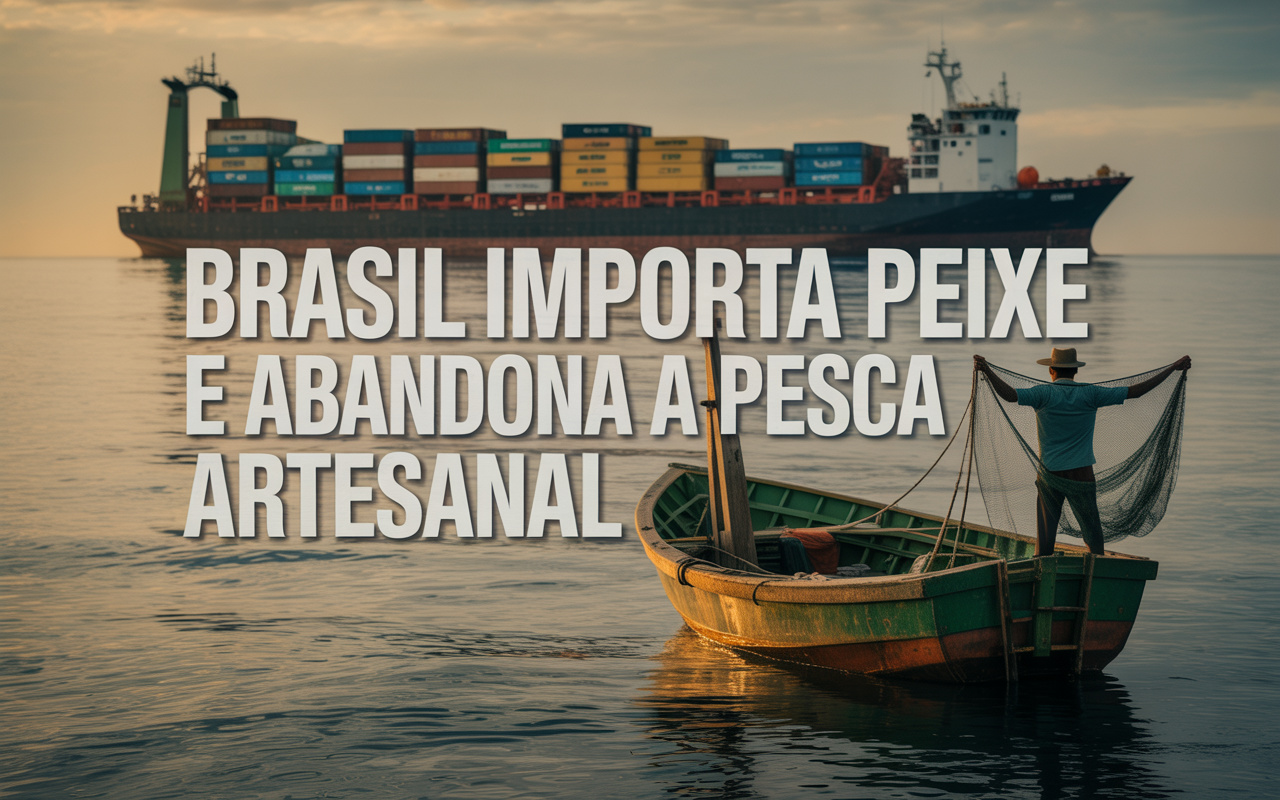


Even with 7,400 km of coastline and giant rivers, Brazil imports fish from Vietnam and Chile while artisanal fishing suffers from lack of incentives and public policies.
Brazil is a country of continental dimensions, home to one of the largest coastal zones in the world and extensive watersheds that run through almost all states. Still, when it comes to fish on the plates of Brazilians, a large part of what arrives at the table comes from abroad. The contradiction is glaring: while artisanal fishing struggles to survive in coastal and inland communities, the country imports tons of fish from Vietnam and Chile to meet internal consumption — including species that could be produced locally at lower cost and with greater sustainability.
According to data from the Food and Agriculture Organization (FAO) and the Ministry of Fishing and Aquaculture (MPA), Brazil imported over 150,000 tons of fish in 2024, with Chilean salmon and Vietnamese pangasius being the most purchased. The volume represents an expenditure of more than US$ 700 million, a figure that contrasts with the abandonment faced by small fishermen living by the sea or along the banks of the Amazon rivers.
A Country Surrounded By Water And Lacking Public Policies
With 7,400 kilometers of coastline and 12% of the planet’s fresh water, Brazil has the potential to be one of the world’s largest fishing powers. However, the national production of fish has stagnated in the last decade. The most recent survey from the Geographic and Statistical Institute (IBGE) shows that extractive fishing and aquaculture grew less than 3% between 2015 and 2023, while internal consumption increased nearly 20% during the same period.
-
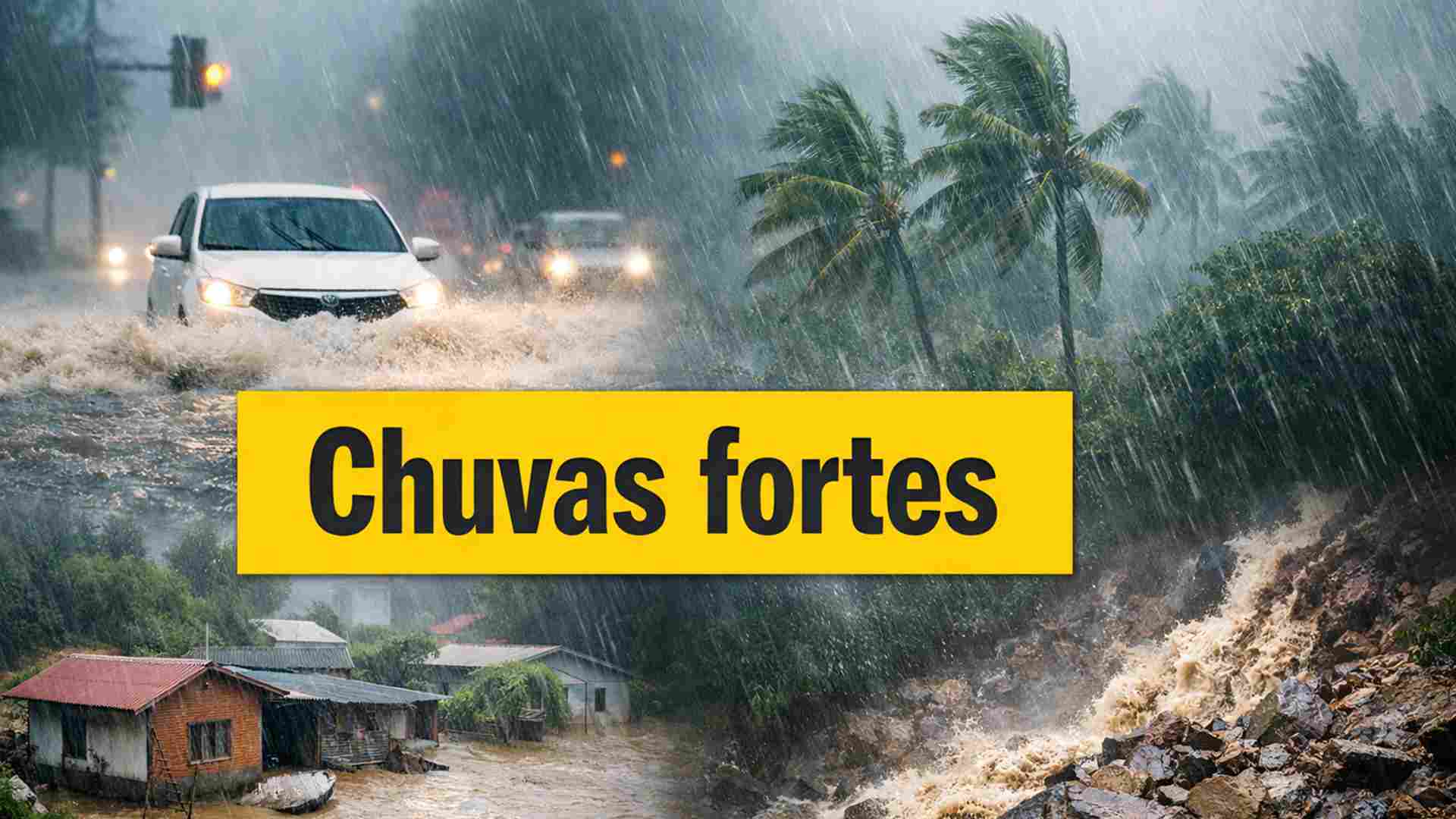
Rain gains strength in April, potentially exceeding 150 mm, placing the North, Northeast, and the coasts of the South and Southeast at the center of the heaviest forecast of the week.
-
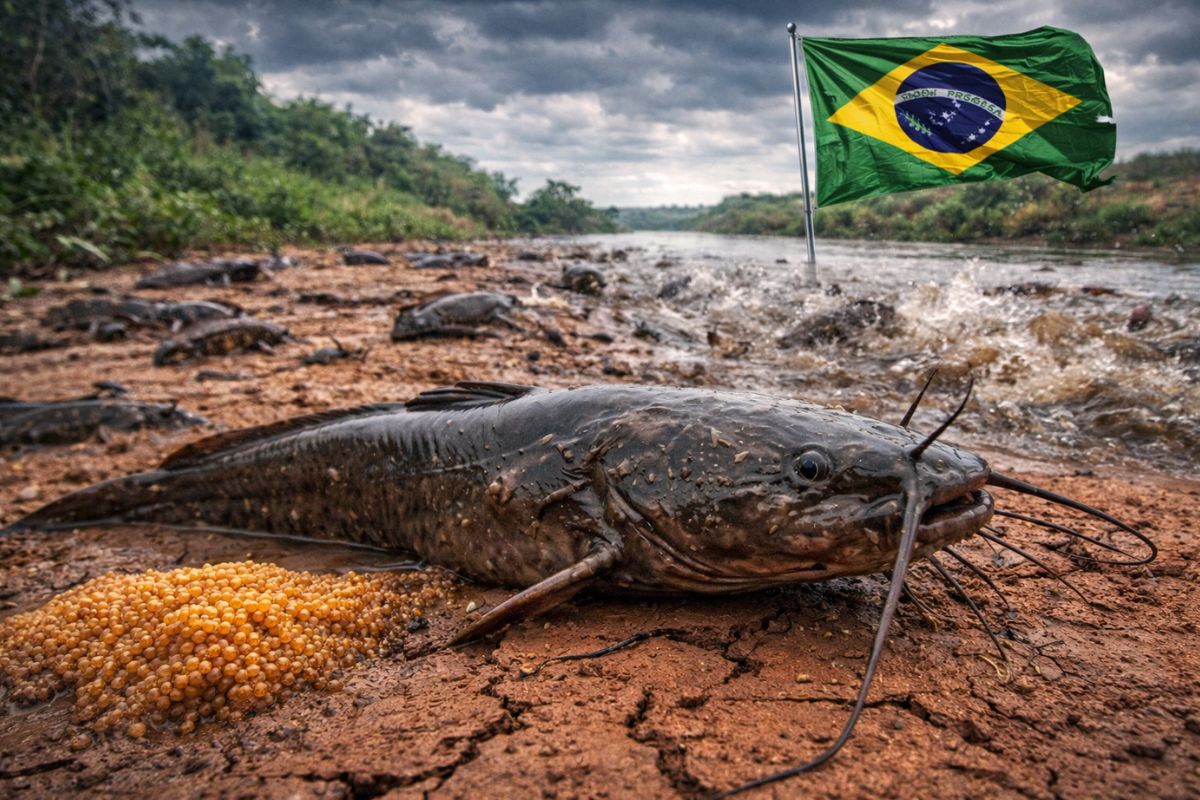
A fish that survives out of water, crawls on land until it finds another river, and whose female lays 80,000 eggs at once is infesting rivers and lakes in Brazil, and no one can stop this invasion.
-
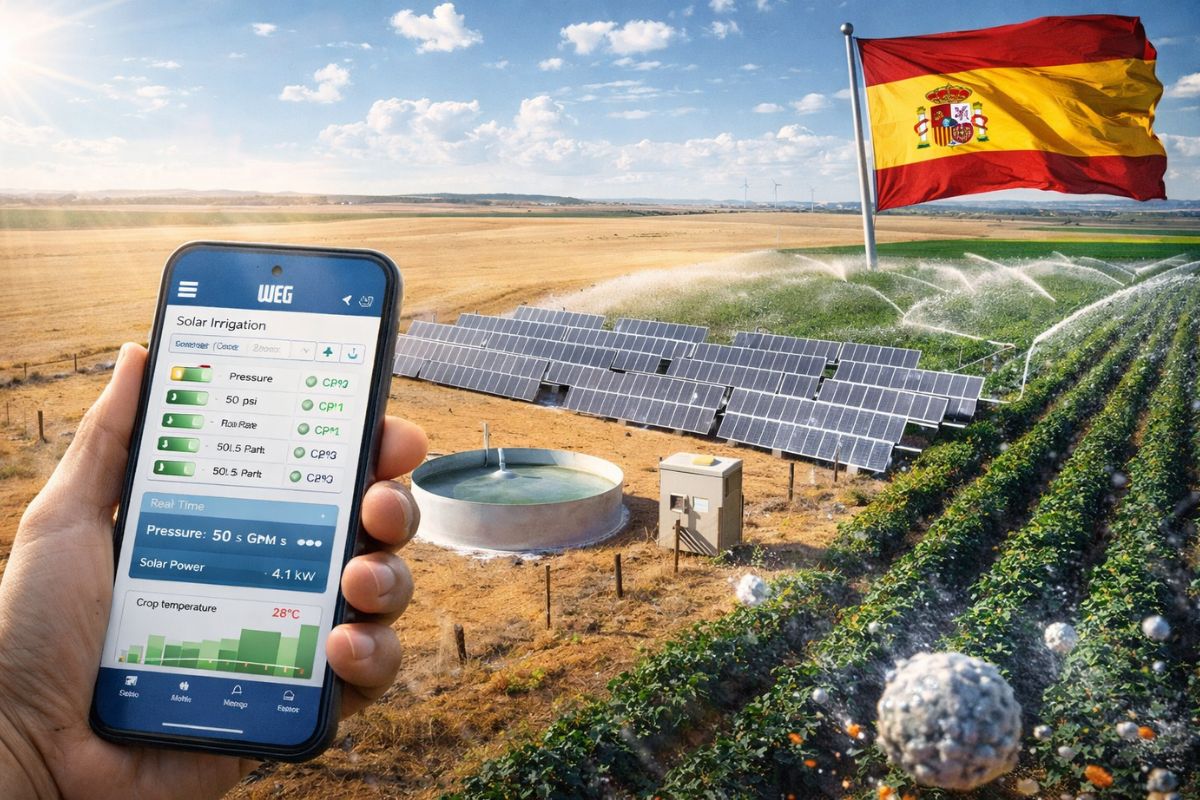
WEG took its technology to Spain to create a solar irrigation system that operates independently without needing an electrical grid, and now farmers control everything remotely via their mobile phones.
-
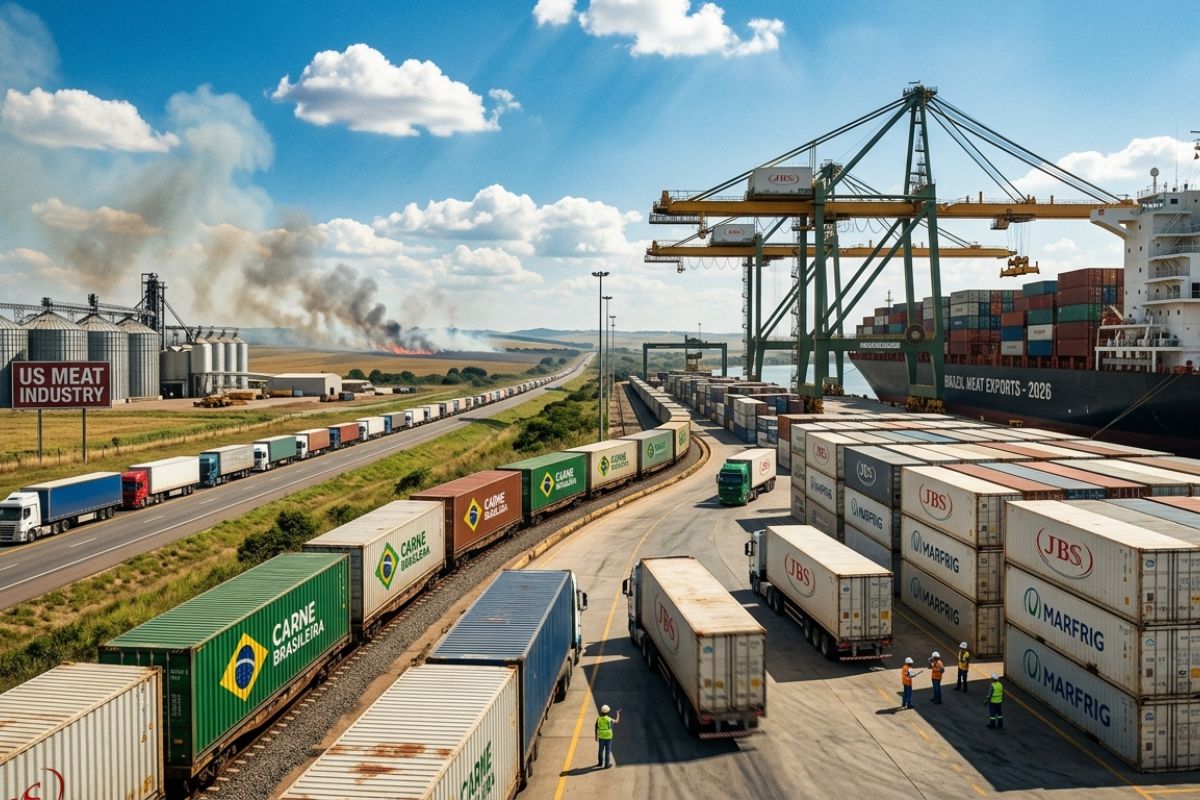
The US faces a meat crisis with fires, pests, and strikes, consumption rises and supply falls to the lowest level since 1952, creating a billion-dollar opportunity for Brazilian exports to grow in 2026.

This imbalance forces the country to import more, even with abundant natural resources. Vietnam, for example, exports large quantities of pangasius (basa) — a freshwater fish cultivated on a large scale in the Mekong River and sold at very low prices. Chile, in turn, dominates the market for Atlantic salmon, whose importation to Brazil has grown over 40% since 2020, according to data from Comex Stat (MDIC).
Meanwhile, fishing communities in Pará, Maranhão, Bahia, and Santa Catarina face declining income, rising costs, and a lack of structural policies.
Artisanal Fishing: A Threatened Heritage
The 2023 Artisanal Fishing Census, conducted by the MPA, revealed that over 60% of Brazilian fishermen live in social vulnerability, lacking access to credit, technical assistance, or basic infrastructure to store and transport fish.
“It’s not a lack of fish, it’s a lack of support,” summarizes Maria das Graças Cardoso, leader of the Z-3 Fishermen’s Colony in Ilhéus (BA). According to her, many workers have abandoned the profession due to the drop in sale prices and the rise in fuel costs. “While the small boat sits idle, the market is full of imported fish,” she laments.
In addition to the lack of incentives, artisanal fishing faces environmental degradation — contaminated rivers, industrial pollution, and siltation of lagoons — and unequal competition with industrial fishing. In states like Pará and Amapá, large-scale trawling nets devastate ecosystems and drastically reduce populations of traditional species, such as tambaqui, pirarucu, and curimatã.
The Advance Of Imported Fish
The growth in imports of salmon and pangasius is no coincidence. Both are intensive-farming fish with controlled costs, produced in industrial systems and subsidized by aggressive export policies. The Chilean salmon, for example, dominates over 90% of the Brazilian market for high-value fish, while pangasius arrives as a cheap alternative, sold for less than R$ 25 per kilo at retail.
According to the Brazilian Association of Fish Industry (Abipesca), the consumption of imported fish grew 27% between 2020 and 2024, particularly for frozen products and fillets ready for the end consumer. This external dependence directly impacts the national supply chain, which loses space and competitiveness.
Economist Eduardo Maia, agribusiness specialist at the Getúlio Vargas Foundation (FGV), explains that “Brazilian artisanal fishing faces high costs and poor infrastructure, while imported fish arrive with efficient logistics and trade agreements that reduce tariffs.” He warns that if nothing changes, the country could become dependent on foreign fish, despite being a water power.
Paralyzed Programs And Excessive Bureaucracy
The situation has worsened after the discontinuation of federal programs like Revitaliza Pesca and ProPesq, which offered lines of credit and technical training. Many modernization projects for colonies and cooperatives were halted due to lack of funding.
Another bottleneck is environmental licensing: according to data from the MPA itself, about 40% of artisanal vessels operate without a license because they cannot meet bureaucratic requirements incompatible with the sector’s reality.
Without registration, fishermen are left without access to pension benefits and unemployment insurance programs, essential during the breeding season of species.
The FAO highlights that Brazil is one of the countries with the greatest potential for sustainable growth in aquaculture and artisanal fishing, but still does not strategically exploit the sector. “The country invests little in production diversification and value aggregation. Dependence on imports is a direct consequence of this lack of an integrated national policy,” the State of World Fisheries and Aquaculture 2024 report points out.
The Risks Of External Dependence
The growing dependence on imported fish also brings economic and sanitary risks. In 2023, the Ministry of Agriculture issued alerts for batches of Vietnamese pangasius with residues above the permitted levels of antibiotics used in cultivation.
Similar cases have occurred with Chilean salmon, which faces allegations of pollution and mass mortality due to excessive use of feed and chemicals.
Even so, consumption remains high, driven by competitive prices and widespread presence in supermarket chains and restaurants.
“The problem is that consumers lack information. They believe they are buying a healthy and sustainable fish, but often they are purchasing an intensively farmed product with a very high environmental footprint,” says Renata Martins, biologist and researcher at the Federal University of Santa Catarina (UFSC).
A Sea Of Wasted Opportunities
With around 1 million registered artisanal fishermen, Brazil has the workforce and environmental diversity to meet its own market and export. Tambaqui, Pirarucu, and Dourado are species valued abroad and could replace imports. However, without promotion policies and investment in cold chain infrastructure, processing, and certification, the potential is lost.
The former fishing secretary of Pará, Cláudio Pinheiro, summarizes the contradiction:
“We have fish, we have water, we have people willing to work. What is lacking is public policy. Brazil doesn’t need to import; it needs to organize what it already has.”
The Challenge Of Aquatic Food Sovereignty
The crisis of artisanal fishing and the growing dependence on imports highlight a structural problem: the absence of a national policy for the sea. While agribusiness progresses with technology and credit, the fishing sector remains adrift, sustained by the resilience of workers.
With the increase in global demand for aquatic protein and climate change affecting natural stocks, Brazil faces a crossroads: to invest in its aquatic food sovereignty or to continue dependent on foreign fish that crosses oceans to reach the shelves.
In a country that has abundant water, the real challenge is to make it a source of life again — and not a symbol of neglect and forgetfulness.









Depois de destruir a pesca, o governo brasileiro destruirá (já está a destruír) o Agronegócio… (RIP)
Aplicar o paradigma desenvolvimentista à pesca artesanal sempre representou um erro. A pesca artesanal tem seu valor socioeconômico nas comunidades e sustentam boa parte da economia dos municípios costeiros. Estes aspectos já conferem à atividade grande relevância e uma tendência à sustentabilidade, considerando a longevidade da prática ao longo do litoral brasileiro. Há que se garantir o acesso à áreas de pesca, ameaçada por grandes empreendimentos do petróleo, mineração e eólicas offshore.
Engraçado os comentários. O governo que acabou com o ministério da pesca não foi o atual, esqueceram?
Na reportagem, aumentou 27% das importações entre 2020 e 2024.
Nesse período quem foi presidente até o final de 2022? Essa política de importação em detrimento do que é produzido, não é de agora.
Reclamam de impostos? Vamos taxar os BBBs… eles tem que pagar já que todos os trabalhadores pagam.
Mas os comentários dos Bois 🐂 sei não se são cegos ou burrice mesmo.
Um beijo no chifre de vcs….