





 Portuguese
  English
  Spanish
  6 min of reading
  1 comment


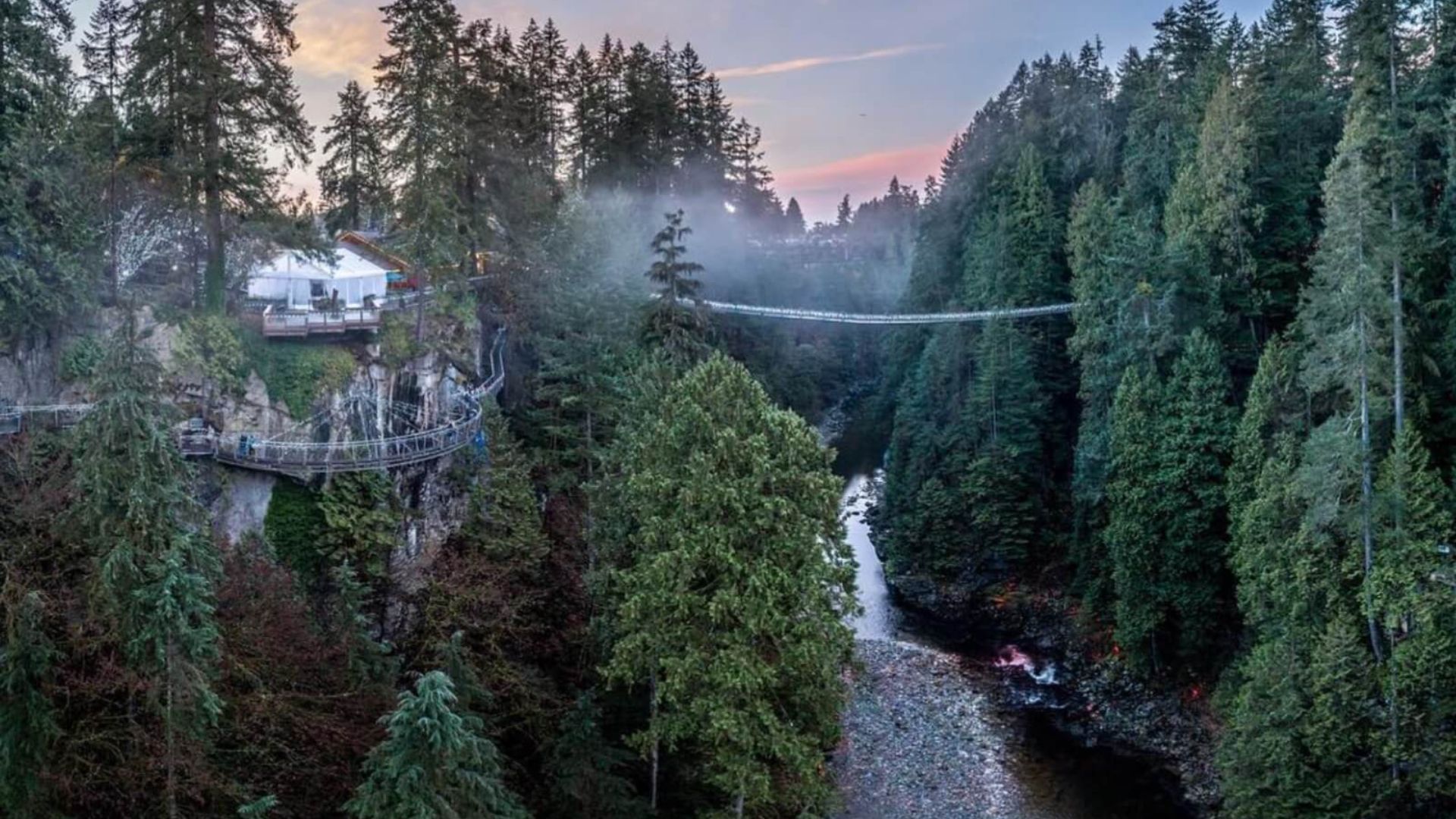


The Capilano Bridge in Vancouver Combines History, Height, and Vertigo in a Suspension Crossing Over the River That Bears Its Name. The Site Brings Adventure, Indigenous Culture, and Impressive Landscapes, Attracting More Than One Million Visitors Each Year.
At 70 meters high and 140 meters long, the most dangerous bridge in the world challenges even the bravest with its unstable crossing and impressive view.
A few kilometers from downtown Vancouver, the Capilano Suspension Bridge in North Vancouver has become synonymous with adrenaline and postcard-worthy views.
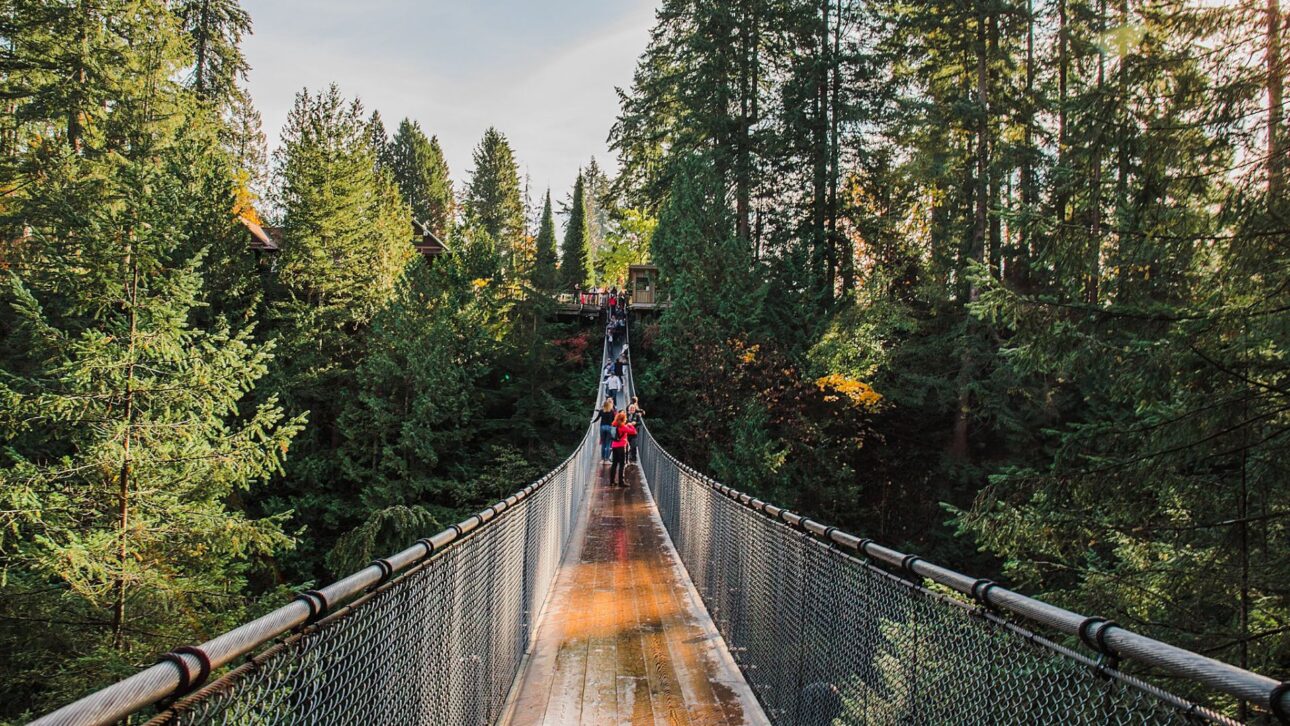
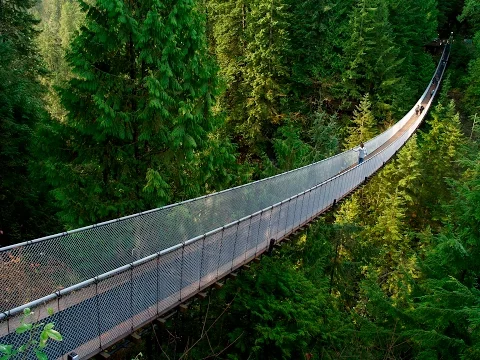
Suspended 70 meters above the Capilano River and about 140 meters long, the crossing sways with each step and the wind, creating the sensation that fuels its fame online as “the most dangerous bridge in the world.”
-
With around 6,000 residents on a single 9 km street, a village in Poland maintains a strong sense of community, cultivates strawberries and potatoes, and becomes the target of a false image created by artificial intelligence.

-
Sleeping at different times each day can be a bomb for your heart and even double your risk of having a heart attack.

-
Without help and without heavy machinery, a woman builds a house from scratch with stone, wood, and cement, erects a chimney, creates a complete leisure area, and transforms an empty lot into her dream home.
-
Couple transforms abandoned house after years of being closed; residence was overgrown with weeds, had a green pool, and a deteriorated structure in the interior of Rio de Janeiro.

Still, it is a structured attraction with access control, safety protocols, and ongoing maintenance that receives more than 1 million visitors per year.
Where It Is and What the Crossing Is Like
Located in the North Vancouver district, the bridge is part of a private park with tickets and daily operation almost year-round.
Access can be done by public transport, car, or a free shuttle operated by the park at certain times.
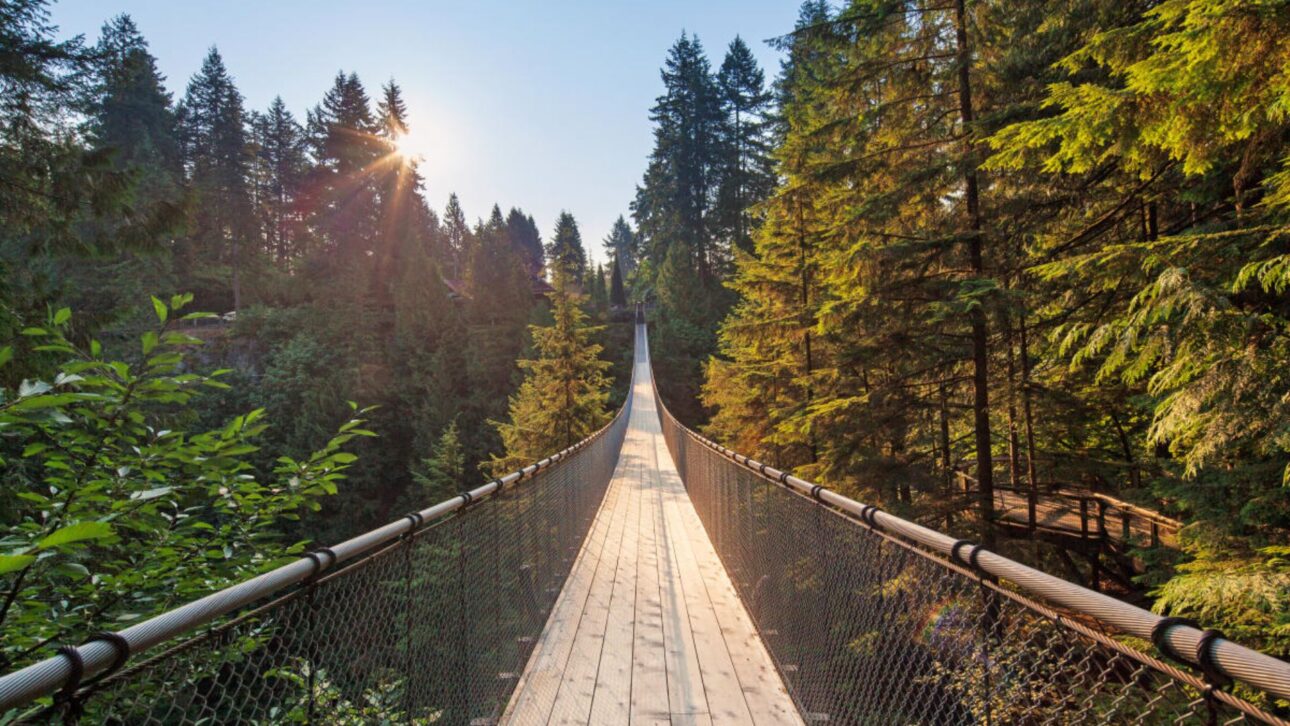
As visitors step onto the walkway, they immediately notice the characteristic sway: the structure swings, the handrail moves with the motion, and the canyon’s void opens up just below.
The official guidance recommends walking in sync with the flow, holding children’s hands, avoiding running, and not attempting to retrieve objects that fall from the decking.
Despite the “tremor” underfoot, the operation emphasizes that the bridge was designed to withstand loads far greater than it encounters daily; the park’s communication compares this capacity to the weight of a Boeing 747.
The traffic is exclusively pedestrian, and strollers, crutches, and wheelchairs are not allowed on the bridge, in the Treetops Adventure, and the Cliffwalk, for safety and accessibility reasons.
History: From Pioneering to Global Attraction
The origin dates back to 1889, when Scottish engineer George Grant Mackay suspended a passage of hemp rope and cedar planks to cross the canyon.
This pioneering solution quickly became a point of curiosity among locals who needed a lengthy journey by boat and trails to reach it.
In 1903, the bridge was replaced with steel cables, keeping up with the technical evolution of the time.
Throughout the 20th century, the structure underwent reconstructions and ownership changes, with a complete renovation in 1956 that established the shape recognized today.
The park has also invested in historical and cultural ambiance.
Panels and installations share stories of the site, including the contribution of August Jack Khahtsahlano, a figure from the Squamish Nation, associated with the initial crossing period and the local imagination.
In the area called Kia’palano, visitors find totem poles and content presenting aspects of the Indigenous culture of the Pacific Northwest.
International visibility has grown with appearances in audiovisual products and TV shows.
Episodes of series like “MacGyver” and “Psych” used the bridge as a backdrop, which helped to project the attraction beyond Canada.
Experiences Beyond the Bridge: Treetops Adventure
The visit does not end with the main crossing.
One of the highlights is the Treetops Adventure, a circuit of seven small suspended bridges that connect platforms installed in century-old Douglas firs.
The walk reaches heights of over 33 meters above the ground at its highest point, offering a rare perspective of the canopy of the temperate rainforest.
The anchoring system uses non-invasive collars that embrace the trunks and accompany tree growth, without any drilling.
The result is a smooth, photogenic, and educational route about local ecology.
Meanwhile, boardwalks and marked trails lead to overlooks over the canyon, helping to distribute foot traffic and create breaks for those who prefer to alternate the impact of the bridge with more stable walks.
Cliffwalk: Walkway Adjacent to the Cliff
Another highly appealing point is the Cliffwalk, a steel and glass path that snakes along the cliff wall for about 213 meters.
Unlike the main bridge, the Cliffwalk does not sway: the structure is anchored at fixed points in the rock, which offers a sense of stability even with the abyss in view.
In sections with glass flooring, visitors can see the river far below, framed by dense forest.
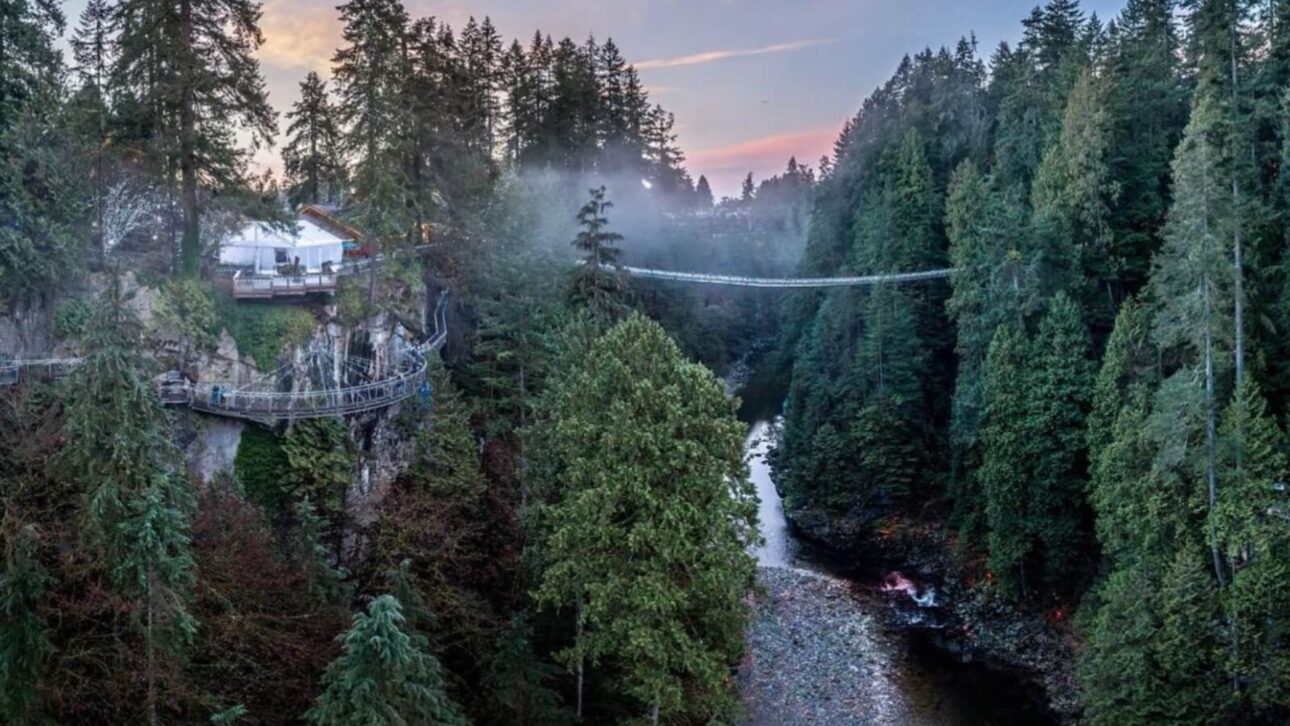
The proposal combines lightweight architecture, contemplation, and environmental information without competing with the more “loose” experience of the bridge.
Visit Rhythm and Time of Year
The average time spent in the park ranges from two to three hours, depending on queues and each person’s pace.
Early in the morning and late in the afternoon, there tends to be a lower concentration of visitors.
In winter, the Canyon Lights event illuminates the bridge, trees, and paths with light installations, transforming the canyon into a nighttime setting highly sought after by families and photographers.
On rainy days, common in the area, the walkways may become slippery; appropriate footwear and waterproof clothing make a difference in the experience.
Safety and Essential Care
Even for those comfortable with heights, it’s advisable to adjust the pace.
Alternating your gaze between the horizon and nearby points helps reduce the feeling of vertigo.
Children should remain hold hands with an adult throughout the crossing.
Running, jumping, or shaking the bridge deliberately is prohibited.
In the case of object falls, the guidance is to not try to retrieve them on your own and to alert the staff.
People with reduced mobility and visitors using assistive devices should consider that the bridge and other attractions involve steps and movement.
The park offers accessible areas, exhibits, and viewpoints outside the suspended structures, along with restaurants, shops, and resting spaces.
Dogs with guides are accepted, as long as they are under constant control, but some areas may not be comfortable for all animals.

Why the Bridge Is “Scary” and Why It Attracts
The combination of height, movement, and emptiness creates an unusual physical and emotional stimulus, which explains reports of sweaty palms and quickened heartbeats during the crossing.
At the same time, the framing of the Capilano River and the canyon walls provides striking images in any season, especially when fog descends into the valley or when the evening light filters through the tree canopy.
In this balance between controlled fear and grand nature lies the appeal that makes the Capilano a classic case of experience tourism.
What Changes When You Understand the Context
Knowing that the bridge originated in 1889, was rebuilt and modernized over time, and currently operates with controlled capacity and strict rules does not eliminate the butterflies in your stomach, but offers perspective.
The visit is also an opportunity to connect with aspects of the Indigenous culture of the Pacific Northwest and the history of coastal occupation in British Columbia.
For many, it is in this intersection — engineering, memory, and landscape — that the crossing gains meaning and remains in memory for years.
Given this collection of history, nature, and operational safety, the lingering question is direct: would you cross the Capilano without looking down, or would you prefer to face the sway head-on and enjoy every second of the view?






This is really interesting, You’re a very skilled blogger. I’ve joined your feed and look forward to seeking more of your magnificent post. Also, I’ve shared your site in my social networks!