





 Portuguese
  English
  Spanish
  5 min of reading
  0 comments


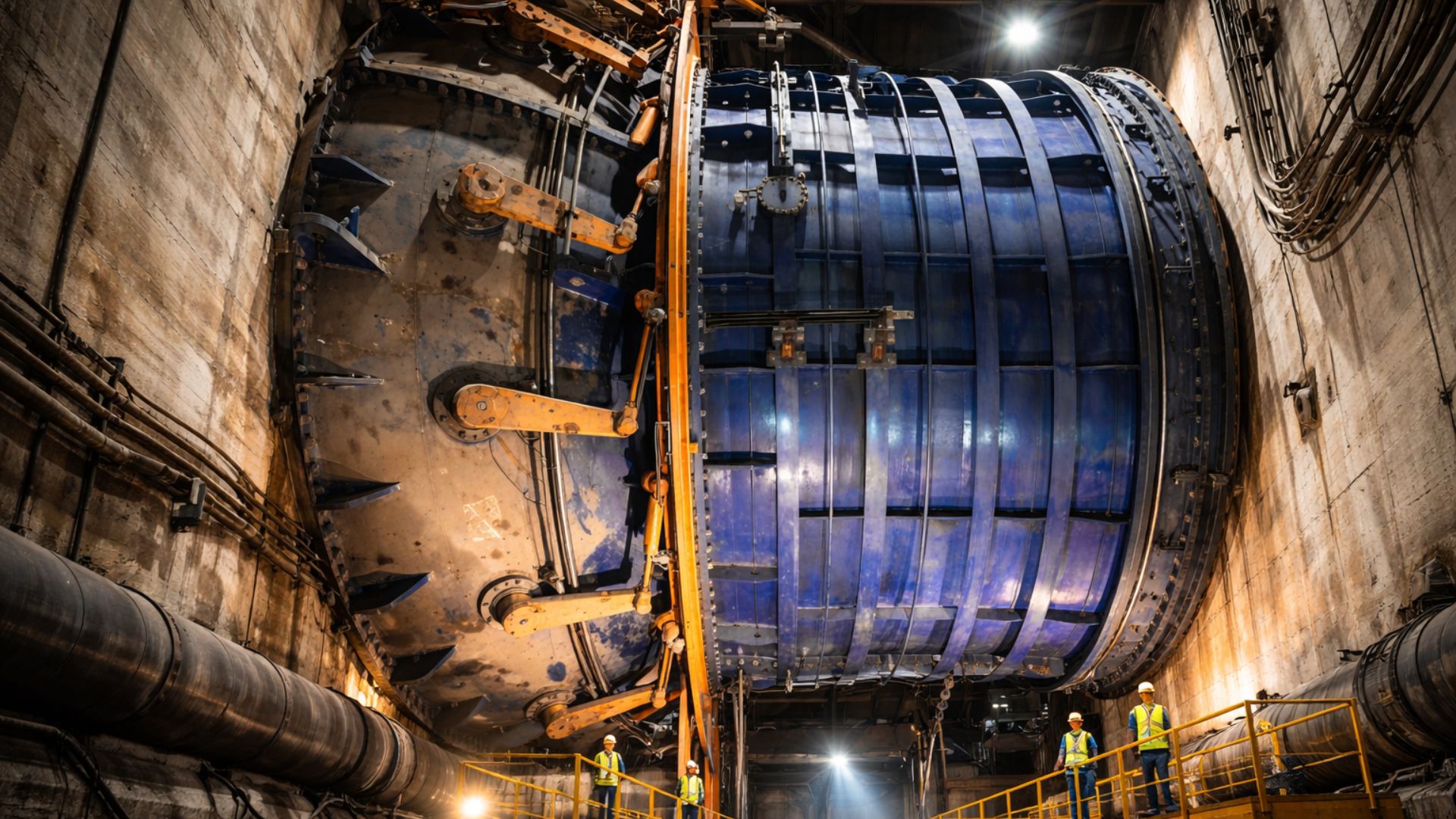
Submerged Engineering of the Jirau Hydroelectric Power Plant Reveals the Little Visible Scale of the Energy Complex on the Madeira River, Where Giant Bulb Turbines Convert Huge Flows into Electricity and Help Understand How Dozens of Machines Work Synchronized to Supply Millions of People.
When observing the Jirau Hydroelectric Power Plant, the most common perception falls on the dam, spillways, and channels, but the real dimension of the enterprise is revealed inside the powerhouses, where bulb turbines transform the flow of the Madeira River into electricity continuously and on a large industrial scale.
Technical documentation from the manufacturer Voith records units with 76.5 MW of power and rotors with a diameter of 7.5 meters in the project linked to the Madeira River complex, a specification that highlights the size of the equipment and explains why these machines have come to symbolize the engineering applied to the plant.
Even without appearing in the external landscape of the hydroelectric plant, the installed electromechanical set internally concentrates much of the technological grandeur of the project, revealing that energy generation depends less on the visible dam and much more on an industrial system operating safely within the plant’s structures.
-
Attracting around 250,000 people a year, a lighthouse 200 meters from the sea, on a 60-meter high cliff, on the North Sea coast in Denmark, becomes one of the most impressive examples of how nature can threaten historical buildings.

-
The narrowest house in the world is only 63 centimeters wide, but inside it can accommodate a bathroom, kitchen, bedroom, office, and even two staircases.

-
In the middle of the sea, these enormous concrete and steel structures, built by the British Navy to protect strategic maritime routes, look like they came straight out of a Star Wars movie.

-
For years, no one could cross a neighborhood in Tokyo because of the tracks, but an impressive solution changed mobility and completely transformed the local routine.


Structure of the Powerhouses and Distribution of the Turbines
In the operational configuration disclosed by the concessionaire, the plant brings together 50 bulb-type generating units, each with 75 MW of power, forming a set that totals 3,750 MW of installed capacity, a number that positions the complex among the largest hydropower projects currently operating in Brazil.
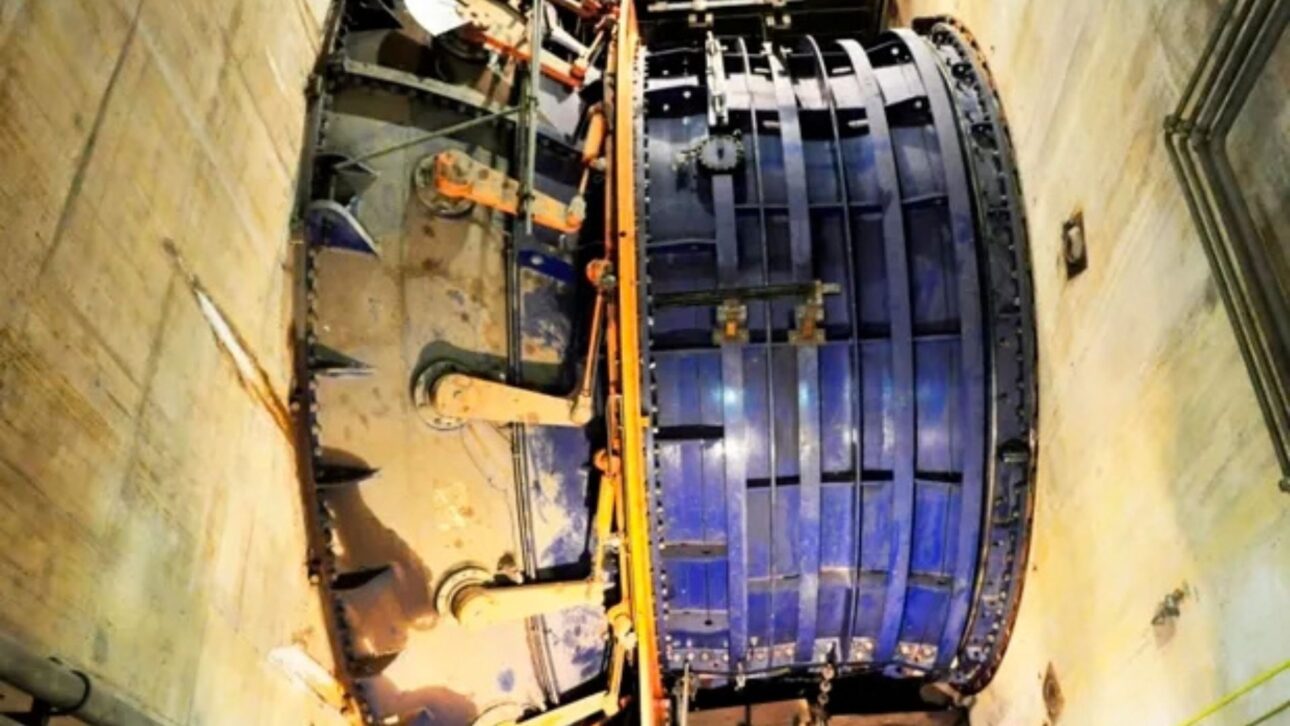
Located about 120 kilometers from Porto Velho, in Rondônia, the enterprise operates with two powerhouses physically separated by the river’s course, one installed on the right bank of the river and the other positioned on the left bank of the same hydraulic system.
Differences between technical and operational data appear in some public references, as the power of 76.5 MW appears in technical documentation associated with the supplied equipment, while institutional reports and materials from the concessionaire describe the commercial arrangement of the plant with 50 turbines of 75 MW each.
Where the Scale of the Hydroelectric Plant Really Shows Up
Although popular imagination associates hydroelectric plants mainly with the reservoir or the monumental dam, the scale of Jirau becomes more evident when observing the set of machines repeated along the powerhouses, forming a sequence of equipment designed to operate in a synchronized manner.
According to information from the concessionaire, 28 generating units are installed on the right bank of the Madeira River, while another 22 turbines occupy the powerhouse built on the left bank, an arrangement that allows the distribution of electrical generation along the natural flow of the river.
This structural design explains why the bulb turbine arouses curiosity even while remaining out of sight of most visitors, as the plant’s energy capacity does not depend on a single monumental machine, but rather on the joint operation of dozens of submerged sets.
Technology Adapted to the Behavior of the Madeira River
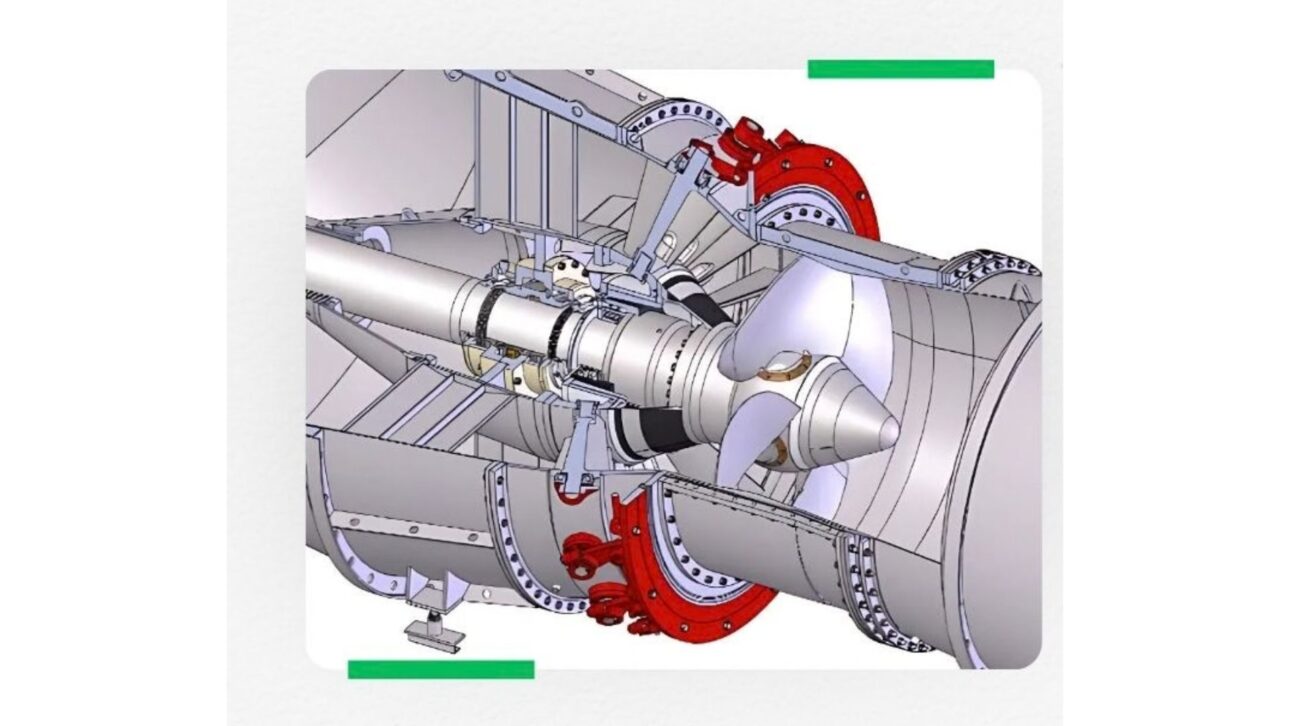
The choice of bulb turbines is directly linked to the hydrological characteristics of the Madeira River, an environment where energy generation needs to cope with large volumes of water and relatively small differences in height between upstream and downstream.
Projects with this profile tend to adopt this type of turbine because the equipment was designed specifically to work with large flows and low heads, a typical condition of extensive Amazonian rivers that have huge water flows but do not present significant natural elevations.
How the Bulb Turbine Works in Energy Generation
Within this system, the water passes through the hydraulic set and moves the turbine rotor, transferring mechanical energy to the coupled generator and allowing electricity to be produced continuously as long as the river’s flow keeps the blades moving.
When the rotor reaches 7.5 meters in diameter, a dimension documented in technical material from the manufacturer, the equipment ceases to be just an industrial component and begins to physically represent the size of the engineering challenge involved in hydropower projects of this scale.
Even so, the energy impact of Jirau does not arise from the isolated size of a single turbine, but rather from the repetition of the same technical design across 50 machines integrated into the plant’s hydraulic structures, operating in a coordinated manner within the National Interconnected System.
Energy Capacity and the Role of the Plant in the Electric System


The first generating unit went into commercial operation on September 6, 2013, marking the beginning of the complex’s electrical production, while the complete motorization of the plant was completed in November 2016, when all fifty units began operating simultaneously.
With this structure, the enterprise consolidated 3,750 MW of installed power, a capacity sufficient to position Jirau among the largest hydropower complexes in the country and significantly increase the participation of the North region in the national electricity generation.
According to data released by the concessionaire, the production of the plant is associated with supplying renewable energy to more than 40 million people, highlighting the strategic role of the complex within the Brazilian electric matrix.
Regulatory Indicators and Reservoir Operation
A management report released by the company indicates that the hydroelectric reservoir has a variable area that can reach up to 361.6 square kilometers, a dimension influenced by hydrological conditions and by the very operational logic of a run-of-river plant.
The same document records a physical guarantee of 2,101.5 MW average, a regulatory indicator used in the electric sector to determine the volume of energy that can be safely marketed within the Brazilian market.
Unlike installed power, which represents the maximum theoretical capacity of the machines, the physical guarantee considers technical and hydrological criteria defined by sector authorities to estimate the reliable average generation over time.
Invisible Gigantism of the Hydroelectric Machines
A large part of the fascination surrounding Jirau arises precisely from the contrast between scale and invisibility, as bulb turbines operate submerged and integrated into the internal structure of the plant, away from the direct gaze of the public that sees only the external structures of the enterprise.
When numbers like rotors of 7.5 meters, fifty generating units and 3,750 MW of installed capacity appear together, the hydroelectric plant ceases to be just a monumental work in the Amazon landscape and begins to be perceived as an essential industrial complex for the country’s electricity supply.





Seja o primeiro a reagir!