





 Portuguese
  English
  Spanish
  6 min of reading
  0 comments


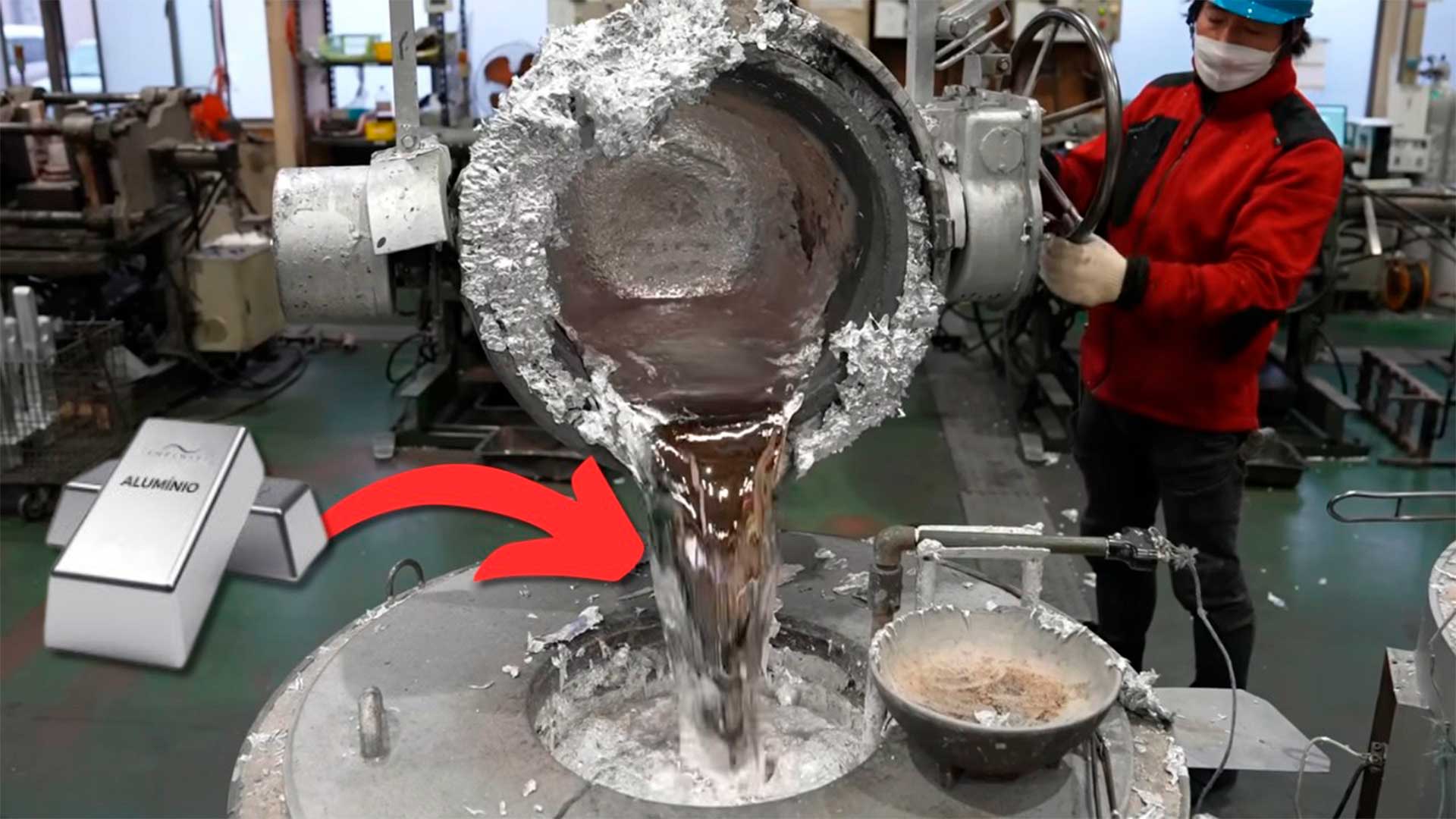
Every day, hundreds of thousands of tons of aluminum leave mines and foundries scattered across the planet to supply airplanes, cars, cans, buildings, and power cables. Understanding how a reddish rock turns into this lightweight metal helps to see the economic, energetic, and environmental weight of this chain, which also includes Brazil among the major producers.
Aluminum is today one of the pillars of the global economy. It is found in beverage cans, in building windows, in parts of cars and trucks, and in the cables that carry electricity to homes and industries. In terms of volume, global primary production exceeds 60 million tons per year, according to the International Aluminium Institute.
This scale means something around hundreds of thousands of tons per day leaving mines and foundries around the world. Just to meet the demand of industrialized countries like the United States, China, and European nations, it is necessary to keep mines and metallurgical plants operating almost nonstop. The chain doesn’t stop because much of what drives the energy transition also depends on this metal.
Interestingly, until the end of the 19th century, aluminum was considered an almost precious material. The metal was worth more than gold at times, and historical accounts indicate that Napoleon III reserved aluminum cutlery only for illustrious guests, while others had to use gold cutlery. It was only after the technological shift that led to the modern electrolytic process that aluminum became widely accessible.
-
Why was the Great Wall of China built? The truth that many are unaware of!

-
At 73.8 meters tall, the world’s tallest teapot-shaped building has 15 floors, ensures stability, and impresses with an internal space of 28,000 cubic meters.

-
Ambev has planted over 3 million trees and restored an area equivalent to the coastline from São Paulo to Natal, and the result after 15 years of silent investment has finally appeared for all of Brazil to see.

-
A new AI collar technology for cattle eliminates physical fences, creates virtual barriers, monitors animals 24/7, and detects changes in behavior and health.


Today, behind every shiny sheet or car part, there is an industrial sequence that starts with the mining of bauxite, goes through heavy chemistry at the refinery, and ends in electrolytic cells that consume vast amounts of electrical energy. It is this journey, and Brazil’s role in it, that this report explains.
Where Aluminum Comes From and Why Bauxite is So Valuable
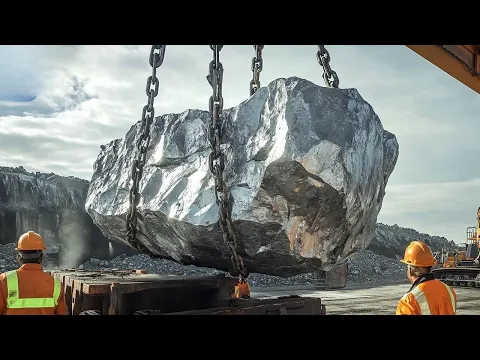

In nature, aluminum does not appear in nuggets or metallic veins like gold and silver. It is bound in minerals, primarily in bauxite, a reddish rock rich in aluminum oxides mixed with iron and other elements. It is estimated that aluminum accounts for over 8 percent of the Earth’s crust, making it the most abundant metal on the planet’s surface.
The largest economic deposits of bauxite are in tropical and subtropical countries. Australia and Guinea lead global production, with significant contributions also from China, Brazil, and Jamaica, according to surveys by institutions such as the African Development Bank and consulting firms in the metals sector.
In practice, extracting this ore from the ground requires open-pit mining on a large scale. Machines drill the soil above the bauxite body, ammonium nitrate explosives create enormous craters, and super-heavy trucks transport the material to the beneficiation plant. In a single blast, tens of thousands of tons of rock can be removed, as seen in operations at large mines in Australia and Guinea.
Despite the impressive volume, each ton of bauxite contains only a fraction of recoverable aluminum. On average, about four tons of bauxite are needed to produce one ton of primary aluminum, which helps to explain the billions of dollars invested in mines, conveyor belts, ports, and refineries.
Bayer Process: Transforming Rock into White Alumina
After being extracted, the bauxite goes to the refinery, where it undergoes the so-called Bayer process. First, the ore is crushed in giant mills with steel balls until it turns into a fine reddish powder. This powder increases the contact area and facilitates the chemical reaction that follows.
The next step is to mix the bauxite powder with a solution of caustic soda under high temperature and pressure. This solution will dissolve the aluminum oxide and leave behind impurities such as iron, silica, and titanium. After filtration, the solution is cooled in a controlled manner, precipitating clear crystals called alumina or aluminum oxide, the basis for the smelting stage. The result is a white powder, visually distant from the original red rock and ready to proceed to the electrolytic furnace.
Hall Heroult: Electrolytic Bath that Consumes Electricity in Solid State
The second major turning point in the path of aluminum is the Hall Heroult process, developed in 1886 by Charles Martin Hall and Paul Héroult. They discovered that by dissolving alumina in a bath of molten cryolite and applying electric current, it would be possible to continuously separate metallic aluminum from oxygen. This principle remains the foundation of modern aluminum metallurgy.
Inside the electrolytic cells, alumina is added to a cryolite bath that keeps the system between 940 and 980 degrees Celsius, well below the over 2,000 degrees at which pure aluminum oxide would melt. Carbon bars act as anodes, and the bottom of the cell acts as the cathode. When the current flows, the oxygen from the alumina reacts with the carbon, forming carbon dioxide, while the liquid aluminum, being denser, accumulates at the bottom of the equipment.
The energy consumption is colossal. Recent studies estimate that electrolysis requires between 13 and 15 kWh of electricity per kilogram of aluminum, depending on the plant’s technology. To produce one ton, the smelting needs energy equivalent to the monthly consumption of dozens of families, which explains why many experts describe aluminum as “electricity in solid state”.
This demand makes the choice of the energy matrix crucial. In countries where energy primarily comes from coal, greenhouse gas emissions are much higher. A report cited by the World Economic Forum and Reuters indicates that the aluminum chain accounted for about 2 percent of global CO₂ emissions in 2023, pressuring the sector to migrate to renewable sources and low-emission technologies such as inert anodes and carbon capture.
Once separated, the liquid aluminum is transferred to thermally insulated crucibles, goes through refining stages to remove impurities, and is poured into molds, forming ingots. These ingots proceed to rolling, extrusion, or pressure casting, transforming into sheets for cans, profiles for civil construction, components for the automotive sector, aircraft parts, and long cables used in power transmission networks.
Brazil on the Aluminum Map and the Importance of Recycling
Brazil holds a relevant position in the global aluminum chain. The country is one of the leaders in bauxite reserves and production, with mines concentrated in the Amazon and Minas Gerais, and has risen in the primary production ranking following the resumption of operations like the Alumar consortium in Maranhão. In 2023, projections indicated that Brazil could reach ninth place in primary aluminum production, after being ranked 12th in 2022.
At the same time, the high energy consumption poses challenges. Although it has a predominantly hydroelectric energy matrix, the country needs to balance the use of this energy between electro-intensive industries and other sectors of the economy. Globally, studies indicate that aluminum production accounts for more than 1 billion tons of CO₂ equivalent per year, making the decarbonization of the chain a central theme in climate negotiations and industrial policies.
Therefore, there is a growing focus on aluminum recycling, which requires only about 5 percent of the energy used in primary production and can reduce associated emissions by up to 95 percent, according to data from the International Aluminium Institute and the Aluminum Association. In Brazil, where the recycling rate of aluminum cans ranks among the highest in the world, strengthening the collection of scrap from vehicles, civil construction, and household appliances is seen as a strategic way to save energy, cut emissions, and generate income at the end of the chain.
In the end, the journey of aluminum that reaches Brazilian homes, whether in a soda can, a window frame, or a car, passes through open-pit mines, complex chemical plants, and foundries that consume energy on a power plant scale. Deciding whether this energy will come from fossil or renewable sources, and how much of the demand can be met by recycled scrap, is a discussion that goes beyond metallurgy and directly enters the country’s energy and environmental policy.
Have you ever stopped to think about all this before opening a can or looking at the aluminum window in your house? Do you think Brazil should invest more in new mines and foundries or accelerate recycling to reduce environmental impact and energy consumption? Leave your opinion in the comments and tell if you see aluminum more as a symbol of economic progress or as an environmental problem that is still far from being solved.








Seja o primeiro a reagir!