





 Portuguese
  English
  Spanish
  5 min of reading
  2 comments


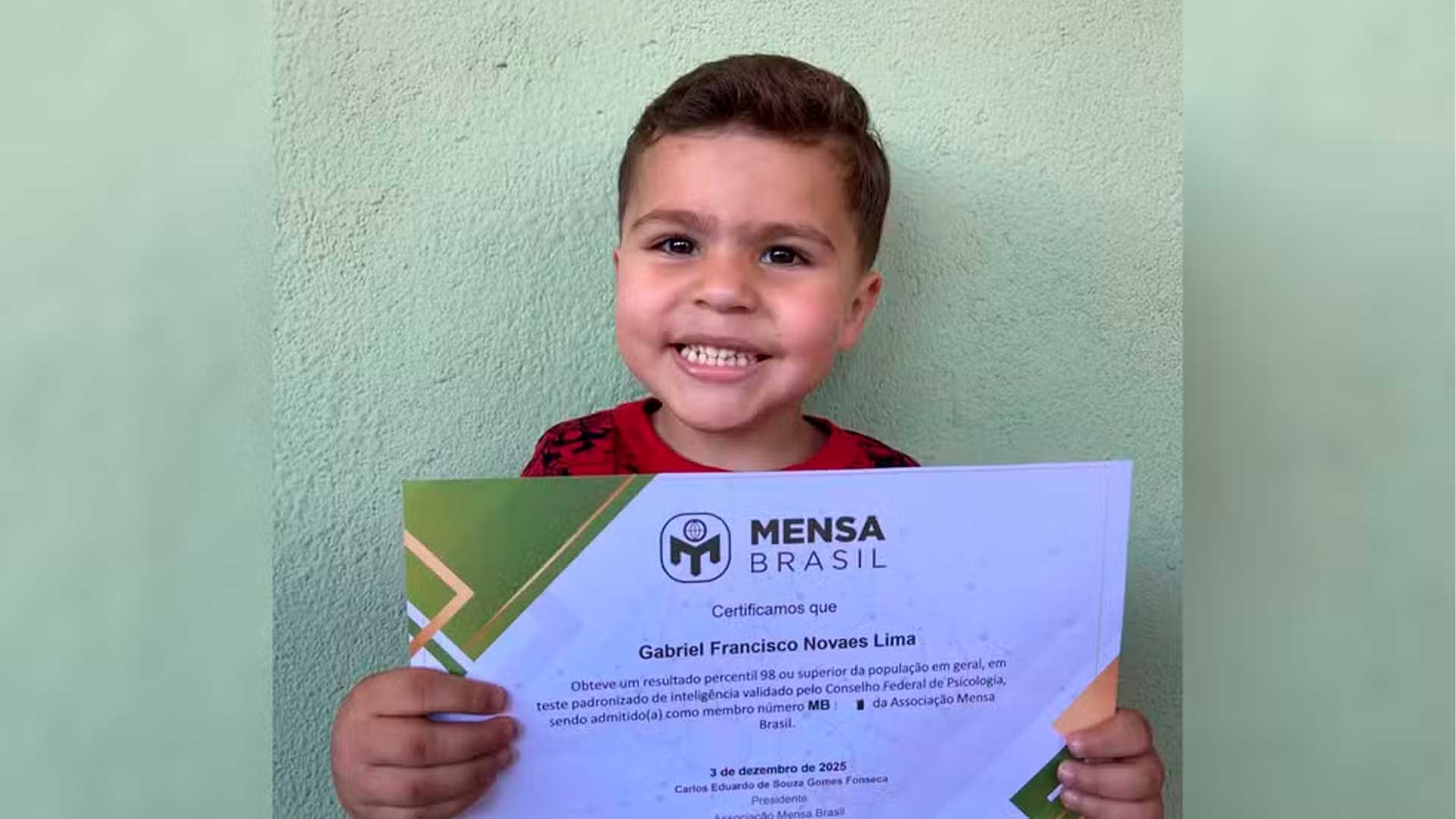


Gabriel Francisco, from Tapiraí (SP), was accepted into the international high IQ community and reignites the debate about diagnosis, school, and support for gifted children in Brazil.
At 3 years old, Gabriel Francisco Novaes, a resident of Tapiraí, in the interior of São Paulo, was accepted into Mensa International after an assessment indicated a IQ of 132 and signs of giftedness. The case gained attention on Friday, December 12, 2025, after reporting an unusual routine for his age, with familiarity in seven languages.
According to information released in a report attributed to g1, Gabriel’s mother, Kelidy Novaes, states that the boy was already identifying letters and words very early, including in English. At home, the family also reports contact with alphabets different from Portuguese, such as Greek and Russian, as well as Brazilian Sign Language.
The story draws attention not only for the performance but for what it reveals about Brazil: many families take a long time to find a diagnosis and, after that, still face difficulties in finding suitable schools and support. The topic is known to specialists but rarely reaches the general public with so much detail.
-
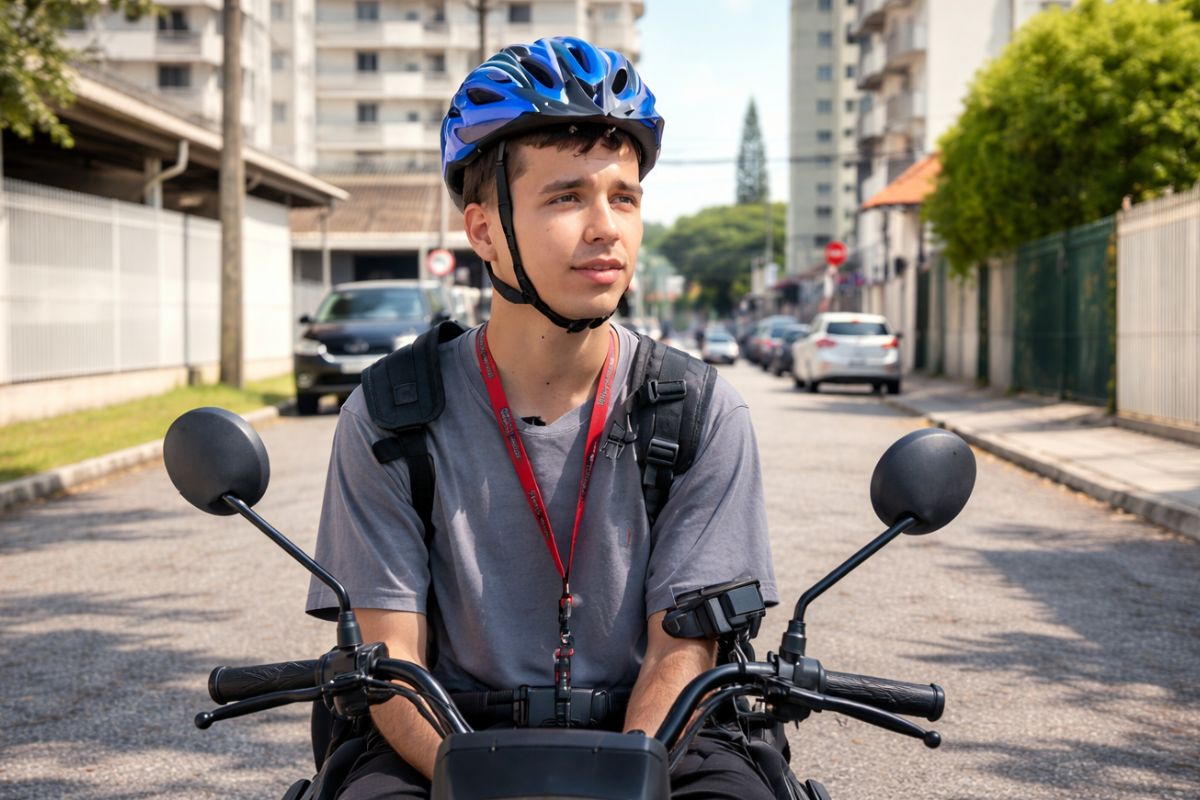
He has been using a wheelchair for almost 10 years, lives alone, is independent, and decided to become a delivery driver for an app: Samuel makes up to 6 deliveries a day, covering routes of 1 km in his wheelchair and has even managed to do 2.5 km in a single run.
-
An island of 7,500 people received 38,000 bananas by mistake, was left unsure where to store everything, and turned the error into a viral case with donations, hustle, and fruit overflowing everywhere.

-
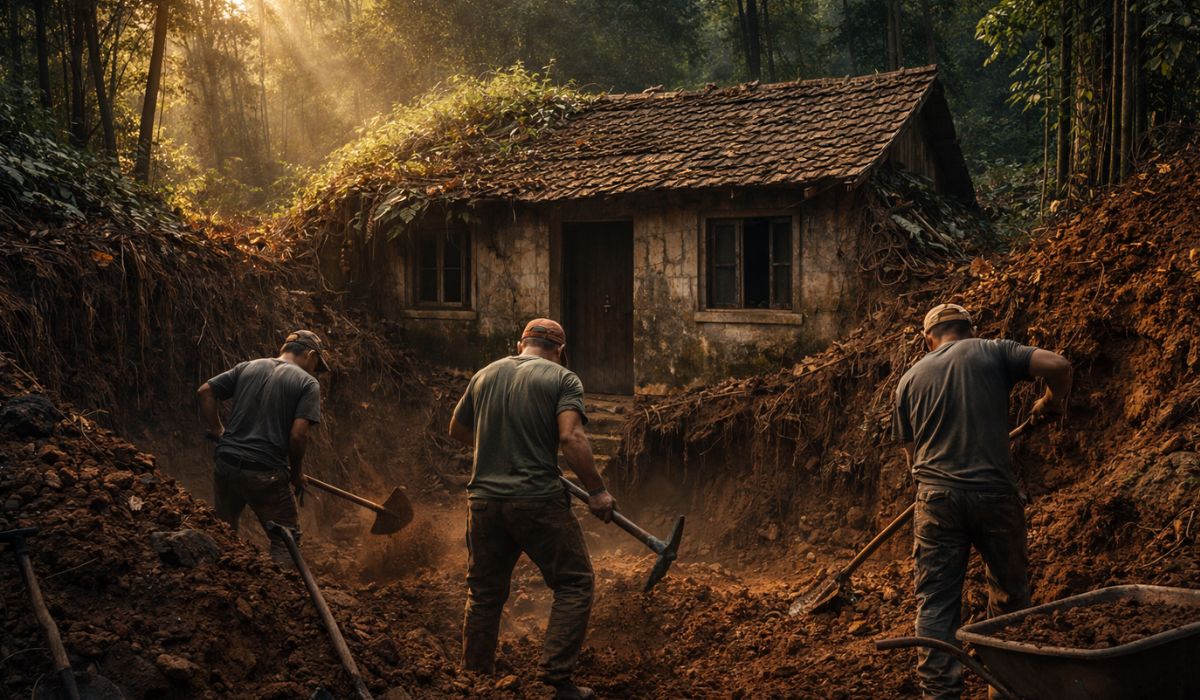
A promise made to their father led three men to unearth a forgotten house that had been swallowed by time for over 70 years, in a story of memory, abandonment, and reconstruction that seems straight out of a movie.
-
A strong earthquake in Indonesia affects houses and schools, causes panic, triggers a tsunami alert, and records a rise in sea level of up to 30 centimeters in some areas.

What weighs the most, according to educators, is the combination of stimulating without pressure and ensuring a healthy social environment. For children with high abilities, the challenge can be as emotional as it is academic.
Who Is Gabriel Francisco and What the Family Reports About His Development in Tapiraí (SP)
According to the published report, Gabriel started to surprise his family at a very young age, showing interest in letters, sounds, and words. One example cited by his mother is that he said “nine” before saying “nove”, indicating early contact with English.
The same report states that, in addition to languages, the boy can do simple math, enjoys solving problems, and has a vocabulary considered advanced for his age. The monitoring was done through specialized assessment, with a quick conclusion of the report, according to the text.
Even with above-average performance, the family says they try to reinforce a routine of a child, with common games and interests, such as soccer. Gabriel himself is described as a supporter of Corinthians and a fan of outdoor activities.
What Does It Mean to Enter Mensa International and Why the “Top 2%” Matters in the IQ Test
Mensa is an international society that accepts people with performance in the 98th percentile or higher on recognized intelligence tests, meaning within the top 2% of the assessed population. This criterion appears in both Mensa International and Mensa Brazil.
In practice, the exact IQ number can vary depending on the test used, as scales and cutoffs change between different instruments. Therefore, the organization emphasizes percentile as a reference, rather than just a “magic number.”
In the case of the boy from Tapiraí, the released material states that entry occurred after analysis of documentation and reports, in a process that took several weeks. The report also describes that the family began to seek support networks and contact with other caregivers of gifted children.
It is important to differentiate “joining a high IQ society” from “skipping childhood stages.” Mensa is a community, not a school, and does not replace educational, psychological, or medical support when necessary.
Giftedness and High Abilities in Brazil: Definition, School, and Specialized Educational Support
In Brazil, documents used by education networks describe high abilities or giftedness as elevated potential in areas such as intellectual, academic, leadership, psychomotor skills, and arts, as well as creativity and involvement with learning. This definition appears in reference materials linked to the Ministry of Education.
In practice, this means that not every child who is “good at tests” is gifted, and not every gifted child will always have high grades. Many exhibit uneven performance, hyperfocus on specific topics, and difficulties with social adaptation.
A sensitive point is that diagnosis often requires careful assessment, combining tests, developmental history, and clinical observation. The report about Gabriel reinforces the importance of a broad investigation, rather than just an isolated result.
After the report, the greatest barrier is usually the pathway within the school, with decisions about curricular enrichment, acceleration, activity adaptation, and emotional support. Guiding materials emphasize that support needs to be continuous, with follow-up, and not a one-time event.
There is also the challenge of public policy: families report a lack of specialized services and unawareness within local networks. It is at this point that high-profile cases often become a “trigger” for the debate about structure, teacher training, and real access to support.
Stimulating Without Pressure: Why the Social and Emotional Aspect Becomes the Biggest Test
Children with high abilities can become frustrated easily, have high self-imposed expectations, and suffer when they do not find peers with similar interests. In the report, the mother describes that the boy’s self-criticism may be greater than his reaction to external criticism.
Another risk is transforming performance into identity, as if the child has a permanent obligation to “be genius.” Experts often advocate for routines that preserve play, physical activity, social interaction, and sleep, as these also support cognitive development.
The debate about “accelerating grade” or “enriching content” often divides opinions. Some see acceleration as a solution, while others fear social isolation, anxiety, and labeling in the classroom, especially when the child is very young.
In the end, the case from Tapiraí becomes a mirror: it shows extraordinary potential but also reveals that the system needs to be ready to welcome, guide, and protect, and not just applaud.
If a 3-year-old child is already entering Mensa, should Brazilian schools accelerate without fear or hold back to preserve socialization? Where is the line between stimulating and pressuring too much? Leave your opinion in the comments and tell us what you would do if you were the family or the school administration.







Novos desafios que precisam evoluir e preparar estrutura parar a criança. E sempre ensinando a bíblia como fonte de vida que nos ensina todas as coisas e a depender e glorificar Deus sempre.
Faz-se necessário o atendimento especializado que ainda não se dá no Brasil, e o mais preocupante que parece não existir interesse! Porque será? Qdo estes indivíduos aportariam muito para o progresso do País! Até parece que nossa classe política é alheia ao assunto, tendo as famílias sozinhas tomar partido na questão, Desgraçadamente e mais uma vez é assim! Até quando devemos suportar está situação?