





 Portuguese
  English
  Spanish
  4 min of reading
  1 comment


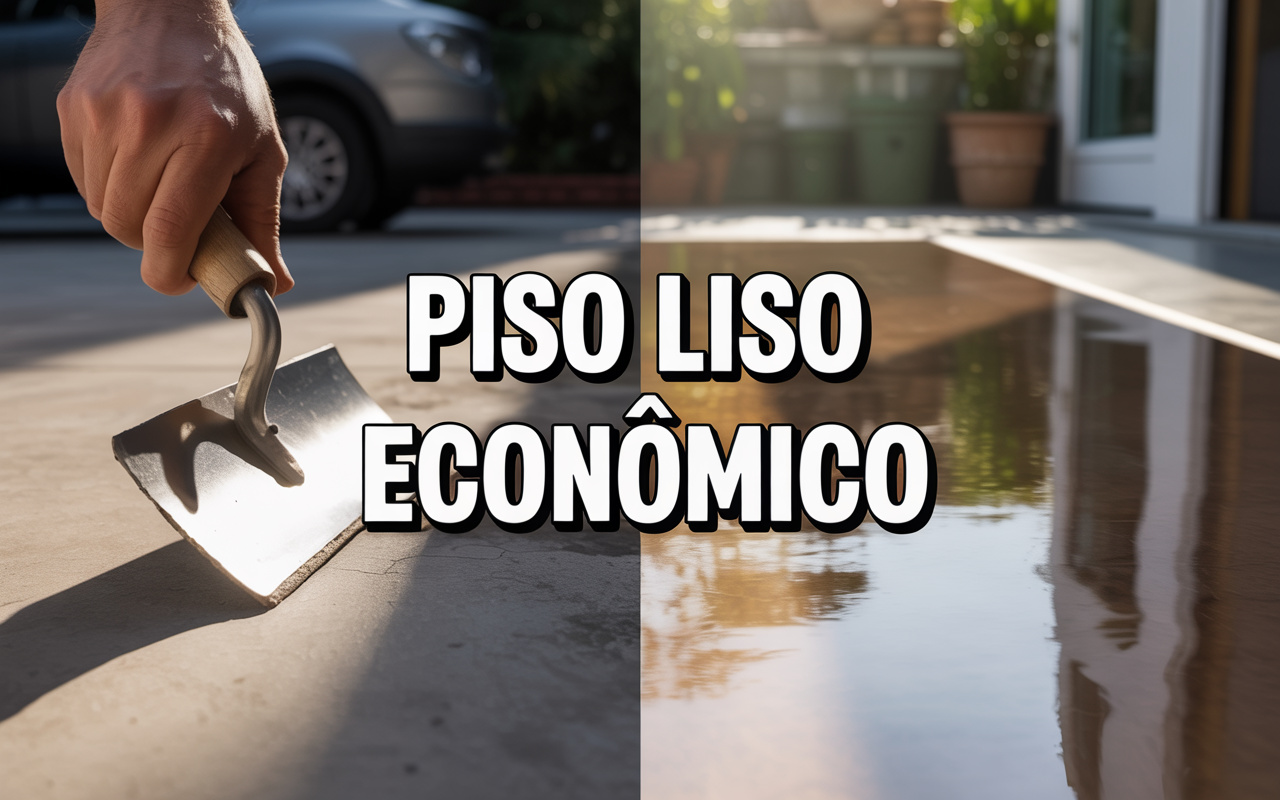


Smooth Economical Floor With Fine Sand, Cement, and Resin Goes Viral for Renovating Backyards and Garages With Shine, Resistance, and Cost Much Less Than Porcelain.
In recent months, an economical flooring technique previously used mainly in warehouses, storage areas, outdoor spaces, and small industries has gone viral on Brazilian social media. This involves a mixture of fine sifted sand, cement, and water-based resin, which creates a smooth, resistant, shiny, and low-cost floor, capable of transforming backyards, garages, circulation areas, and balconies in just a few hours. The solution became popular precisely because it offers a high-performance finish at a much lower cost than traditional coverings like porcelain, ceramic, or polished industrial flooring.
The technique is not new: it derives from cementitious processes used for decades, known as “artisanal microcement,” “polymeric cement flooring,” or “polymer-additivized screed.” The difference is that starting in 2024, videos from bricklayers, renovators, and low-cost construction specialists began to go viral, showing impressive results—worn surfaces gaining shine, old floors becoming leveled, and rough slabs transforming into clean, smooth, and easy-to-maintain areas.
The main reason for its success is simple: it’s real, it works, and it costs very little.
-
Neither the Pyramids nor the Great Wall of China, this gigantic construction in Spain is the human mark on planet Earth that intrigues the most when seen in images from space.
-
Surrounded by cliffs, mist, and chilling stories, the ancient Hotel del Salto has been reborn as a museum while still unable to shake off its reputation as a haunted place.

-
This star-shaped fortified construction, hidden near the border of Spain, may be the largest fortress on the planet.

-
Congonhas receives the monorail promised for the 2014 World Cup after more than a decade of delays and becomes the first airport in Brazil with integrated subway.

How The Smooth Economical Floor Works — And Why It Is So Resistant
The mixture follows technical principles used in advanced cementitious coatings. Each component has a specific function:
- Fine sifted sand: creates a homogeneous texture, increases density, and improves surface resistance.
- Cement: acts as a hardening matrix, forming a solid layer after curing.
- Water-based resin: serves as a binding polymer, increasing adhesion, reducing cracks, and providing greater impermeability.


When mixed, these materials form a kind of artisanal microcement, capable of:
- creating a rigid and dust-free film;
- leveling small imperfections;
- increasing floor durability;
- reducing water absorption;
- delivering a smooth and visually cleaner finish;
- facilitating daily cleaning;
- resisting light to medium traffic.
It is an intermediate solution between a traditional screed and an industrial floor, with an extremely reduced cost.
Where This Technique Works Best: Garage, Balcony, Backyard, and External Circulation
In real projects where the technique is applied, four areas have stood out:
1. Garages With Dusty Floors
Old garages tend to release dust due to concrete expansion and surface abrasion. The mixture seals the surface and creates a firm and shiny floor, making cleaning easier and reducing tire wear.
2. Backyards With Rough or Irregular Flooring
Outdoor areas with old concrete usually exhibit flaws, stains, and unevenness. The smooth economical floor improves appearance and creates a continuous surface that is safe and resistant to weather conditions.
3. Balconies Exposed to the Sun
The water-based resin creates additional protection against temperature variations, reducing the appearance of microcracks.
4. Circulation Areas, Corridors, and Back Balconies
Surfaces that require easy maintenance and a good appearance benefit from the smooth and slightly porous layer formed by the mixture.
Why The Smooth Economical Floor Costs So Little?
The low price is one of the factors that most contributes to its popularity. On average, the mixture costs:
- between R$ 7 and R$ 12 per m² when prepared and applied manually by professionals;
- up to 80% less than ceramic coatings;
- less than 30% of the cost of an epoxy industrial floor.
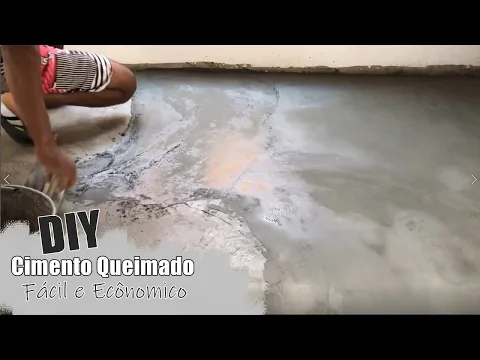
The low cost comes from the simplicity of the materials:
- fine sifted sand;
- common CP II cement;
- water-based resin sold in construction stores;
- water to adjust consistency.
Nothing requires sophisticated equipment or highly specialized labor.
The Function of The Resin: The Secret to Durability
In traditional cement flooring systems, only cement and sand are used. The problem is that this surface tends to:
- release dust;
- absorb water;
- develop cracks over time;
- stain quickly.
The water-based resin acts as a modifier polymer, increasing:
- adhesion;
- initial flexibility;
- abrasion resistance;
- surface cohesion;
- the ability to withstand light and medium traffic.
That’s why industrial works and warehouses use resins as additives—and domestic use now follows the same logic.
A Finish That Allows for Later Painting and Sealers
Another reason for its viral success is the versatility. After curing the smooth economical floor (between 24 and 72 hours, depending on the temperature), the surface can receive:
- acrylic floor paint;
- water-based acrylic sealer;
- clear resin for shine;
- industrial varnish;
- additional layer of microcement.
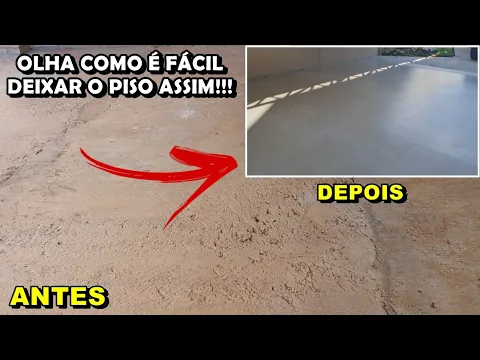
This allows the visual effect to be adjusted to:
- matte;
- satin;
- intensely shiny;
- pigmented;
- natural.
Each owner chooses the final aesthetic according to the environment.
Technical Details That Make a Difference in Durability
For the floor to have a long lifespan, professionals highlight five fundamental care measures:
- The old surface must be clean, dust-free, and without loose parts.
- The mixture must be homogeneous, without excess water.
- The application must be continuous, without long interruptions.
- The floor must be protected from direct sunlight during the initial curing phase.
- Nothing should traffic over the floor in the first 24 hours.
By following these steps, the floor typically lasts for years without major maintenance.
An Affordable, Real, and Extremely Efficient Solution for Renovating External Floors
The mixture of fine sifted sand, cement, and water-based resin has become one of the most popular alternatives in 2024 and 2025 for those looking to renovate floors without breaking things, without spending much, and with a visual result comparable to industrial coverings.
With low cost, quick application, and surprising performance, the smooth economical floor proves how simple solutions and traditional techniques can transform entire environments—and become a trend throughout Brazil thanks to real efficiency and visible results.








Qual a quantidade de areia, cimento e resina? Para obter uma mistura certa