





 Portuguese
  English
  Spanish
  5 min of reading
  2 comments


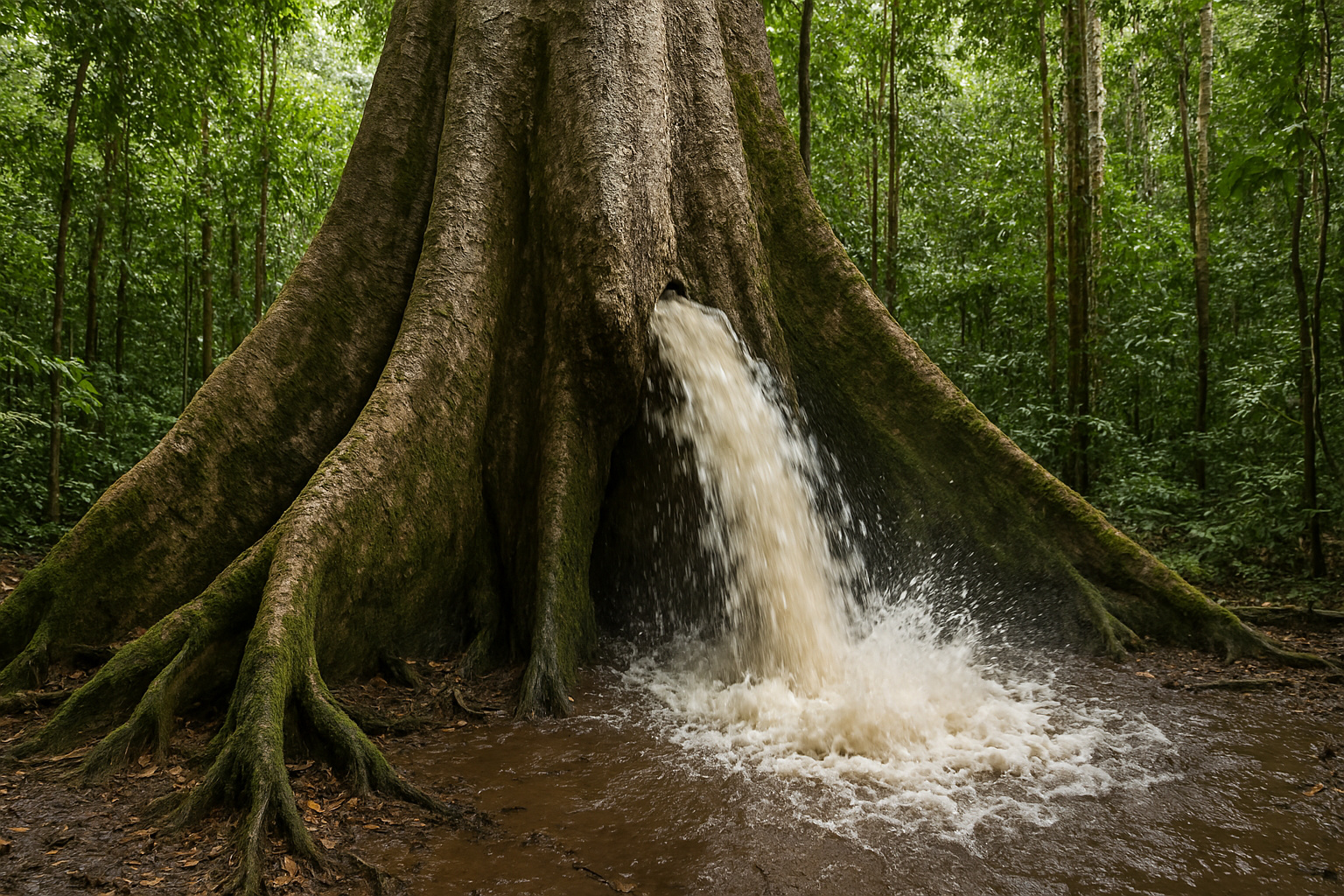


The Amazon Sumaúma Reaches Up to 60 Meters, Storing Water and Releasing Humidity, Functioning as a “Living Tower” That Helps to Maintain the Climate and Biodiversity of the Forest.
The sumaúma (Ceiba pentandra) is often referred to as the “Giant of the Amazon” due to its colossal height, the way it visually dominates the forest, and the ecological role it plays in maintaining moisture and the microclimate of tropical forests. However, the greatness of this tree is not just aesthetic.
Behind the monumental trunk lies a biological system that stores and releases water, interacts with the rainfall cycle, and forms entire shelters for other species. It is from this that the term “living tower” emerges, commonly used by ecologists to describe trees that connect the underground to the atmosphere and function as environmental structures.
A Tree with the Size of a Building and Its Own Architecture
An adult sumaúma can reach between 40 and 60 meters in height, with records exceeding the top of this range when considering individuals located in sections of primary forest.
-
With the equivalent of a day’s salary, about 15 dollars, a resident filled the cart at a Chinese supermarket and even had the famous pork from his region for two and a half dollars, depicting the cost of living in the interior of China.

-
The CIA paid for 20 years for psychics, telepaths, and “astral travelers” to spy on Soviet military facilities using extrasensory perception: Project Star Gate recruited dozens of people with supposed ESP, produced 12 million pages of classified reports, and was only terminated in 1995 when the agency admitted that the results were “inconsistent.”

-
The largest reserve of fresh water on Earth is locked in the ice of Antarctica and cannot quench anyone’s thirst, because less than 1% of all the fresh water in the world is actually available for human use, revealing that the water crisis is one of access, not quantity.
-
France builds a 107 km canal costing €7.3 billion to connect the Seine to the northern European waterway network


To give the reader a visualization, we’re talking about an equivalent to a 15 to 20-story building rising in the middle of the forest. The trunk is cylindrical and very wide at the base, potentially exceeding 3 meters in diameter, with buttress roots that extend laterally for several meters.
These plates, known as sapopemas, help stabilize the tree in waterlogged soils and support the colossal weight of the trunk.
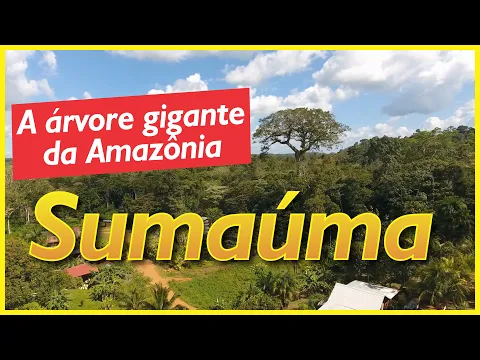

The canopy, when viewed from above, forms a green umbrella with dozens of meters in diameter, ensuring permanent shade for the understory and reducing soil evaporation.
This shading is fundamental in forest areas where temperatures can rise rapidly after direct sun exposure.
Internal Water Storage: An Invisible Adaptation
Although the trunk appears dry, the sumaúma has the capacity to store water in its wood and in internal spaces. This adaptation is common in giant tropical trees and helps regulate the water balance during periods of less precipitation.
Part of this water can be redistributed to the surface of the roots, a behavior known as reverse hydraulics, observed in Amazonian species that help maintain the microclimate of the underground.
Plant physiology research indicates that large trees contribute to soil thermal stability, preventing excessive drying and protecting microorganisms, fungi, and invertebrates that depend on moisture.
Release of Humidity into the Atmosphere and the Role in the Rainfall Cycle
The sumaúma actively participates in forest transpiration. This process is not exclusive to it, but its size ensures that its contribution is greater in volume. On hot days, a tree of this size can release large amounts of water vapor through its leaves.
This humidity forms what climatologists call “aerial rivers,” currents of vapor that move above the forest and feed atmospheric systems.
This phenomenon does not act alone but is part of a set of interactions that explain why extensive areas of tropical forest can maintain rainfall regimes, even during drier seasonal periods.
Going beyond its immediate surroundings, giant trees indirectly contribute to the formation of rain in distant regions, something confirmed in climate simulations and studies on atmospheric vapor transport.
Shelter for Life: From Base to Top
The physical gigantism of the sumaúma creates vertical habitats. At the base of the trunk, there are cavities that can shelter reptiles, amphibians, and small mammals. On the buttress roots, mosses, bromeliads, and fungi settle and form microecosystems. In the canopy, birds and primates use the branches as platforms for observation and movement.
Invertebrates live directly on the trunk, and the bark serves as a substrate for lichens and epiphytes. This diversity of biological interactions, from the ground to the top, helps explain why mature forests have greater complexity and productivity compared to young secondary forests.
Sumaúma and Culture: A Venerated Tree and Historical Symbol
The sumaúma is important not only for biology but also for the culture of populations living in the Amazon. Indigenous peoples often attribute spiritual value to the tree, associating it with spirits, protectors of the forest, and beings from the underworld.
In various regions, it is believed that entities guarding the territory live beneath the sumaúma. In Amazonian urban centers, the image of the tree is often used as a symbol of the forest and Brazil’s natural heritage.
Threats Related to Economic Advancement and Forest Fragmentation
The destruction of habitats is the main threat. A tree of this size does not form in a decade. To reach full maturity, a sumaúma can take several decades, depending on soil conditions and the presence of primary forest around it.
In the last 50 years, the advancement of activities such as cattle ranching, illegal logging, and road opening has drastically reduced the areas of continuous forest that allow for the development of giant individuals.
Fragmentation also impacts the hydrological cycle. When forest areas are reduced to isolated patches, transpiration decreases and humidity recirculation loses strength. Climate models indicate that the more the Amazon is fragmented, the lower its capacity to produce and recycle local rain.
What Makes the Sumaúma a “Living Tower” of the Amazon
When ecologists use the term “living tower,” they are not referring to literary metaphors but to a real environmental function performed by giant trees.
The sumaúma connects the underground, where it retains water; the trunk, which acts as a reservoir; the canopy, which transpires; and the atmosphere, which receives the vapor and recycles it as rain.
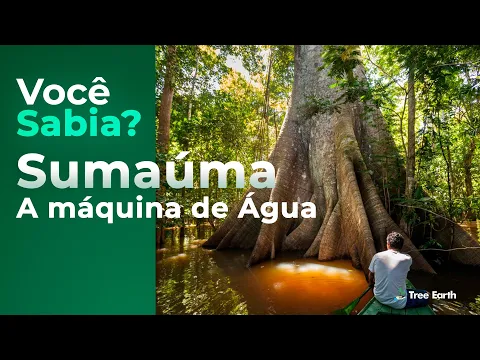
This vertical connection literally sustains tropical ecosystems, mitigating heat, humidifying the air, protecting the soil, and ensuring habitat for hundreds of species.
It is a living engineering, refined over millions of years of evolution, which humans still only partially understand but already influences research in bioclimatic architecture, urban planning, and climate conservation.
What Is at Stake With the Loss of This Giant
When a sumaúma falls, it is not just a tree that is lost. A microclimate, a platform for life, a water reserve, a biological connection between the ground and the sky is also lost.
A part of a climatic system that influences clouds, rain, and temperatures is also lost, not only in the Amazon but in areas connected by the “flying rivers” that transport humidity to the Midwest, Southeast, and South of Brazil.
Preserving giant trees means safeguarding complex processes that technology still cannot reproduce on the scale that nature does spontaneously.




Vídeo muito informativo,
está árvore serve de exemplo, para aqueles que não acredita em Deus que é o senhor Jesus!
o impossível acontecendo.