





 Portuguese
  English
  Spanish
  6 min of reading
  9 comments


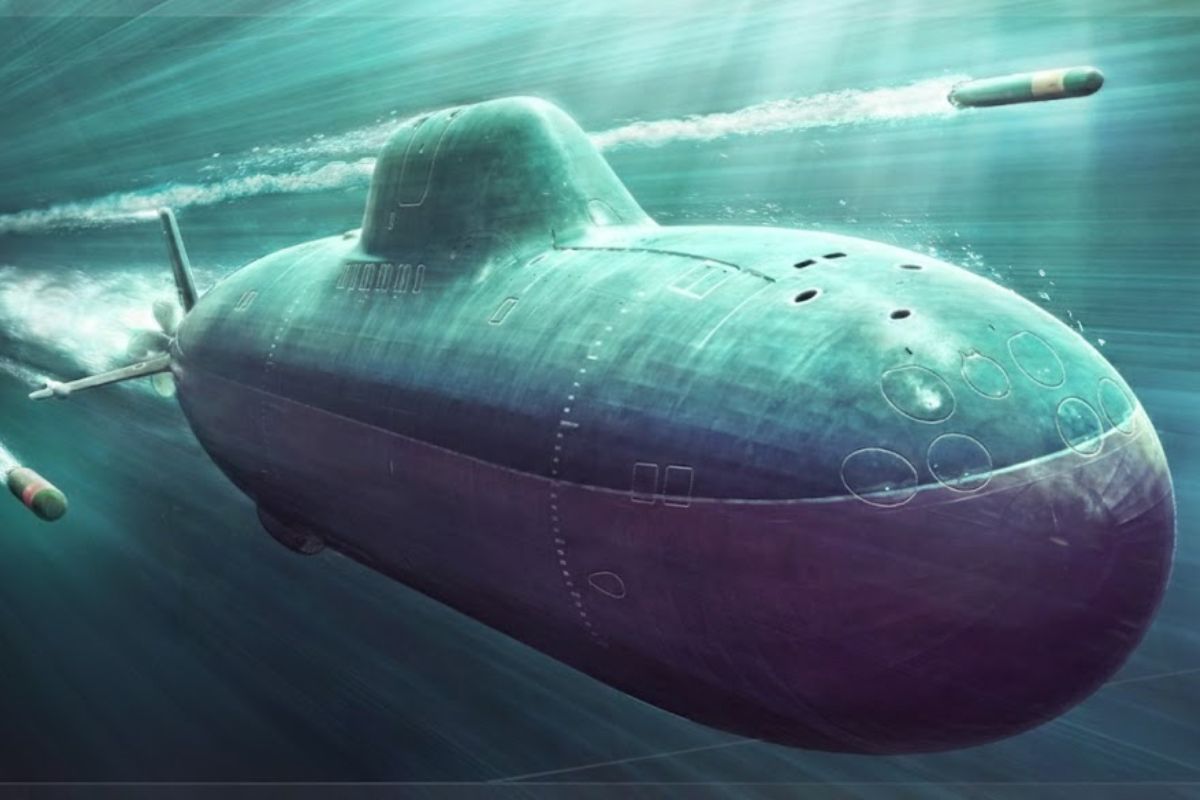


In March 1979, US listening posts detected a submarine in the Barents Sea moving faster than expected. It was Project 705, later called the Alfa class: titanium hull, automation, and liquid metal reactor. The promise was to escape from torpedoes; the cost, to live on the edge.
Ratifying what the sensors captured in March 1979 required more than disbelief: a Soviet submarine was moving too fast by known standards and, worse, fast enough to disrupt the logic of pursuit and engagement that guided submarine warfare at that time.
The episode synthesizes a strategic turning point: when stealth became American territory, the Soviet Union tried to win through physics, betting on speed, maneuverability, and depth as an asymmetric response on the Cold War underwater chessboard.
The Unexpected Signal in the Barents Sea and the Scare at Listening Posts
In March 1979, American listening posts detected something moving in the depths of the Barents Sea at speeds considered improbable for a submarine. It was not just “one contact”: it was a movement pattern that suggested high acceleration and sustained speed, sufficient to raise the most uncomfortable hypothesis of the time a submarine capable of escaping the torpedo interception envelope.
-
In 2026, the results of a study involving 140,000 people are expected to be released regarding a blood test capable of detecting 50 types of cancer before any symptoms appear, and this could be the greatest advancement in medicine since penicillin.

-
Spring 2026 could be the most dangerous season of the year, according to Climatempo and MetSul, with the peak of El Niño between September and November, an increase in Mesoscale Convective Complexes that caused historic floods in Rio Grande do Sul, and an advancing risk for São Paulo and Mato Grosso do Sul.

-
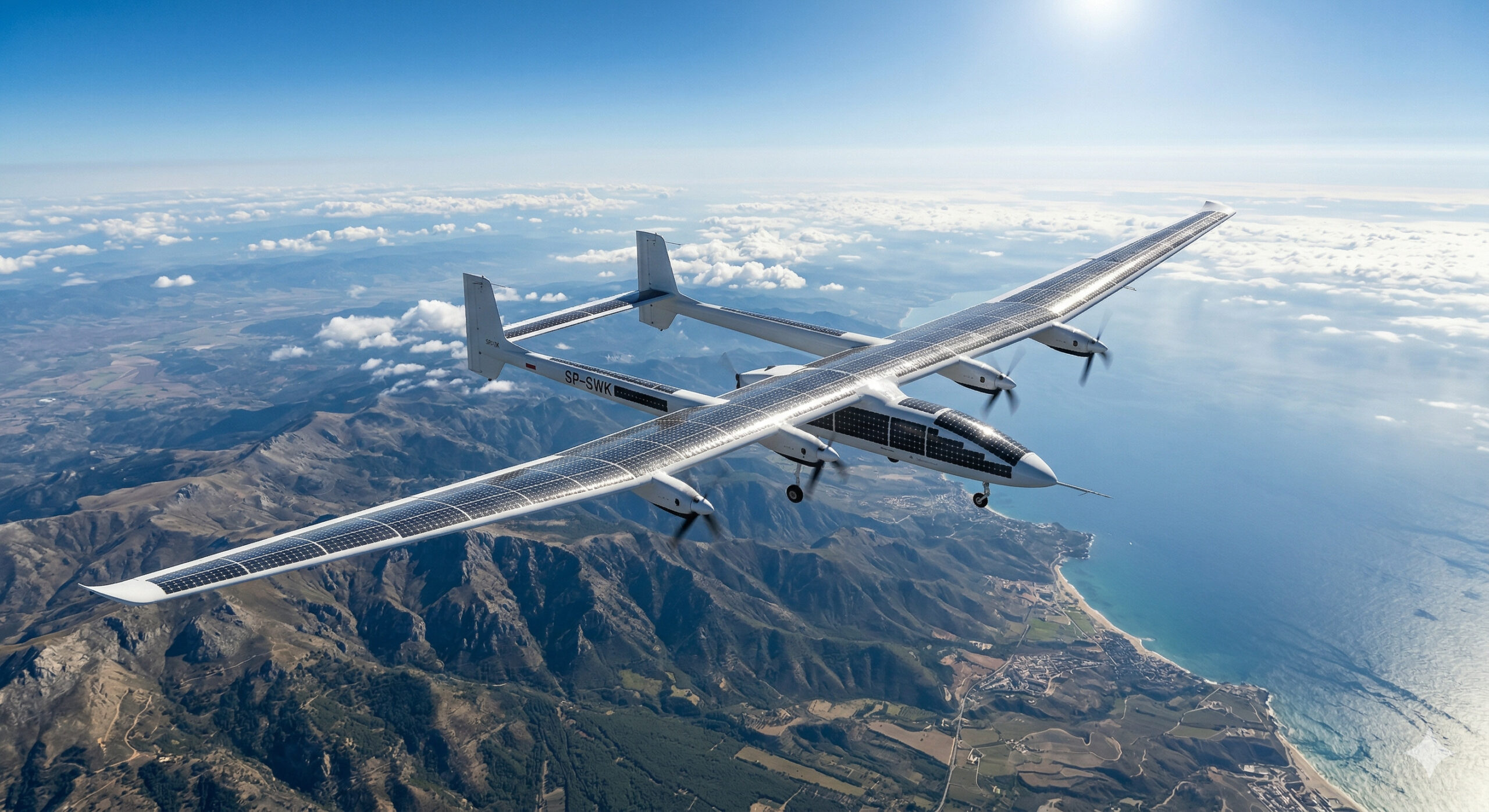
With the wingspan of a Boeing 747 and 160 times lighter, a solar drone flies for 90 days without landing, without fuel, and without a pilot, carrying 17,248 photovoltaic panels, a 200 km radar with AI, and has already crossed storms in the Gulf of Mexico during tests for the U.S. Navy.
-
Butantan Institute will produce pembrolizumab for the SUS and could change everything in cancer treatment by expanding access to innovative immunotherapy that strengthens the body and reduces high costs.


What made the case emblematic was the break in operational expectation. For years, American crews had managed to track Soviet submarines for long periods without being detected. For the Soviets, the feeling was the opposite: US submarines “vanished” in the oceans, supported by stealth technologies, dampeners, more precise gears, and quieter propulsion. In practice, the message was harsh: if war broke out, locating and neutralizing Soviet submarines before a counterattack seemed a real risk.
When the Soviet Union Decided to “Change the Rules” on Purpose

In the late 1950s and early 1960s, the Soviet strategy prioritized volume: building as many submarines as possible, attack and missile types, betting that quantity would compensate for technological limitations. By the mid-1960s, the Soviet fleet would have more than double the submarines compared to the US, but the accounting hid the essential: the quality of silence and tracking was tilting towards the American side.
It was in this context that, in 1960, a radically new project began to take shape: a submarine designed not to disappear but to “overcome” pursuit. The declared goal was raw performance: at least one-third faster than American submarines, with aggressive maneuverability (Americans needed 2 to 3 minutes for a 180° turn, while Soviet engineers aimed for about 40 seconds) and extreme acceleration, from a standstill to maximum speed in less than a minute. The concept was simple and dangerous: attack and disappear before the enemy’s response.
Titanium: The Hull That Promised Depth and Left Visible Traces
The design of the submarine required a material revolution. The idea of a whole hull made of titanium sounded improbable to analysts, because the metal is difficult to work with and has historically been reserved for programs where weight and heat resistance justified the cost and complexity. A complete submarine would require unprecedented large-scale manufacturing, with assembly of entire sections in giant chambers filled with argon and hermetically sealed environments. This was not only naval engineering: it was a new industry being forced to exist.
Curiously, titanium would have left indirect traces. Regular steel tends to darken when exposed to the elements; more reflective surfaces attracted attention. For the West, if the hull was indeed made of titanium, the implications were immediate: a lighter and stronger submarine by weight could move faster, dive deeper, and survive pressures that would crush conventional steel. Analysts even estimated diving depths close to 1,000 meters, a level that would put part of the anti-submarine arsenal under technological pressure and require accelerated responses in weapons and acoustic tracking.
Liquid Metal Reactor: Brutal Power and the “Required Heat” as a Trap
At the core of the submarine was the boldest bet: a revolutionary reactor cooled by liquid metal, capable of delivering up to three times more power. This leap explained the intended feat: accelerating from complete immobility to over 40 knots in just over a minute, transforming the submarine into something close to a “subaquatic jet.” However, the power came with an inflexible condition: the system could not, in practice, “stop” like other reactors.
The requirement was operationally cruel. The coolant needed to be kept above 125°C; if the temperature dropped and solidified, the reactor could be destroyed. This meant dependence on specialized port infrastructure and strict procedures even while docked. The very history of the program carries this risk: after 11 years of development, the first and most sophisticated submarine of the Soviet Union went out to the Barents Sea in 1972, and then, a failure in the steam generator caused a leak; the coolant fell below the threshold and the reactor was lost, turning the “jewel” into a piece of titanium scrap and generating political and financial pressure to cancel everything.
Automation and Reduced Crew: Efficiency on Paper, Complexity at Sea
To cut through the water with less drag, the submarine adopted a teardrop shape, streamlined surfaces, and even retractable components at high speeds, in addition to extreme compaction. The price of a smaller volume was human: operating with a crew just above one-third the size of a typical attack submarine.
The proposed solution was unprecedented automation for the time: computers managing propulsion, ballast systems adjusting automatically, and even automatic torpedo loading, with navigation, sonar, and target acquisition integrated into a central command system.
This integration changed the onboard routine and, at the same time, increased systemic risk: when everything is automated and interdependent, failures propagate. The program ended up associated with recurring technical problems, with automatic systems failing and overwhelming crews.
Added to this was the reality of the “always hot” reactor: the need to keep the system continuously operating, something not envisioned by the designers, would make critical maintenance difficult and, many times, delayed. The submarine promised to reduce human labor, but created a new type of technological dependence.
The Speed That Terrifies Also Hinders: Cavitation, Noise, and “Blind Sonar”
When the Alfa class was finally ready, around 1978, the design delivered what stood out the most: speed, maneuverability, and depth that impressed rivals. Six submarines entered service beyond the first, far fewer than the 30 originally planned, but still described as some of the most advanced attack submarines the world had seen, kept on high alert at Soviet bases to defend the so-called Arctic “bastion.”
The paradox was that the very speed created tactical limitations. At more than 40 knots, the propeller cavitated and the water “screamed” around the hull, producing so much acoustic interference that sonar could become compromised.
The submarine, in those moments, was not hunting; it was announcing its presence, while at the same time reducing its capacity to listen to the environment. And, in the background, the cost remained: each unit would have cost approximately double that of a conventional nuclear submarine, in addition to requiring a titanium industrial chain, new manufacturing methods, and extreme exploration of nuclear thermodynamics.
The Legacy: Why a “Nearly Perfect” Submarine Still Changed the Cold War

Even with flaws, the initiative had a strategic effect: it forced the West to accelerate responses, rethink expectations, and treat submarine warfare as a race not only of silence but also of performance.
By betting on a titanium submarine with a liquid metal reactor, the Soviets showed they were not just trying to “copy” stealth; they were trying to redefine the problem with another dominant variable.
The final balance is less glamorous and more revealing. The program produced few submarines, consumed enormous resources, and exposed how extreme solutions create new vulnerabilities: critical port infrastructure, complex maintenance, fragile automation, and acoustic limits at high speed.
Still, the submarine played a historical role: proving that radical innovation can be frightening, even when it does not become standard and that, in the Cold War, fear was sometimes as strategic as performance.
The Soviet submarine from Project 705, known as the Alfa class, was born to run faster than torpedoes, dive deep thanks to titanium, and “explode” in acceleration with a liquid metal reactor. Along the way, it revealed the real cost of trying to win a technological war through shortcuts: power that does not shut down, maintenance that becomes torment, and speed that can blind sensors.
If you had to choose a single decisive factor for an attack submarine, extreme speed, absolute stealth, or maximum depth? And in your opinion, a submarine that terrifies with performance but spends more time in maintenance than on patrol, is it still worth the investment?









The Alfa’s had a limited area of patrol. They were purposed as high speed interceptors in the Barrents Sea, with a particular interest in the Denmark Strait between Greenland and Iceland. They we so fast, the subs were built with little concern for stealth. They could zip in at 40 knots, find their target, launch a nuclear torpedo, and speed away, outrunning the NATO torpedoes. As far as I know, the Alfa’s never deployed in the Med, nor did they ever approach the US coast.
Maximum stealth
As useless as Putin in a whirlwind