





 Portuguese
  English
  Spanish
  5 min of reading
  0 comments


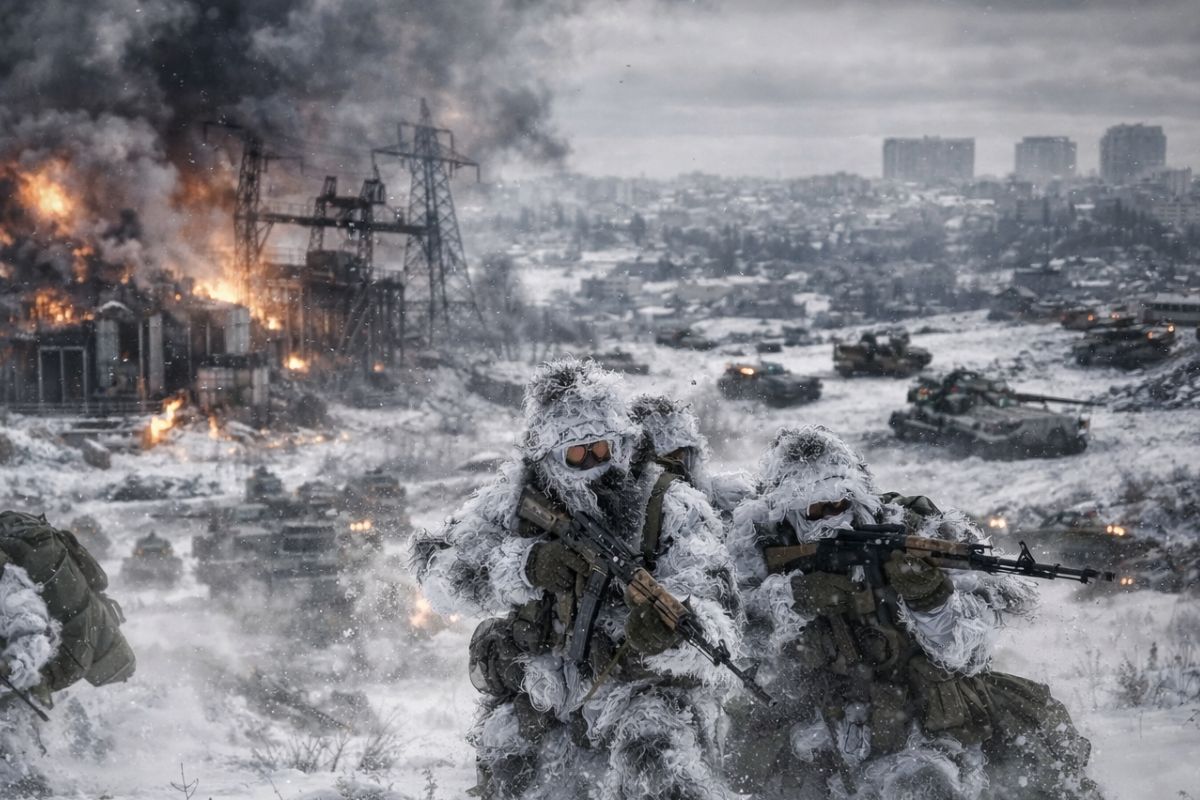
In Ukraine, Winter Has Stopped Being a Season and Has Become Strategic Pressure: With Prolonged Blackouts, Power Plants Under Attack, and Millions of Civilians in the Dark, the War Enters a Phase Where Each Decision Combines Human Cost, Energy Resistance, and Political Time, at Risk of Simultaneous Social and Military Breakdown.
The Ukraine has reached a point where the war is no longer measured only by advances on the map, but by the ability to keep cities functioning under extreme cold, energy infrastructure under attack, and a civil society that needs to stay alive, heated, and organized as the conflict drags on. With lows near -20 °C in various areas, each power interruption becomes not just a technical problem but pressures high-risk strategic choices.
In this scenario, the dilemma has taken explicit shape: to expand the logic of attrition to try to impose up to 50,000 Russian casualties per month and force Moscow to negotiate under less favorable conditions, or to admit territorial concessions before a new cycle of winter and destruction further reduces the country’s capacity for resistance. Between the Military Front, the Energy Rear, and the psychological wear on the population, the margin for gradual decisions has become much smaller.
Winter as a Multiplier of Conflict

Military history shows that cold rarely “wins alone,” but almost always accelerates collapse processes when logistics, supply, and command are already strained. In 1812, Napoleon’s retreat from Moscow was devastated by extreme weather conditions; in 1939-1940, Finland exploited the winter and frozen terrain to delay a larger Soviet force; in 1941, the cold also weighed on the German paralysis at the gates of Moscow. The pattern is recurring: winter transforms wear into urgency.
-
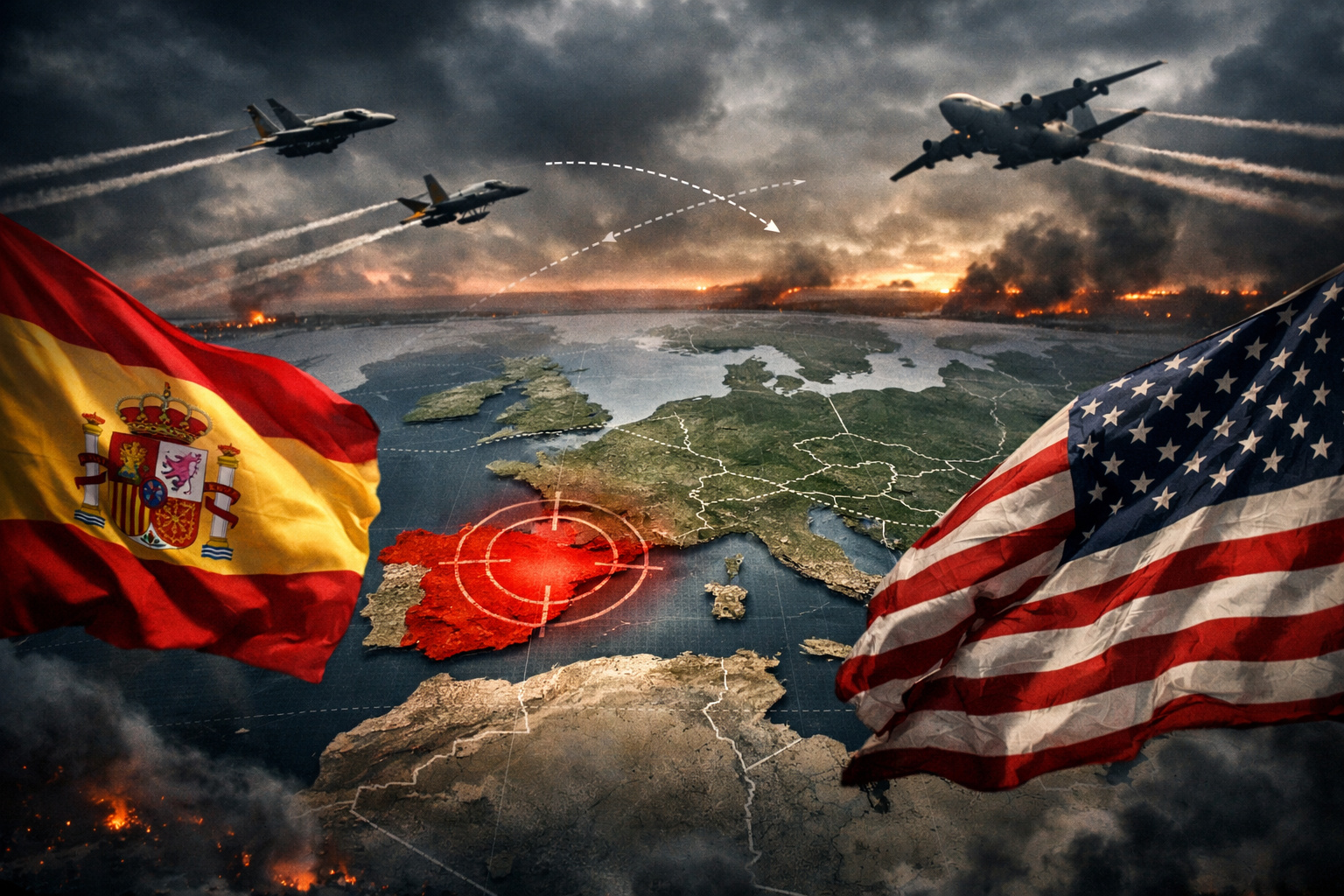
Spain challenges the USA and closes its airspace for operations against Iran, raising global tension and provoking the threat of a trade rupture.
-
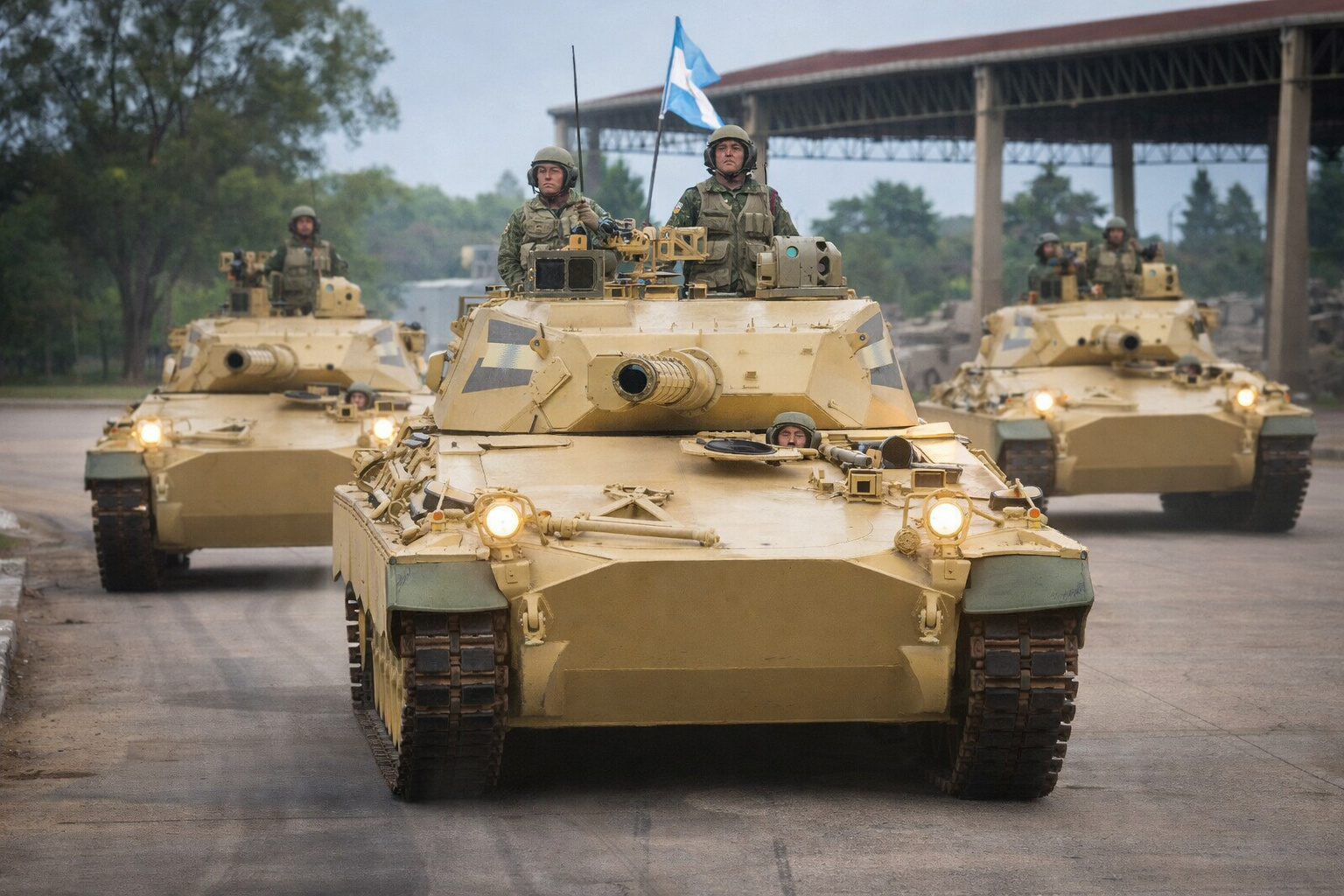
While no other country manufactures tanks in Latin America, Argentina activates the TAM 2C-A2 and raises a curiosity about the technological lag in the region.
-
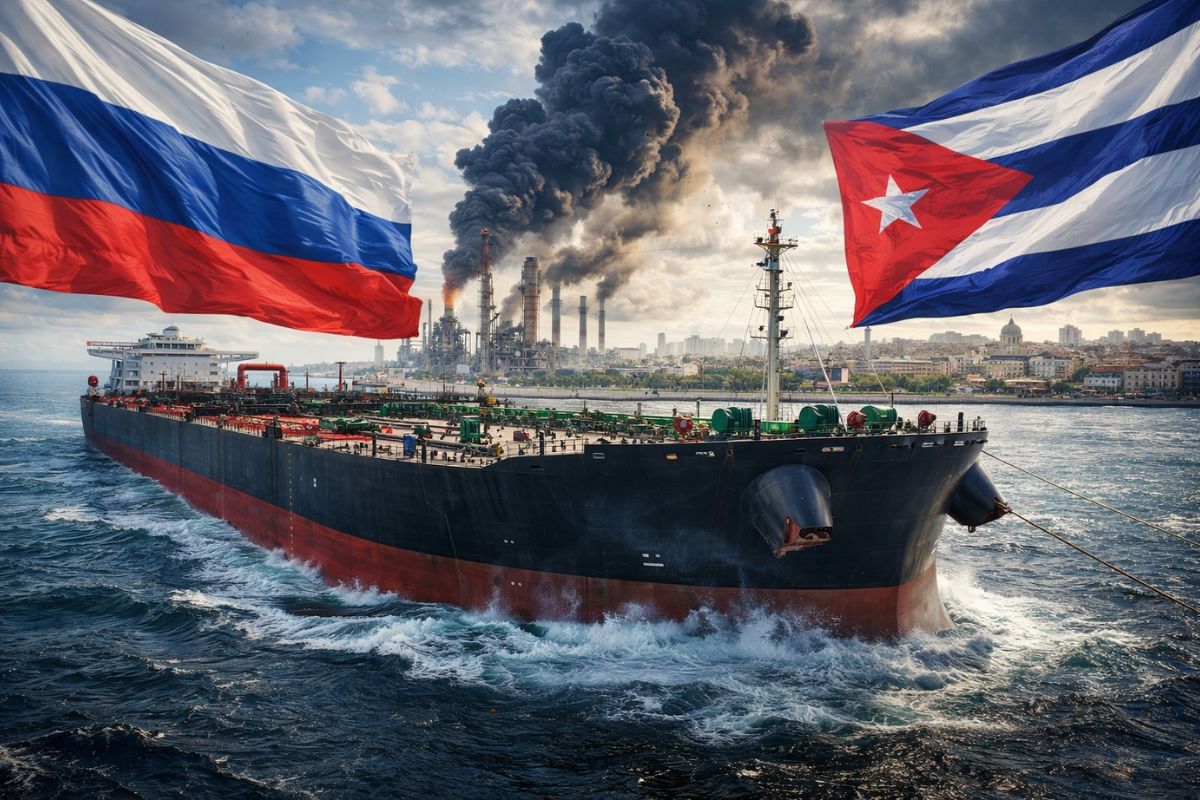
A Russian ship with 730,000 barrels of oil has just arrived in Cuba while Mexico negotiates fuel sales through private companies: the communist island is desperately seeking alternatives after losing its supply from Venezuela due to American military action.
-
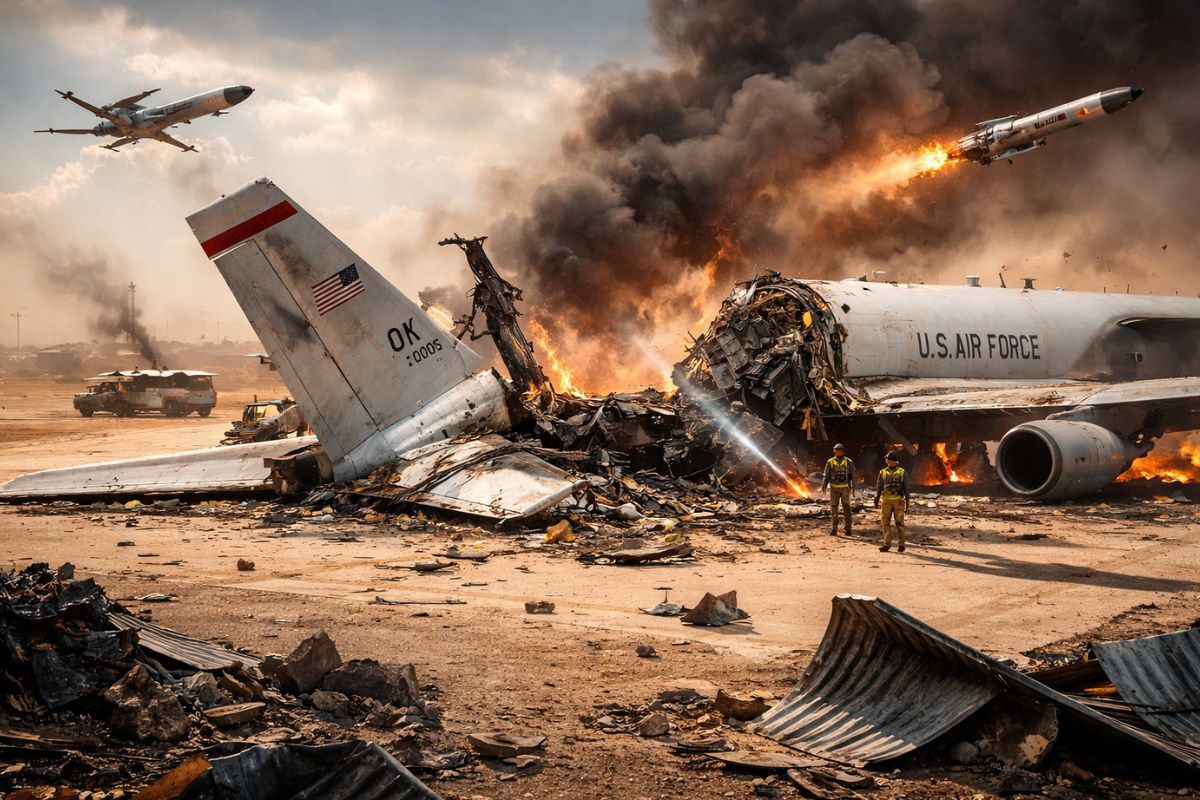
Iranian drones and missiles destroyed a 270 million dollar American spy plane in Saudi Arabia, splitting the E-3 Sentry aircraft in half and injuring 12 military personnel in an attack that exposes the vulnerability of U.S. bases in the Persian Gulf.

In Ukraine, this dynamic is concretely apparent in the sum of severe weather and ongoing attacks on civil infrastructure. When the electrical system fails for long periods, the impact is not limited to household lighting: it affects water pumping, heating of buildings, hospital operations, urban circulation, and the ability to coordinate essential public services. Low temperatures convert network damage into daily political pressure, reducing the time available for strategic decisions.
Energy, Blackout, and Civil Wear
Since the beginning of winter in this phase of the war, Moscow has maintained systematic attacks on power plants, thermoelectric plants, and distribution networks, with a cumulative logic: even when there is quick repair, the recurrence of damage raises costs, reduces predictability, and saturates technical teams. In practice, Ukraine needs to rebuild at an emergency pace while preparing for the next wave of impact, in a cycle that mixes engineering, defense, and crisis management on a national scale.
The Ukrainian response has avoided total collapse through accelerated maintenance, use of generators, and more flexible network management. Still, the social price is high: buildings without heating for weeks, neighborhoods subjected to blackout schedules, and a population that reorganizes routines based on available electricity. When millions live in the dark, the civil front becomes a direct part of the battlefield, and resistance stops being abstract and becomes a calculation of daily survival.
The Bet of “50,000 Casualties per Month”
At the center of the debate in Kiev, the goal of imposing up to 50,000 Russian casualties monthly emerged as an extreme wear formulation, not as isolated rhetoric. The idea stems from a hard reasoning: if winter accelerates internal suffering and reduces the resilience of the rear, significantly raising the human cost for Moscow could shorten the conflict or, at least, improve the negotiating position. It is a logic of compressing the time of war, where waiting may cost more than escalating.
But this path is called “kamikaze” for an obvious reason: the effort to maintain this pace of attrition also demands a high price from the Ukraine itself. Intensifying operations in an environment of severe cold, infrastructure under pressure, and accumulated social fatigue requires human and technical resources that are not infinite. The dilemma shifts from simple victory or defeat to different forms of loss, over distinct time horizons.
Operational Limits and Technological War
The war of attrition encounters clear structural limits. There are infantry bottlenecks, a shortage of specialized operators, and technological competition where Russia maintains advantages in certain segments, such as electronic warfare and fiber optic drones. Even when tactical actions produce local results, this does not always interrupt Russia’s capacity for logistical replenishment in the rear. Eliminating force on the front line does not guarantee, by itself, breaking operational depth.
The digital dimension has further expanded the complexity of the conflict. Reports published by Insider about interruptions of Russian access to systems connected to Starlink have shown how communication and command rely on continuous connectivity. The occasional disorganization in Russian units has been perceived as an opportunity for Ukraine, but the side effects have also affected civilian users and other operators. In modern warfare, technological advantage is real, but fragile, and any failure during winter can generate cascades of chaos in a matter of days.
The Taboo of Territorial Concessions
With climate and military pressure advancing simultaneously, a debate previously considered almost untouchable has gained traction: admitting territorial concessions in exchange for solid security guarantees. Recent reports, including material from the New York Times cited in public debate, indicate that a growing part of Ukrainian society has begun to discuss this hypothesis, still without consensus and without a formal decision from the leadership. The new fact is not the decision made, but the shifting limit of what can be said.
This shift reveals the combined weight of three factors: severe winter, recurring blackouts, and a lack of a short-term horizon for ending the conflict. In practice, Ukraine finds itself between maintaining the bet on maximum wear to try to rebalance the negotiation or seeking a territorial arrangement that interrupts the continuous erosion of infrastructure and civil life. Neither alternative offers a clean solution, and both require politically painful choices, with effects that span generations.
The Ukraine faces a crossroads where climate, energy, and military strategy have ceased to be separate issues. With cities at extreme temperatures, vulnerable electrical grids, and an exhausted population, winter acts as an accelerator of decisions that perhaps, in another context, could have been postponed for months. Between trying to impose massive losses on Russia to force concessions from Moscow or admitting territorial concessions to preserve state and social capacity, the country is dealing with a calculation of national survival in real time.
If you had to choose which risk is less destructive in the medium term to intensify human wear to try to shorten the war or to accept territorial losses to avoid another winter of energy collapse which option would you consider more defensible and why?






-

Uma pessoa reagiu a isso.