





 Portuguese
  English
  Spanish
  5 min of reading
  0 comments


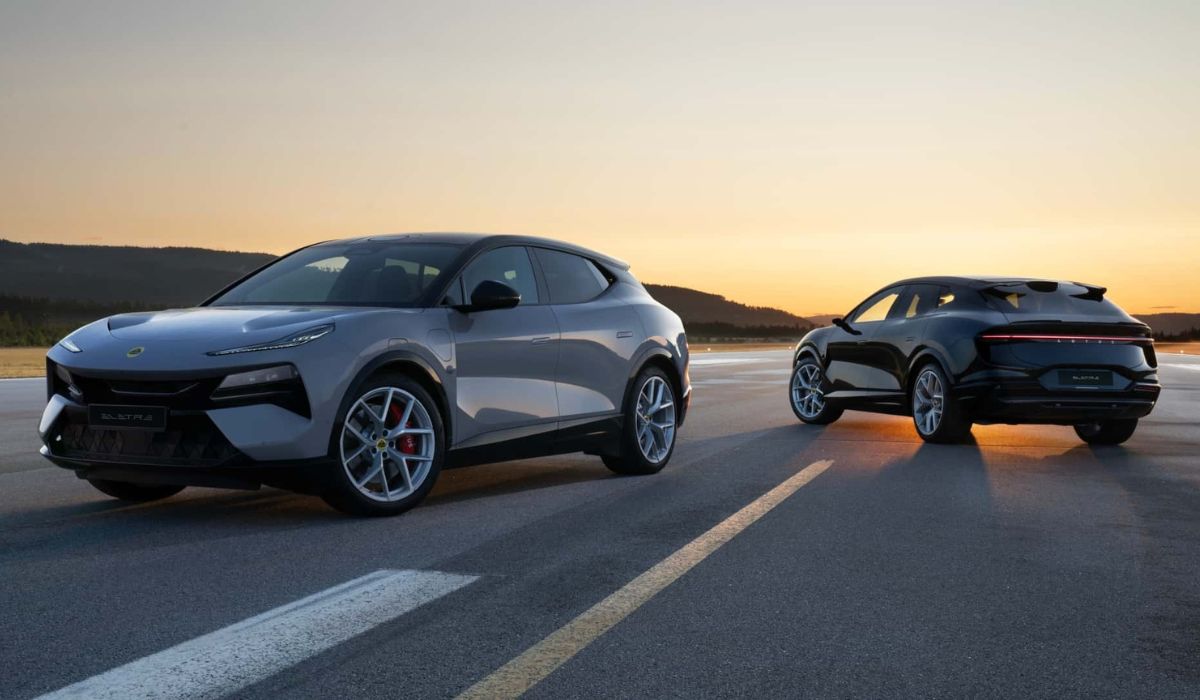
British Brand With History In Formula 1 Prepares Entry Into Country Under Geely’s Command, Betting On High-Performance Gasoline And Electric Sports Cars For Premium Positioning In National Market, Still Shrouded In Secrecy.
The Lotus, a British brand with a long history in motorsport and a historical presence in Formula 1, is expected to be the next manufacturer from the Geely group to start operations in Brazil.
The arrival is being led by an importer group still kept secret, and according to information available so far, the start of activities is expected to occur between late 2026 and early 2027.
Since 2017, Lotus has been owned by the Chinese conglomerate Geely, which began to control the company as part of a global strategy aimed at expanding its portfolio of high-performance brands and, more recently, electrified vehicles.
-
Largest public charging network in Brazil: BYD reaches 125 fast chargers and accelerates national expansion of electric mobility.
-
The Toyota Hilux is R$ 75.5 thousand cheaper and bets on the 2.8 turbodiesel engine with up to 204 hp and 50.9 kgfm to catch up with the VW Saveiro, which leads with 4,472 sales.
-
The new Renault Koleos has a screen exclusively for the passenger that is invisible to the driver, heated rear seats, and 29 assistance systems, but its Chinese competitors cost R$ 40,000 less and deliver more power.
-
The car stored for 38 years: when opening the barn door, what appears is breathtaking and looks like a scene from a movie!


In the Brazilian market, the British manufacturer is expected to occupy the highest position within the group’s brand hierarchy, focusing on niche and higher value-added models.
The strategy envisioned for the country combines sporting tradition and recent technologies.
The plan involves offering a gasoline sports car linked to the brand’s legacy, as well as the introduction of electric SUVs and sedans that use platforms developed in partnership with other companies in the Geely group.
Heritage From The Tracks And Lotus Positioning In Brazil
The history of Lotus in motorsport is one of the main assets explored by the brand in its global communication.
The team played a significant role in Formula 1 and was the team of Ayrton Senna between 1985 and 1987, a period often cited in institutional materials and reports about the manufacturer.
In the Brazilian context, this heritage should be used as a positioning element.
The proposal, according to what was reported in the original text, is for Lotus to function as a technological and sporting showcase for the Geely group, above other brands already present or planned for the national market.
This viewpoint is recurring among automotive industry analysts when global conglomerates operate with multiple brands in different price ranges.
Emira Keeps Gasoline Engines And Sporting Tradition

The main model cited for Lotus’s debut in Brazil is the Emira, a sports car introduced in 2021 as the successor to the Evora.
It is currently the last car from the brand developed from the ground up to use a gasoline engine at a time when the manufacturer is directing a significant portion of its investments towards electrification.
The Emira follows principles associated with Lotus’s historical philosophy, such as the pursuit of weight balance, performance, and dynamic response.
Nevertheless, the project itself reflects changes imposed by safety regulations, emissions, and comfort, resulting in dimensions and weight greater than classic sports cars from the brand.
In mechanical terms, the model can be equipped with a 2.0 turbocharged four-cylinder engine, supplied by Mercedes-AMG, paired with an eight-speed dual-clutch automatic transmission.
In this configuration, the power reported by Lotus is around 400 hp, with torque close to 48.9 kgfm, plus acceleration from 0 to 100 km/h in less than five seconds, according to the manufacturer’s official data.
There are also versions equipped with a 3.5 supercharged V6 engine, delivering similar power but with slightly lower torque.
This setup can be combined with either a six-speed manual gearbox or an automatic transmission, depending on the version and market.
The configurations include variations such as SE and packages with a more sporty appeal, according to the technical material released by the brand.
Although it does not replicate the extreme lightness of models like the Elise, which rarely exceeded the 1,000 kg mark, the Emira maintains core characteristics of Lotus.
It is always a two-seater car, with a mid-rear engine, low driving position, and adjustments focused on sporty driving, as described by the manufacturer itself.
Electric Line Expands Lotus Presence With SUVs And Sedans

In addition to the sports car, Lotus has been structuring a range of larger electric vehicles that are also part of the plans mentioned for Brazil.
The two main names mentioned are the Eletre, an SUV introduced in 2022, and the Emeya, a sedan revealed in 2023.
These models utilize an electric architecture developed by Lotus, called Electric Premium Architecture, based on the SEA platform created by Geely for its electric vehicles.
This approach allows for the sharing of components and technologies among different brands in the group, a common practice in the global automotive industry.
Lotus Eletre Bets On Performance, Technology, And Fast Charging
The Eletre is the first SUV produced by Lotus and marks a significant change in the company’s portfolio.
At approximately 5.10 meters long, it falls into the large SUV segment, a category that includes high-value electric and hybrid models.
Version variations of the Eletre range in power and performance.
Data released by the manufacturer indicate configurations with approximately 600 hp and others that exceed 900 hp, always featuring all-wheel drive and two electric motors.
The declared range can reach about 600 km on the WLTP cycle, depending on the version and battery capacity, which is around 100 kWh.
Another highlighted point is the charging capacity.
According to Lotus, the Eletre can use ultra-fast chargers of up to 350 kW, allowing hundreds of kilometers of range to be recovered in just a few minutes under ideal conditions.
The practical application of this feature, however, depends on the infrastructure available in each market.
The model also incorporates advanced driver assistance systems, including LiDAR sensors.
The manufacturer describes the system as prepared for high levels of automation, although the effective use of these functionalities is subject to local regulations.
Emeya Marks Lotus Return To Four-Door Sedans
Another vehicle mentioned as a candidate for the Brazilian operation is the Emeya, an electric sedan that represents Lotus’s return to the four-door segment after decades.
The model uses the same technical basis as the Eletre and has been positioned by the brand as a high-performance electric grand tourer.
According to specifications released, the Emeya can reach up to 905 hp in the most potent versions, with acceleration from 0 to 100 km/h in less than three seconds.
Its dimensions reinforce the large sedan profile, measuring just over 5.1 meters long and with a wheelbase exceeding three meters.
The interior follows the trend observed in other premium electric vehicles, featuring extensive digitization and reduced physical controls, along with trim options using materials such as Alcantara.
All versions announced thus far come with all-wheel drive as standard.
The proposal for these models, as described in the original text and in institutional materials from Lotus, is not to compete on volume but to reinforce the technological and sporting image of the brand within Geely’s portfolio.
Industry experts often point out that this type of positioning seeks to consolidate reputation and brand value, even in markets with less scale.








Seja o primeiro a reagir!