





 Portuguese
  English
  Spanish
  7 min of reading
  0 comments


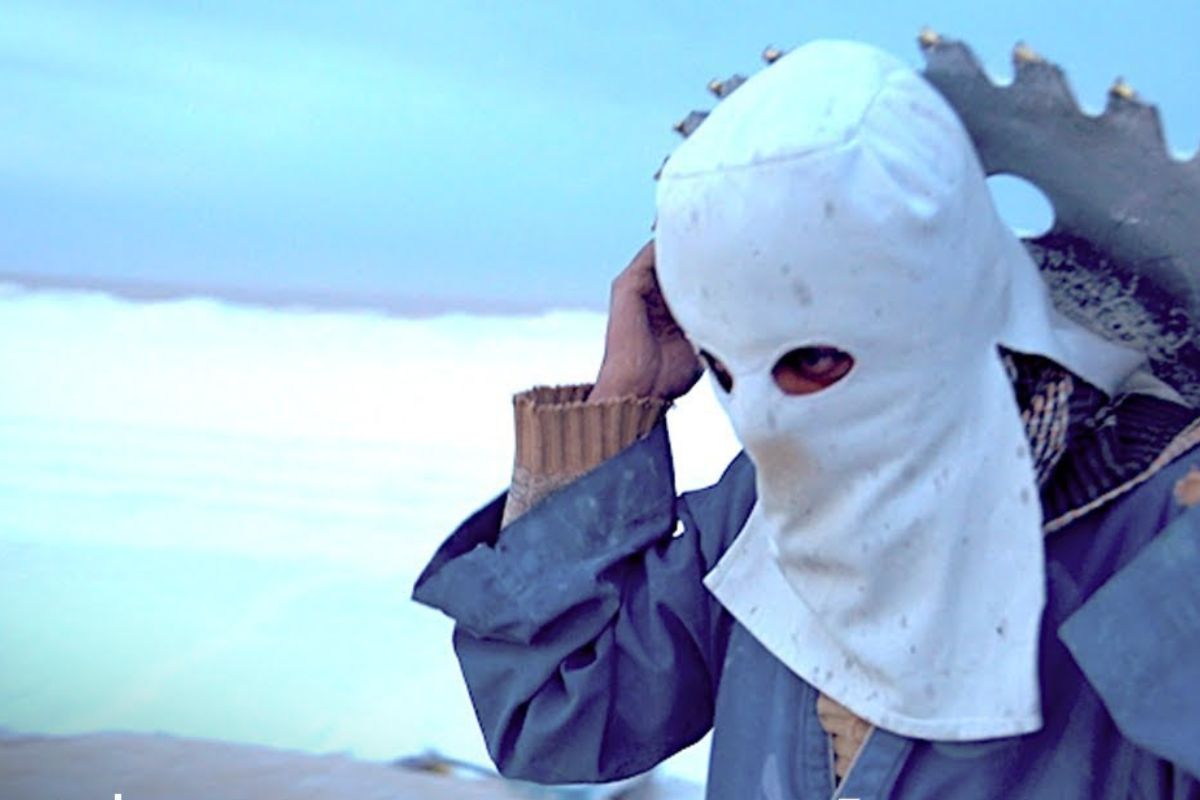
While The Sulfur, Salt, Acai, And Swallow Nest Industry Moves Billions, Workers Face Toxic Heat, Fatal Falls, Chronic Diseases, And Miserable Salaries To Sustain Invisible Families, Far From Basic Guarantees Of Safety, Healthcare, And Dignified Income In Global Chains That Profit And Give Back Little.
If you eat white sugar, season food with salt, drink acai smoothies, and have never stopped to think about who is behind it. In different corners of the planet, workers face tasks so dangerous that many do not reach 60 years, while the industries related to these products are worth billions.
From the smoking crater of a volcano in Indonesia to the cracked salt desert in India, from the thin palms in the Amazon to the limestone cliffs in Egypt and the cliffs of the Philippines, the logic is the same: the more dangerous the job, the smaller the portion that goes to those who put their bodies on the front line.
Sulfur In The Volcano: The Devil’s Gold On The Backs Of Workers

The sulfur industry generates nearly 13 billion dollars worldwide, but the workers who extract the mineral from an active volcano earn about 17 a day. In Java, miners descend into the crater, walk more than 3.2 km, and face a wall of 300 meters in a toxic environment.
-
Attracting around 250,000 people a year, a lighthouse 200 meters from the sea, on a 60-meter high cliff, on the North Sea coast in Denmark, becomes one of the most impressive examples of how nature can threaten historical buildings.

-
The narrowest house in the world is only 63 centimeters wide, but inside it can accommodate a bathroom, kitchen, bedroom, office, and even two staircases.

-
In the middle of the sea, these enormous concrete and steel structures, built by the British Navy to protect strategic maritime routes, look like they came straight out of a Star Wars movie.

-
For years, no one could cross a neighborhood in Tokyo because of the tracks, but an impressive solution changed mobility and completely transformed the local routine.

Inside, the air can exceed 38 degrees, and the volcanic lake has acidity comparable to battery acid. If the liquid enters the mouth or stomach, it can be fatal.
Still, many cannot afford gas masks and use only wet cloths to try to filter the sulfur smoke.
The yellow blocks form when the hot gas exits through tubes and condenses into liquid that runs and hardens. After that, miners break everything with hammers, fill baskets, and carry up to 90 kg on their backs, even though many weigh around 60 kg. Each climb is a struggle between breath, pain, and the need to bring some money home.
The journey ends with the sulfur being weighed and sold by the kilo to intermediary companies. What comes out of there can become phosphorus, detergent, paper, battery, and even the agent that makes white sugar clean and flawless in the supermarket package.
For the consumer, the product arrives clean. For the workers, it leaves chronic cough, back pain, and the certainty that their health is slowly being burned away.
Salt In The Desert: Entire Families Live On Brine

In India, thousands of families have lived for generations producing salt in an arid area, the Little Rann of Kutch. They are the agaras, workers who move to the desert for about six months, bringing everything they need to survive: wood for huts, tools, clothes, food, and water.

They dig wells about 9 meters deep to reach the underground saline water. Subsidized solar panels power the pumps that draw this water to large shallow tanks.
With beaten earth and simple rollers, they prepare salt flats where, over the months, the water evaporates and forms crystals when it reaches a salinity of about 24 percent.
The work is heavy and continuous. The workers rake salt under the strong sun, on a terrain that reflects light like white ice. The brine is highly aggressive to the skin, causing wounds that take weeks to heal. Many develop chronic diseases in their feet and hands.
Life expectancy is around 60 years, and cases of blindness due to intense exposure to reflected light are common.
After producing up to 1,000 tons of salt in a season, these families sell their production for a price between 2 and 3 per ton, a value decided by intermediaries.
Months of exhausting work yield well below the poverty line, while the salt goes to processors, well-known brands, and markets that pay multiple times that amount.
Acai In The Amazon: The Superfood That Pays Pennies To Workers
In the Brazilian Amazon, acai has become a star superfood in bars and gyms around the world, but those who risk their bodies to harvest the fruit still get the smaller part of the bill. In Pará, responsible for over 90 percent of Brazil’s acai, entire families depend on harvesting from high palm trees.
The only technology many workers use is the peconha, a strip of rope that wraps around their feet and helps them climb palm trees up to 15 meters high. The trunks are thin, and any misstep can mean broken arms or legs.
Up there, the collector swings from tree to tree to reach the bunches, knife in hand, and the constant risk of falling.
In one year, a family harvested 53 baskets of acai, receiving about 50 in total, roughly 20 cents per half kilogram of fruit.
Meanwhile, the same amount of acai, already processed into ice cream or pulp, can be sold for a value many times higher in large cities and abroad.
As the fruit spoils quickly, producers without processing machines are forced to sell fast to middlemen.
Without their own industry, workers are squeezed between the urgency of the harvest and the prices imposed by intermediaries, who take the product to factories, markets, and brands that capture most of the profit.
Limestone In Egypt: Dust, Blades, And Cut Life Expectancy
In Egypt, perfect blocks of limestone support a massive chain, used in cement, glass, plastic, tiles, and much more.
But behind the impeccable white stones, there are workers who live surrounded by exposed saws, improvised trucks, and clouds of fine dust.
Miners descend into the quarries in trucks that are not even meant for transporting people. Down there, they set up tracks and operate machines that cut blocks with large, fast blades. One misstep can place the body directly in the path of a saw capable of killing instantly.
Since many are freelancers, workers buy their own equipment and, in practice, rely only on rags, simple glasses, and cheap gloves.
Limestone dust, when inhaled over the years, is linked to serious lung diseases such as silicosis. There are reports of life expectancy around 45 years among those who spend decades in this environment.
Even in the face of the risk of amputations, fatal accidents, and permanent respiratory problems, financial compensation is low. There are cases of compensation considered insignificant for those who lost a leg or hand.
In return, many receive just over 6 a day, plus some food and tea. It’s a math where the body delivers everything and the pocket sees almost no return.
Nests On Cliffs: Luxury Soup, Risk Of A 30-Meter Fall
In Southeast Asia, especially in the Philippines, another type of extreme work feeds a luxury market: the collection of swallow nests made of saliva.
These nests are the base of a famous soup in countries like China, and only 900 grams can be worth about 900, according to the collectors themselves.
To reach them, workers climb limestone cliffs up to 30 meters high, using improvised bamboo ladders or, in some cases, just hands and feet. Loose rocks, slippery surfaces, and any slip can be fatal. Those who fall land on hard rock, with no safety net or rescue team nearby.
The collectors, known as buad in some regions, ascend with the weight of their own bodies, tools, and the ever-present risk of dislocating shoulders, breaking bones, or simply not returning.
There are reports of relatives who have died in falls during the climb. On a remote island, an emergency often means not having help in time.
After the collection, the nests are cleaned, sorted by quality, and bought by local municipalities at a regulated price.
From there, they go to private clients and international markets that sell the soup at exorbitant prices. For those who risk their lives on the cliff, the pay is just enough to survive, but far from what circulates in the final product in upscale restaurants.
Trillions In Consumption, Crumbs For The Workers At The Base
When everything is laid out on the table, the pattern is cruelly clear. Global industries make billions from sulfur, salt, acai, limestone, and bird nests, while the workers who deal with toxic smoke, acidic brine, falls from heights, and deadly saws receive salaries that barely guarantee the basics.
The gap between the price paid on the shelf and the value that reaches the base of the chain is filled by intermediaries, processors, brands, and international markets.
In many of these regions, the lack of access to healthcare, adequate protective equipment, and job alternatives pushes entire generations to repeat the same risks.
It’s a gear where danger is concentrated in a few bodies, and the profit is distributed to those who almost never get their hands dirty.


After understanding the routine of these workers who risk their lives to sustain billion-dollar industries, do you think the price we pay for these products should come with any minimum guarantee of justice for those at the base of the chain, or is the market functioning exactly as you expected?






-

-

5 pessoas reagiram a isso.