





 Portuguese
  English
  Spanish
  5 min of reading
  0 comments


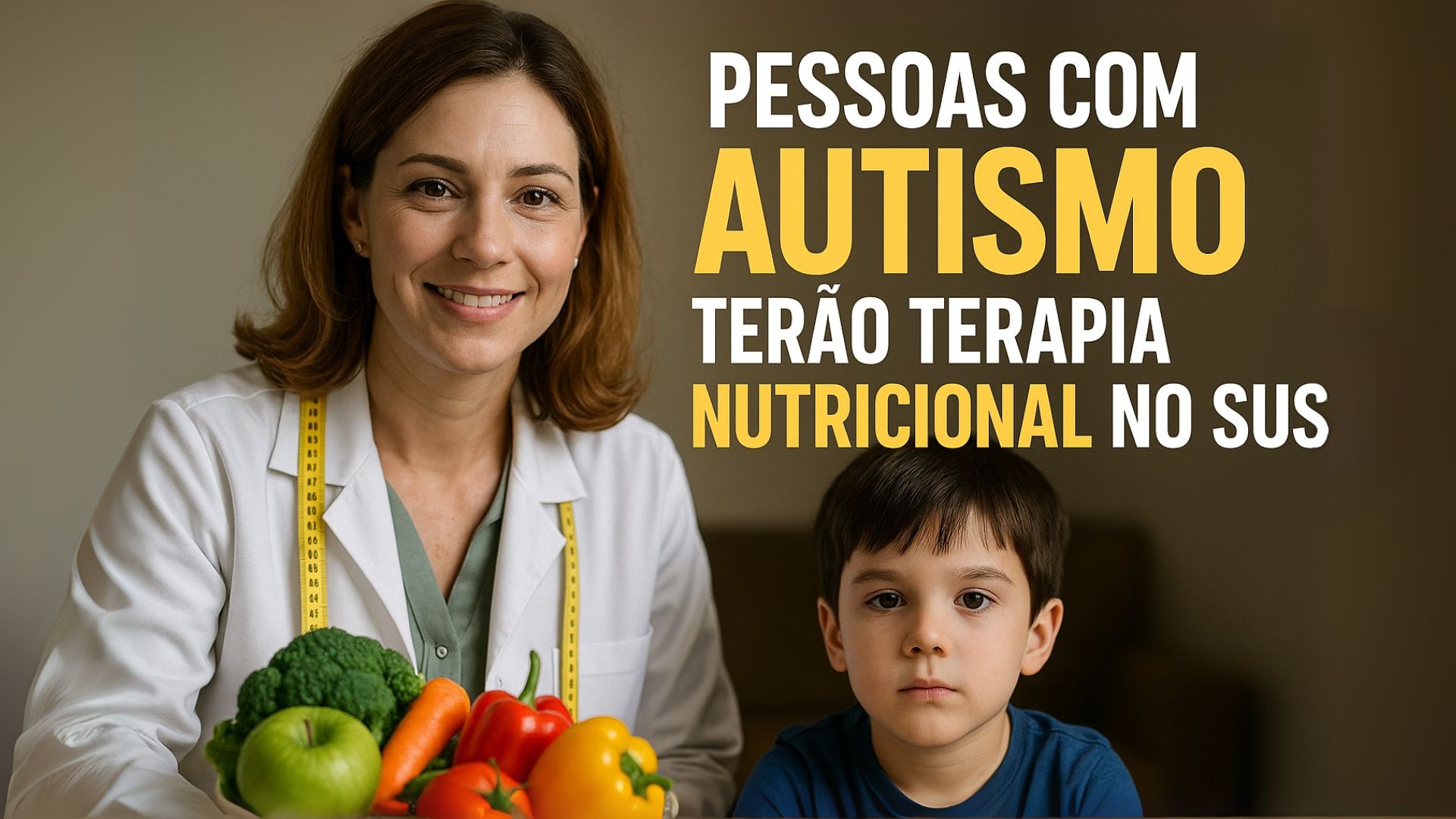
New Law Ensures Specialized Nutritional Care for People with Autism in SUS, with Technical Protocols and Qualified Professionals, Detailing Rights Already Enshrined in Legislation and Strengthening the Standardization of Care Across the Country.
The Law 15.131/2025, enacted on April 29 and published in the Official Gazette of the Union on April 30, now explicitly guarantees people with Autism Spectrum Disorder (ASD) access to adequate nutrition and nutritional therapy in SUS, conducted by a legally qualified health professional in accordance with clinical protocols and official therapeutic guidelines.
The regulation amended the Law 12.764/2012 (Berenice Piana Law) and took effect on the publication date, meaning the right can already be claimed within the public network.
What Changes with the New Wording of the Berenice Piana Law
Prior to the update, the Berenice Piana Law already provided access to comprehensive health actions and services.
-
With the arrival of Law 11.788, internships are now recognized as professional experience.

-
The Brazilian Civil Code states that a property owner has the right to cut the roots of a neighbor’s tree that invade their land, as long as it does not harm the tree itself. The owner must notify the neighbor before taking such action.

-
Engineer is sentenced to repay R$ 148 thousand after holding public positions in three municipalities in Rondônia with incompatible schedules, and the decision is upheld by the Court of Justice.

-
Chamber approves project that creates mandatory Life Insurance for police officers, firefighters, guards, and traffic agents.

With the 2025 amendment, the legislation began to specify the scope of the right to nutrition within the context of ASD, defining that nutritional therapy encompasses “all actions for the promotion and protection of the person with ASD from a nutritional perspective,” to be carried out by a qualified professional and observing protocols and guidelines issued by the competent authority.
The legal text explicitly states that care must follow official technical parameters.
Legal Basis, Effect, and Official Publication
The law was enacted on April 29, 2025 and published in the Official Gazette on April 30, 2025, with an immediate effect clause.
This indication eliminates doubts about applicability, allowing users and families to request care directly at SUS units, including primary health care units, specialty outpatient clinics, and services regulated by municipalities and states.
The full text, including the wording of the new paragraph of Article 3 of Law 12.764, is available on the legislative portal of the Chamber.
Origin of the Project and Presented Justification
The amendment stems from PL 4262/2020, proposed by Deputy Maria Rosas (Republicans-SP) and former Deputy Aline Gurgel (AP).
In the process and in official notes, the authors and legislative bodies highlighted that the measure aims to address frequent food challenges among people with ASD, such as food selectivity, associated with the risk of nutritional deficiencies, malnutrition, and obesity, among other issues.
The Chamber and the Senate pointed out that the normative definition provides technical support to teams and standardizes procedures, reducing variations in care across the country.
Clinical Protocols and the Role of Qualified Professionals
By linking care to clinical protocols and therapeutic guidelines, the law establishes a uniform basis for assessment, monitoring, and referrals.
The text stipulates that actions must be “performed by a legally qualified health professional, observing clinical protocols and therapeutic guidelines published by the competent authority.”
This requirement reinforces the multiprofessional nature of care and facilitates the organization of workflows by local management, from primary care reception to follow-up in specialized services.
Impact on the Organization of SUS and Care Flows
In practice, the normative update guides how municipalities and states should structure their offerings, regulation, and internal references.
With clear rules, teams now have the support to record demands, set monitoring goals, and coordinate their work with other therapies indicated for ASD.
Users and families, in turn, find objective parameters to request the service, even with supporting documents of the right.
According to the Senate Agency, standardization aims to tackle bottlenecks such as fragmentation of care and families wandering through different entry points.
Federal Agencies Reinforce Quality of Care
In announcing the sanction, the Ministry of Human Rights and Citizenship and Gov Agency emphasized that nutritional care for ASD must be individualized, focusing on qualifying multiprofessional care, reducing access barriers, and improving coordination between primary care and specialized services.
The official communication also stressed that the requirement for qualified professionals and the use of official protocols support clinical and administrative decisions, creating verifiable references for SUS and social control.
How to Request Care in the Public Network
With the law in effect, the guidance is to seek the reference health unit to register the demand and for initial clinical assessment.
If the need is confirmed, the user may be referred for specialized nutritional follow-up, in accordance with the current technical documents.
This dynamic continues under the coordination of the Ministry of Health, responsible for developing and updating protocols and guidelines, while states and municipalities organize their networks and internal flows according to installed capacity and regional agreements.
Legal Security and Enforcement of Compliance
By explicating what is meant by “adequate nutrition and nutritional therapy” in ASD and anchoring execution in official guidelines, the law creates a verifiable framework for the offer and supervision of the service.
The detailing facilitates the actions of public defenders, public prosecutors, and rights councils when there is undue denial, by providing a more precise legal text for case analysis.
Standardization also tends to guide contracts, goals, and regulatory instruments used by managers.
Diagnosis of the Nutritional Problem and Focus on Selectivity
The justification from the legislature emphasizes that food selectivity is one of the most recurring issues in ASD and can restrict dietary variety, influence growth, and lead to nutritional deficiencies.
The focus on nutritional therapy in SUS aims to offer evidence-based management strategies, monitoring goals, nutritional education, and, when indicated, coordination with other areas such as speech therapy, occupational therapy, and psychology, following the approved protocols.
Point of Attention for Managers and Families
Although the wording is a technical adjustment, its effects are concrete at the entry point of the system.
The legal command helps reduce divergent interpretations and provides predictability to work processes, which includes scheduling, regulation, and team matrixing.
For families, the main message is that the right is in effect and can be invoked based on the text of the law and clinical guidance documents, always subject to professional evaluation.
With this clearer regulatory framework, the requirement for qualified professionals and the use of official protocols are sufficient to improve real access to nutritional therapy for people with ASD in SUS, or will additional management and oversight measures be necessary for the right to be continuously fulfilled at the frontline?









-

-

-

-

-

15 pessoas reagiram a isso.