





 Português
  Inglês
  Espanhol
  4 min de leitura
  0 comentários


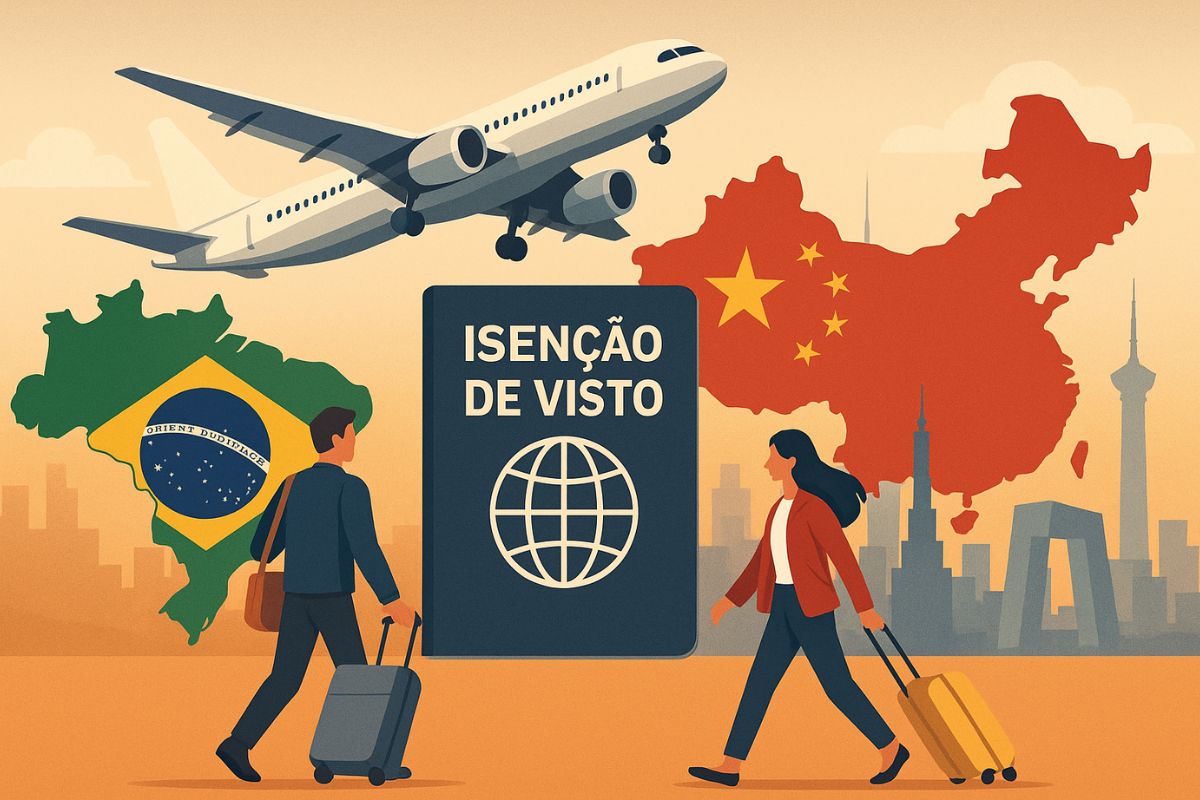
The Visa Exemption Policy Between Brazil and China Until 2026 Transformed Beijing and Shanghai into Highlights Destinations, Expanded the Flow of Brazilian Tourists, and Consolidated the New Direct Air Route Between the Two Countries.
The visa exemption granted by China to Brazilians until May 2026 is already causing a concrete change in international routes and global tourism statistics. The number of travelers from Brazil heading to the Asian country has increased by more than 200% since the policy’s inception, driven by the ease of entry and strengthened direct air connections.
According to the UOL portal, the movement is visible on booking platforms such as Booking, Decolar, and Kayak, where Beijing, Shanghai, and Shenzhen have become the most searched cities. The diplomatic opening between the countries, combined with cultural curiosity and business opportunities, has consolidated China as a new center of interest among Brazilians.
Record Growth in Travel and New Profile of Brazilian Tourists
Since June, when the visa exemption came into effect, searches for flights and accommodations in China have increased exponentially.
-
In a silent race, Shopee signs a mega contract in Guarulhos and accelerates the e-commerce war with faster deliveries, pressured shipping, and a new threat to rivals in Brazil.

-
Oil surged to $115 a barrel due to the war in the Middle East, and diesel in Brazil has already risen to R$ 7.45 per liter, while the United States…

-
Brazilian city bets on the business environment to generate jobs and attract investments in the energy sector — secretary reveals strategy at Macaé Energy 2026.

-
50 viaducts, 4 tunnels, 28 bridges, and 40 kilometers of bike paths: BR-262 in Espírito Santo will receive 8.6 billion reais for the largest engineering project in the state’s history, inspired by the Immigrant Highway in São Paulo.


Industry data indicate a 216% growth in searches for Chinese destinations and more than 85% in the volume of flight bookings between Brazil and China.
The impact goes beyond leisure tourism. Executives, entrepreneurs, and Brazilian students have expanded their presence in universities and international events.
The number of Brazilians enrolled in institutions such as Tsinghua University has doubled in a year, and business missions have begun to include visits to technology fairs and industrial hubs, such as Shenzhen and Guangzhou.
Beijing Consolidates as a Symbol of the New Brazil-China Route
Beijing has become the most symbolic destination of this new travel cycle. The city combines the millennial history of the Great Wall with the accelerated modernization of its financial and technological districts.
For many Brazilians, the fascination comes from the combination of discipline, safety, and innovation, which challenges old stereotypes about China.
The direct flights from São Paulo to Beijing with only one technical stop for refueling have reduced the total travel time and expanded the number of tourist packages.
Air connectivity is today one of the main drivers of this growing flow, and agencies report rapid sell-out of tickets for the first half of 2026.
The Cultural Experience and Adaptation Challenges
The visa exemption has removed bureaucratic barriers, but the journey still requires preparation. Travelers report that language and cultural differences are initial challenges, compensated by local hospitality and the efficiency of Chinese services.
The use of apps like WeChat and Alipay is essential, replacing physical cash in almost all transactions.
The travel agent and actress Daniela Tassy, who has lived in China for over a decade, highlights that adaptation comes with positive surprises.
She reports that “Brazilians are enchanted to find clean rivers, fast transportation, and safety on the streets,” something that contrasts with the old image of a polluted and closed country.
Education, Business, and New Cultural Connections
The educational exchange also reflects the effects of the visa exemption. The presence of Brazilian students in Chinese universities more than doubled in 2025, especially in courses related to engineering, international relations, and technology.
Beijing, Shanghai, and Chongqing have consolidated as centers of study and innovation, attracting young people interested in global training.
In the business field, corporate tourism is growing. Cities like Shenzhen and Guangzhou have become the stage for technology and industry fairs, where Brazilian companies seek partnerships in energy, robotics, and electric cars.
The result is a new phase of economic cooperation, supported by more accessible travel and direct contacts.
Uncertainties After 2026 and Outlook for the Future
The visa exemption policy is set to last until May 2026. Despite its success, there is still no confirmation regarding a potential extension.
The tourism sector fears that the end of the measure will slow the growth rate, especially since Brazil currently does not offer equivalent exemption for Chinese visitors, only the electronic visa.
According to specialized agencies, the continuation of the exemption is seen as essential to maintain the positive curve of travel and investments.
In addition to bringing the economies closer, the agreement strengthens China’s image as an open, technological, and culturally fascinating destination for Brazilians.
Do you believe that the visa exemption between Brazil and China should be extended after 2026 to maintain the growth rate of tourism and cultural exchanges between the two countries?









-

-

3 pessoas reagiram a isso.