





 Portuguese
  English
  Spanish
  4 min of reading
  0 comments


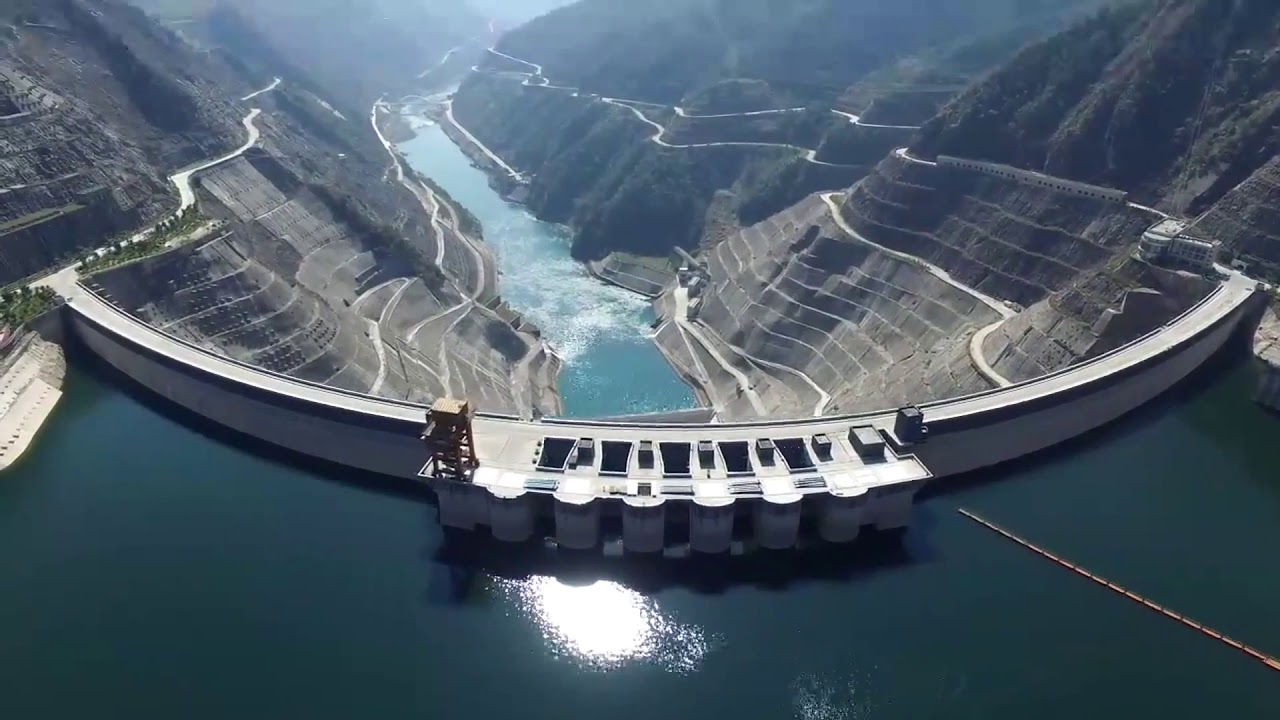
With 54 Million m³ of Compacted Material, the Nurek Dam Shaped an Artificial Mountain and Entered the History of Heavy Engineering.
In the Vakhsh River valley, in Central Asia, there stands a structure that, from a distance, appears to be a natural formation. But it is not. It is the Nurek Dam, in Tajikistan, a work that redefines the concept of construction on an extreme scale. Instead of exposed concrete and geometric lines, what is seen is a colossal mass of compacted earth and rock, totaling over 54 million cubic meters of material shaped by humans.
To put it into perspective, this volume would be sufficient to build several pyramids the size of Giza or create an artificial hill visible for miles.
Why Use Compacted Earth Instead of Concrete
Unlike arch or gravity dams made of concrete, Nurek was designed as an earthfill dam, a method chosen for geological and economic reasons. The region has an abundance of suitable rock and soil, while the massive use of concrete would require much more complex logistics.
-
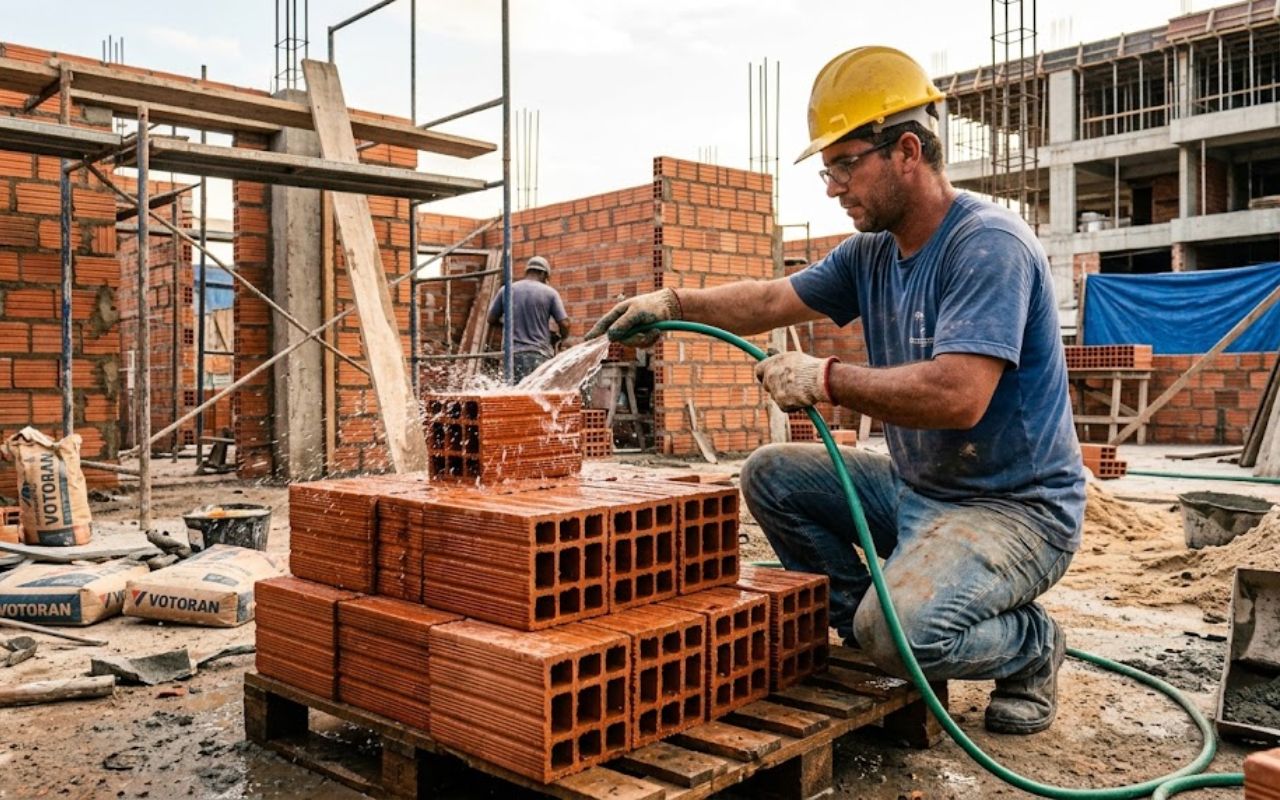
A simple technique of wetting the brick before laying it prevents cracks, improves the adhesion of the mortar, reduces fissures, and ensures stronger walls and more durable constructions.
-
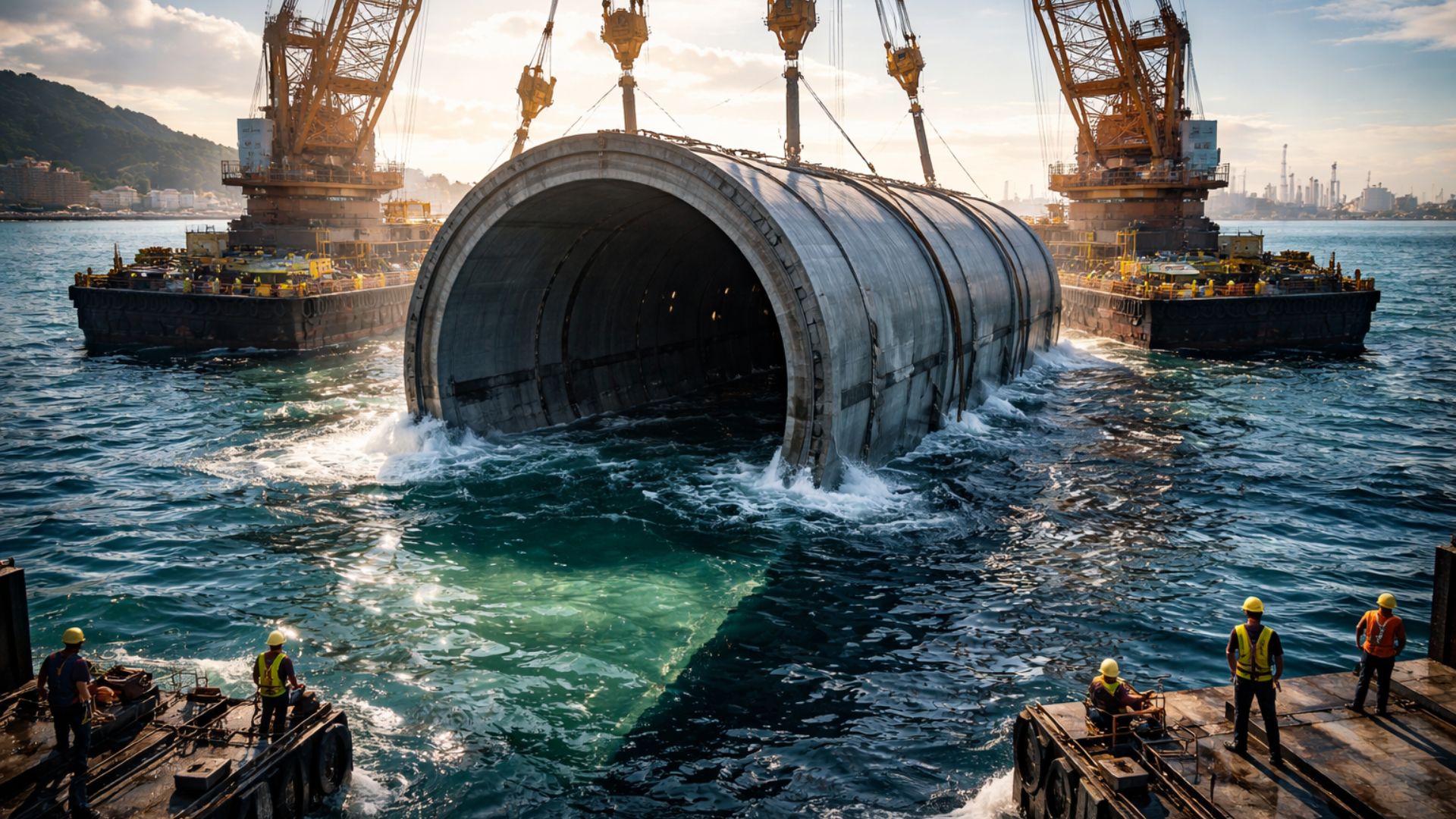
The government opens the vault and deposits R$ 2.6 billion for the construction of Brazil’s first underwater tunnel, with a length of 1.5 km, 870 m under the sea, a total project cost of R$ 6.8 billion, and a 30-year concession.
-
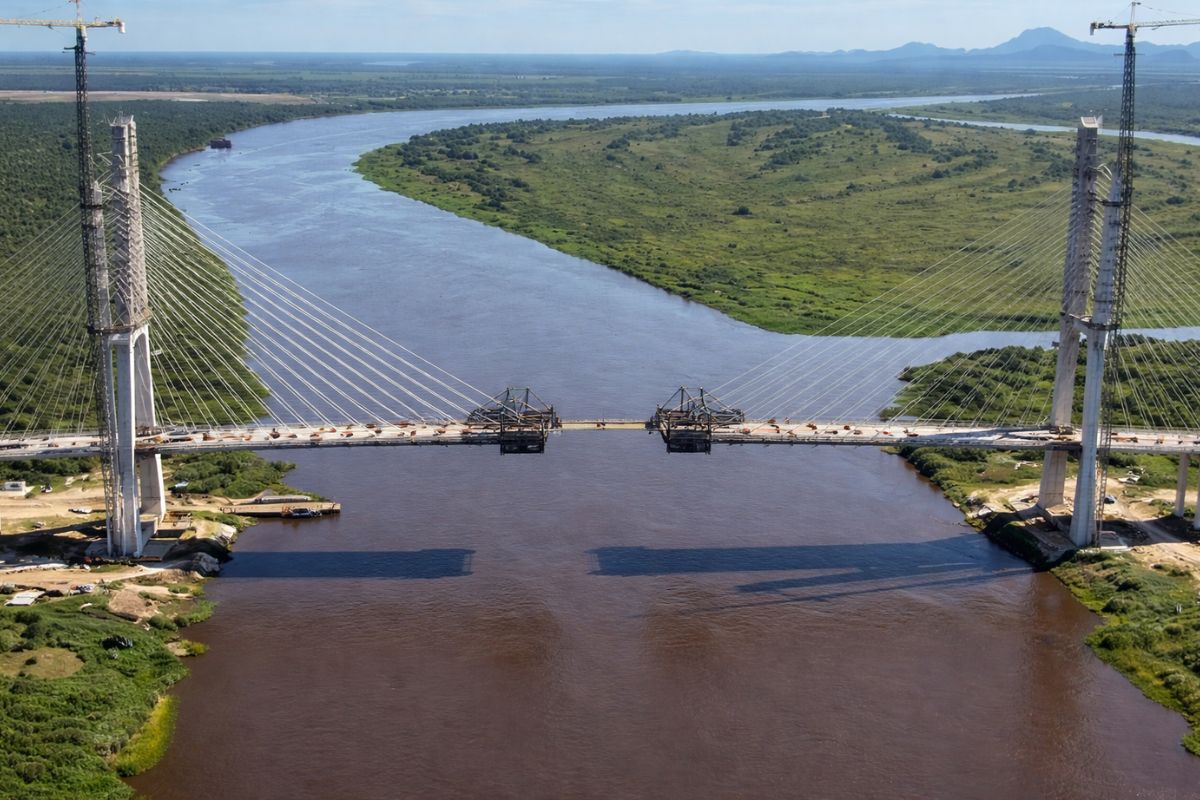
Only 46 meters remain for Brazil and Paraguay to connect via the Bioceanic Route bridge, the project that will link the Atlantic to the Pacific by land and change the logistical map of four countries in South America.
-
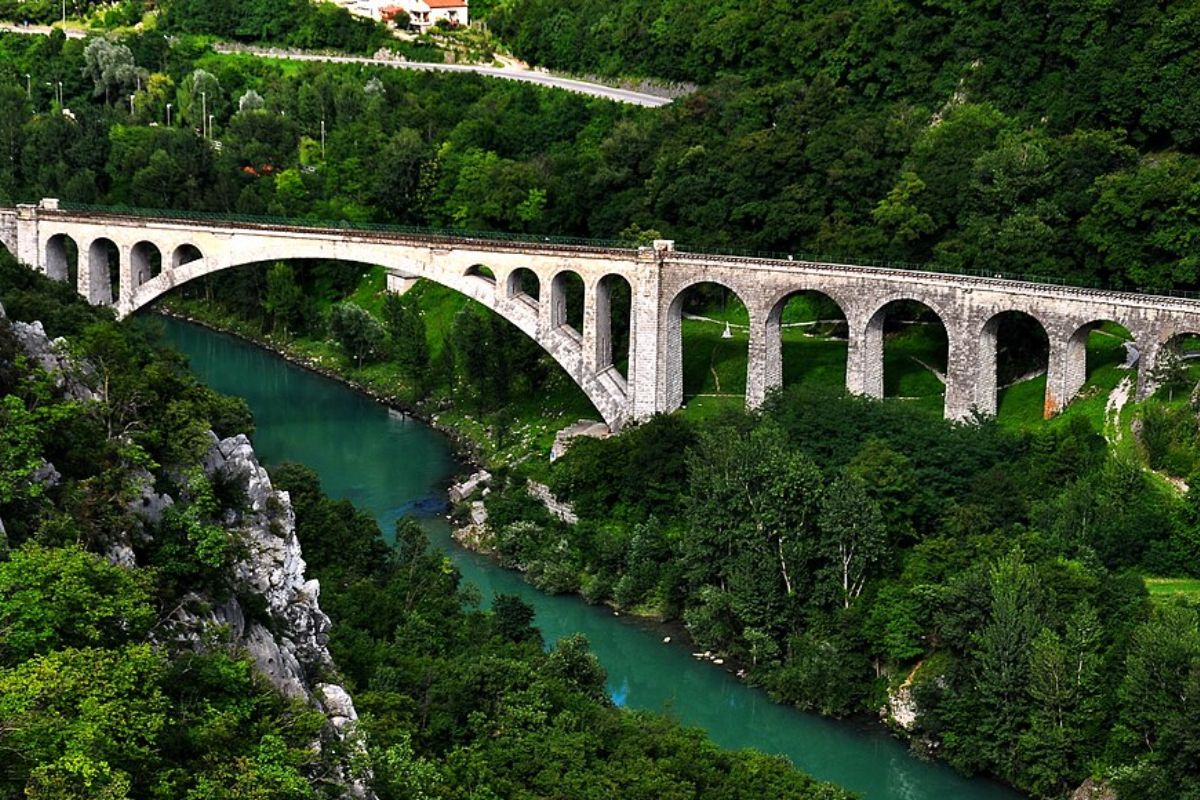
The bridge that holds the largest stone railway arch in the world: built over 100 years ago, destroyed in the war, and rebuilt to continue operating to this day, it still carries trains over the Soča River in Slovenia.

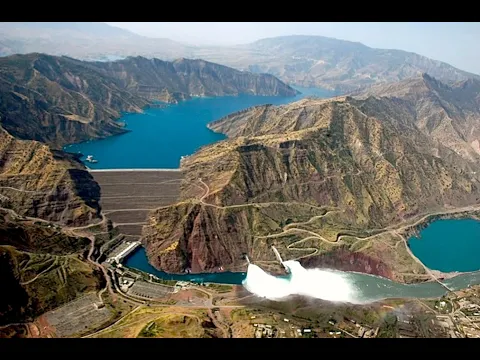

The principle is simple, but brutal in execution: successive layers of earth and rock are spread, leveled, and compacted until they form a stable mass capable of withstanding the pressure of billions of tons of water.
Each layer needed to achieve a specific density to avoid infiltrations, settlements, or structural failures over the decades.
Height That Rivals Skyscrapers
At about 300 meters high, the Nurek Dam reaches a dimension comparable to buildings of 90 to 100 stories. This makes it one of the tallest earthfill dams ever built on the planet.
Unlike vertical structures, however, this height is supported by an extremely wide base, which distributes the weight across the valley and ensures stability even under extreme loads.
The trapezoidal shape is not aesthetic: it is pure engineering to prevent the structure from “slipping” or suffering internal ruptures.
The Invisible Challenge: Compacting Millions of Cubic Meters
The greatest challenge of the construction was not raising something tall, but controlling the behavior of millions of cubic meters of loose material.
Each section needed to be compacted to the exact degree, not too loose, which would cause settlement — nor excessively rigid, which could generate internal cracks. Heavy equipment operated for years, in repetitive cycles, transforming raw material into a cohesive structural mass.
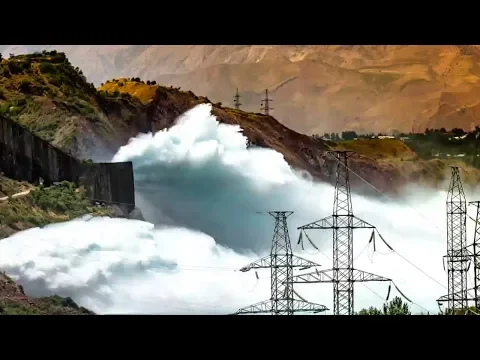
This type of work requires almost geological control, closer to “shaping a mountain” than to building a building.
A Reservoir That Pressures the Structure Day and Night
Behind the dam, a gigantic reservoir forms, whose mass of water exerts constant pressure on the compacted mass. In such dams, stability depends on the balance between the weight of the structure itself and the hydraulic force of the reservoir.
In Nurek, the volume of compacted material is precisely what ensures that the water does not overcome the dam.
Additionally, the internal impermeable core prevents water infiltration and compromises the interior of the structure over time.
Energy, Water Management, and Regional Impact
The Nurek Dam is not just a static colossus. It houses a hydroelectric power plant that, for decades, has been the largest in Central Asia, providing essential energy for Tajikistan and neighboring regions.
The control of the Vakhsh River’s flow also allows for flood management and water regulation, something vital in a mountainous region with an extreme climate.
Thus, the dam serves as energy, hydraulic, and territorial infrastructure simultaneously.
Comparisons with Other Megastructures
When it comes to giant works, names like Hoover Dam or Three Gorges often dominate popular imagination.
Nurek, however, impresses by another criterion: total shaped mass. While concrete dams draw attention for their visible height, Nurek stands out for its internal volume, the amount of displaced and compacted material, something that does not catch the eye but redefines the limits of heavy engineering.
It is a less photogenic work, yet more brutal in physical terms.
A Work That Shows How Far Engineering Can Go
The Nurek Dam proves that civil engineering is not limited to designing elegant structures but also to transforming geography on a continental scale.
It involves millions of cubic meters of earth rearranged with technical precision, creating an artificial mountain that works silently every day.
In the end, this dam is not just energy infrastructure. It is a concrete, or rather, compacted reminder that humans have been capable of moving, shaping, and stabilizing volumes of material comparable to the greatest monuments of Antiquity, using science, planning, and industrial strength.








-

-

-

-

-

33 pessoas reagiram a isso.