





 Portuguese
  English
  Spanish
  5 min of reading
  30 comments


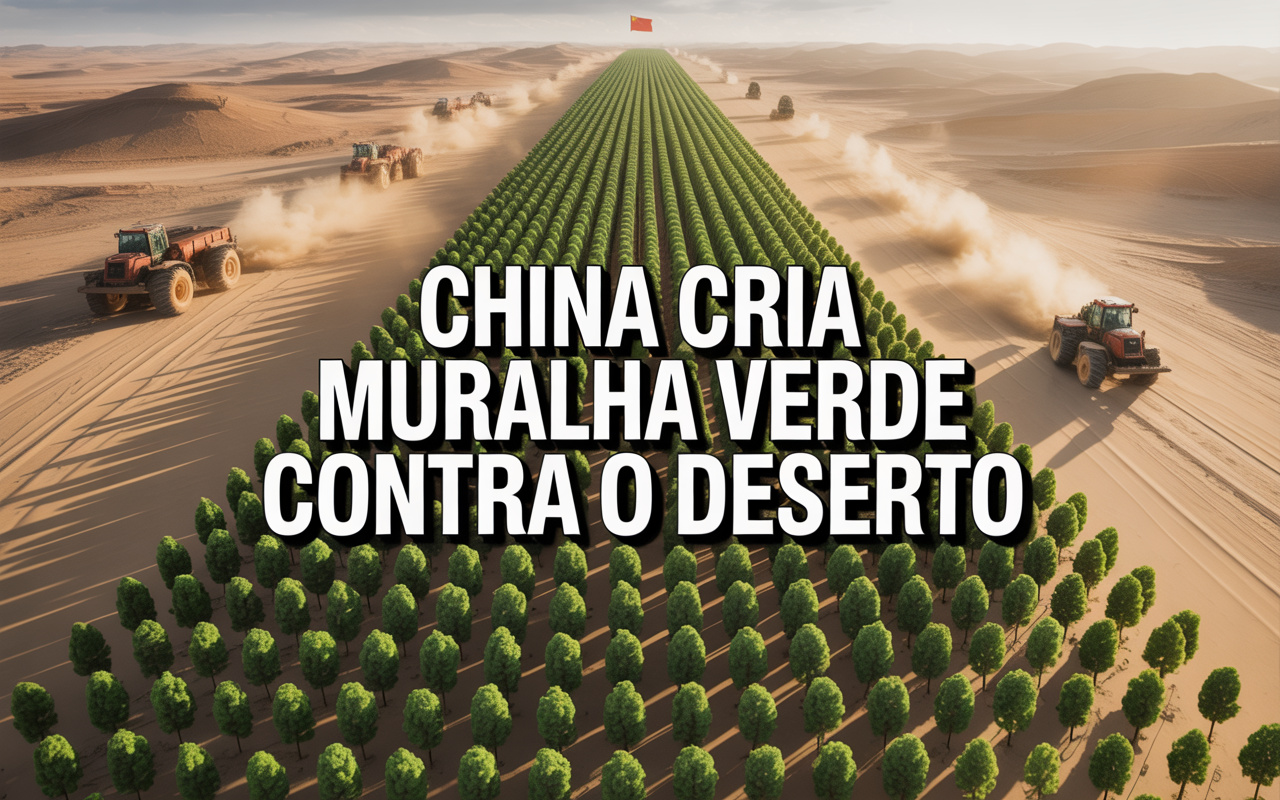


China Expands Its “Great Green Wall”, Program Started in 1978 with a Goal of 100 Billion Trees to Combat Desertification and Transform Arid Areas into Forest Belts.
When China began, in 1978, the largest reforestation program in modern history, much of the northern part of the country was on the brink of environmental collapse. The Gobi Desert was rapidly encroaching on farmland, sandstorms battered entire cities, and rural areas suffered from severe soil degradation, loss of productivity, and water scarcity. Decades later, the project known as the Three-North Shelterbelt Forest Program became internationally recognized as China’s “Great Green Wall”, a monumental effort aimed at combating desertification and restoring fragile ecosystems along thousands of kilometers of land.
According to data compiled by the Chinese government and institutions such as the FAO and the Chinese Academy of Sciences Institute of Geography, the country has set a goal of planting 100 billion trees by the middle of the century. The scale of the project is impressive: it is a green belt that passes through three major regions — North, Northeast, and Northwest — covering about 4,500 kilometers, nearly the distance between Oiapoque and Chuí. In terms of area, the total of the restoration zones exceeds the territory of many medium-sized countries.
The Advance of the Desert and the Environmental Challenge that Motivated the Project
The start of the “Great Green Wall” is linked to a combination of climatic and human factors. Northern China has always been sensitive to water shortages, but the problem intensified in the 20th century. Population growth, the expansion of agricultural areas without proper management, and the intensive use of wood for fuel accelerated soil degradation.
-
(Video): Italian pilot lands plane on moving train at 120 km/h and achieves unprecedented feat in aviation, even with a narrow runway and without direct visual contact.
-
It seems to have come out of a science fiction movie: A Brazilian city where it rains almost every day, recording over 4,000 mm per year, driven by climatic factors — a direct result of its strategic location in the Amazon.
-
The water crisis that could change everything this year has already begun; it’s not just about the climate, it affects technology, raises product prices, and can halt entire companies without warning.

-
A Japanese mason transforms raw granite into small cups and handcrafted utensils, collects giant stones, cuts with precision, and impresses with detailed manufacturing and finishing.

By the late 1970s, severe sandstorms were hitting cities like Beijing several times a year, reducing visibility, affecting public health, and depositing dust in distant regions.
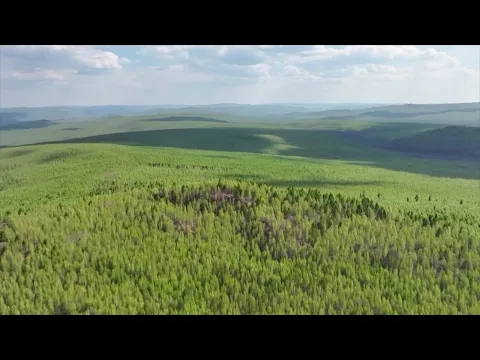

These events served as a wake-up call. To contain the advance of the Gobi, protect agricultural areas, and stabilize the local climate, the government initiated a plan that combined environmental engineering, social mobilization, and scientific research.
Since then, successive phases of the program have been implemented, involving universities, forestry institutes, and millions of rural workers mobilized over the decades.
Visible Results: Increase in Vegetation Cover and Reduction in Sandstorms
The combination of ecological restoration and large-scale reforestation began to show results especially from the 2000s onwards.
NASA satellites detected consistent growth in vegetation cover in significant parts of northern China. Research from the Chinese Academy of Atmospheric Sciences also indicates a reduction in the frequency and intensity of sandstorms in some regions.
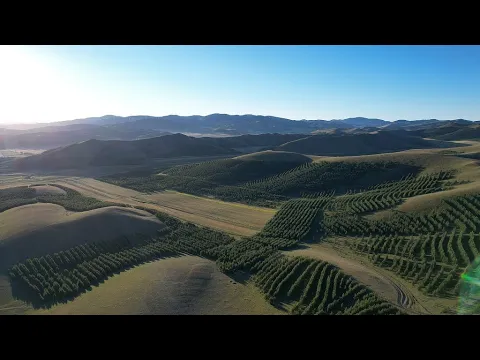
Although the goal of 100 billion trees is a long-term objective, estimates from the government and studies from international institutions indicate that tens of billions of seedlings have already been planted since the program began.
In areas that were previously completely barren, strips of vegetation have begun to reduce wind speed, stabilize soil, and facilitate water retention.
This transformation has allowed local communities to return to cultivating small agricultural plots and managing pastures more safely.
Criticism, Adjustments, and the Need for More Diverse Ecological Solutions
Despite the advancements, academic studies point out significant limitations. Some sections of the “Great Green Wall” faced low tree survival rates, especially when fast-growing species were planted that were poorly adapted to the arid climate.
Chinese and foreign researchers have noted that monocultures tend to be more vulnerable to drought, pests, and soil degradation.

These criticisms have led the program to undergo adjustments over the decades. In the more recent phases, scientists from the Chinese Academy of Sciences have prioritized native species, water management, natural regeneration techniques, and integration between forests and agricultural systems.
The current goal is not only to plant trees but to create sustainable ecological belts that can thrive with less human intervention.
Socioeconomic Impacts: From Climate Mitigation to Stabilization of Rural Communities
In addition to environmental effects, the project has also generated social impact. Rural communities that lived under the constant threat of sandstorms have gained greater stability for agricultural production.
In some regions, farmers have been trained to take care of nurseries, produce seedlings, and participate directly in restoration, creating new sources of income.
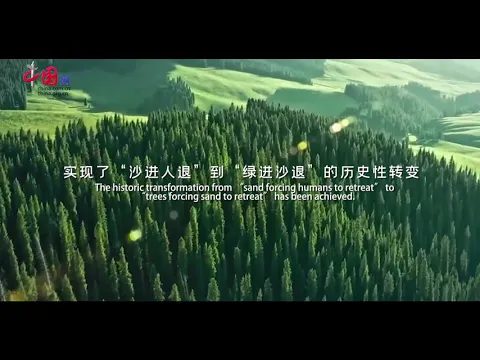
The program has also been integrated into China’s climate goals. The country is working to enhance carbon capture through reforestation, and the “Great Green Wall” is one of the pillars of this effort. Official reports indicate that reforested areas are already significantly contributing to soil and biomass carbon stocks.
One of the Largest Environmental Experiments on the Planet
The scale of the “Great Green Wall of China” is unprecedented. It is an ongoing ecological experiment, with challenges and achievements, technical adjustments, and ambitious goals. Instead of a physical structure like the stone Wall built centuries ago, this modern version is a living set of forests, shrubs, management systems, and communities involved in the task of halting the desert’s advance.
No other country in the world is carrying out such an extensive ecological restoration project with so many years of continuity. And, although the final goal is still far from being fully achieved, current results show that the restoration of large landscapes is possible when science, public policy, and social mobilization work together.
In the end, the “Great Green Wall” represents more than just a reforestation effort. It is an open-air laboratory on how to rebuild ecosystems on a large scale, minimize climate impacts, and transform entire regions through environmental regeneration.
In a century marked by extreme events, growing desertification, and pressure on natural resources, the Chinese project points to pathways with successes and failures that may inspire similar initiatives in other parts of the world.





Nós brasileiros também podemos fazer como a China tá fazendo,aqui no nosso sertão.
Eles (governo) quer manter o povo do sertão escravizado, mendigando benefícios.
Deve ser por isso que o governo Lula fez tanto esforço para a transposição do São Francisco, né meu querido?
O projeto, o aprendizado e o aperfeiçoamento levarão a China a muitas conquistas!!!
Por mais ações assim 💙🙏