





 Portuguese
  English
  Spanish
  6 min of reading
  0 comments


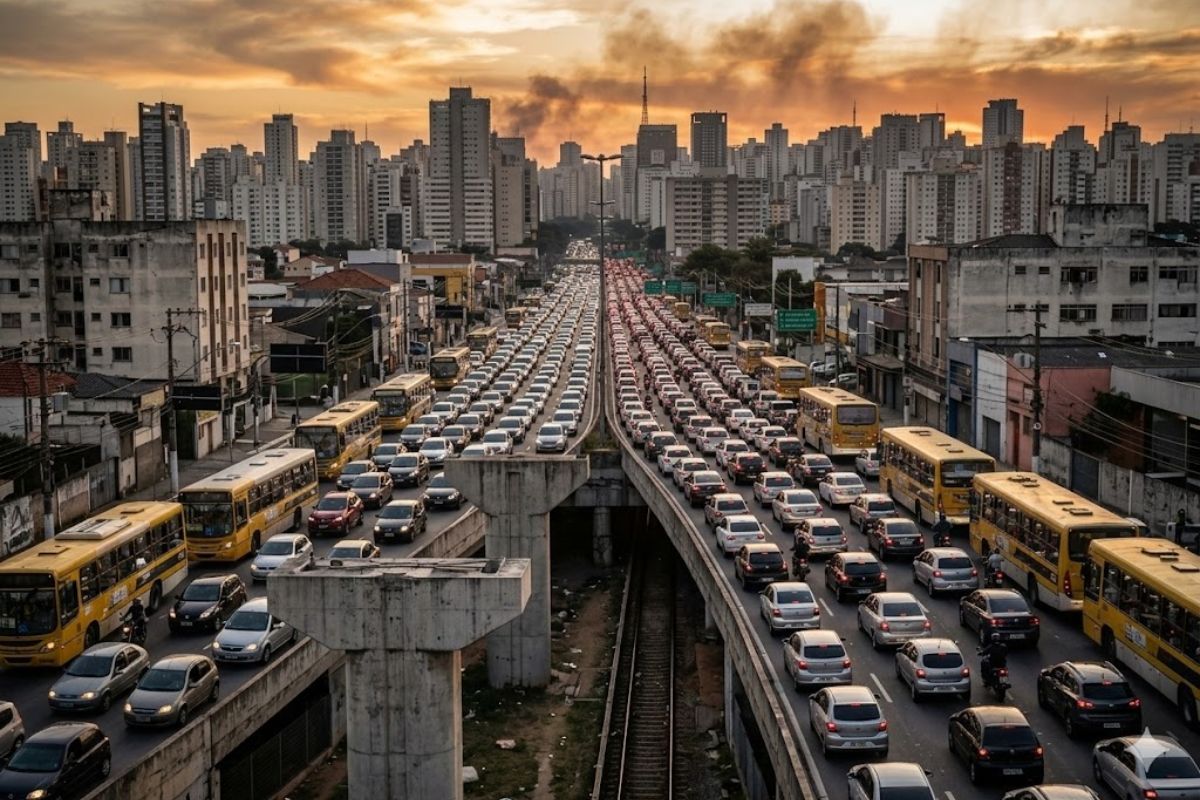
The Subway Remains Limited in Brazil Even in Capitals with Heavy Traffic, Because Expensive Lines and Complex Construction Are Hindered by Politics, Corruption, Fiscal Crisis, Expropriations, and Planning Failures, Creating Small Networks, Interrupted Projects, and a Routine Where Millions of Passengers Still Depend on Slow and Saturated Buses Daily.
The subway still occupies a small space in Brazil even in capitals where traffic already consumes hours of the day and the existing lines are far from meeting the size of urban demand. In gigantic metropolises, the delay in rail infrastructure has become part of the routine, and the consequences appear in long commutes, insufficient networks, and excessive dependence on buses and cars.
This situation did not arise by chance. Billions of dollars projects have stalled in a mix of politics, bureaucracy, corruption, fiscal crisis, and flawed urban planning, while city growth advanced at a rate much higher than subway expansion. The result is a continental country where few capitals have relevant systems and many others have not even managed to get their proposals off the ground.
Subway, Urban Train, and Aeromóvel Are Not the Same Thing
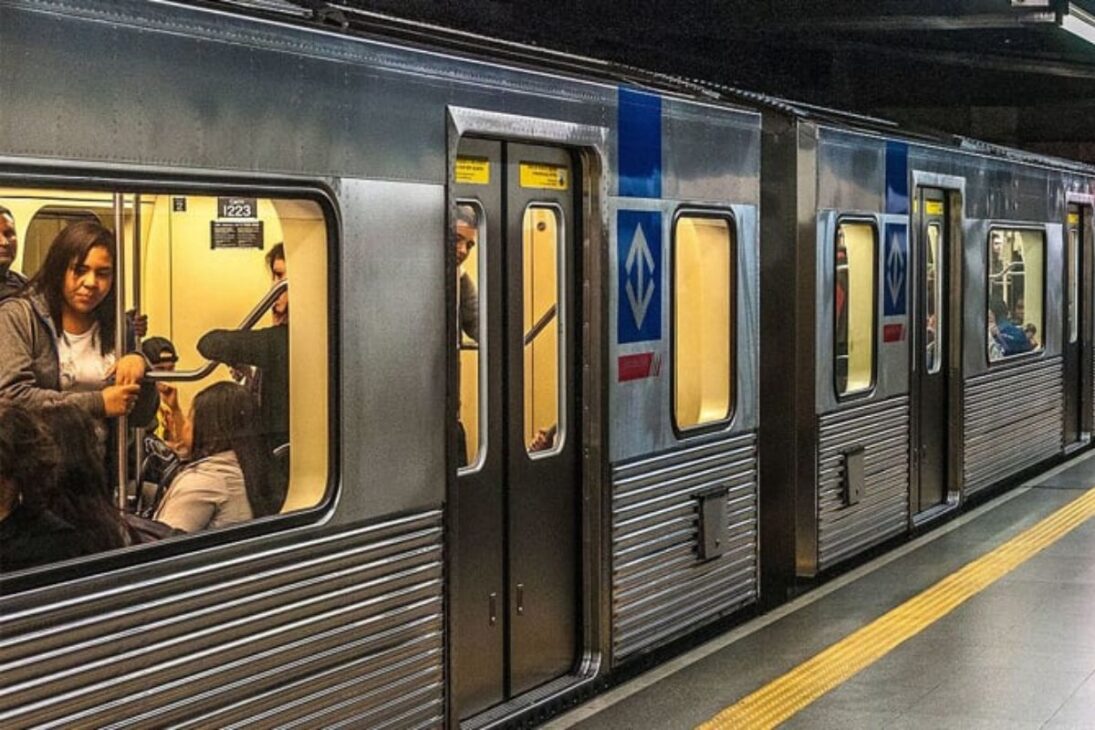
Part of the confusion about mobility in the capitals begins with the comparison between different systems. Train, urban train, subway, and aeromóvel operate on tracks, but do not serve the same function.
-
Attracting around 250,000 people a year, a lighthouse 200 meters from the sea, on a 60-meter high cliff, on the North Sea coast in Denmark, becomes one of the most impressive examples of how nature can threaten historical buildings.

-
The narrowest house in the world is only 63 centimeters wide, but inside it can accommodate a bathroom, kitchen, bedroom, office, and even two staircases.
-
In the middle of the sea, these enormous concrete and steel structures, built by the British Navy to protect strategic maritime routes, look like they came straight out of a Star Wars movie.
-
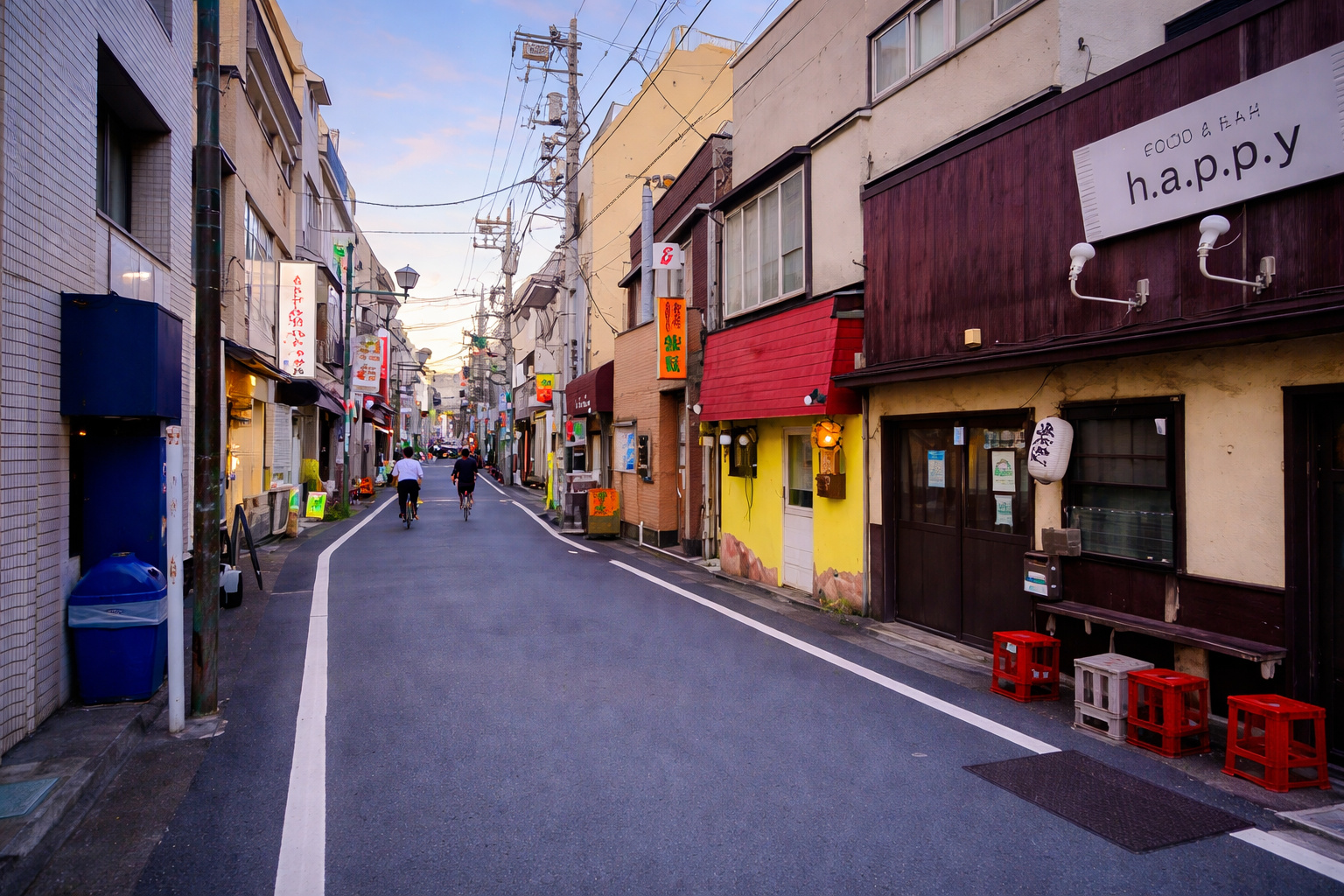
For years, no one could cross a neighborhood in Tokyo because of the tracks, but an impressive solution changed mobility and completely transformed the local routine.

The train typically serves suburbs and metropolitan areas with more distant stations and structures that can also accommodate freight transport. The urban train connects central areas to peripheries with more frequent stops.
The subway, on the other hand, is designed to cross the city more quickly, often in underground stretches, avoiding traffic lights, intersections, and part of the surface traffic.
The aeromóvel, in turn, appears as a specific and much more limited solution. In Porto Alegre, there was an old abandoned project and then a partial revival with a system inaugurated in 2013 to connect the airport to the train station.
This contrast helps to understand a central point: not every construction on tracks represents a structured subway network.
In several capitals, the absence of broad and integrated lines continues to be the underlying issue, even when specific solutions appear, sold as progress.
Where Brazil Managed to Advance and Where Capitals Fell Behind
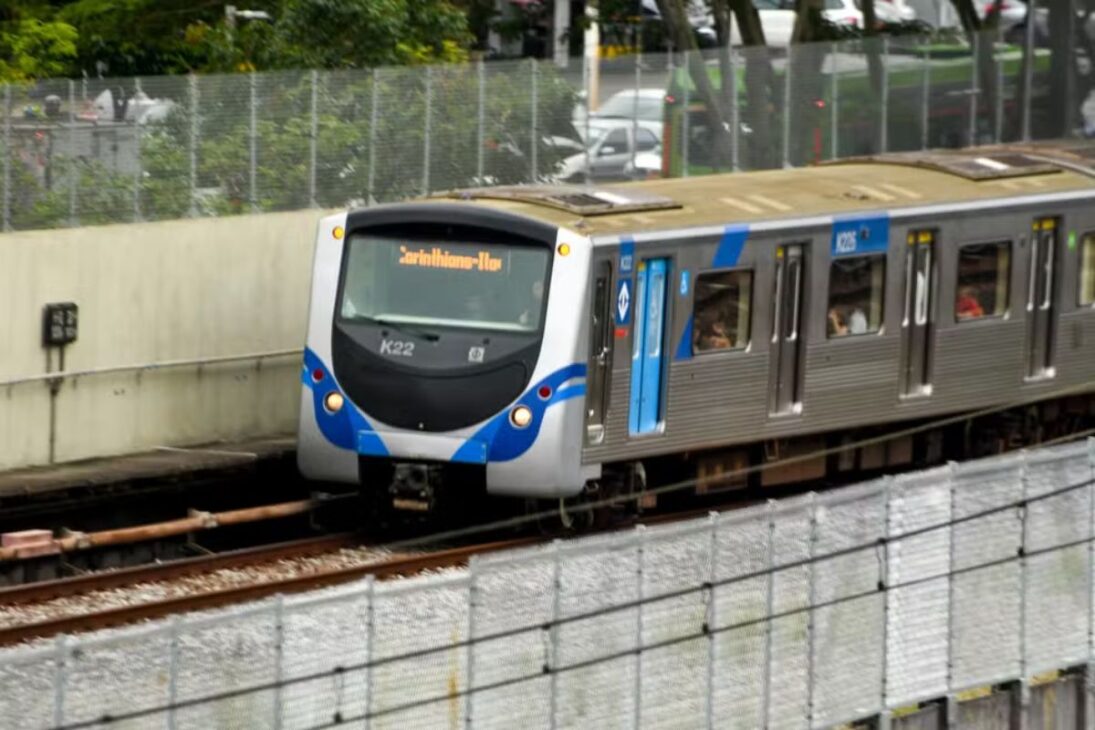
The history of the subway in Brazil begins in São Paulo, which was a pioneer in implementing this type of transport. The first line was inaugurated in 1972, initially known as the Blue Line, connecting Jabaquara and Vila Mariana.
Over time, São Paulo expanded its network and now leads the national metro-rail system with over 370 kilometers and nearly 200 stations.
Rio de Janeiro follows with an integrated network of 287 kilometers, while Belo Horizonte lags far behind, with only 28 kilometers and 19 stations.
The gap between one capital and another shows that growth has been unequal since the beginning.
Outside of the most remembered axis, the picture also reveals limited advances. In the Northeast, seven of the nine metropolitan regions have rail networks, with Recife exceeding 70 kilometers and 36 stations, while Fortaleza has over 50 kilometers and 41 stations.
In the Midwest, among four capitals, only Brasília has subway lines. In the North, no capital has this system.
In the South, Porto Alegre has Trensurb, with just over 40 kilometers, but the operation connects the center to the metropolitan area and does not solely resolve the internal mobility of the capital.
In a country the size of Brazil, the supply remains too small for the scale of the problem.
Why Do Lines Advance So Little in Brazilian Capitals?

The expansion of the subway is slow because the construction is expensive, heavy, and politically vulnerable. Since the World Cup in 2014, the country has added only 113 kilometers of new lines in eight years, growth equivalent to 2% per year.
Even São Paulo, which made the most progress during this period, continued to experience congestion of 1,350 kilometers. When the pandemic reduced demand for transport by 85% in 2020, the sector entered a crisis, and several ongoing projects were halted.
The subway requires long-term planning, but Brazil insists on treating it under the short-term logic of governments, crises, and political calendars.
In addition to the direct cost, the project faces judicial decisions, expropriations, environmental requirements, and administrative disputes.
Belo Horizonte is an example of a network frozen for decades: the only line has remained the same size since the beginning of operation, and the promised second line depends on a new company and the privatization of CBTU.
In Florianópolis, the discussion advanced to the point of concluding that the fare would only be viable with a population of 1 million inhabitants, while the city had just over 430,000.
Capitals grow, traffic worsens, but the lines remain halted amid calculations, impasses, and lack of coordination.
Corruption, Bureaucracy, and Poor Planning Dismantle Billion-Dollar Projects
In Brazil, the problem with the subway is not just technical. It is also political and institutional.
A large part of the systems implemented depended on public funding, and the opening to partnerships with the private sector did not eliminate the dependence on governmental decisions.
When there is a lack of administrative continuity and budget priority, complex constructions become eternal construction sites. The result is perverse: the country spends a lot, delivers little, and normalizes delay as if it were inevitable.
Corruption allegations deepen this blockage. In São Paulo, since 2008, the participation of cartels and illicit schemes involving the Metro and CPTM has been pointed out as an important cause of project delays or stoppages.
To this are added bribery, money laundering, and diversion of resources that should fund structural lines. When the construction delays, the cost does not disappear; it returns in the form of high fares, incomplete services, and insufficient expansion.
It is not just a matter of an expensive construction, but of public money poorly protected and poorly executed urban planning.
The Cost of Not Having Sufficient Subway Appears Every Day
The absence of an efficient subway directly affects the quality of life in the capitals. Crowded trains, few lines, poor service to the peripheries, high fares, and excessive dependence on buses make urban mobility a continuous strain.
Millions of people waste productive time every day because they need to combine several slow modes or face long car trips in already saturated traffic.
When the city grows without tracks at the same speed, the population pays with time, income, and physical wear.
On paper, the bus seems cheaper and simpler to implement. But in the long term, the subway delivers more efficiency, greater lifespan, and potentially lower operating costs per passenger.
The problem is that this long-term logic often loses out to the immediate and politically easier solution. Meanwhile, capitals remain stuck with short networks, and traffic continues to absorb demand that should be distributed across more robust systems.
The choice not to invest properly in the subway is also a choice to keep the chaos functioning.
Brazil does not have little subway due to lack of need. It has little because it allowed its capitals to grow faster than the infrastructure, accepted insufficient lines as a standard, and allowed politics, corruption, bureaucracy, and flawed planning to halt projects that should be central to urban life.
The delay is neither geographic nor inevitable; it is the result of poor decisions accumulated over decades.
Without serious expansion, traffic will continue to occupy the space that the subway could not take. And the longer it takes, the more expensive it becomes to correct this delay.
In your view, the main obstacle to expanding the subway in Brazil is the lack of money, politics, or the inability to plan cities as they already are?





-

Uma pessoa reagiu a isso.