





 Portuguese
  English
  Spanish
  8 min of reading
  0 comments


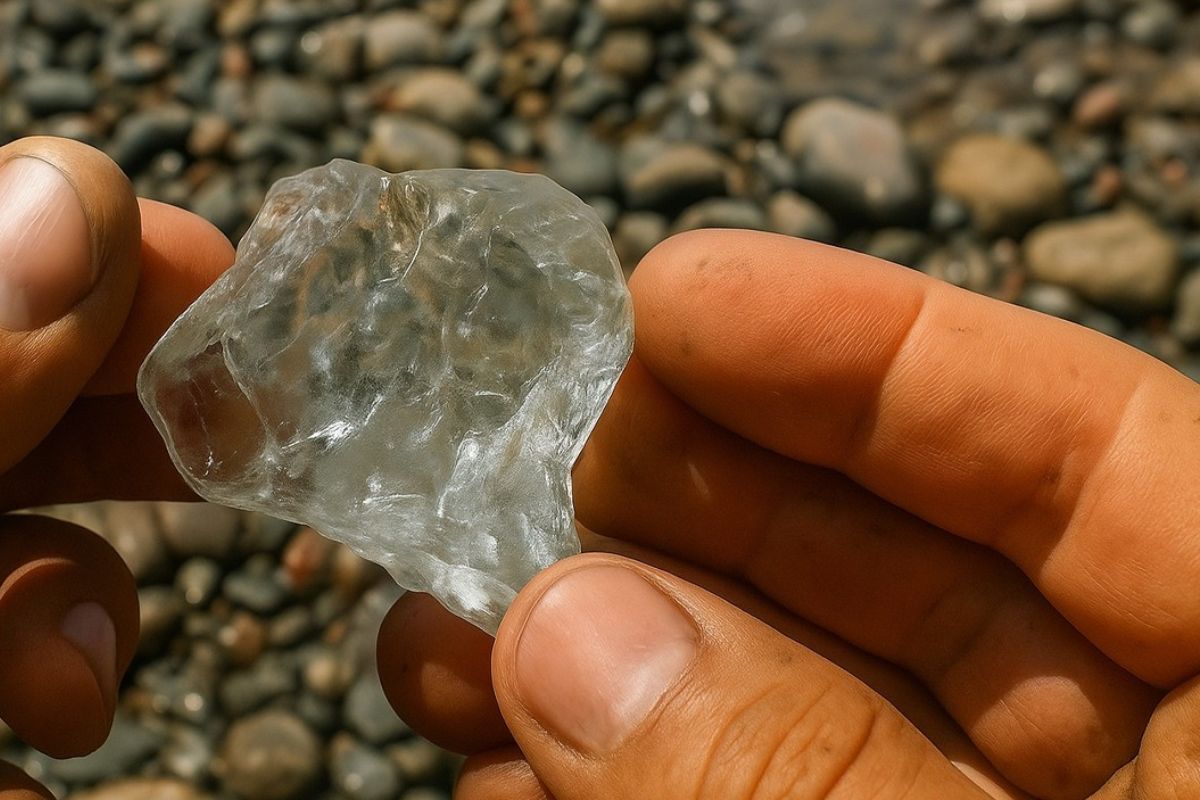
From The Deceptive Beauty Of Toxic Minerals To The Stones That Can Kill, This Investigation Shows How The Most Dangerous Minerals In The World, Including Radioactive Minerals And Other Deadly Minerals, Can Cause Cancer, Poisoning, And Lung Problems Just From Breathing The Dust Or Touching The Samples, Without You Realizing The Danger.
Have you ever stopped to think that the colorful little stone on the shelf, shining under the light, could be slowly poisoning your home’s environment? When we talk about toxic minerals, we are not just exaggerating for clicks. In many cases, we are literally talking about the most dangerous minerals in the world, true stones that can kill if broken, ground, licked, or inhaled as dust.
Behind the beautiful shine, there are minerals loaded with mercury, arsenic, lead, uranium, and asbestos-like fibers, capable of causing cancer, incurable lung diseases, acute poisoning, and even death. In some cases, small samples of these deadly minerals have already been sold on the internet as simple curiosities for collectors, while, in others, radioactive minerals were used without protection in industry, construction, and even in cigarette filters.
When A Beautiful Stone Becomes A Chemical Trap

At first glance, many of these toxic minerals seem harmless. Some are vibrant reds, others hypnotic blues or silvery like liquid metal.
-
Attracting around 250,000 people a year, a lighthouse 200 meters from the sea, on a 60-meter high cliff, on the North Sea coast in Denmark, becomes one of the most impressive examples of how nature can threaten historical buildings.

-
The narrowest house in the world is only 63 centimeters wide, but inside it can accommodate a bathroom, kitchen, bedroom, office, and even two staircases.

-
In the middle of the sea, these enormous concrete and steel structures, built by the British Navy to protect strategic maritime routes, look like they came straight out of a Star Wars movie.
-
For years, no one could cross a neighborhood in Tokyo because of the tracks, but an impressive solution changed mobility and completely transformed the local routine.

This is the case with cinnabar, used for centuries as a red pigment, and chalcanthite, a blue crystal that looks like it came out of a fantasy game.

The problem is that to become paint, decorative dust, or pigment, these stones need to be ground. At this moment, what the eye sees as beauty turns into poison.
Cinnabar is mercury sulfide in solid form. When pulverized, it can release particles capable of causing mercury poisoning, affecting the nervous system, kidneys, and even leading to death.
Chalcanthite is basically crystalline copper sulfate. Just touching, licking, or leaving it in contact with moisture can release copper ions that can contaminate skin, mouth, and water.
It’s no wonder specialists warn that some of the most dangerous minerals in the world should never be handled without gloves and masks, especially when in powder form.
In this same category are stibnite, rich in antimony, and galena, a classic source of lead. Both have been used in ancient cosmetics, especially in regions like Egypt and the Mediterranean. The idea was to look beautiful, but the complete package included years of chronic exposure to heavy metals directly on the face.
Heavy Metals That Transform Minerals Into Silent Killers
A large part of these toxic minerals makes the list of deadly minerals because of three well-known culprits in the chemistry of evil: arsenic, lead, and antimony. In minerals like orpiment and arsenopyrite, arsenic can represent up to the majority of the composition.
Grinding, heating, or dust in enclosed spaces can release gases and particles that attack the liver, kidneys, and nervous system.
Orpiment, with its vibrant yellow, has been used as a pigment in paintings and decorations, including in historical works. However, this golden beauty can carry about 60% arsenic, meaning a handling mistake can turn the paint into a chemical weapon in slow motion.
In other cases, like huningtonite, the toxic combo includes antimony, lead, and arsenic at the same time. It’s like a “trio of poisoning.” Antimony gained fame as a spy poison precisely because it is hard to detect and lethal in small doses.
It’s no wonder this type of rock is treated in laboratories with heavy protective equipment, not as a travel souvenir.
This is the point where the stones that can kill cease to be a metaphor. When you combine toxic minerals with heavy metals and fine dust, you are dealing with potential deadly minerals, even if it all looks like just a beautiful collection on the shelf.
Radioactive Minerals That Shine And Radiate Danger

Things escalate when radioactive minerals come into play. Torbernite is the perfect example: green crystals reminiscent of the famous kryptonite from Superman.
Some collectors even buy torbernite online, not realizing they are bringing home a mini source of radioactive uranium.
When torbernite is broken, scraped, or wears down over time, it can release radioactive dust. Inhaling this, even in small doses, means exposing the body to radiation capable of increasing the risk of lung cancer and other tumors.
This is why, in any serious list of the most dangerous minerals in the world, torbernite appears near the top.
But it’s not alone. Other radioactive minerals can release radon gas, an invisible gas linked to lung cancer, especially when accumulated in enclosed spaces.
Some types of feldspar, for example, can contain traces of uranium that, when decomposed, generate this gas.
In summary, some of these toxic minerals don’t even need to be licked or touched to cause problems. Just staying in the wrong place for too long can turn a basement or an unventilated room into an invisible risk environment.
It’s the kind of danger that makes many people reclassify some pieces of their collection as deadly minerals disguised as decoration.
From Dust To Lung: The Invisible Danger Of Mineral Dust
Another underestimated category is minerals that, in solid state, seem harmless, but become a deadly threat when they turn to dust. Quartz is the best example: the second most abundant mineral on Earth, found in mountains, beaches, sands, ceramics, glass, and so on.
By itself, a quartz crystal in your hand will not poison you. The problem begins when this quartz is ground, cut, sanded, or crushed on an industrial scale.
Inhalable silica dust is directly linked to silicosis, chronic pneumonia, and lung cancer. In mines, quarries, and factories, this makes quartz one of the most dangerous minerals in the world when protective equipment is ignored.
The same logic applies to mineral fibers. Riebeckite, crocidolite, and chrysotile form very fine fibers that break easily and become suspended in the air.
These fibers, close relatives of asbestos, can enter deep into the lungs and become trapped there for decades, generating asbestosis, mesothelioma, and other cancers.
This is why so many specialists classify these materials as toxic minerals, even when, at first glance, they only look like blue, gray, or brown stones.
In many old constructions, these fibers remain trapped in tiles, boards, and insulation, turning buildings into ticking time bombs. We don’t even see it, but we are breathing a bit of that every day.
Asbestos, Deadly Fibers, And The Legacy Of Civil Construction
Among the deadly minerals most studied, asbestos occupies a special place. For decades, it was treated as a miraculous material: heat resistant, cheap, and easy to mold. As a result, roofs, water tanks, car brakes, coatings, and insulation for entire buildings were made with variations of asbestos, such as chrysotile and amosite.
The problem is that these microscopic fibers, when released, do not leave the lungs. They lodge in the tissue and can take years or decades to become serious diseases. In many countries, asbestos was banned too late.
Only after thousands of cases of cancer and incurable diseases did it become clear that it was one of the most dangerous minerals in the world, even though it was everywhere.
This is the classic case where stones that can kill were used as an engineering solution, packaged as technology, and sold as progress.
Today we know that, in many old constructions, these fibers remain hidden, reminding us that some toxic minerals are dangerous precisely because no one knows they are present.
Between The Mystical And The Deadly: Crystals, Beliefs, And Real Risks
Some of these toxic minerals also circulate in the world of “mystical” crystals. Phenacite, for example, is seen by some as a stone capable of opening spiritual portals or enhancing intuition.
But, in practice, it contains beryllium, an element linked to severe lung diseases when inhaled as dust.
While some believe that certain crystals “raise the vibration,” what science shows is that handling minerals with beryllium, arsenic, mercury, or lead carelessly invites heavy metals into the body. The line between fascination and recklessness is very thin here.
This is why, in any serious approach, these crystals are categorized with the same basket of deadly minerals: not because every person who touches them will get sick, but because, without knowledge, the chance of unnecessary exposure to toxins increases significantly.
And, as always, the ones who pay the price are the lungs, liver, and nervous system.
How To Coexist With Toxic Minerals Without Paranoia Or Carelessness
Do you feel like throwing away every stone in the house? Calm down. Not every rock is dangerous, and not every exposure leads to illness.
The point is different: to know how to recognize when you are dealing with truly toxic minerals and when it’s just common stone.
Some basic rules help a lot:
- Be suspicious of very colorful crystals sold without clear identification, especially if the seller cannot explain the composition.
- Avoid grinding, sanding, cutting, or sawing any stone without a mask and good ventilation.
- If you work with mining, ceramics, construction, stone cutting, or handling mineral dust, protective equipment is not a luxury; it’s survival.
- In collections, keep potential radioactive minerals identified, away from children and pets, and preferably in closed packages.
The big message is simple: the most dangerous minerals in the world continue to be explored, sold, and used by industry, often because they generate high profit, beautiful pigments, or cheap materials.
But on the other side of the chain, the ones who pay the price are unprotected workers and consumers who have no idea what they are breathing.
In the end, toxic minerals, radioactive minerals, stones that can kill, and other deadly minerals are part of the same story.
A nature creates, industry exploits, ignorance completes the service. What changes everything is information.

And you, have you ever had a crystal or stone at home that, after learning about these risks, you think could make the list of the most dangerous minerals in the world?






Seja o primeiro a reagir!