





 Portuguese
  English
  Spanish
  4 min of reading
  0 comments



Special Retirement for High-Risk Activities Remains in Effect in 2025 with Specific Rules and Requires Detailed Technical Evidence from the Insured.
In 2025, the National Institute of Social Security (INSS) maintains the possibility of special retirement with 15 years of contribution and 55 years of age for workers engaged in underground mining at production fronts.
The rule covers seven specific functions related to mineral extraction underground and remains valid according to the social security regulations following the Retirement Reform.
Special retirement is a benefit intended for insured individuals habitually and permanently exposed to agents considered harmful to health or physical integrity.
-
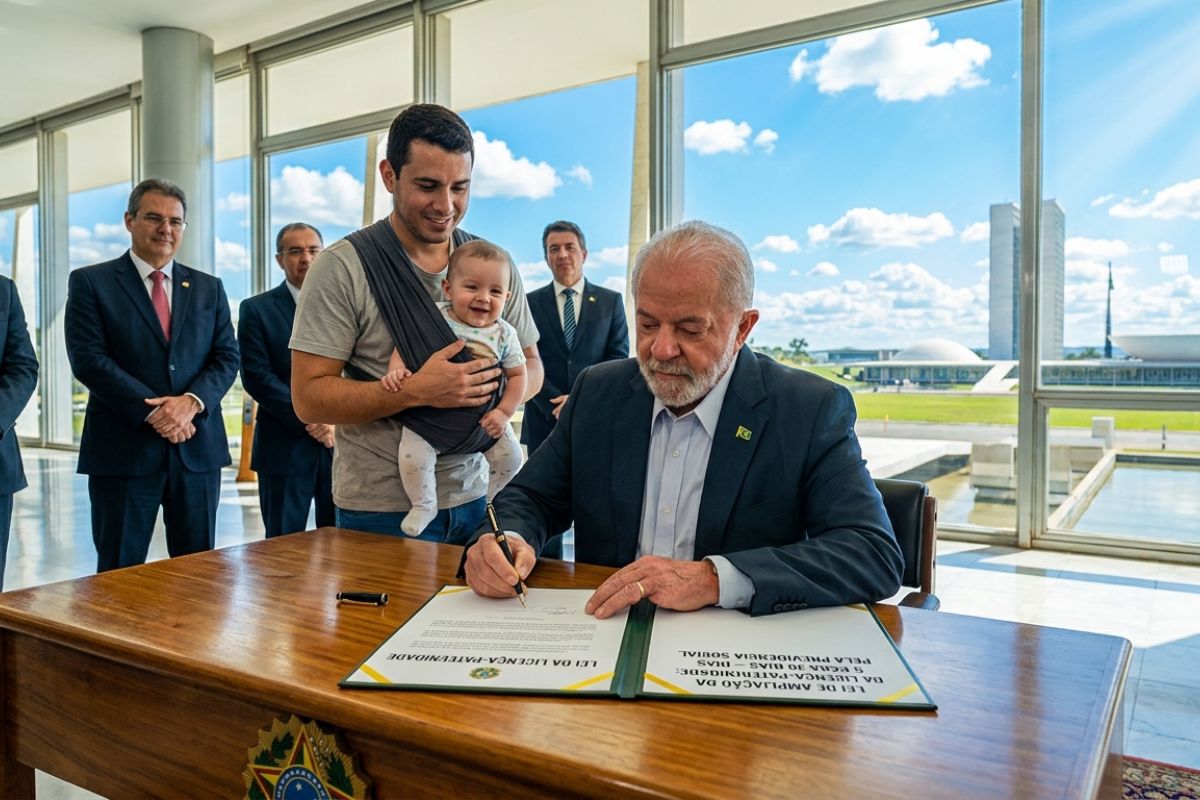
Government enacts new law: paternity leave increases from 5 to 20 days with gradual increases until 2029, and Social Security pays the paternity salary; companies no longer bear the absence cost, estimated at R$ 5.4 billion.
-
End of the 1-hour lunch break in the CLT? Current labor law maintains the break, allows for negotiated reductions, and defines rules for working hours and home office in Brazil.

-
Employee Fired After Accumulating 114 Days of Medical Leave in One Year, Labor Court Upholds Company’s Decision

-
Employee Fired While Treating Depression Wins in Court and Vale Is Required to Rehire Him Following Decision Based on the CLT and INSS Benefits


The legislation establishes three categories of classification, with requirements of 15, 20, or 25 years of special activity, associated with minimum ages of 55, 58, or 60 years, respectively.
In the case of underground mining at the front of the mine, classified as of higher risk by occupational health organizations, the reduced time of 15 years and 55 years of age applies.
Professions Entitled to the Benefit with 15 Years of Contribution
The 15-year criterion is directed exclusively to workers who operate in underground mines, at the fronts of the mine, with continuous exposure to harmful agents.
The INSS considers this classification only for activities effectively performed underground, in direct contact with environmental risks identified in technical reports.
Within this group, there are seven typical functions of production fronts. Among them is the crusher, responsible for rock fragmentation.
The rock loader, who transports the extracted material. The excavator, who performs manual excavations or uses small tools. The stabilizer, who works on tunnel and gallery stabilization.
Also included are the miner underground, the operator of underground rock crusher, and the driller of rocks in caves.
These professionals are frequently exposed to intense noise, mineral dust, and extreme temperature variations, according to occupational health specialists.


Health Risks Identified by Technical Organizations
Underground mining is described by technical organizations as an activity with high risk potential due to prolonged exposure to mineral dust such as silica.
Repeated inhalation of these particles can lead to silicosis, an irreversible lung disease.
There is also a recurring record of noise-induced hearing loss among workers in the sector, according to occupational medicine studies.
In addition to physical and chemical agents, safety assessments point to factors such as restricted airflow, excessive heat, and risk of structural accidents.
For this reason, Social Security maintains different parameters for recognizing the special activity in this segment.
Mandatory Documents to Prove Special Activity
For the grant of special retirement, the INSS requires objective proof of exposure to harmful agents.
The central document is the Occupational Profile Report (PPP), issued by the company and filled out based on technical evaluations of the work environment.
The PPP gathers information about functions performed, environmental conditions, and agents to which the worker was exposed.
The Technical Report of Environmental Working Conditions (LTCAT), prepared by a safety engineer or occupational physician, serves as a reference for the PPP.
The absence of appropriate documentation may lead to non-recognition of the period as special.
In addition to these documents, the insured must present professional and personal records that confirm labor links and contributions.
In some cases, the INSS may request additional information or a technical evaluation to assess the consistency of the provided information.
Transition Rules for Those Contributing Before the Reform
For workers affiliated with the INSS before the Retirement Reform in November 2019, the transition rule based on points applies.
In this modality, age is added to the total contribution time.
For activities classified as higher risk, requiring 15 years of exposure, the minimum score is 66 points.
For those engaging in special activities of 20 years, the requirement increases to 76 points.
For activities of 25 years, the minimum total rises to 86 points.
Thus, an underground mining professional with 55 years and 15 years of special work exceeds the required minimum threshold.
Permanent Rules Applied to New Contributors
For insured individuals who began contributing only after November 2019, the points system no longer exists.
In these cases, only the permanent rules apply, which require both minimum exposure time and minimum age.
At the highest risk level, the requirement is for 15 years of special contribution and 55 years of age.
In the next tiers, the legislation provides for 20 years of contribution and 58 years of age for medium risk.
And 25 years of contribution and 60 years of age for activities classified as having lower environmental aggressiveness.
How to Make the Request Through Meu INSS
The request can be made entirely through the Meu INSS platform, available on the website and app.
The insured individual must access the system with their Gov.br account, search for the option of retirement by time of contribution, and select the modality corresponding to special retirement.
In the next step, it is necessary to attach digitized documents, including PPP, LTCAT, work card, and identification records.
If there are inconsistencies or lack of technical information, the INSS may request additional information.
Social security technicians recommend reviewing documents in advance.
The guidance is to check whether the PPP and LTCAT accurately describe the activities performed and the harmful agents present.
This precaution reduces the likelihood of additional requirements during the administrative analysis.
With the maintenance of the rules allowing the benefit after 15 years of contribution and 55 years of age for those working in underground mining, have you checked if your documentation is up to date to request special retirement?








Seja o primeiro a reagir!