





 Portuguese
  English
  Spanish
  8 min of reading
  0 comments


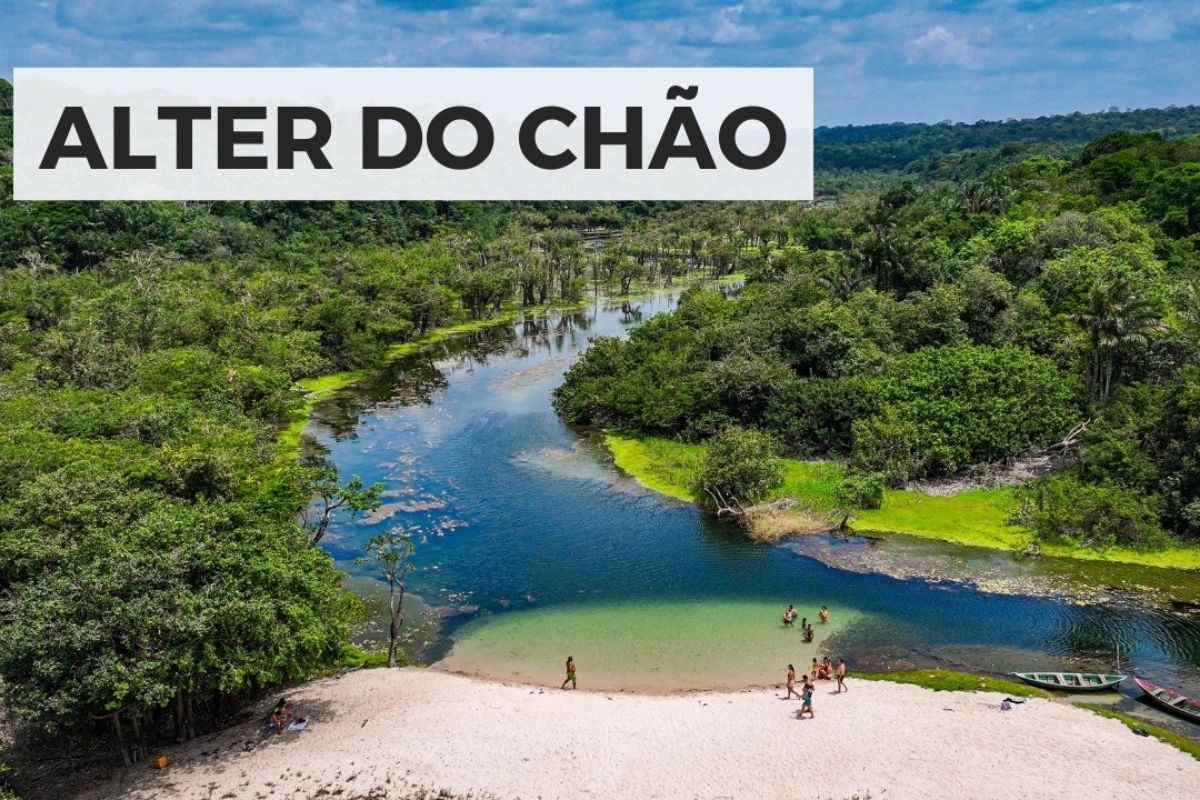
Between Giant Rivers, Crystal Clear Freshwater Beaches, Hidden Igarapes, Shaded Trails, and Smoky Amazonian Cuisine, Alter Do Chão Mixes Charming Inns, Welcoming Riverine Communities, and Community-Based Tourism in an Unforgettable Journey Through Pará That Offers Intense Nature Without Losing Comfort for Couples, Families, Curious Ones, and Solo Travelers.
Have you ever imagined getting on a boat in the middle of the Amazon and landing on a stretch of white sand surrounded by crystal clear freshwater beaches, with the calm river feeling like a warm pool and the forest embracing everything around? In Alter do Chão, in western Pará, this scene is not a brochure exaggeration; it’s literally the day-to-day scenario.
Throughout the year, the river levels rise and fall, drawing and erasing beaches, opening hidden igarapes, flooding the forest, and completely changing the experience for travelers. It’s as if there are two destinations in one place, and in all of them, river life, the forest, and local culture set the tone for the trip.
Where Is Alter Do Chão and Why Do So Many People Talk About This Place

Alter do Chão is located in the interior of Pará, in an area that integrates the municipality of Santarém, about 120 kilometers from the capital Belém, in a region where the major rivers of the Amazon create landscapes that look like a montage.
-
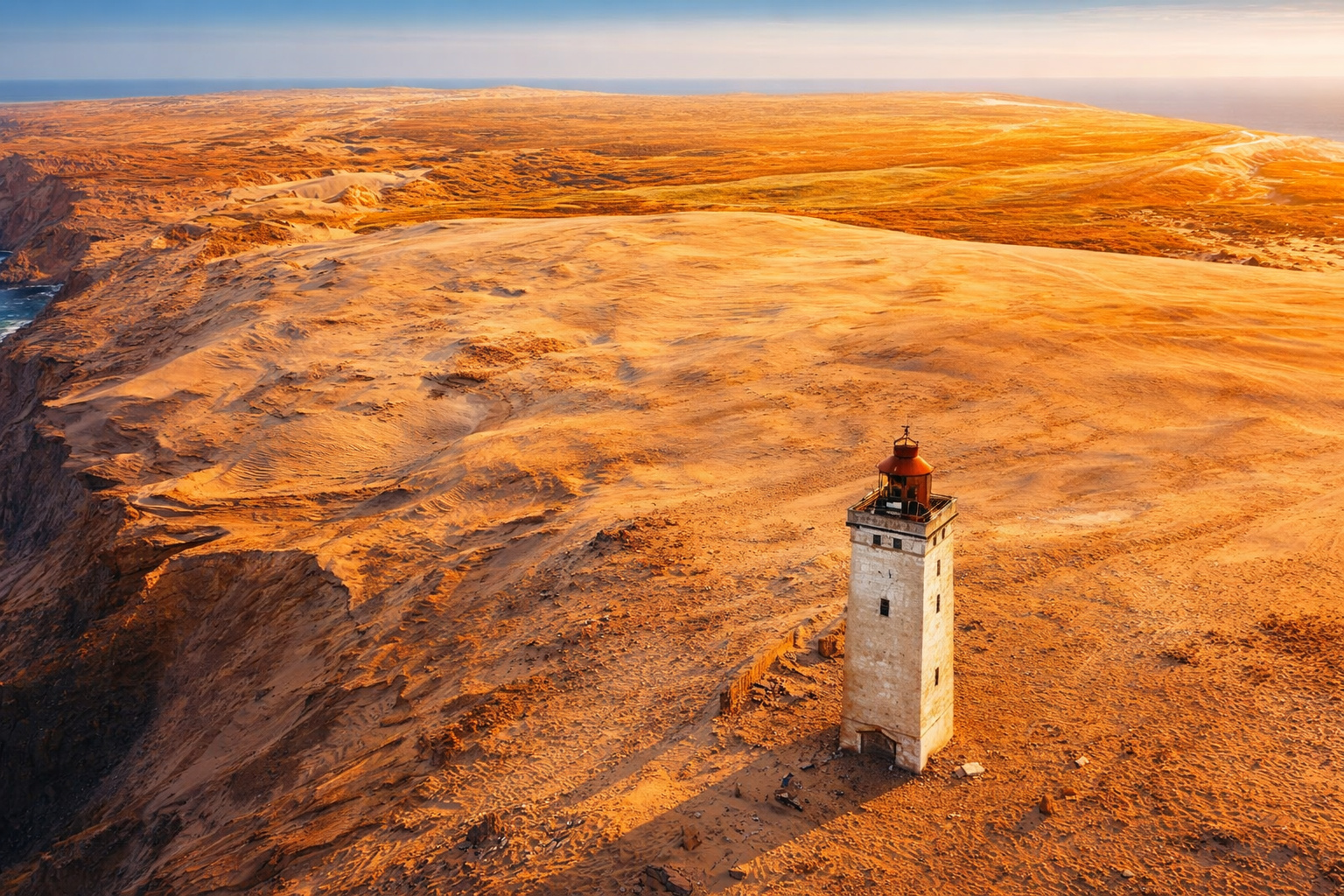
Attracting around 250,000 people a year, a lighthouse 200 meters from the sea, on a 60-meter high cliff, on the North Sea coast in Denmark, becomes one of the most impressive examples of how nature can threaten historical buildings.
-
The narrowest house in the world is only 63 centimeters wide, but inside it can accommodate a bathroom, kitchen, bedroom, office, and even two staircases.

-
In the middle of the sea, these enormous concrete and steel structures, built by the British Navy to protect strategic maritime routes, look like they came straight out of a Star Wars movie.

-
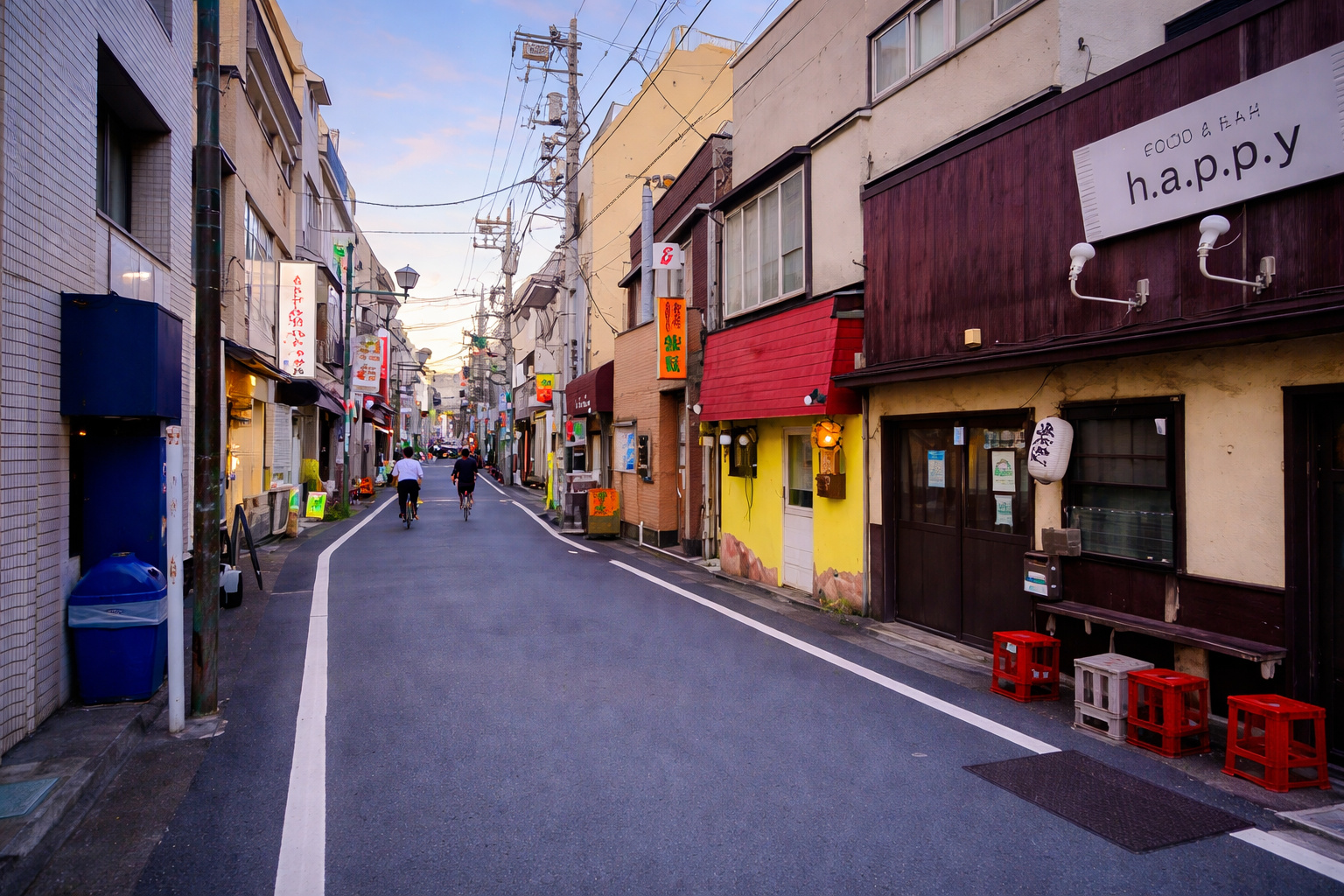
For years, no one could cross a neighborhood in Tokyo because of the tracks, but an impressive solution changed mobility and completely transformed the local routine.

The village has about 7 thousand residents and a small community routine, but firmly rooted in tourism.
In 2009, Alter do Chão gained national media coverage when it was elected the most beautiful beach in Brazil by a British newspaper, surpassing even famous ocean destinations.
That’s quite a feat for a place with crystal clear freshwater beaches in the middle of the forest, without a wave of the sea in sight.
In practice, what the traveler finds is a district that grew around the church, the small square, the riverbank, and the famous Ilha do Amor, a postcard that appears in the dry season, almost disappears in the flood, and dictates the rhythm of the village’s movement.
Crystal Clear Freshwater Beaches That Appear and Disappear With the River

The great charm of Alter do Chão is precisely this: the crystal clear freshwater beaches do not always look the same. In the dry season, the white sands advance over the Rio Tapajós, forming banks and sand points that resemble coastal beaches, but with a river instead of the sea.
In the flood season, the waters rise, swallowing part of the beaches, reaching the forest, and creating another type of scene, with trees in the water, submerged roots, and perfect channels for canoe rides. Those who return at different times of the year feel that they are getting to know another destination without leaving the same place.
The Ilha do Amor is the most famous point of this dance of nature. It is right in front of the busiest area of the community, near the Parish of Nossa Senhora da Saúde. In the dry season, its sands become a stage for sun chairs, umbrellas, floating bars, and extended baths. In the flood season, the island shrinks and takes on another face, more silent and intimate.
Hidden Igarapes, Trails in the Forest, and Nature in 360 Degrees
Alter do Chão does not rely solely on the crystal clear freshwater beaches. Those who decide to go beyond the center discover hidden igarapes, trails in dense forest, and pieces of the Amazon where the noise of traffic is replaced by the sounds of birds and wind in the trees.
One of the most remarkable excursions is to the community of Jamaraquá, already within the Tapajós National Forest. By boat, the traveler follows the river, passes through areas of preserved forest, and goes down to walk towards the transparent water igarapé known as Terra Preta.
Upon arrival, the scene looks like a montage: the forest reflects on the water’s surface, the trees form a natural corridor, and the river is so clear that you can easily see the bottom. In flood season, all of that becomes a flooded world, with submerged trunks and canoes entering deep into the forest.
The trails, opened by the residents themselves, lead the visitor through the forest, among huge trees, damp ground, and animal tracks.
Along the way, local guides explain medicinal plants, stories of indigenous peoples, seasonal changes, and the importance of preservation.
Riverine Communities and Community-Based Tourism
An essential part of this journey is not only in the landscapes but in the people. In Jamaraquá, Coroca, and other surrounding communities, community-based tourism is part of everyday life. The logic is simple and powerful: those who live there conduct the tours, tell the stories, and receive the income directly in the community.
The local guides take the traveler to walk in the forest, paddle in canoes, visit igarapes, and understand the difference between dry and flood in practice. They are the ones who reveal what it is like to live year-round at the rhythm of the rivers, with school, church, health post, restaurant, and crafts organizing collective life.
In Coroca, on the banks of the Rio Arapiuns, visitors find clear sand beaches, calm water, and a routine centered around the river. There is beach soccer when the water level is lower, fishing, boats crossing the horizon, and food coming off the grill by the community.
This is where Alter do Chão stops being just a backdrop and becomes people, name, story, and face. The feeling is one of entering as a tourist and leaving with a bit of neighborhood in the heart.
Amazonian Cuisine That Alone Would Justify the Journey
A good trip doesn’t exist without good food, and Alter do Chão takes this seriously. From the inns to the communities, what appears on the table is a festival of fresh fish, crunchy flour, and simple side dishes, but full of flavor.
In Jamaraquá and Coroca, it is common to have lunch in community restaurants that operate in a style akin to an extended family home. You arrive, order the dish, go out for a walk, and return to find the table set with grilled tambaqui, stew pirarucu, beans with vegetables, salad, local pepper, and typical flours from Pará, the kind that make you want to eat with a spoon.
At dessert or coffee time, the scene features honey produced by families, honey from stingless bees, brewed coffee without rush, and often a chat about recipes, plantings, and memories of wood stove cooking.
The Amazonian cuisine here is not an attraction of a fancy restaurant; it is what people truly eat every day. And that, for travelers, is worth its weight in gold.
The Healing Forest: White Breu, Rubber Tree, and Traditional Knowledge
On the trails of the Tapajós National Forest, the residents become a bridge between the urban visitor and the living pharmacy that exists in the trees. One of the most striking stops is in front of the white breu, an aromatic tree used for generations to relieve respiratory issues, headaches, and migraines.
With care not to harm the trunk, the residents show how a small cut is made in the bark, from where the fragrant resin flows.
The smell is reminiscent of menthol, mint candies, pharmacy medicine, but coming directly from the forest, without labels or barcodes.
Another tradition that endures is the extraction of latex from the rubber tree, transformed into rubber and crafts, keeping alive a history that almost disappeared.
The demonstrations show everything from the cut on the trunk to the material taking shape into pieces sold in the community itself, ensuring income and cultural continuity.
Crafts, Honey, and Turtles: Creative Economy of the River
In Coroca, the weavings of Arapiuns catch the eye immediately. Baskets, bags, and decorative pieces are produced with tucumanzeiro palm and dyed with natural dyes extracted from plants like annatto, genipapo, and saffron. The result is colorful, lightweight crafts that are completely connected to the environment.
Almost all families have a meliponary in their backyard, with stingless bees producing honey, propolis, and pollen that become products sold to tourists.
It is an economy that arises from the forest but relies on respect for the forest to continue existing.
Another highlight is the turtle conservation project in a large pond in the community. There, animals that arrived as hatchlings grew under the care of residents and became a symbol of environmental education and commitment to the future. The visitor sees up close, learns, photographs, and returns home with a new sense of responsibility.
Inns That Embrace Nature and Complete the Experience
Back in Alter do Chão, the experience continues in the inns. Accommodations like Pousada Amazônia, which supports trips to Jamaraquá, and Vila Flor, with a pool, hearty breakfast, and views of the forest and the river, show how it is possible to have comfort without disconnecting from the environment.
It is not a resort isolated from local reality. These are places that combine hammocks, silence, fresh coffee, evening breezes, and that vibe of “river house” designed for those who truly want to relax.
After a whole day between trails, igarapes, and crystal clear freshwater beaches, returning to a ventilated room, taking a long shower, and sitting on the porch becomes an important part of the trip.
When to Go and How to Make the Most of Alter Do Chão
A key detail about Alter do Chão is that the timing of the trip changes everything. In the dry season, more crystal clear freshwater beaches appear, with long sandbanks, cinematic sunsets, and crossings on foot in shallow areas. In the flood season, the highlight shifts to the igarapes, the flooded forest, and canoe rides among the trees.
The ideal is to talk to local inns and guides to align expectations with the time of year. If the priority is large beaches, one time; if the idea is to paddle among trunks and see the forest within the water, another. What’s important to understand is that there is no “right” or “wrong” Alter do Chão, there are different experiences that nature offers in cycles.
Regardless of the month, the itinerary pairs well with time: at least a few days between Ilha do Amor, Jamaraquá, Coroca, Ponta Grande on the Rio Arapiuns, and free moments to simply sit on the sand, gaze at the river, and let the clock slow down.
In the end, Alter do Chão is the type of destination that does not live solely by beautiful photos. It thrives on the sum of crystal clear freshwater beaches, vibrant forest, Amazonian cuisine, riverine communities, and stories shared by the riverbank.

And you, what would be the first thing you would do upon arriving in Alter do Chão: rush to the crystal clear freshwater beaches, get lost in the igarapes, or sit down to taste the food from the riverine communities?





-

-

5 pessoas reagiram a isso.