





 Portuguese
  English
  Spanish
  5 min of reading
  0 comments


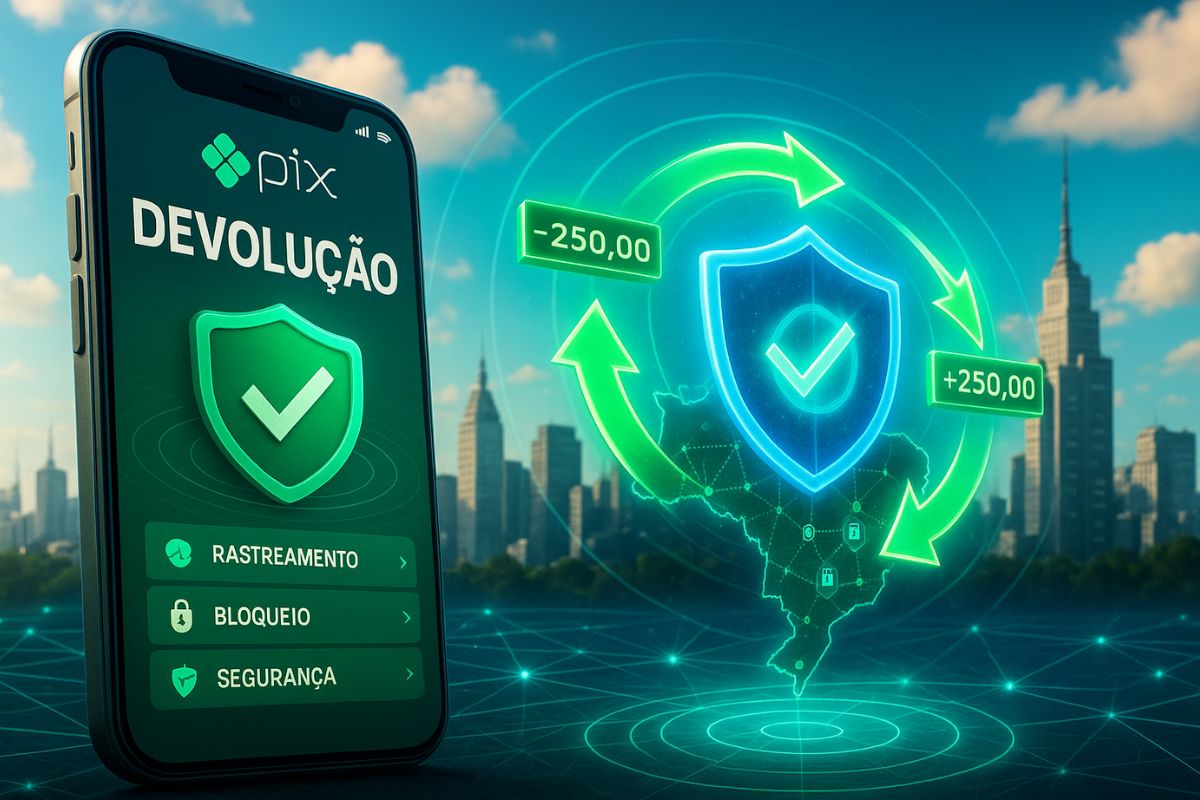
With Expanded Tracking, Blocks on Multiple Accounts and a Dispute Button Directly in the App, the New Pix Refund System Comes into Effect, Creating a More Aggressive MED 2.0 Against Fraud and Making It Harder for Scams to Evade Banks and Consumers Every Day Throughout the National Financial System
The new Pix refund system marks an important change in how the Central Bank and financial institutions deal with fraud in instant payments. By expanding the tracking of money and allowing chain blocks, MED 2.0 no longer sees just the first account that received the suspicious amount and begins to follow the entire transaction path, including intermediary accounts used to mask scams.
In practice, the new Pix refund system combines technology, cooperation among banks, and standardized dispute flows to react faster to irregular transactions. Starting from November 23, 2025, MED 2.0 becomes optional, opening a testing and adjustment phase for the internal systems of the institutions. On February 2, 2026, the model becomes mandatory, raising the minimum security standard and response to fraud throughout the Pix arrangement.
What Changes in Practice with MED 2.0

MED 2.0 is a direct evolution of the special refund mechanism created in the first phase of Pix.
-
Brazilian city bets on the business environment to generate jobs and attract investments in the energy sector — secretary reveals strategy at Macaé Energy 2026.

-
50 viaducts, 4 tunnels, 28 bridges, and 40 kilometers of bike paths: BR-262 in Espírito Santo will receive 8.6 billion reais for the largest engineering project in the state’s history, inspired by the Immigrant Highway in São Paulo.

-
Brazil produces too much clean energy and doesn’t know what to do with it: over 20% of solar and wind capacity was wasted in 2025 while investors flee and 509 renewable generation projects were abandoned in the last year.

-
Piauí will produce a new fuel that replaces diesel without needing to change anything in the truck’s engine and reduces pollutant gas emissions by half: truck drivers from all over the Northeast are already celebrating the news that will arrive later this decade.


Previously, the focus was on the account that initially received the contested amount.
Now, the model allows tracking the money trail through multiple accounts, including those used merely as “bridges” to quickly disperse amounts.
With the new design, banks are required to share more information among themselves when a transaction is contested, which makes the blocks faster, coordinated, and more efficient.
Instead of relying solely on the goodwill or speed of an isolated institution, the process is now conducted in a network, with expanded tracking and structured records of each stage.
How Expanded Transaction Tracking Works

In the updated design, each contested Pix triggers a kind of audit trail.
The institution that receives the dispute identifies the transaction flow, maps which accounts the money was transferred to, and alerts other involved banks.
This mapping includes intermediary accounts, which are often used by fraudsters to “break” the money trail and make tracking difficult.
The logic of MED 2.0 is to transform this labyrinth into a clear chain of events, allowing successive blocks to be made before the amounts circulate completely.
The sooner the trail is identified, the greater the chance of recovering the money and returning it to the affected user.
The objective is not only to freeze balances but also to create a detailed history to support refund decisions.
Dispute Button Directly in the App
One of the visible tools for the user is the dispute button, available in banking apps since October 1st.
Instead of relying on calls or external services, the client can, with just a few taps, signal that a Pix transaction is suspicious or potentially fraudulent.
From the moment this button is activated, the institution has up to seven days to analyze the case, cross-reference internal information, and, when necessary, alert other institutions via MED 2.0.
If fraud is confirmed, the time frame for the value to be effectively returned to the client can reach eleven days, respecting the flows defined by the Central Bank.
This standardization of timelines reduces the feeling of insecurity and provides predictability to the user who has just fallen victim to a scam.
Adoption Timeline and Challenges for Banks
The implementation of the new Pix refund system has been divided into two phases precisely to accommodate the technical complexity of the project.
From November 23, 2025 onward, participation is optional, serving as a period for adaptation, integration testing, and fine-tuning of internal IT systems, risk monitoring, and service teams.
Starting February 2, 2026, all participating Pix institutions must operate mandatorily with MED 2.0.
By this date, banks, fintechs, and cooperatives need to ensure that their tracking, blocking, and information sharing modules are aligned with the Central Bank’s standards.
This involves not only technology but also team training, reviewing internal fraud policies, and continuously updating compliance routines.
Impacts on User Security and Trust
The advancement of MED 2.0 responds to the increase in scams that exploited the speed of Pix to move resources before any block could be triggered.
By making the money trail more visible and allowing coordinated action among institutions, the system increases the operational difficulty for fraudsters and reduces the space for maneuvers that evade banks and consumers.
For the end user, the expectation is for greater confidence in instant transactions, without losing the speed and convenience advantages that made Pix dominant in the Brazilian market.
By combining expanded tracking, faster blocking, and structured disputes, the new design aims to balance agility with protection, preventing the fight against fraud from turning Pix into a slow or bureaucratic system.
What Changes in the Daily Life of Pix Users
In the customer’s routine, the new Pix refund system does not alter the act of sending or receiving payments.
The user experience remains the same: registered key, defined amount, and almost immediate confirmation.
The difference appears when something goes wrong, either in an evident scam or in a transaction that the user considers suspicious.
In these cases, the flow becomes clearer: the user activates the dispute button in the app, follows the institution’s analysis within the official timelines, and, in cases of confirmed fraud, has a greater real chance of seeing the money returned.
Nevertheless, the Central Bank emphasizes that prevention continues to be the first line of defense, and basic digital security practices remain essential, even with a more robust MED 2.0.
A Step Further in Combating Digital Scams
With MED 2.0, the Central Bank aims to reposition Pix as an instant payment method, but not unprotected, raising the system’s capacity to react to fraud without sacrificing the user experience.
By expanding tracking, standardizing blocks, and consolidating disputes within the app itself, the new model responds to a scenario in which scams are becoming more sophisticated and testing the limits of banks and regulation daily.
In the end, the new Pix refund system does not eliminate risk but reduces maneuvering space for those trying to take advantage of the speed of instant payments.
The real effectiveness of the model will depend on the coordination among institutions, the quality of internal analyses, and the speed with which suspicious cases are identified and addressed.
And you, do you think the new Pix refund system will really make it harder for scams or do you still have doubts about banks’ ability to act quickly in practice?










Seja o primeiro a reagir!