





 Portuguese
  English
  Spanish
  3 min of reading
  0 comments


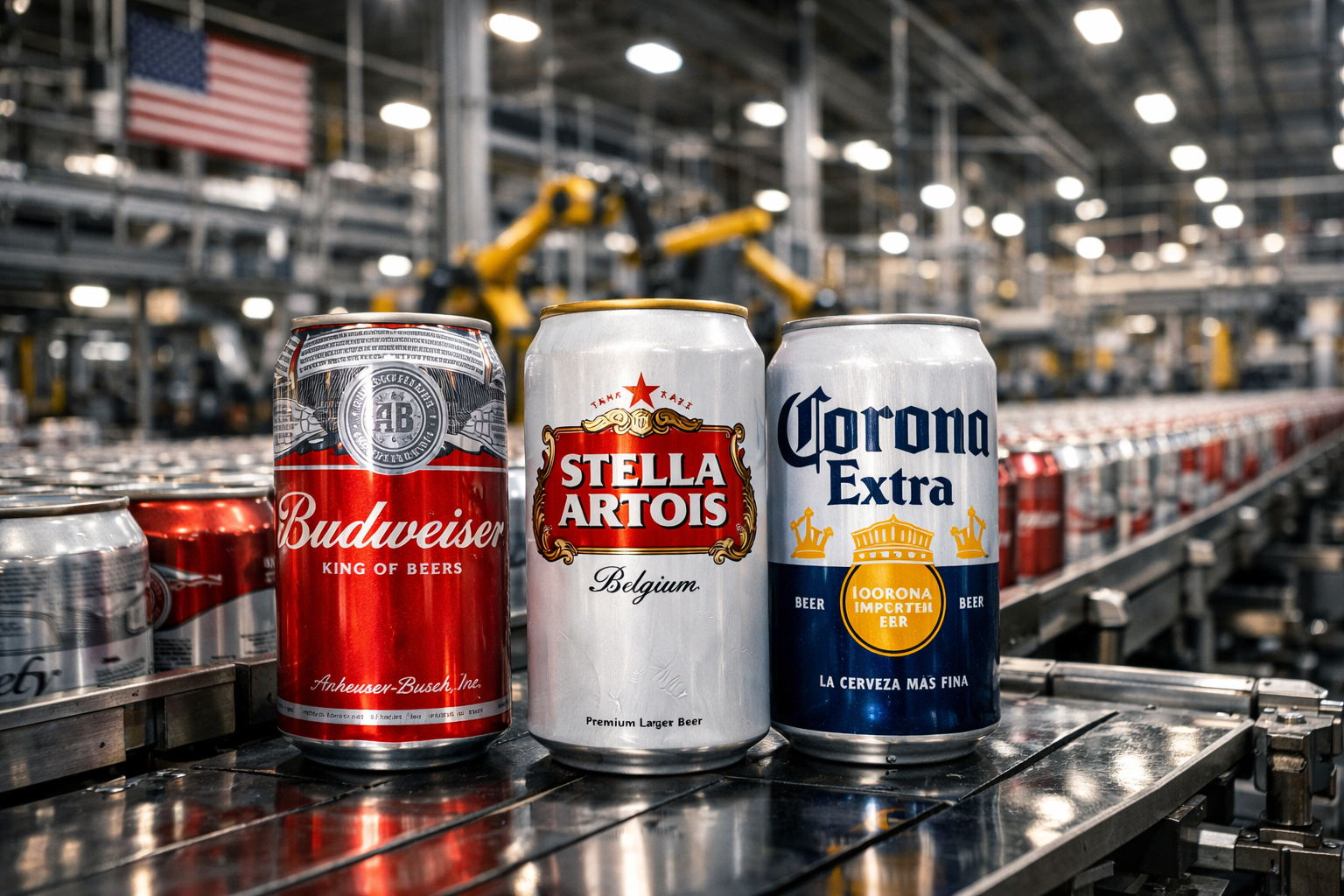
The Repurchase of Seven Industrial Units in Six States Signals a Strategic Turnaround for the World’s Largest Brewery Amid Rising Aluminum, Trade Tariffs, and Adjustments in Global Consumption
The AB InBev, the world’s largest brewery and controller of Ambev, announced the repurchase of its stake in metal packaging facilities in the United States for US$ 3 billion, regaining full control of an asset considered strategic for its supply chain in the country. The operation involves seven factories located in six U.S. states, which play a central role in the production of cans used by brands such as Budweiser and Stella Artois.
The information was disclosed by the company itself in a market statement and picked up by specialized media outlets in economy and finance. According to AB InBev, the acquisition will be financed entirely with its own cash, without the need for new debt issuances, signaling a more comfortable financial position after years of deleveraging.
Reversal of a Sale Made to Reduce Debt After Acquiring SABMiller
The repurchase marks a significant strategic shift compared to 2020, when AB InBev sold the same stake to management firm Apollo Global Management, also for US$ 3 billion. At that time, the goal was to reduce the high level of indebtedness generated by the acquisition of rival SABMiller, completed in 2016, one of the largest operations in the history of the beverage sector.
-
He sold his share for R$ 4 thousand, saw the company become a giant worth R$ 19 trillion, and missed the opportunity of a lifetime.

-
Elon Musk’s Starship megafrocket puts $8 billion at risk, raises alarms in the market, and could affect technology, mining, and space internet startups in the coming years.

-
Airfare prices may rise with increasing fuel costs, and the government is considering urgent measures to avoid a direct impact on the wallets of Brazilians.
-
Chocolate prices soar nearly 15% and become a luxury item for Easter 2026, with increases surpassing inflation and changes in Brazilian consumption habits.


Since then, however, the macroeconomic scenario has changed significantly. On one hand, the company has made progress in the deleveraging process, improving its cash generation. On the other, the industrial environment has faced new challenges, especially with the rise in aluminum prices and the direct impact of trade tariffs imposed by the United States.
In this context, AB InBev’s shares fell slightly more than 1% at the start of trading, reflecting market caution regarding the announcement. Nonetheless, the stock has accumulated nearly 14% appreciation in 2025, indicating that investors see positive signals in the company’s financial trajectory.
Tariffs on Steel and Aluminum Accelerate Strategic Decisions


Currently, the brewing sector is facing a more challenging global environment, marked by consumers cutting back on spending, inflationary pressure, and higher industrial costs. In the United States, this scenario has been aggravated by high tariffs on steel and aluminum, imposed last year by President Donald Trump, with the argument of protecting the American steel industry.
According to analysts, this move helped accelerate AB InBev’s decision to bring its metal packaging production back in-house. “It is likely that AB InBev is ensuring the quality of key packaging assets in the U.S. as a consequence of the tariffs on aluminum,” assessed Duncan Fox, senior industry analyst at Bloomberg Intelligence, in an analysis on the subject.
The company itself reinforced this understanding by stating that full control of the factories will allow for gains in quality, cost efficiency, speed in innovation, and above all, supply chain security for its brands, as well as maintaining skilled industrial jobs and stimulating local economies in various regions of the country.
Confidence in Cash and Signals to the Financial Market
For the financial market, the operation also carries important symbolism. According to Trevor Stirling, an analyst at Bernstein, the deal resembles a kind of “debt repurchase”, as the company is reacquiring an asset that had been sold precisely to reduce indebtedness. At the same time, the decision signals confidence in the company’s underlying cash flow and in the success of its deleveraging process.
This perception is further strengthened when considering that, despite facing a challenging third quarter, with beer sales below expectations, AB InBev initiated a US$ 6 billion share repurchase program last year. This reinforces the reading that the company believes in its cash generation capacity in the medium and long term.
The operation involving the metal packaging factories is expected to be completed in the first quarter of this year, consolidating a relevant strategic change in the way AB InBev manages its industrial assets in the United States.
Source: Invest news






Seja o primeiro a reagir!