





 Portuguese
  English
  Spanish
  8 min of reading
  3 comments


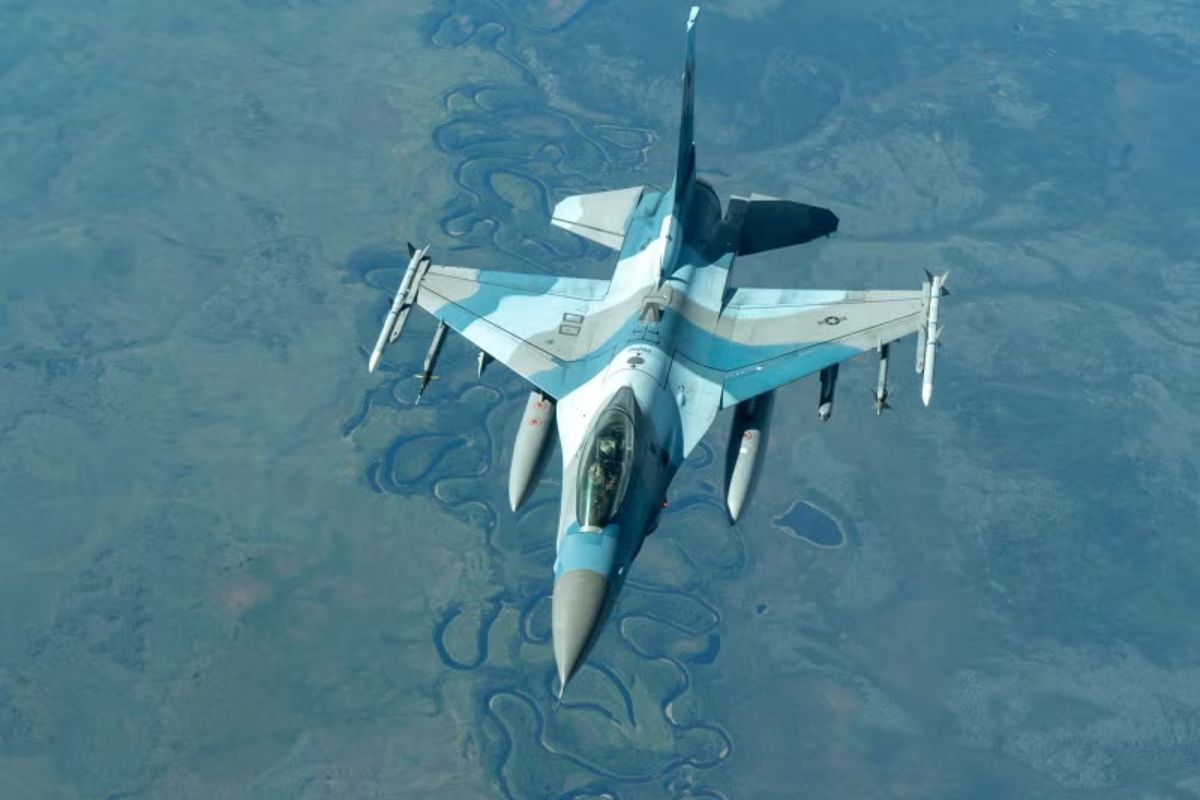


In The F-16 Fighting Falcon, Structural Engineering for High G Loads, Continuously Evolving Sensor Suite, Air-to-Air and Surface-to-Air Missile Integration, and Modernization Programs Explain Why a Project Initiated in The Last Century Still Operates in Thousands of Units in High-Pressure Scenarios Around the World.
The F-16 Fighting Falcon has consolidated a rare formula in combat aviation: fighter performance, ground attack capability, and architecture designed to reduce pilot workload without sacrificing firepower. This combination explains why it has remained relevant in such different operational environments over decades.
When looking at who operates it, how much they invest, and where they modernize their fleets, the picture becomes clear: it is not just a widely produced aircraft, but a platform that has been continuously updated to keep up with new threats, new sensors, and new mission requirements.
Global Scale and Operational Permanence That Few Fighters Have Achieved

According to the Airforce portal, Lockheed Martin has delivered around 4,600 units of the F-16 Fighting Falcon to over 25 countries, with more than 3,000 aircraft still in operation. This volume alone reveals a strategic advantage: broad logistical chains, a consolidated maintenance ecosystem, and multiple real-world employment experiences in distinct scenarios.
-
The first nuclear submarine in Latin America is being built in Brazil, but the Navy warns that without an additional one billion reais, the project may halt, and the delivery forecast, which was 2029, has already been pushed to 2037 due to a lack of funds.

-
The most expensive appliance in your home is not in the kitchen or the bathroom, it runs 24 hours a day to cool a few items and can cost more per month than the value of everything it stores, while a single replacement eliminates the consumption equivalent to a shower running for 30 minutes daily.

-
Beneath 25 km of ice, a moon of Jupiter hides an ocean with more water than all the seas on Earth and may have the necessary conditions to support life, according to studies supported by NASA.

-
The appliance that should cool your home may be driving up your electricity bill when installed with the wrong power, forcing the device to work harder and consume much more than necessary.

Operational maturity is also reflected in the accumulated numbers: by August 2021, the fighter had completed over 13 million missions and approximately 19.5 million flight hours. In practical terms, this represents a vast base of tactical, technical, and maintenance learning, something that directly impacts the confidence of those needing to maintain high readiness.
Service entry occurred in 1979, and the program has gone through successive phases of production and updates. The last of the 2,231 F-16s destined for the USAF was delivered in March 2005, and the platform has continued to evolve with subsequent versions, including milestones such as the acceptance of the F-16D by the U.S. government in 2009.
Structure, Dimensions, and Single Engine with Central Role in The Proposal of The F-16 Fighting Falcon
In physical design, the F-16 brings together proportions that balance agility and payload capacity: 10 m wingspan, 15 m length, 5 m height, and 8,500 kg empty weight. This structural combination supports both air superiority missions and attack profiles, without necessitating a complete change of philosophy between tasks.
The aircraft uses one single engine, with options for Pratt & Whitney F100-PW-200/220/229 or General Electric F110-GE-100/129. The choice for a single engine does not impede the platform’s versatility and, on the contrary, is at the core of the program’s idea: to maintain combat performance with a more straightforward operational architecture, supported by continuous evolution of avionics and armaments.
The fuel system includes fire protection with inert gas, and there is an in-flight refueling probe located on the top of the fuselage. The integration of conformal fuel tanks also increased the range in updated variants, with the first flight of this configuration in March 2003 and Greece as the launch customer.
Cockpit and Avionics: When The Pilot Becomes The Axis of Combat
The cockpit of the F-16 Fighting Falcon has been redesigned to enhance situational awareness and reduce decision latency. Among the features are color multifunction displays, a digital terrain system, a modular mission computer, a camera to record what is shown on the HUD, and multi-channel video recorders.
In the Sure Strike project, the fighter received an enhanced data modem to transmit target information directly to the HUD from an observer on the ground. This shortens the chain between detection, confirmation, and action, a critical difference when seconds define the mission.
The seat also underwent significant structural changes: the backrest angle was changed from 13° to 30°, a measure aimed at improving comfort and pilot tolerance during demanding maneuvers. In Gold Strike, there was an evolution in image exchange with different sources, including ground units and unmanned aircraft, with video displayed in the cockpit.
The integration of a helmet-mounted sight reinforced this logic. The JHMCS went into large-scale production and was operationally used in Operation Iraqi Freedom; later, JHMCS II advanced with symbology on the visor, optical/inertial tracking, and upward vision reticles, including flight tests on the F-16V Block 70/72 in 2020.
Weaponry: Nine Hardpoints and a Real Multirole Logic
The weapon configuration shows why the F-16 Fighting Falcon is not limited to a single mission profile. The aircraft has Nine hardpoints: one at each wingtip, three beneath each wing, and one on the centerline of the fuselage. This allows for different loadouts based on tactical objectives, required range, and threat type.
The multicanon M61A1 20 mm, integrated with the HUD targeting system, enhances immediate response capability in close combat. At the same time, the aircraft operates a broad portfolio of air-to-air missiles, such as AIM-9 Sidewinder, AMRAAM, and other families integrated throughout its lifecycle.
In ground attack and anti-ship roles, the inventory is also extensive, including Maverick, HARM, Shrike, Harpoon, and Penguin, in addition to tests with JASSM. The F-16 was also the first USAF aircraft to employ JSOW and played a significant role in relevant JDAM launches, reinforcing the platform’s role in precision-guided munitions.
With systems like WCMD and the BRU-57 support, which doubles the capacity for certain guided munitions, the fighter increases flexibility without depending on a total redesign of the aircraft. In continuous upgrades, packages for new long-range attack weapons in all climates have also been planned.
Sensors, Pods, and Countermeasures: Surviving Is Also Winning
In the target designation and acquisition layer, the F-16 operates with LANTIRN, integration with a holographic display, Litening pods in different versions, and the Sniper XR, selected as the advanced pod for F-16 and F-15E, featuring high-resolution FLIR, CCD TV, tracker, and laser marker.
This set is not isolated: it interacts with the mission architecture, navigation, and data links, allowing the aircraft to transition seamlessly between interception, suppression of defenses, and precision attack with greater tactical continuity. It is the combination of systems, not a single sensor, that sustains operational advantage.
In the field of self-protection, the Block 50 of the U.S. uses AN/ALR-56M and is compatible with various electronic jamming systems, in addition to chaff and flare dispensers ALE-40 and ALE-47 in manual, semi-automatic, or automatic modes. In specific fleets, dedicated packages emerge, such as ASPIS II in Greece and AN/ALQ-211 (V)4 in Chile and Pakistan.
This diversity reveals a central point: the F-16 Fighting Falcon was designed to accept distinct electronic warfare ecosystems, adapting to each operator’s threat profile and modernization budget.
Radar, Navigation, and Communications at The Core of Situational Awareness
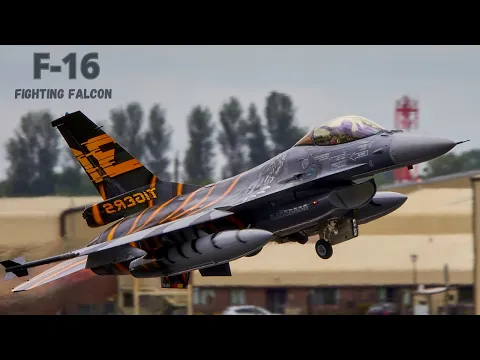

The AN/APG-68 radar offers 25 air-to-air and air-to-ground operational modes, including long-range detection and tracking, multi-target tracking, and high-resolution ground mapping. The evolution to AN/APG-68(V)9 added a 30% increase in detection range, five times faster processing, and ten times greater memory.
In navigation, the F-16 was the first operational U.S. aircraft to receive GPS, combining inertial system and ring laser gyroscope, in addition to complementary solutions such as Terprom, radar altimeter, TACAN, and instrument landing system. In real missions, this set reduces positioning errors and improves consistency in the use of armaments.
Communications include UHF and VHF links, IFF, and secure communication encryption, with transponder/interrogator updates over time. In combined operations, interoperability is not a technical detail, but a requirement for survival and collective effectiveness.
Layered Modernizations: CCIP, Block 60, and Block 70/72
The CCIP program modernized 650 Block 40/50 aircraft of the USAF in phases, incorporating features such as APX-113, Sniper XR, Link 16, JHMCS, and new electronic displays. This way, the F-16 maintained fleet coherence and elevated mission standards without relying on the immediate replacement of the entire line.
In Block 60, developed for the United Arab Emirates, there was a leap in payload and range with a higher thrust engine, new avionics, large LCD screens, fiber optics data architecture, AESA APG-80 radar, and an integrated electronic warfare package. The first flight was in December 2003, and deliveries of 80 aircraft took place between 2005 and 2009.
Block 70/72 focuses on the most recent stage of evolution: structural lifespan of 12,000 hours, a 50% increase compared to the previous standard, AESA APG-83 radar, new avionics architecture, IRST, advanced data link, more modern armaments, and Auto GCAS for automatic ground collision prevention. The operational projection extends the platform’s life until at least 2060.
Who Buys, How Much Invests, and Where The F-16 Fighting Falcon Is Repositioned
The international distribution shows a broad geography of users and contracts. Israel ordered 110 F-16I; Turkey, Pakistan, Morocco, Iraq, Bahrain, Slovakia, Taiwan, and the Philippines appear in orders, upgrades, or sales approvals in different blocks and configurations. It is a global presence with very different national strategies.
In terms of values, there are contracts and packages that indicate the weight of the platform in defense planning: over US$ 2.9 billion for additional aircraft for Turkey in one of the agreements; US$ 1.12 billion for 16 Block 70 for Bahrain; US$ 800 million for 14 Block 70 for Slovakia; approval of US$ 3.8 billion for 25 Block 72 for Morocco; and a potential US$ 2.43 billion for 12 aircraft for the Philippines.
Taiwan, in addition to sales approvals, signed an agreement for a maintenance center in 2019 and advanced in upgrading its existing fleet to F-16V standard.
Meanwhile, Singapore received a modernization contract worth US$ 914 million. The recurring standard is clear: the F-16 Fighting Falcon remains relevant not only for new lot purchases but also for intensive upgrades of already operational airframes.
Digital Twin and The Next Chapter of Availability and Maintenance
In 2021, the USAF announced a plan to create a digital twin of the F-16, sponsored by the program office at the Life Cycle Management Center and executed by NIAR at Wichita State University.
The project involves dismantling and digitizing two aircraft to build a full-scale 3D model.
The goal is to reduce time and cost of maintenance and modernization, in addition to optimizing manufacturing and supply chain based on detailed data from environmental, hydraulic, and fuel systems. When a platform ages well and receives digital intelligence, it prolongs value without losing tactical relevance.
The F-16 Fighting Falcon does not sustain itself by nostalgia, but by engineering that accepts continuous updates, by a mission architecture that integrates sensors, weapons, and electronic protection, and by a global base of operators that transforms accumulated experience into practical advantage.
Among production numbers, flight hours, contracts, and modernization blocks, what emerges is an adaptable, long-lasting, and technically coherent platform.






25 F-16 Block 70 para Maruecos,por US$3.8 mil millones, se me antoja robo a la FAP, del Perú, porque trump ofrece 12 F-16 Block 70, por US$ 3.5 mil millones, por somos amigos y aliados,.
Wso es metes un pico en el ojo
Un A-10 Thunderbolt II…pero con esteroides!!!
El latino obsecuente y admirador de la tecnología anglosajona…qué fastidio