





 Portuguese
  English
  Spanish
  5 min of reading
  1 comment


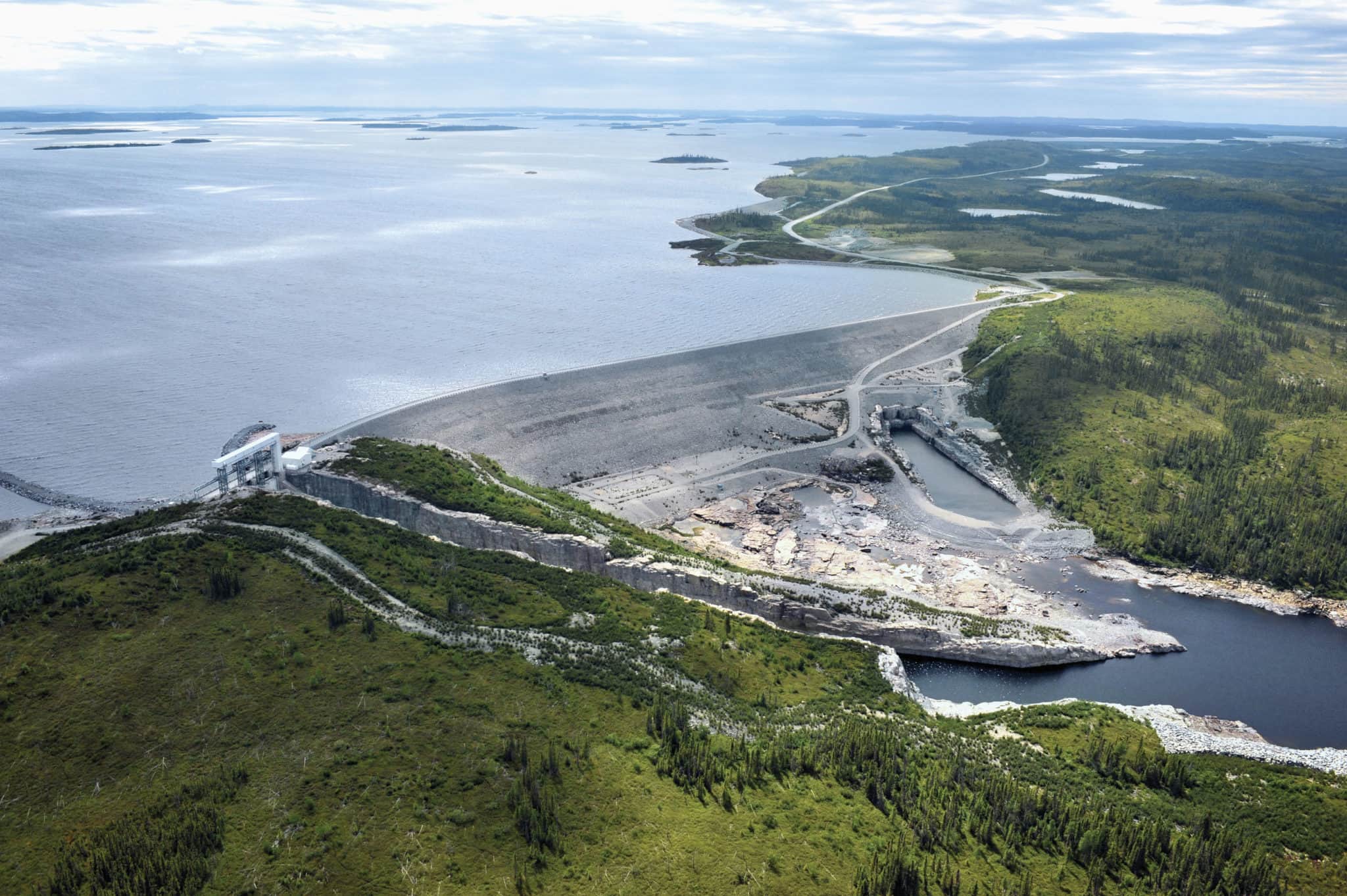


With 764 km² of Reservoir and 5,428 MW, James Bay Transformed Remote Northern Canada into One of the Largest Hydroelectric Plants Ever Built in the World.
The James Bay Hydroelectric Project is neither a hypothetical nor futuristic project; it is one of the largest energy infrastructure works in modern history. It officially began in 1971, after the provincial government of Québec and the state-owned Hydro-Québec launched an ambitious plan to transform the remote north of the province into a strategic energy hub. The construction and operation were extensively documented by public agencies and state-owned enterprises, including Hydro-Québec, the Government of Québec, and the Government of Canada, which regard James Bay as one of the pillars of the Canadian electricity matrix based on hydropower.
From the beginning, the goal was clear: to create an integrated system capable of generating clean energy on a large scale, ensuring urban and industrial supply for decades.
Where It Is and Why It Was an Extreme Challenge


The area chosen for the complex is located in the James Bay region, at the southern tip of Hudson Bay. This region is known for:
-
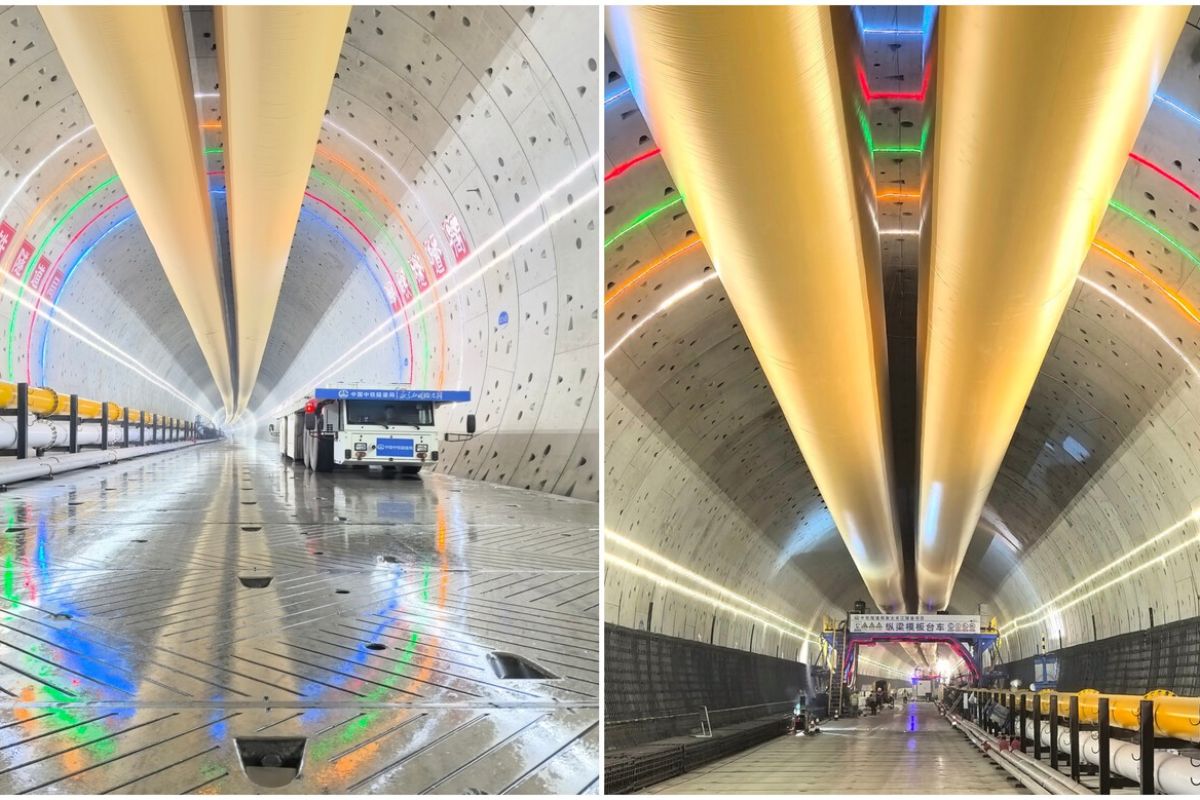
China completes the most critical section under the Yangtze River with the intelligent tunneling machine Linghang, excavating 11.32 continuous kilometers at depths of up to 89 meters and transforming the Chongming-Taicang tunnel into a landmark that redefines the scale of high-speed rail engineering in the 21st century.
-
The government of São Paulo surprises South America with a plan to transform the famous Ibirapuera with underground shops, air conditioning, and a 25-year concession in a billion-dollar project that expands the audience, alters a protected area, and provokes an immediate reaction.

-
With a lifespan of up to 60 years and a cost up to 30% higher than conventional concrete, self-healing concrete is already being used in Brazil to eliminate leaks, reduce maintenance, and is changing the real cost of construction projects.

-
Engineered wood CLT challenges steel and concrete and promises construction that is up to 2x faster with a lower environmental impact in modern civil engineering.

- low population density
- subarctic climate
- vast boreal forests
- saturated soils and peatlands
- absence of paved roads at the time
- rivers with enormous seasonal flows
In other words, it was exactly the type of environment that requires heavy engineering, complex logistical operations, industrial camps, and specialized transportation. Nothing was ready to accommodate a project of this scale; everything had to be created from scratch.
The First Phase: When the Impossible Began to Take Shape
Phase I of James Bay began in 1971 and focused mainly on the La Grande River. This phase included some of the most impressive hydropower plants in the complex, such as:
- La Grande-2 (now called Robert-Bourassa)
- La Grande-3
- La Grande-4
They formed the generator core of the initial system. Only Robert-Bourassa has:
- 5,616 MW of installed capacity
- the largest underground power plant of its kind at the time
- a depth of over 130 meters below ground level
- giant caverns to house turbines
Phase I took until 1985 to complete, amounting to 14 years of continuous work in the middle of nowhere, equivalent to an entire generation of engineering.
The Second Phase and the Expansion of the Energy Frontier
Phase II began in the 1980s and extended into the 1990s, with further works in the La Grande River basin. It added:
- La Grande-1
- La Grande-2-A
- La Grande-M
- as well as complementary dikes and channels
It is in this phase that the system reaches a total capacity of 5,428 MW and becomes one of the largest on the planet.
An Artificial Reservoir the Size of a Large City

The most impressive and often unknown fact to the public is the reservoir, which reaches 764 km². To put it into perspective:
- it is larger than São Paulo city
- it is larger than Singapore + Hong Kong + Andorra combined
- it is close to the area of cities like Dallas (USA)
And this number includes not only the main lake but the complex of integrated artificial waters through dikes and channels.
Dozens of Dams and Dikes Shaping Rivers
Contrary to the common view of a single dam and a single lake, James Bay is a redesigned hydrological system, composed of:
- dozens of dams
- hundreds of smaller dikes
- artificial channels
- water diversions between basins
This hydrological redesign had a strategic objective: to increase the water drop and energy potential without relying solely on a single dam point.
In this sense, it is a project closer to the Norwegian and Swedish philosophy of hydropower (linked systems) than to the Brazilian model (single mega reservoirs).
How Is So Much Energy Generated
The complex utilizes a mixed system:
- Massive Spillways
- High-Power Francis Turbines
- Underground Galleries
- Pressure Shafts with Hundreds of Meters
The river water is redirected to caverns and powerhouses excavated directly into the rock. This reduces the visual impact and protects the infrastructure from the harshness of the subarctic climate.
When fully operational, James Bay is capable of supplying:
- Entire Cities
- Heavy Industries
- Rail Systems
- Exporting Energy to the USA
In fact, part of the production is sold to New York and New England, strengthening the economy of Québec.
Geopolitical and Economic Impact
The project established Québec as a global hydropower powerhouse. Some impacts:
Ultra-Cheap Energy
The massive hydropower production drove local prices down and attracted energy-intensive industries such as:
- aluminum
- mining
- heavy chemicals
- data centers (most recent phase)
Energy Export
Today, Canada exports hydropower to the USA via:
- Hydro-Québec
- New York Independent System Operator (NYISO)
- ISO-New England
Sovereignty Over the Territory
The work consolidated control over the remote north, which previously had no roads, connections, or economic activity.
The Agreement with Indigenous Peoples
In 1975, during construction, the James Bay and Northern Quebec Agreement was signed, involving:
- Cree
- Inuit
- Government of Québec
- Government of Canada
- Hydro-Québec
This agreement is considered a legal milestone in the relationship between large projects and native peoples, defining:
- financial compensation
- territorial rights
- wildlife management
- impact on hunting and fishing
- infrastructure and services
It is one of the first modern agreements of this type in North American history.
What Makes James Bay So Unique

James Bay is not just large; it is unique. It combines:
- civil engineering in a subarctic climate
- hydrology applied on a mega scale
- logistics in remote areas
- long-term clean energy
- real geopolitical impact
- international energy export
- redesign of watersheds
When compared to other large hydropower plants:
| Project | Country | Capacity | Observation |
|---|---|---|---|
| Itaipu | Brazil/Paraguay | 14,000 MW | largest binational |
| Three Gorges | China | 22,500 MW | highest capacity |
| James Bay | Canada | 5,428 MW | largest remote Nordic system in the world |
The Canadian differential is the setting: it is not in the tropics or in dense areas. It is in the middle of the taiga, under snow, ice, bears, and boreal forests.
Current Status
Today, James Bay is:
- fully operational
- integrated into Canada’s electricity matrix
- strategic energy base for Québec
- a model for renewable energy export to the USA
- a technical reference in hydropower engineering congresses
Canada continues to expand and modernize turbines and transmission lines, reinforcing its position as one of the most electric and renewable countries in the world.






Vlademar:
The capacity of the La Grande project (seven main stem dams and two smaller diversion projects) is 17,445 MW. The reservoirs comprise 12,542 square kilometers. This makes the reservoir twelve times the size of Dallas.
The roughly comparable Columbia River projects are considerably larger — 39,000 MW covering parts of British Columbia Washington, Oregon, Idaho, and Utah.
Feel free to email if you would like a list of recommended corrections.
Robert