





 Portuguese
  English
  Spanish
  4 min of reading
  0 comments


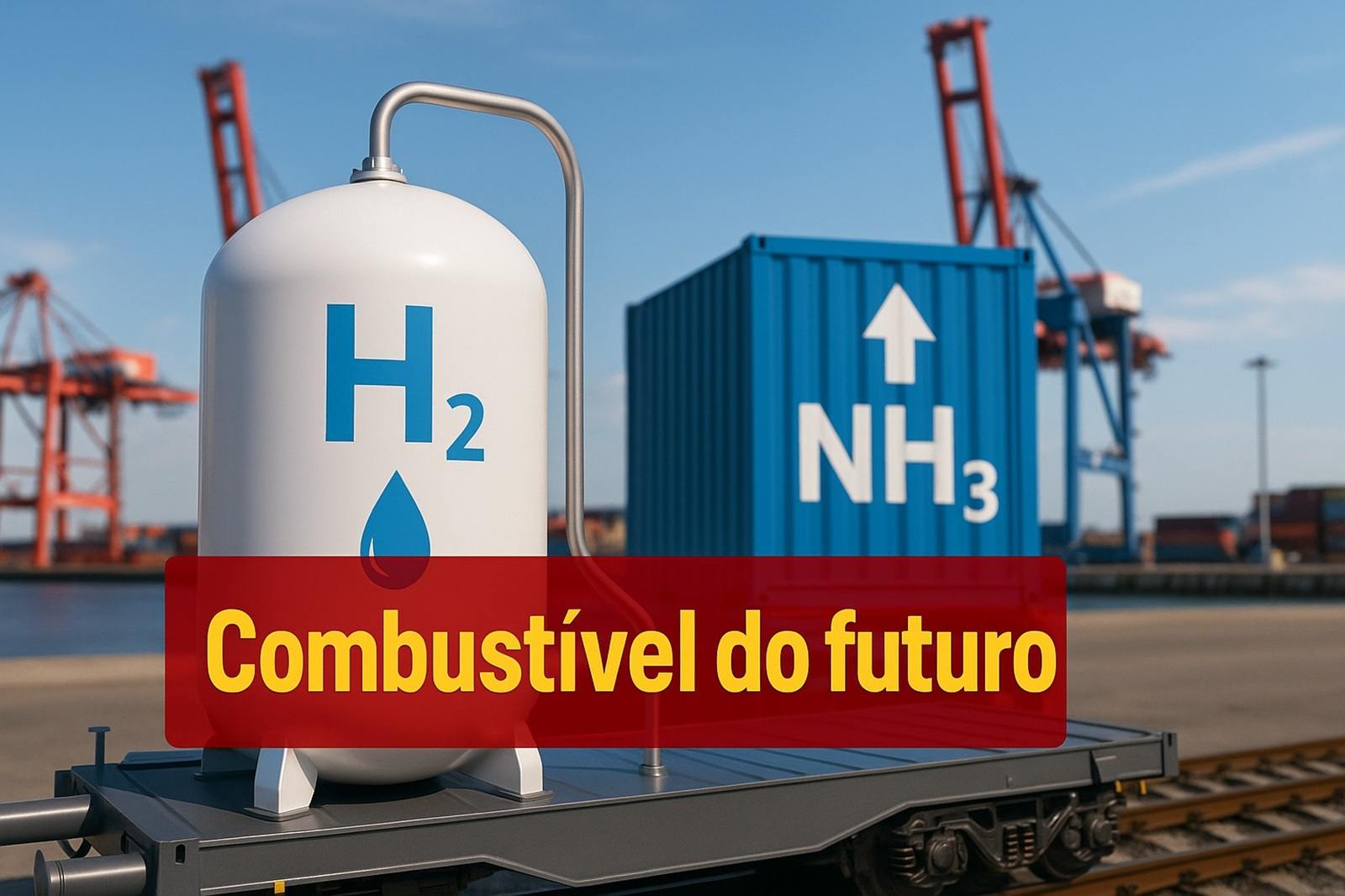
A New Maritime Technology Positions an Emerging Fuel as a Strong Contender to Replace Hydrogen in Long-Distance Routes, Offering Higher Energy Density, Simple Storage, and Lower Operating Costs for Large Global Vessels
A new maritime technology positions an emerging fuel as a strong contender to replace hydrogen in long-distance routes, offering higher energy density, simple storage, and lower operating costs for large global vessels.
Japan Engine Corporation has developed the first commercial maritime engine entirely powered by ammonia.
The equipment has already received approval from ClassNK, a Japanese maritime classification society founded in 1899.
-
The oceans are darkening all over the planet – what is happening?

-
An engineer designs a solar plane to fly on Mars at an altitude of 1,000 meters and a speed of 300 km/h, covering 16,000 kilometers in a Martian year, 900 times the distance traveled by the Ingenuity helicopter in three years on the planet before experiencing a rotor failure, and NASA is already funding the feasibility study.

-
A new phenomenon of contactless magnetic friction intrigues scientists and questions a theory that has been valid since the 17th century.
-
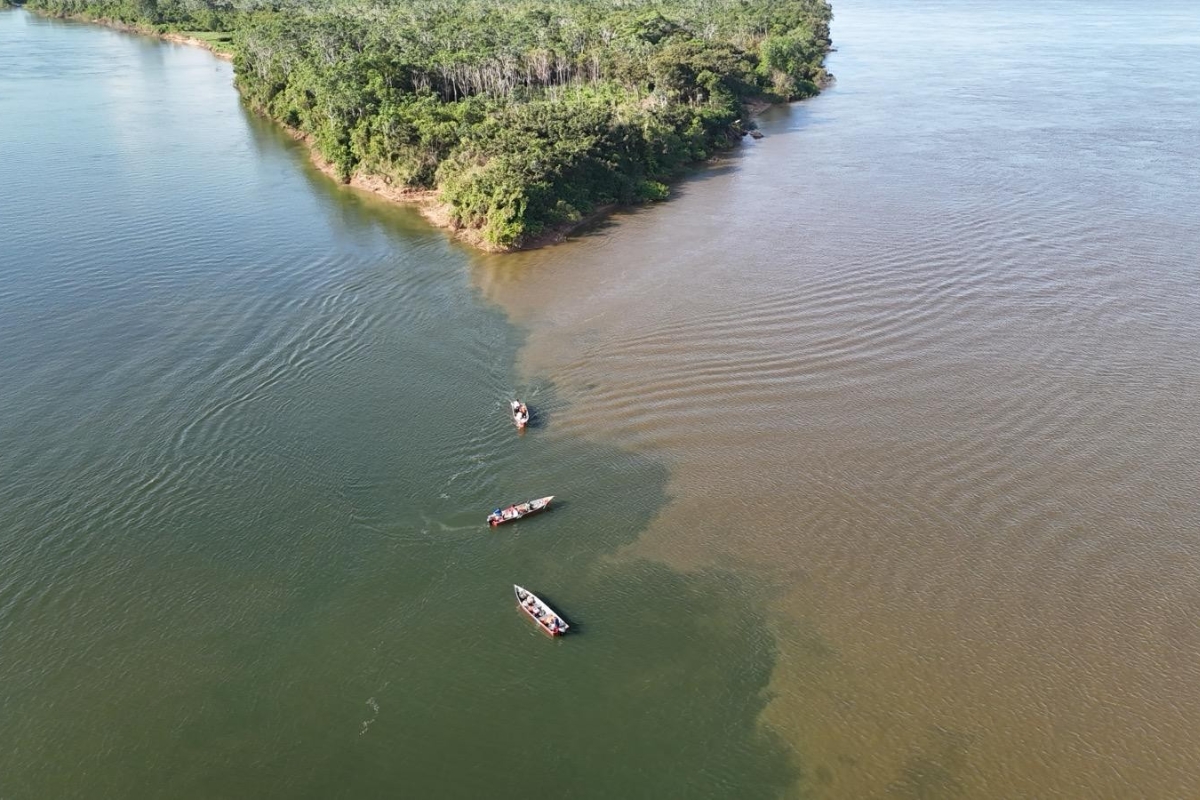
An impressive phenomenon in Northern Brazil causes rivers of different colors to flow side by side, revealing secrets about sediments, currents, and biodiversity.

The certification ensures essential safety parameters, protection of assets at sea, and preservation of the marine environment.
The next step will be to install the engine on a gas-powered vessel that is set to be operational in 2026.
This advancement places ammonia as a direct alternative to hydrogen in zero-emission maritime mobility, replacing diesel.
Cost Comparison Between Ammonia and Hydrogen
The Total Cost of Ownership has been one of the main references for evaluating alternative fuels.
Technical and economic studies indicate that, on post-Panamax ships, the use of ammonia can increase the TCO by about 19% compared to vessels powered by heavy fuel oil, considering optimistic fuel cost scenarios.
Projections developed by consultancy CE Delft estimate that ships powered by blue or green ammonia could have a TCO of 3 to 3.5 times higher than that of traditional vessels between 2030 and 2050.
Hydrogen, in turn, faces specific limitations. An analysis from Argonne National Laboratory shows that the TCO of liquid hydrogen can exceed double that of diesel due to the high price of the fuel, which hovers around US$ 4 per kilogram.
Additionally, its lower energy density increases operational costs. To match the TCO of a conventional ship, the price of hydrogen would need to drop to approximately US$ 2 per kilogram.
Storage and Energy Density
The difference between the two fuels intensifies when looking at storage. Liquid hydrogen requires cryogenic conditions of less than 253 degrees Celsius, a process that demands a large amount of energy for liquefaction. This condition reduces the range of vessels or decreases the available cargo space.
Ammonia, on the other hand, does not require these extreme conditions. It remains liquid under moderate pressures and temperatures and has an energy density of approximately 11.5 MJ per liter. Although this density is about one-third that of diesel, it is significantly higher than that of liquid hydrogen. Furthermore, its storage and handling are simpler and less costly.
Technical Comparison in the Well-to-Wheel Model
The well-to-wheel analysis highlights the advantages and limitations of each option. In the case of ammonia, the combination of combustion engine and SCR contributes to consistent thermal performance and reduction of harmful emissions.
Hydrogen, while providing electrical energy through fuel cells, is penalized by the high energy consumption required for liquefaction.
The safety aspect also presents contrasts. Ammonia is toxic but easily detectable, allowing for manageable risk control protocols.
Hydrogen, being flammable and of low density, poses a higher leak risk.
In terms of real viability, the ammonia-powered engine has already reached the commercial stage, with deployment expected in 2026.
Hydrogen remains restricted to regional applications and short-duration vessels, still in the experimental phase.
The Importance of Energy Infrastructure
The infrastructure required for each fuel has a direct impact on technological adoption. Hydrogen requires dedicated terminals and a new cryogenic liquefaction network, which increases the initial investment.
Ammonia, in contrast, benefits from a well-established chemical infrastructure on a global scale. This advantage is highlighted by CE Delft as a determining factor to enhance ammonia’s competitiveness.
Studies from GreenCarCongress indicate that blue ammonia, when associated with capture technologies, could surpass other options economically starting in 2037, potentially exceeding even LNG in competitiveness.
Industrial Advancements and International Goals
Wärtsilä has launched the first four-stroke ammonia engine for maritime applications, strengthening the technological transition in the sector.
The International Maritime Organization sets clear goals: to achieve 5% energy with zero emissions by 2030, with possibilities of reaching 10%, and to pursue carbon neutrality by 2050.
These goals press shipowners and investors to renew their fleets with clean alternatives.
Current Challenges and Projections
The supply of ammonia still presents important challenges. Its cost remains two to four times higher than conventional fuels, and its toxicity necessitates strict safety measures. By 2024, there were only 25 ammonia dual-fuel ships ordered, while LNG and methanol registered much higher numbers.
Ammonia, combined with the combustion engine and SCR, consolidates itself as the most promising option for ocean routes and long-distance operations.
Its energy density is more advantageous than that of liquid hydrogen, its global infrastructure is already available, and its commercial application is becoming a reality with the engine developed by J ENG.
Hydrogen should remain directed to short routes and operations demanding absolute zero emissions, where specialized infrastructure and high costs still find operational justification.









Seja o primeiro a reagir!