





 Portuguese
  English
  Spanish
  7 min of reading
  0 comments


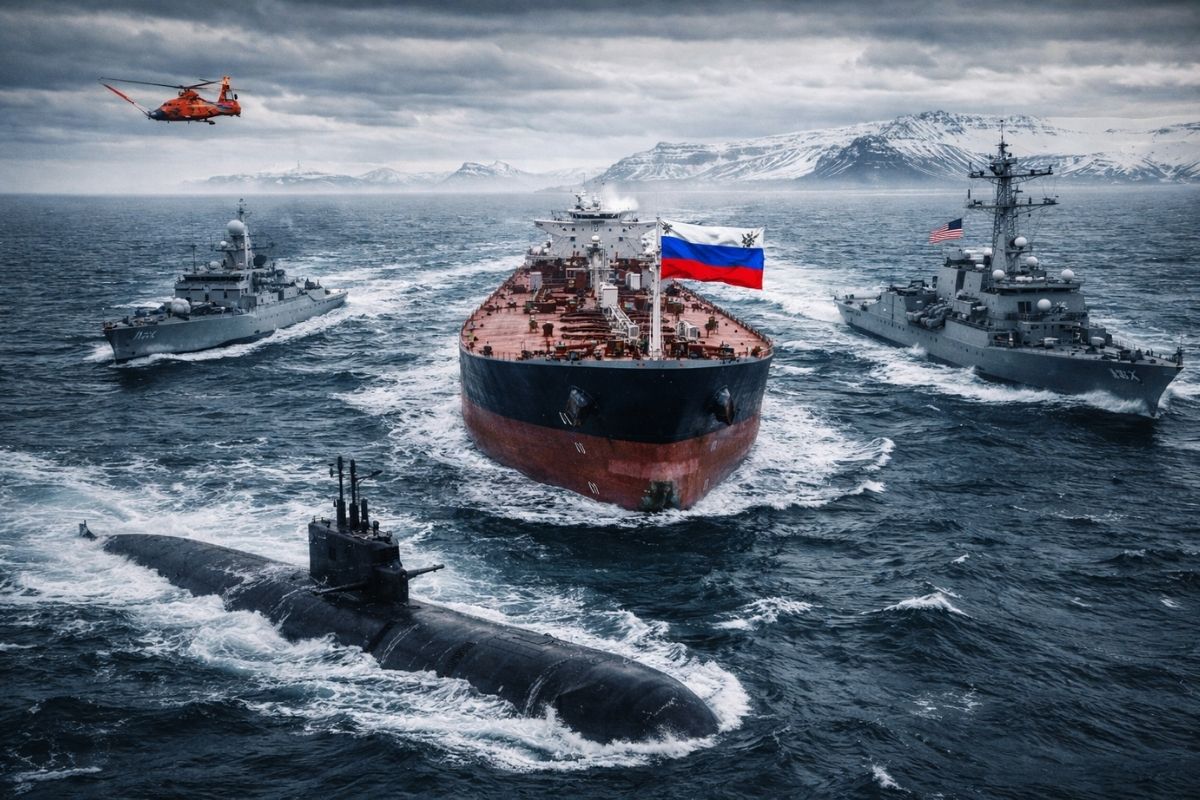
After Being Intercepted on December 16 in the Caribbean, the Tanker Bella 1 Escaped, Abandoned the Route to Venezuela and Fled to the North Atlantic. On the Way, It Painted a Russian Flag, Changed Its Name to Marinera, Obtained a Temporary License and Triggered a Diplomatic Stalemate Until Being Captured Near Iceland Today
In the North Atlantic, near the coast of Iceland, a tanker that had been monitored since the Caribbean became the center of an international chase involving a flag change, name change, and political dispute. The ship, which operated as Bella 1, attempted to break through the blockade linked to the coast of Venezuela, escaped from the initial interception, and fled for almost 20 days.
The case involved the United States and United Kingdom in a coordinated response, as well as an official reaction from Russia when the tanker began to operate under temporary Russian authorization. The situation, described as tense due to the risk of escalation, gained even more delicate contours when the presence of Russian ships in the area was mentioned, including a nuclear submarine, without any record of direct confrontation.
The Blockade off the Coast of Venezuela and the Spark That Triggered the Pursuit
The starting point occurs around Venezuela, where a total blockade was reported to prevent tankers from approaching to load oil and take the cargo out.
-
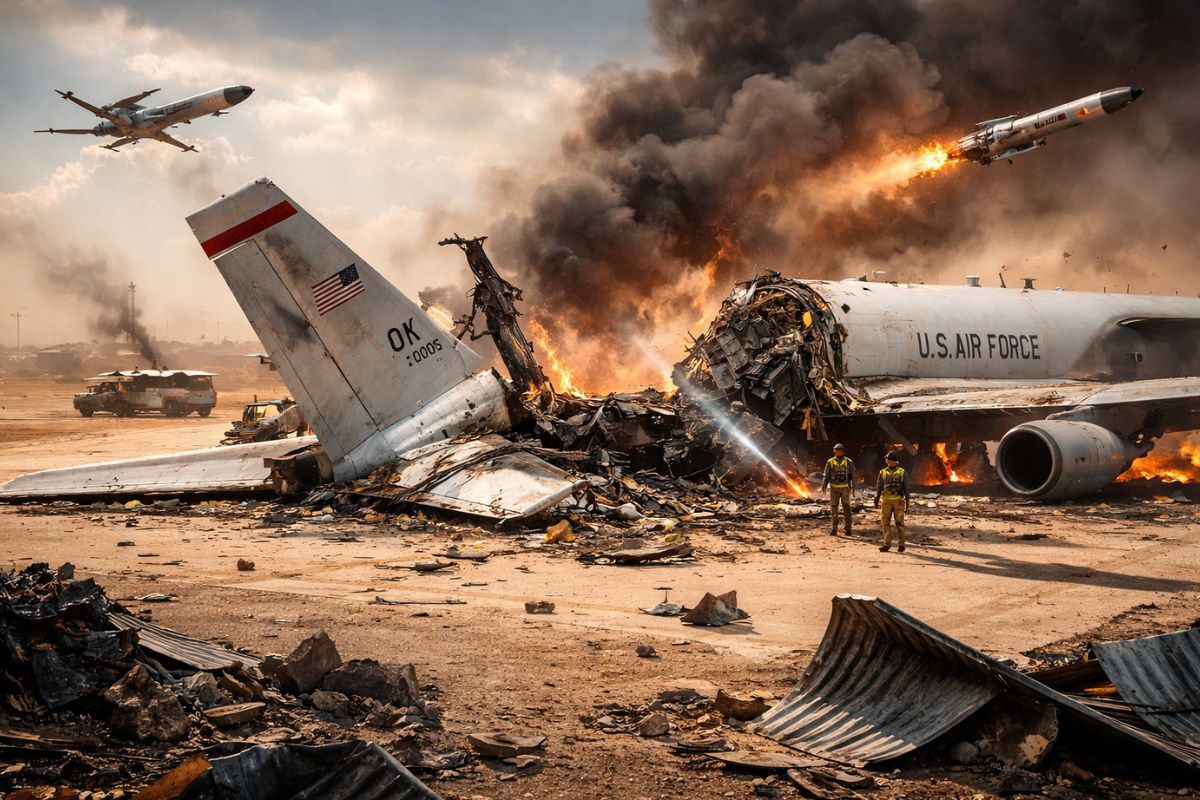
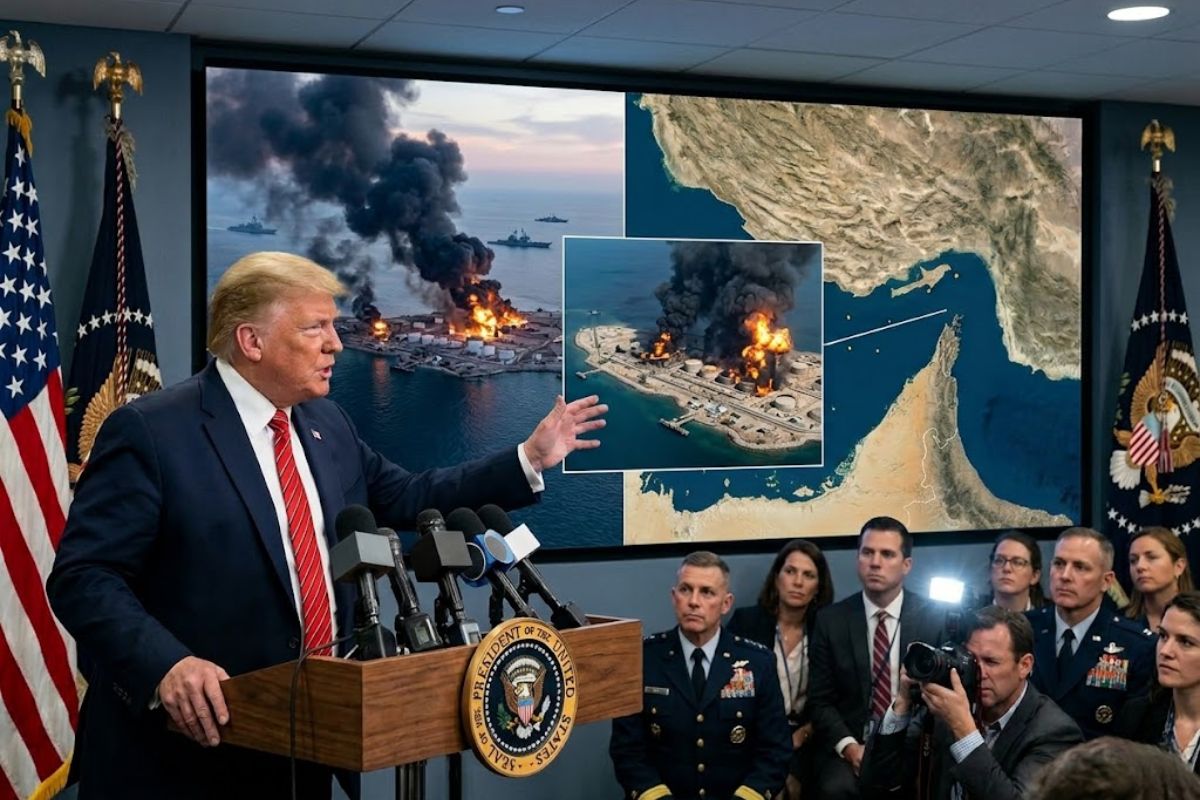
Iranian drones and missiles destroyed a 270 million dollar American spy plane in Saudi Arabia, splitting the E-3 Sentry aircraft in half and injuring 12 military personnel in an attack that exposes the vulnerability of U.S. bases in the Persian Gulf.
-
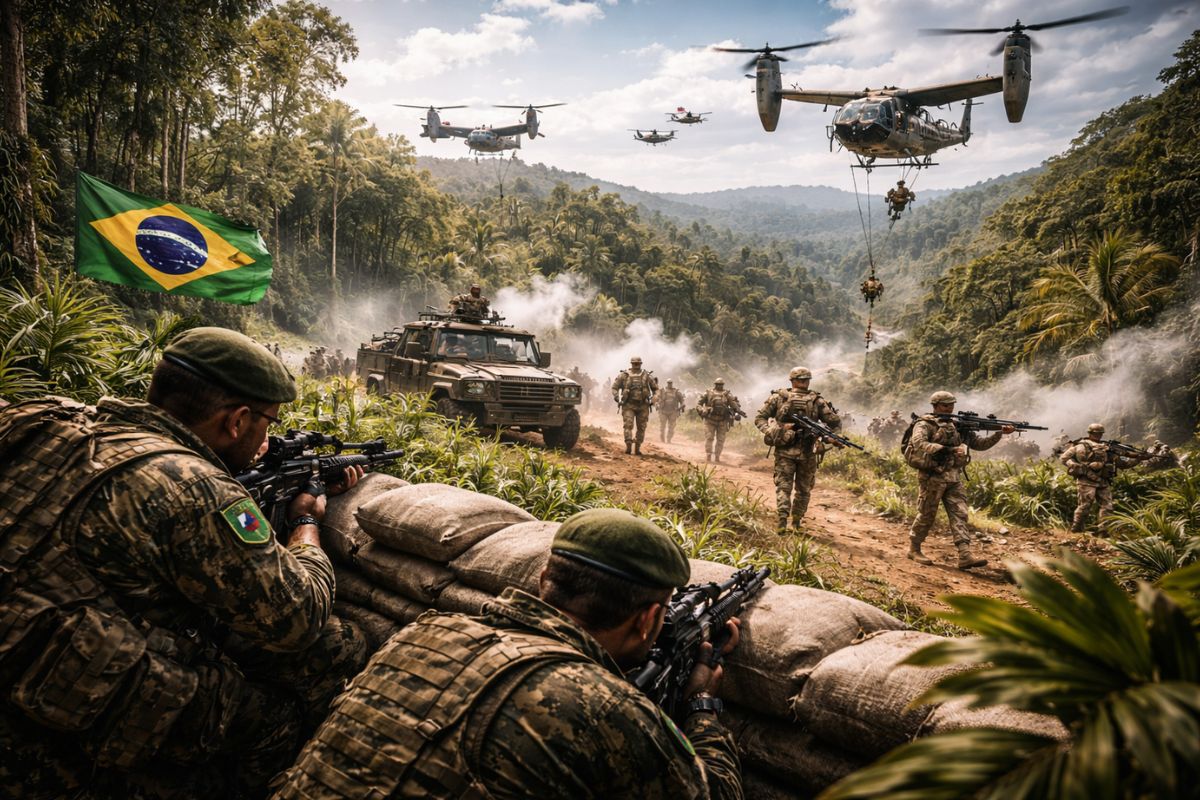
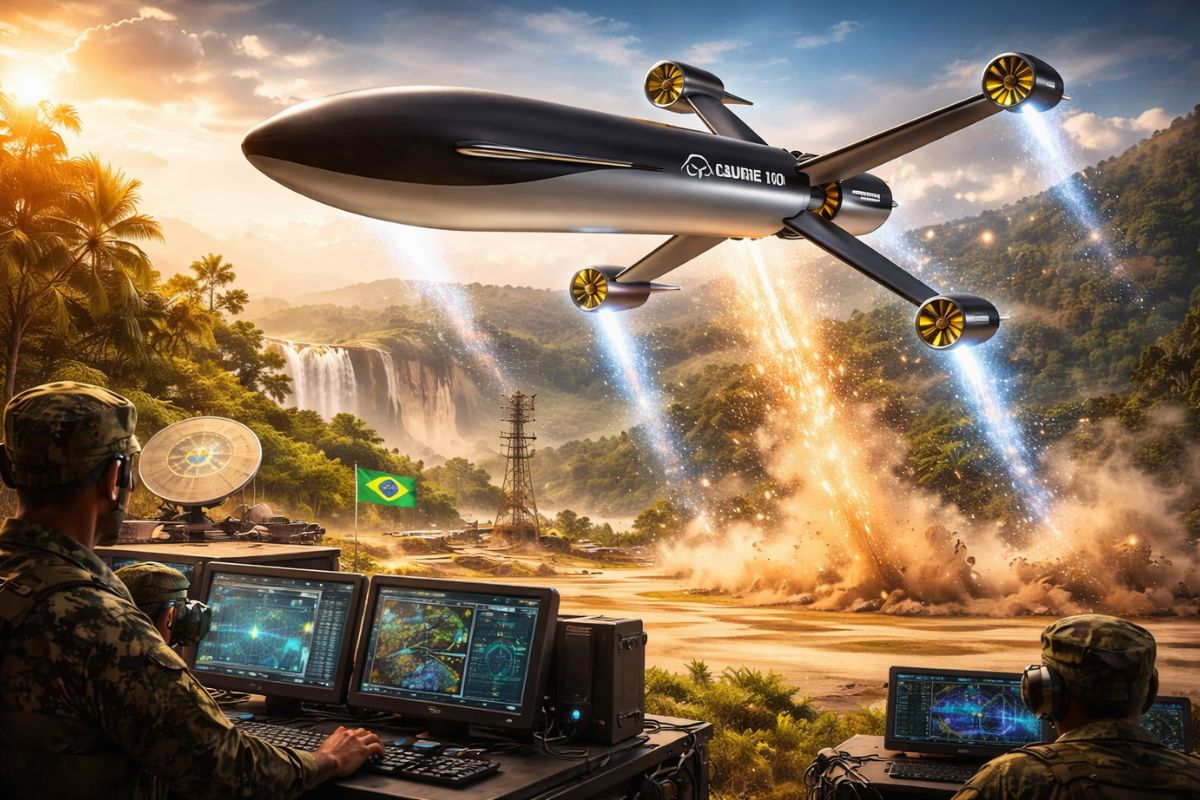
If the USA were to go to war with Brazil, Washington’s greatest fear would not be the attack itself, but facing a vast territory, prolonged resistance, and a costly, chaotic, and unpredictable occupation.
-
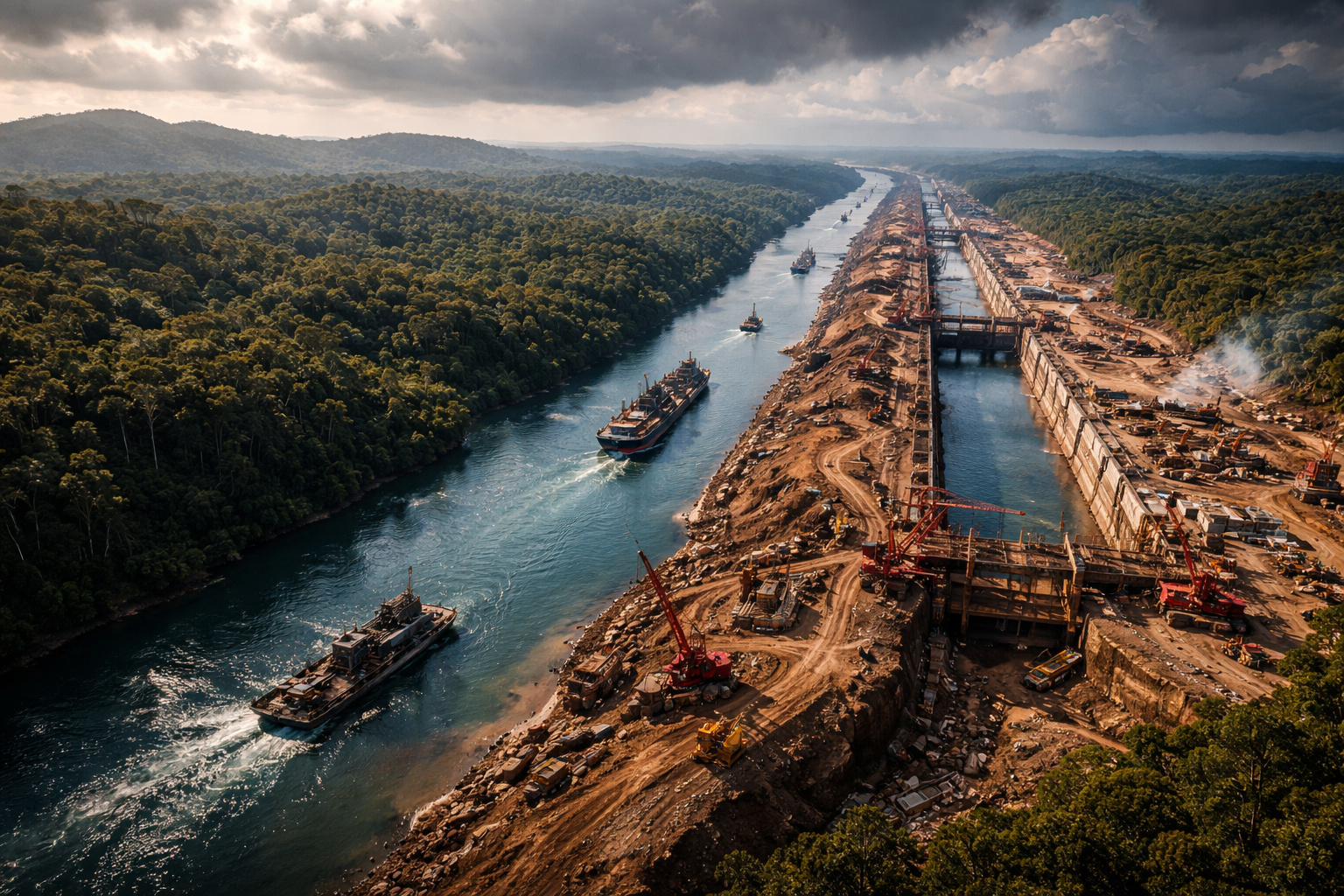
In 2013, Nicaragua sold the concession for a canal to rival Panama to a Chinese billionaire who lost 85% of his fortune, disappeared, and was declared bankrupt. Now the project resurfaces with a new route, a new Chinese partner, and a cost of $64.5 billion.
-
The USA announces a mysterious billion-dollar vault project to store critical minerals, but what intrigues experts is not just the plan itself, but why Latin America, including Brazil, has entered the center of this global dispute against China.

The order, in the narrative presented, was direct: no one enters, no one leaves the Venezuelan coast.
In this environment, any tanker that approaches automatically becomes a target for inspection and operational risk.
The logic of the blockade also creates an immediate collateral effect: discreet routes, cautious approaches, attempts to go unnoticed, all of this is interpreted as a deliberate maneuver of evasion.
Who Was the Tanker Bella 1 and Why It Was Already on the Radar
The tanker appears as Bella 1, registered by Guyana, trying to approach Venezuela as if it were “sneaking in”.
The narrative indicates that the ship already had a history and a “criminal record,” associated with sanctions against Iran and a route of origin related to that country.
The central reading is that, for the authorities tracking it, this was not just any tanker making a common commercial journey.
It was a tanker with a sensitive history, entering a blockade area, at a time when the declared rule was to prevent loadings and departures.
December 16 in the Caribbean: Interception, Fleeing and Sudden Change of Route
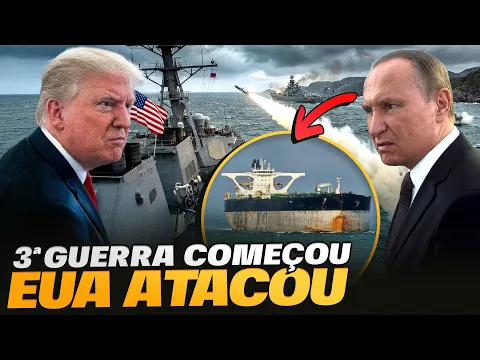

The key episode occurs in the Caribbean, with the interception reported on December 16.
The tanker was stopped, but managed to escape, turning an inspection operation into a prolonged chase.
From there, the ship changes the logic of its journey.
Instead of insisting on Venezuela, the tanker changes its route and flees to the north of the Atlantic Ocean, trying to gain distance and complicate any attempt at approach.
The escape is described as continuous and intense, with the ship seeking time and space to reconfigure its operational identity.
The Turn in the North Atlantic: Tanker Changes Name, Paints Flag and Tries to “Turn Russian”
In the midst of the chase in the North Atlantic, the tanker adopts the most symbolic maneuver of the case: paints a Russian flag on the hull and changes its name to Marinera.
The intention presented is clear: create confusion, claim it is another ship and impose political costs on whoever is pursuing it.
The risk of this move, however, also appears in the narrative itself: by changing flags and trying to present itself as a ship under different authority, the tanker could open itself up to additional accusations, such as operating under false flag.
However, the situation gains an additional layer: in the days leading up to Christmas, the crew reportedly sought the Russian Ministry of Transport and received a temporary license to operate as a Russian ship.
In other words, it was not just paint on the hull. There was a document of temporary authorization supporting the change.
United Kingdom Enters the Circuit and the Siege Becomes International Coordination
With the tanker running north, the case stops being a regional problem and starts to touch on the zone of interest of the United Kingdom.
The report describes direct contact to request reinforcements, with the offer of naval bases, air surveillance support, and even a warship.
This point is decisive because it closes the escape corridor. A large tanker depends on predictability, route, fuel, sea, and time.
When air surveillance and logistical support from another country are involved, the ship loses the ability to “disappear” merely by changing its name.
The Diplomatic Request from Russia and the Political Response from the United Kingdom
With Marinera already presented as a ship under Russian authorization, Russia requests that the United States and United Kingdom stop the hunt.
The argument is that the tanker would be in international waters of the North Atlantic, under Russian state flag and in compliance with international maritime law.
The response from the United Kingdom hardened its tone.
The ship is described as having a nefarious history, associated with an axis of evasion of sanctions, and accused of fueling conflict and instability, from the Middle East to Ukraine.
This exchange of messages shows that the dispute was no longer just about a specific tanker, but about what it represents.
Near Iceland: Capture of the Tanker and the Mention of a Nuclear Submarine
The conclusion occurs near the coast of Iceland, in the North Atlantic, where the tanker Marinera ends up captured.
The report states that there was a Russian naval fleet providing coverage in the region, including a nuclear submarine, and that, despite the level of tension, no confrontation was recorded.
The detail about the submarine changes the atmosphere even without any shooting.
A tanker surrounded by American and British forces, with Russian presence nearby, becomes a scenario of heightened nerves.
The operation ceases to be just an interdiction and begins to touch on the symbolic limit between maritime pressure and escalation between powers.
The “Empty Ship” and the Point That Makes the Story Stranger
One of the most repeated elements is that the tanker would be empty, with publicly monitored sensors indicating reservoirs without cargo.
This fits with the fact that the ship did not operate in Venezuela before the episode exploded.
Still, the contrast is inevitable: why invest so many resources in pursuing an empty tanker for almost 20 days?
The narrative itself acknowledges that there are more things unsaid than said, especially about what really motivated such effort, and why Russia would move to issue a temporary license and mobilize coverage for an empty tanker.
Capacity of the Tanker, Objective of the Route and What Was at Stake
Even if empty, the tanker Marinera appears to have the theoretical capacity to carry up to 318,000 tons of oil.
This helps explain the strategic importance: a ship of this size, in a blockade area, is a logistical asset capable of altering volumes and routes quickly.
The narrated objective was that the tanker would refuel in Venezuela and deliver the oil to some client, with owners willing to take risks.
From the moment the blockade becomes the rule, any tanker with mass transportation potential begins to be treated as a strategic piece, not as a mere cargo ship.
The Legal Dispute: Freedom of Navigation Against the “Underlying Identity” of the Tanker
The legal conflict appears on two tracks.
On one side, Russia claims that, under maritime law, freedom of navigation applies in the high seas and no state has the right to use force against a vessel duly registered in another jurisdiction.
This is the thesis that a tanker in international waters should not be the target of coercive action.
On the other hand, there is the justification that the motivation is not the paint on the hull or the flag, but the underlying identity of the tanker, its ownership network and the history of sanctions.
This reading treats the ship as a traceable entity behind the name and registration, and tries to legitimize the pursuit based on past operations.
What Remains as Consequences After the Siege Near Iceland
The case leaves a clear signal: a tanker trying to bypass blockades and sanctions can trigger a multinational operation, especially when it involves a flag change in motion and a request for diplomatic protection.
It also leaves a second signal: when the outcome occurs near Iceland, instead of the Caribbean, the story shows how a crisis that starts off the coast of Venezuela can cross the ocean and touch on sensitive areas of other powers.
On the political board, the immediate narrative result is that Russia asks only for the Russian sailors aboard the tanker to be treated with respect and returned, a sign of reduced temperature after the peak of tension.
And in the background, there is a sense that an empty tanker does not generate such a large pursuit without greater interests that were not clearly exposed.
In your opinion, what could be so sensitive involving this tanker to justify almost 20 days of pursuit and even mention of a nuclear submarine near Iceland?







-

-

-

3 pessoas reagiram a isso.