





 Portuguese
  English
  Spanish
  4 min of reading
  2 comments


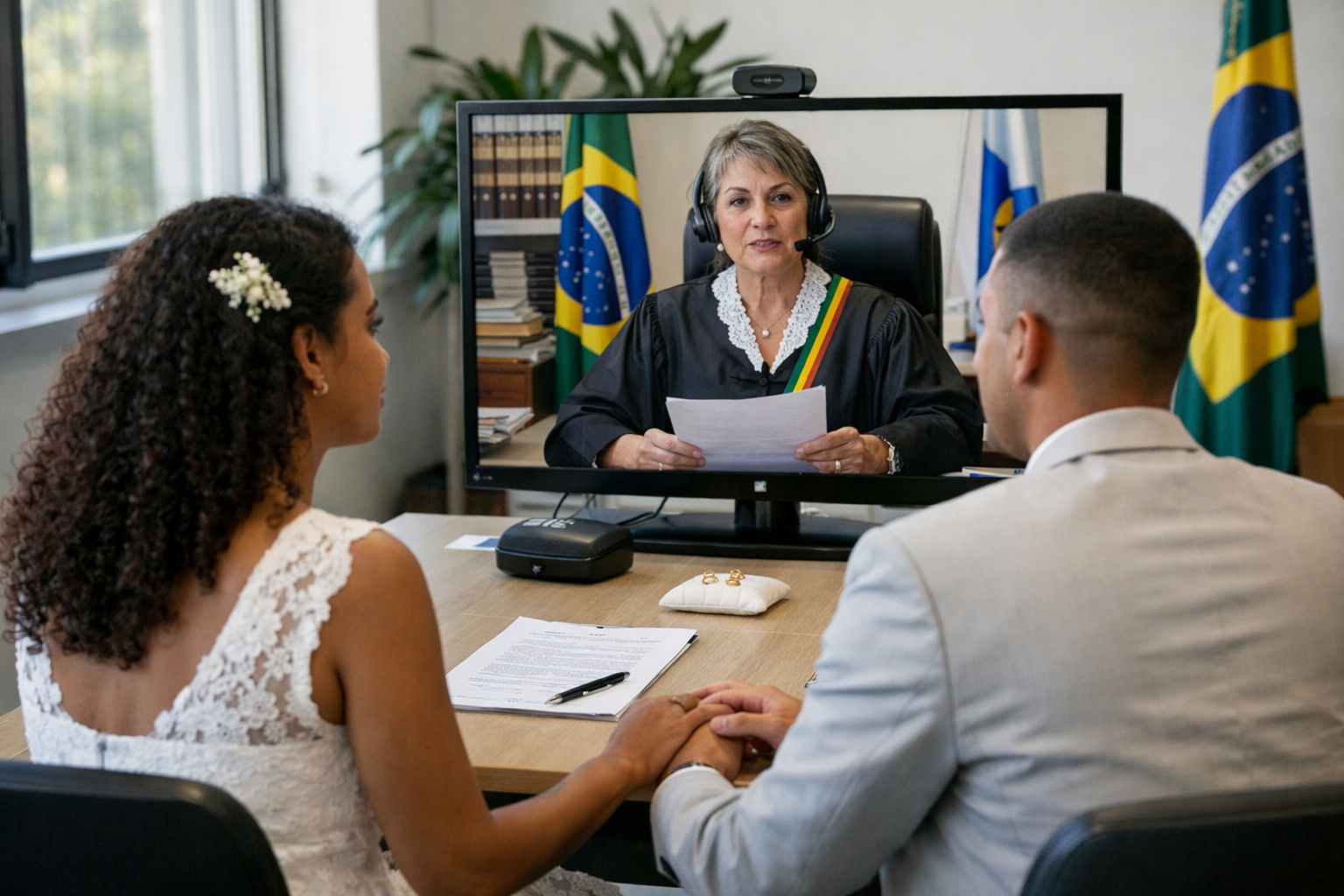


Approved Proposal Modernizes The Civil Code, Authorizes Marriage Via Videoconference, Broadens The Use Of Electronic Signatures And Redefines The Role Of Notaries Across Brazil
The National Congress has advanced in one of the most significant changes to the Brazilian Civil Code in recent years. The Constitutional and Justice and Citizenship Commission (CCJC) of the Chamber of Deputies approved, in a conclusive manner, a bill that officially authorizes the holding of marriage via video, paving the way for profound changes in how Brazilians formalize civil unions.
The proposal is included in the Bill No. 9.395/2017, authored by the licensed deputy Carlos Gomes (Republicanos-RS), and aims to adapt the Civil Code to the digital reality. Thus, traditionally in-person procedures will now allow electronic means, which has reignited legal, social, and institutional debates about security, tradition, and the future of the justice of the peace in the country.
List Of Major Changes Approved In The New Civil Code
Among the central points of the project are direct changes in the operation of notaries and the celebration of civil marriage. The approved changes include:
-
The noise law will no longer be in effect at 10 PM starting in June with a new rule valid during the 2026 World Cup.

-
The Chamber opens a debate on driver’s licenses at 16 years old as part of a reform that includes around 270 proposals to change the Brazilian Traffic Code and may redesign rules for licensing, enforcement, and circulation in the country.

-
The new Civil Code could revolutionize marriages in Brazil with “express divorce” and changes that could exclude spouses from inheritance.
-
Banco do Brasil sues famous influencer for million-dollar debt and intensifies debate on delinquency, risks of seizure, and direct impact on Gkay’s credibility.


- Celebration of marriage via videoconference, allowing the ceremony to be held remotely, without the physical presence of the couple at the notary;
- Electronic signature on the request for marriage authorization, which can be done both in person and online;
- Issuance of the authorization certificate within five business days, reducing deadlines and existing bureaucracies;
- Authorization for the civil registrar or their substitute to act as a justice of the peace, provided there is permission from the local judicial authority;
- Guarantee of reimbursement to notaries for free acts, such as the issuance of birth and death certificates intended for low-income populations;
- Determination for states and the Federal District to establish a minimum income for natural person registrars, seeking financial balance in the provision of services.
These changes were designed to integrate the Brazilian notarial system into the digital environment, broadening access to services and accelerating administrative procedures considered slow or excessively bureaucratic.
Modernization of Notaries and Integration into The National Electronic System
The information was disclosed by specialized media in legislation and accompanied by legal analyses that point to the project as a direct outcome of the Law No. 14,382/2022, responsible for creating the Electronic System of Public Records (Serp). This system established the legal bases for the digitization of civil records throughout the country.
According to the rapporteur of the proposal, deputy Cleber Verde (MDB-MA), the initiative aims to modernize the Civil Code, aligning the legislation with technology already used in other public services. As the parliamentarian emphasized, the measure seeks administrative efficiency, without compromising legal guarantees or fundamental rights.
Nevertheless, experts warn that accelerated digitization requires caution. Issues such as ensuring free expression of will, preventing fraud, and including populations with limited internet access remain at the center of the legal debate.
Conclusive Approval and Debate On The Future Of The Justice Of The Peace In Brazil
Since the project was approved conclusively, it will not need to be voted on in plenary, except in the event of an appeal. If this does not happen, the text will go directly to the Federal Senate, where it will be analyzed again.
Despite the legislative progress, the approval of marriage via video has rekindled discussions about the possible emptiness of the traditional role of the justice of the peace, a figure historically associated with in-person ceremonies. For some jurists, the change represents technological evolution; for others, it may weaken the symbolism and legal security of the act.
At the same time, supporters of the project argue that modernization meets the reality of millions of Brazilians and aligns with the state’s digital transformation. The topic, therefore, remains open and is likely to continue generating debates as the new Civil Code progresses in Congress.
In light of the approval of marriage via video in the new Civil Code, do you believe that the modernization meets the needs of Brazilians, or does the traditional model, with an in-person ceremony, still represent the most appropriate way to formalize civil union?









Perfeito. Útil. Inovador.
Excelente mudança! A burocracia inibe o progresso. Mas, que seja opcional a realização da cerimônia presencial.