





 Portuguese
  English
  Spanish
  5 min of reading
  0 comments


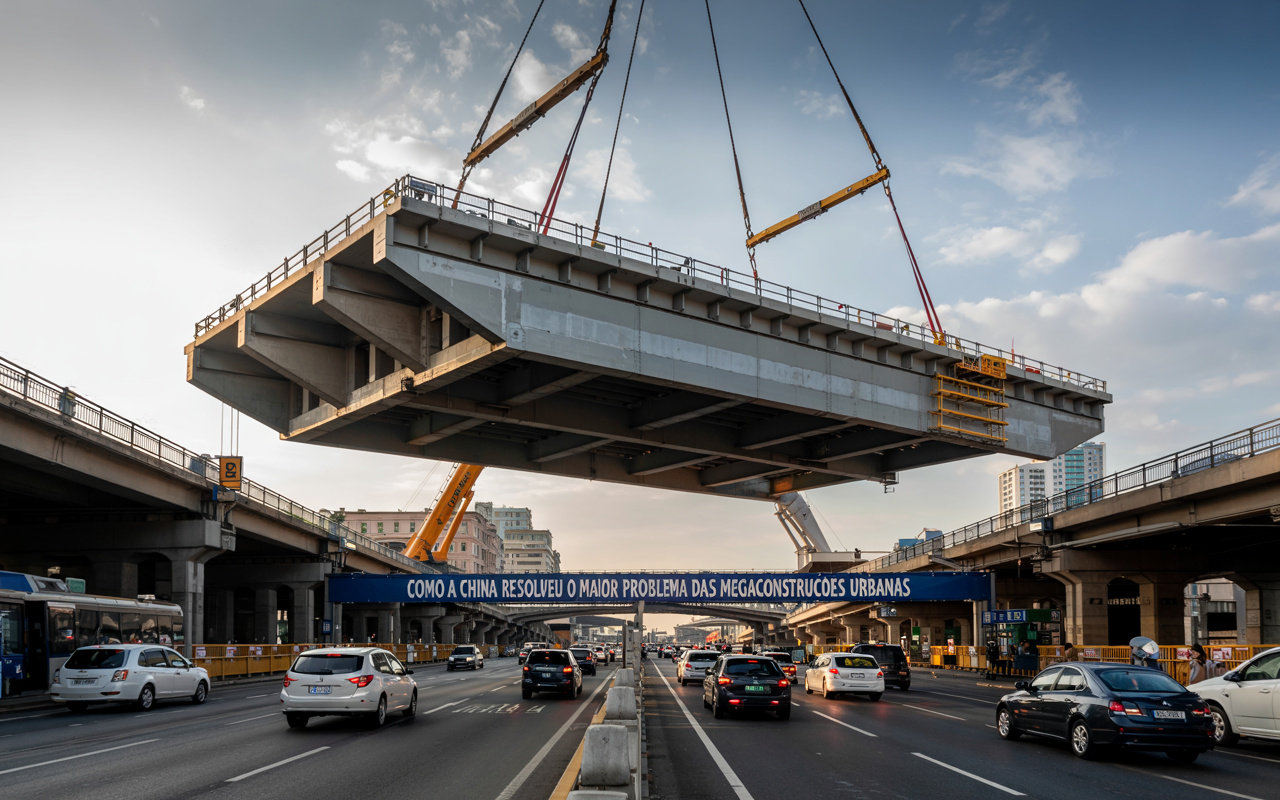
Discover How Chinese Precision Engineering Transformed Urban Megaconstructions in the Country by Adopting Modern Solutions for Works in Large Cities Without Blocking Traffic. Discover the Most Advanced Technologies and the Chinese Method of Urban Infrastructure That Are Revolutionizing the Sector
Urban megaconstructions in China are globally known for their scale and complexity. With the rapid growth of Chinese cities, building large infrastructures without interrupting the daily lives of the population has always been a significant challenge. However, Chinese engineering has developed a solution for works in large cities that revolutionized the sector: constructing without stopping traffic and ensuring millimeter precision. This innovative method combines advanced technology, strategic planning, and unique construction techniques, becoming a global reference in construction technology in China.
The Challenge of Urban Works in Chinese Metropolises
Chinese cities face intense population and urban growth. According to World Bank data, urbanization in China surpassed 66.16% of the population in 2023, and this rate is expected to continue growing.
In this context, urban megaconstructions are essential to ensure adequate infrastructure, from expressways and subways to bridges and tunnels.
-
Neither the Pyramids nor the Great Wall of China, this gigantic construction in Spain is the human mark on planet Earth that intrigues the most when seen in images from space.

-
Surrounded by cliffs, mist, and chilling stories, the ancient Hotel del Salto has been reborn as a museum while still unable to shake off its reputation as a haunted place.

-
This star-shaped fortified construction, hidden near the border of Spain, may be the largest fortress on the planet.

-
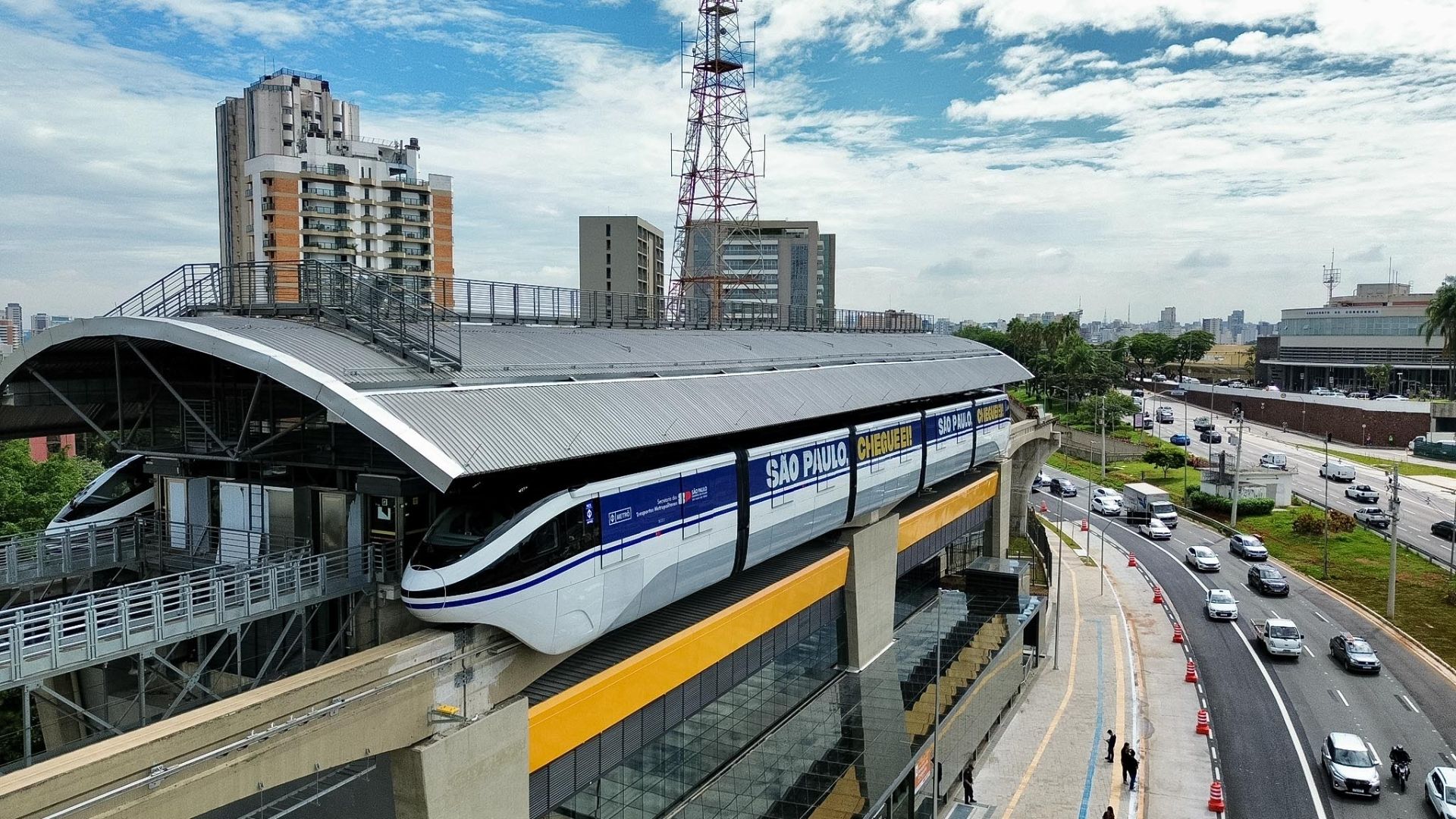
Congonhas receives the monorail promised for the 2014 World Cup after more than a decade of delays and becomes the first airport in Brazil with integrated subway.


However, one of the biggest difficulties has always been executing these works without interrupting the intense flow of traffic in the cities. Blocking main streets or highways can cause severe congestion, affect the economy, and disturb millions of people daily. Therefore, the search for methods that avoid these shutdowns has become a priority in Chinese urban engineering.
Chinese Method of Urban Infrastructure: Innovating Without Stopping Traffic
The main Chinese innovation lies in the integration of detailed planning, the use of automated machinery, and modular construction techniques. This combination allows works to be carried out in already saturated urban environments with heavy traffic, without significant interruptions.
Modular Construction and Prefabrication
One of the most widely used techniques is the prefabrication of structural components, such as beams, tunnel segments, and concrete walls. These elements are produced in specialized factories away from the construction site, with high precision and quality control.
Later, during construction, these modules are quickly transported and installed on-site, reducing the time of interference with traffic. This technique is fundamental for the success of urban works without stopping traffic, as it drastically decreases the time needed for assembly and disassembly in urban areas.
Real-Time Monitoring and Control
Another important innovation in Chinese precision engineering is the intensive use of sensors, drones, and artificial intelligence to monitor every stage of the work in real time. This allows for the anticipation of potential problems, adjustments to schedules, and ensures that the installation of the modules occurs with millimeter precision, avoiding rework and delays.
Solution for Works in Large Cities with Minimal Impact
The application of the Chinese method of urban infrastructure represents a significant advancement in how large works are executed without affecting urban mobility. The use of cutting-edge equipment, such as movable bridges and launch machines, enables the installation of large structures during the night or in periods of low vehicle flow.
This way, traffic remains practically unchanged during the day when the volume of cars and pedestrians is much higher. In addition, there is meticulous planning to reduce noise and visual pollution generated during the most intense construction phases.
Chinese precision engineering also prioritizes the integration of sustainable technologies, with the reuse of materials, strict waste control, and reduction of environmental impact around the works. This approach ensures more comfort for the population, resource savings, and greater efficiency in delivery deadlines, consolidating the Chinese method as a global reference in sustainable and effective urban works.
Construction Technology in China: Automation and Robotics as Allies
Industrial automation has not been left out of urban megaconstructions in China. Robots are used for repetitive or dangerous tasks such as welding, cutting, and moving heavy loads. Moreover, high-tech cranes and automated systems for module positioning ensure safety and agility.
This technological advancement also facilitates the execution of works during hours of lower traffic, such as at night, further reducing impacts on the population.
Practical Examples of the Solution for Works in Large Cities
Shanghai Metro Expansion Project
Shanghai, one of the largest metropolises in the world, underwent an ambitious project to expand its subway system. The construction of new tunnels and stations was carried out without interrupting traffic on the surface streets, using the Chinese method of urban infrastructure.
The prefabrication of tunnel segments and installation using remotely controlled tunnel boring machines reduced the impact on the surface. This project served as a model for several other Chinese cities, demonstrating that it is possible to advance in complex works without causing severe disruptions.
Construction of the Hong Kong-Zhuhai-Macau Bridge
Considered one of the largest engineering works in the world, the Hong Kong-Zhuhai-Macau Bridge was constructed amid intense maritime and terrestrial traffic. The use of precision technologies and modular assembly allowed large segments to be built in shipyards and transported and assembled accurately at the final location.
This project also employed techniques to minimize environmental impacts and disruptions for the population, demonstrating the efficiency of construction technology in China.
Benefits of Urban Megaconstructions in China with Millimeter Precision
The adoption of this method offers numerous practical benefits for Chinese megacities, such as:
- Reduction of construction time: modular construction and automation expedite the process, avoiding long shutdowns.
- Minimization of traffic disruptions: executing works during strategic hours and the rapid positioning of modules allows maintaining traffic flow almost intact.
- Precision and safety: real-time monitoring and robotics technology ensure that the work meets strict quality standards.
- Sustainability: the reduction of urban interference minimizes pollution and environmental impact while improving residents’ quality of life.
Future Perspectives of Chinese Precision Engineering
Despite the advances, challenges still persist, such as the need to integrate these technologies into less developed regions and the training of specialized labor. The high initial investment for machinery and infrastructure is also a factor to be considered.
However, China continues to invest heavily in innovation, with research focused on artificial intelligence, advanced materials, and new construction methods. It is expected that in the coming years, the country will further expand the use of its exclusive method, consolidating its global leadership in precision urban engineering.
The Chinese experience proves that technological innovation, detailed planning, and a focus on efficiency can transform the urban infrastructure sector, serving as an example for the entire world.







Seja o primeiro a reagir!