





 Portuguese
  English
  Spanish
  4 min of reading
  0 comments


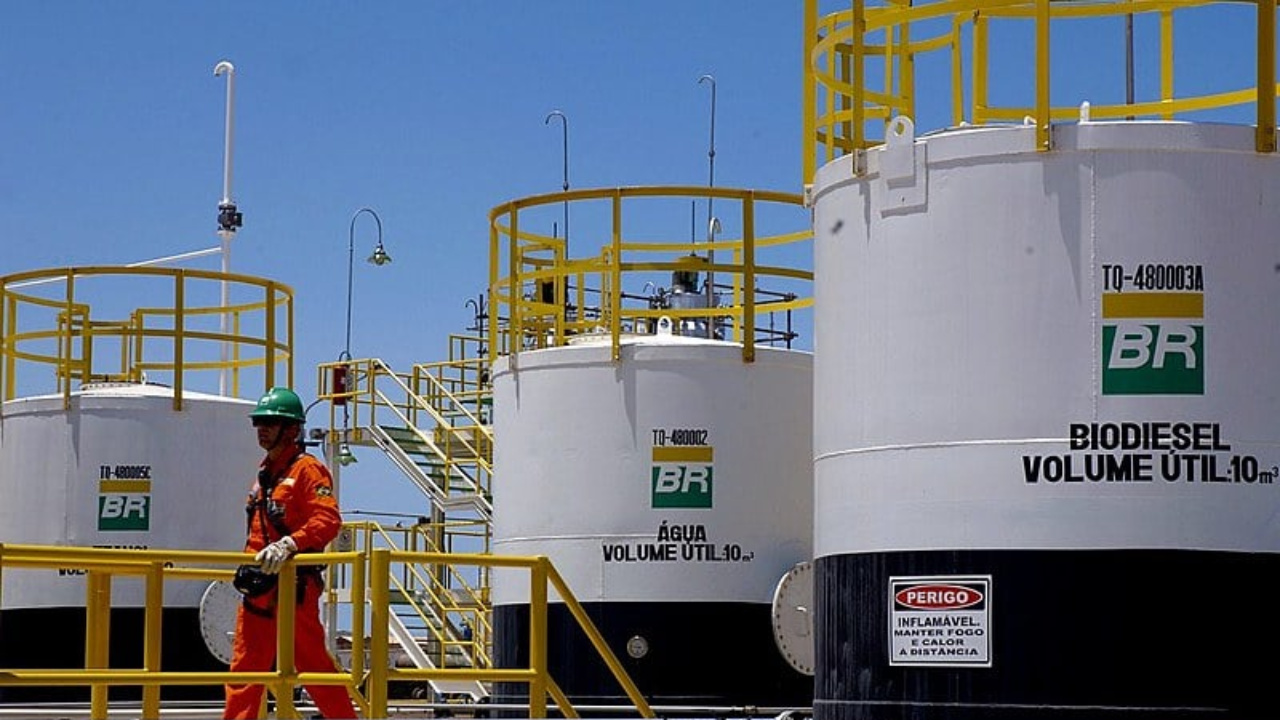
Petrobras May Feel Indirect Effects of the Crisis in Venezuela, Impacting Oil Prices, State Company Profits, and Fuel Policy in Brazil.
Petrobras returned to the center of the energy debate after the intensification of the political and institutional crisis in Venezuela, which reignited expectations regarding a possible increase in global oil supply.
If the United States manages to exert greater control over Venezuelan reserves, the market is likely to respond with adjustments to international commodity prices, which could generate significant indirect effects for the Brazilian state company.
Analysts assess that the mere perception of a return of private investments in Venezuela is already enough to pressure barrel prices. This happens because the country holds one of the largest proven reserves in the world, even though its current production is limited by lack of capital, technology, and political stability.
-
Lula reveals a masterstroke by Petrobras to undo a deal made by Bolsonaro, which involves the return of an important refinery that currently produces less than half of what was expected and makes Brazil dependent on international diesel.
-
A study confirms that the natural gas sector will reduce greenhouse gas emissions in Brazil by 0.5% and accelerate the energy transition by 2026.

-
Petrobras implements a severe adjustment and confirms a 55% increase in the price of aviation kerosene with a proposal for installment payments for the companies.
-
The rise in oil prices could ensure an extra revenue of R$ 100 billion for the Federal Government, indicates a recent economic study.


Expectations of a Drop in Barrel Prices Pressure Oil Company Margins
According to economist Adriano Pires, founding director of the Brazilian Infrastructure Center (CBIE), market perception is decisive. “If the market believes that Trump will really take control of Venezuela and that American and other private companies will return to invest in the country in the short term, the trend is for a drop in barrel prices.”
This scenario is not trivial for Petrobras. Lower prices reduce company revenue, especially after a period already marked by strong commodity devaluation. In 2025, WTI barrel prices fell 19.9%, while Brent fell about 14.3%, recording one of the worst performances since 2020.
“This is not good for Petrobras, because it loses revenue,” reinforces Pires, highlighting that the state company remains highly sensitive to fluctuations in the international market.


Initial Market Reaction Contrasts with Medium-Term Outlook
On the first trading day after the American operation in Venezuela, oil registered a high of nearly 1%. However, the movement was interpreted as temporary. According to lawyer Marcelo Godke, a specialist in International Business Law, the initial reaction reflects an increase in risk perception.
“This occurs mainly because such events create insecurity, and insecurity is a basic factor for raising the price of any product or commodity,” he explains. Still, he notes that in the medium to long term, the logic tends to reverse, with greater supply putting downward pressure on prices.
Possible Impacts on Profits and New Opportunities for Action
The medium and long-term effects for Petrobras remain uncertain. If global production increases consistently, the state company may face tighter margins. On the other hand, the reopening of the Venezuelan market could also create opportunities.
Adriano Pires assesses that not all Venezuelan assets are of interest to major American companies. “A field of 20,000 barrels is not for Chevron. A field like this, for example, might attract medium-sized American, Canadian, or even Brazilian companies, like PetroReconcavo or Prio,” he states.
In this context, Petrobras could evaluate partnerships, specific projects, or even service provision, depending on the political and regulatory conditions that may be established.
Brazilian Exports Should Follow Their Own Dynamics
Experts consulted by the financial market assess that Brazilian oil exports are unlikely to suffer significant impacts in the short term. Economist Simão Silber, a professor at the University of São Paulo (USP), explains that any increase in Venezuelan production aimed at the United States could alter regional flows.
“On the other hand, other markets are opening up. Particularly, the Asian market becomes more favorable for Brazil as there is a diversion of Venezuelan oil supply,” Silber states.
Historically, Venezuela directed a significant portion of its oil to China, a country with a scarcity of its own reserves. Any change in this arrangement is likely to redistribute markets without necessarily reducing Brazil’s share.
Additionally, national production remains influenced by OPEC+ decisions, which control global quotas and volumes. Although the group faces institutional wear, it still plays a significant role in price formation.
Fuels in Brazil: Possible but Uncertain Drop
One of the most sensitive points of the debate involves fuel prices in Brazil. In theory, cheaper oil opens the door for reductions at the pumps. However, Petrobras’ pricing policy adds a high degree of uncertainty.
Since the start of President Luiz Inácio Lula da Silva’s third term, the state company has adopted a new model that formally replaced the Import Parity Policy (PPI). The stated goal is to reduce external volatility for consumers, but the calculation method has not been disclosed.
“As the oil pricing model is highly controlled here, price changes will fundamentally depend on the government. But if there is a change, it will be downward, not upward,” assesses Simão Silber.
Adriano Pires adds that political and electoral factors may accelerate this movement, as fuel prices directly impact inflation and, consequently, the debate on interest rates.
Political Uncertainties Keep Scenario Open
Despite projections, the future of the market remains conditioned by the evolution of the Venezuelan situation. Political scientist Leonardo Paz from FGV states that the scenario still lacks clear definitions.
“We need to understand how an eventual political transition will unfold. Will Delcy Rodríguez remain in power until Maduro’s term effectively ends? Will she call for new elections? We do not know,” he states.
If instability persists and production expansion plans fail, the effect may be opposite to what is expected, with new upward pressures on oil. Economist Carlos Honorato from FIA Business School stresses that caution is essential: “I think we have to be very careful with oil, because we do not have good news coming immediately.”








Seja o primeiro a reagir!