





 Portuguese
  English
  Spanish
  3 min of reading
  0 comments



Discover Helibras, the Pride of Brazilian Aviation: Learn How a Helicopter is Made at the Only Helicopter Manufacturer in the Southern Hemisphere, Located in Itajubá, MG, Revealing Its Essential Contribution to Defense, Public Services, and Technological Innovation in Brazil.
In the heart of Itajubá, southern Minas Gerais, lies Helibras, the only helicopter manufacturer in the Southern Hemisphere, playing a crucial role in Brazilian aviation. With about 80% of the public service helicopters in Brazil coming from Helibras, the company stands out not only for its production, but also for the maintenance and modernization of these essential aircraft.
The Helibras assembly line reveals a panorama of aeronautical engineering, with models such as the H130 and the robust H225, the latter serving in the three branches of the Brazilian Armed Forces. The Itajubá factory not only showcases the manufacturing process but also the importance of Helibras in the national and international aeronautical industry, with the company being part of a select group of eight countries capable of performing a complete spectrum of aeronautical operations.
How is a Helicopter Made?


To understand how a helicopter is made, let’s start at the design and simulation stage, where aerodynamics and structure are meticulously planned. Engineers use CAD software to create designs that optimize flight efficiency while considering the arrangement of vital components like the cockpit and engine. Aerodynamics is essential to ensure controllability and stability, and the structure must be robust enough to withstand the stresses of flight.
-
American Airlines starts selling trips as if they were flights, with check-in and baggage check at the airport, but on short routes, passengers board luxury buses connecting cities to major hubs in the U.S.

-
Historic bankruptcy of Centauro shocks the market, and the century-old company puts more than 500,000 products, machines, and complete infrastructure up for online auction.

-
São Paulo surprises the world with a colossal railway network project that promises over 1,000 km of tracks, R$ 194 billion in investments, and 40 projects connecting the capital to the interior with fast and sustainable trains.
-
The world’s largest escalator, measuring 905 meters in China, reduces urban travel time from 1 hour to about 20 minutes and transforms mobility in mountainous regions with an engineering solution adapted to the terrain.


In the component manufacturing phase, the fuselage is built to be both light and strong, often employing advanced composite materials. The rotor blades, essential for the helicopter’s lift, are designed with materials like carbon fiber to combine strength and lightness.
Assembly and Engine
During the assembly and integration phase, the fuselage takes shape from the skeleton, with the addition of outer panels, doors, and windows. Mechanical systems such as the transmission, which connects the engine to the rotors, as well as hydraulic and fuel systems, are carefully installed, ensuring the essential functionality of the helicopter.
The motoring process involves selecting and installing engines that meet the helicopter’s power needs. The transmission is crucial for transferring power from the engine to the rotors, requiring precise engineering to ensure efficiency and safety.
Technology and Safety at Helibras
In avionics and electronic systems, the cockpit is equipped with advanced instruments for navigation and communication, as well as flight controls that allow the pilot to maneuver the helicopter. These systems are fundamental for effective management of flight operations.
Rigorous testing is conducted to ensure the safety and performance of the helicopter. This includes ground tests to verify mechanical and electronic systems, and flight tests that evaluate the helicopter’s maneuverability and response under various conditions to finalize how a helicopter is made.
Do You Know How Helibras Started?
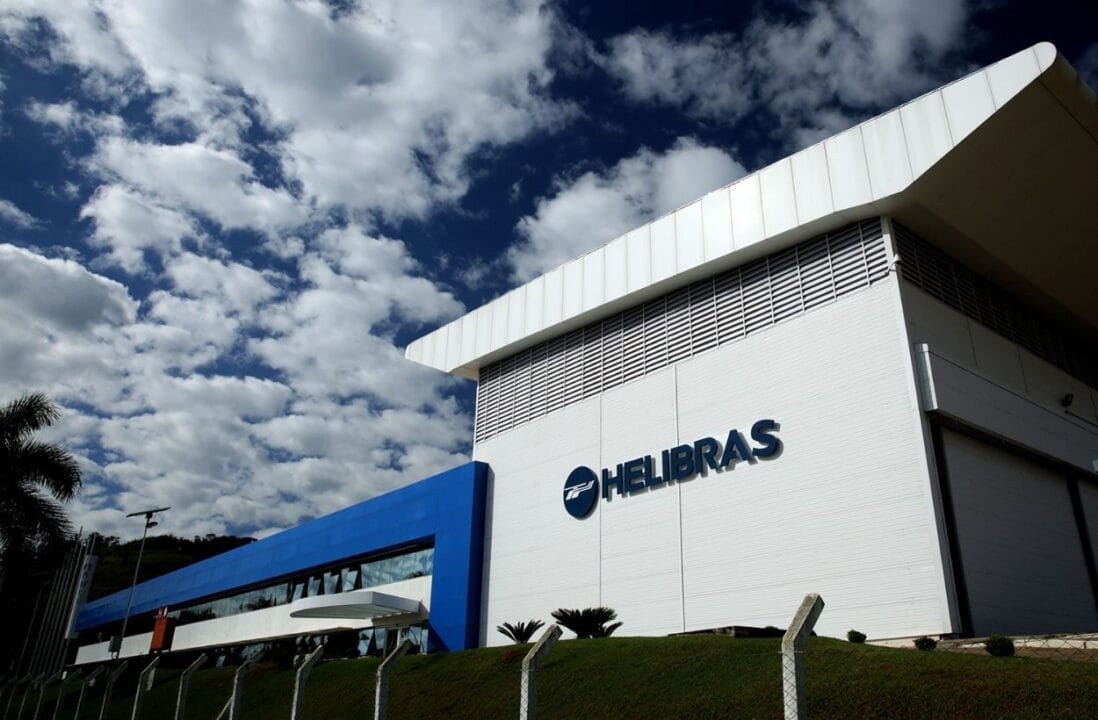
Helibras, founded in 1978 and operating in Itajubá since 1980, has produced over 850 helicopters, significantly contributing to Brazil’s technological and industrial development. In addition to serving the domestic market, Helibras exports technology, components, and helicopters, reinforcing its position as a global player.
The company not only manufactures helicopters but also plays a vital role in public service missions and rescue operations, as seen during the Brumadinho tragedy and other natural disasters. Helibras’s modernization capability ensures that aircraft like the Brazilian Army’s Panther are revitalized with cutting-edge technology, extending their operational lifespan and efficiency.
With a workforce of highly skilled workers and facilities that include the only approved helicopter workshop in Latin America by Airbus, Helibras symbolizes innovation and technical expertise in the global aeronautical landscape. Its impact transcends helicopter manufacturing, contributing to sustainable development and technological sovereignty in Brazil. Helibras not only manufactures helicopters but also shapes the future of aviation, standing out as a pillar of the Brazilian and global aeronautical industry.









-

2 pessoas reagiram a isso.