





 Portuguese
  English
  Spanish
 5 min of reading
  0 comments


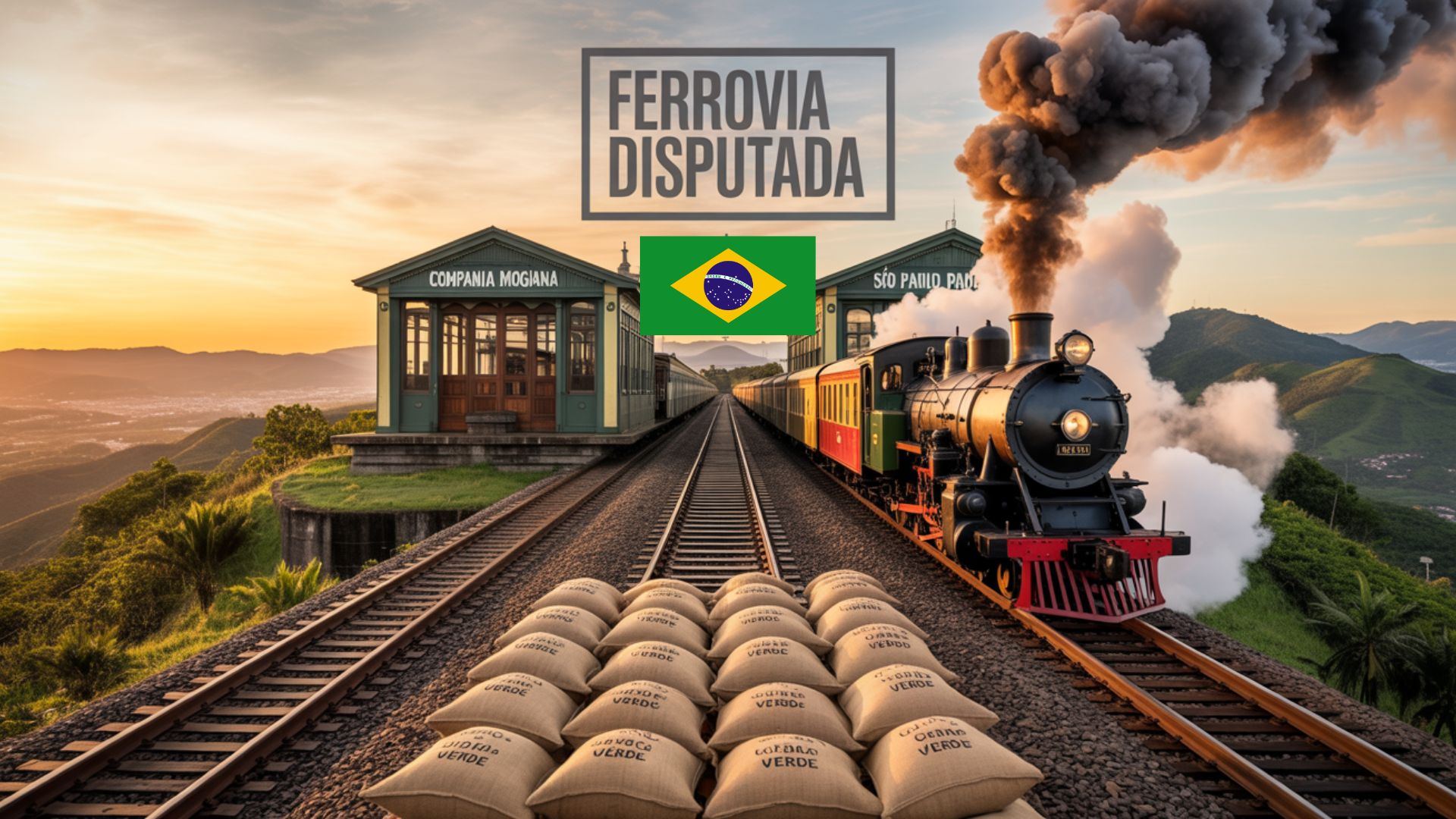
The Arrival of Coffee in the Mining Interior Boosted the Construction of Railways and Transformed São Sebastião do Paraíso into a Strategic Pole, Attracting Two Rival Companies That Competed for the Transport of Grain to the Port of Santos.
The advancement of coffee cultivation in the late 19th century reshaped the railway map of the São Paulo and Minas interiors.
This movement brought São Sebastião do Paraíso (MG) to the center of an unprecedented competition: in a few years, two companies opened stations in the same city to compete for the flow of the so-called green gold towards the Port of Santos.
In 1911, the São Paulo–Minas Railroad reached the municipality. Three years later, it was the turn of the Mogiana Railway Company.
-
“No one will make us change the Pix,” says Lula after the US report.

-
Lula responds directly to Trump and says that Pix is from Brazil and will not change under pressure from anyone, after a report from the United States pointed out the Brazilian payment system as an American trade barrier.

-
Amazon has just announced a new fee on all deliveries, and your online purchases will become more expensive starting April 17, including for those buying from the United States here in Brazil.

-
He sold his share for R$ 4 thousand, saw the company become a giant worth R$ 19 trillion, and missed the opportunity of a lifetime.


The two lines made the territory a logistical node between Minas Gerais plantations and São Paulo tracks, accelerating immigration and businesses related to coffee.
Coffee and Railways in the Interior of Minas and São Paulo
The high production demanded fast and reliable transportation. Proximity to the São Paulo coffee zone favored Paraíso, which saw the grain shape the local economy and attract workers from São Paulo and abroad.
Before the tracks, many immigrants landed in Mococa (SP) and traveled by ox cart to the mining municipality. With the railways, the journey was shortened, and the shipments of sacks gained scale.
Dispute Between São Paulo–Minas and Mogiana
The São Paulo–Minas was born in São Simão (SP) and expanded for two decades until it established, in 1911, its terminal station in São Sebastião do Paraíso.
The objective was to capture coffee loads from the Southwest of Minas and integrate them into the São Paulo networks that flowed into Santos.
In 1914, the Mogiana inaugurated its station, just a few blocks from its competitor. This forced a competition in tariffs, deadlines, and shipping facilities. The city began to operate as a hinge between two networks, a rare situation even at the height of export.
The Decline of Railway Companies
The coffee cycle sustained railway expansion until the mid-20th century. However, economic crises and changes in transportation reduced revenues and pressured the accounts of various railroads.
In the case of São Paulo–Minas, the government took over management in the early 1930s.
The aim was to maintain the circulation and maintenance of the line. Decades later, a new rearrangement would change the railway landscape of São Paulo and Minas.


From Rivalry to Railway Unification
The first major turn occurred in 1967, when the São Paulo–Minas was transferred to the administration of the Mogiana Company.
Shortly after, in October 1971, the São Paulo government unified its railways and created Fepasa (Ferrovia Paulista S.A.).
The state-owned company incorporated Mogiana, Paulista, Sorocabana, Araraquara, and the São Paulo–Minas itself.
The brands of the two former rivals disappeared, but the logistical function built over decades remained as a regional legacy.
End of Urban Transportation and Removal of Tracks
The Mogiana station served passengers until 1977. In the following years, freight trains also dwindled.
Around 1990, the tracks in the urban section were removed. A railway bypass began to circumvent the city, consolidating the end of central circulation.
In the São Paulo–Minas network, physical unification with the Mogiana preceded the bypass, and the old urban layout was gradually deactivated.
Preserved Heritage: Stations of São Sebastião do Paraíso
The built heritage survived. The old Mogiana station, inaugurated in 1914, was restored and now houses the “Napoleão Joele” Municipal Historical Museum, on Avenida Oliveira Rezende.
The building has been listed by the municipality since 1992.
A few blocks away, the old station of São Paulo–Minas, built in 1911 with features of English railway style, gained a new role.
It became the administrative headquarters of the Fire Department of Minas Gerais and has been listed since July 25, 2003.
The two stations synthesize the local memory of a time when the train whistle marked the rhythm of the economy.
Why Paraíso Was a Key Piece in the Coffee Cycle
In addition to its strategic position on the border with São Paulo, Paraíso was close to major producing areas.
The municipality served as a collection and transshipment point. From there, coffee would travel to junctions that connected the São Paulo network to Santos.
The simultaneous presence of two companies also increased the loading capacity and boosted support services, such as warehouses, workshops, and commerce linked to the movement of people and goods.
Timeline of Green Gold
In 1891, the São Paulo–Minas began to expand from São Simão. Two decades later, it reached São Sebastião do Paraíso, establishing its peak point there.
In 1914, the Mogiana inaugurated its own station, reinforcing competition. In the 1960s, a state rearrangement sealed the administrative merger.
The creation of Fepasa in 1971 put an end to the original brands. From 1977, passenger transport was terminated.
Between the late 1980s and early 1990s, the urban layout was suppressed and diverted outside the central perimeter.
What remained was the symbolic dimension: the stations, now protected by listing, became public spaces of memory and service.
The Railway Heritage in Local Identity
Even with the tracks moved away from the center, the dynamics created by coffee and railways still express themselves in the landscape and toponymy of the city.
Neighborhoods, avenues, and cultural facilities preserve references to the period when the flow of sacks defined investments, attracted immigrants, and connected Paraíso to international markets.
The remaining stations, now requalified, help explain how infrastructure shapes the territory and why this history remains relevant to those who live and work in the municipality.








Seja o primeiro a reagir!