





 Portuguese
  English
  Spanish
  5 min of reading
  0 comments


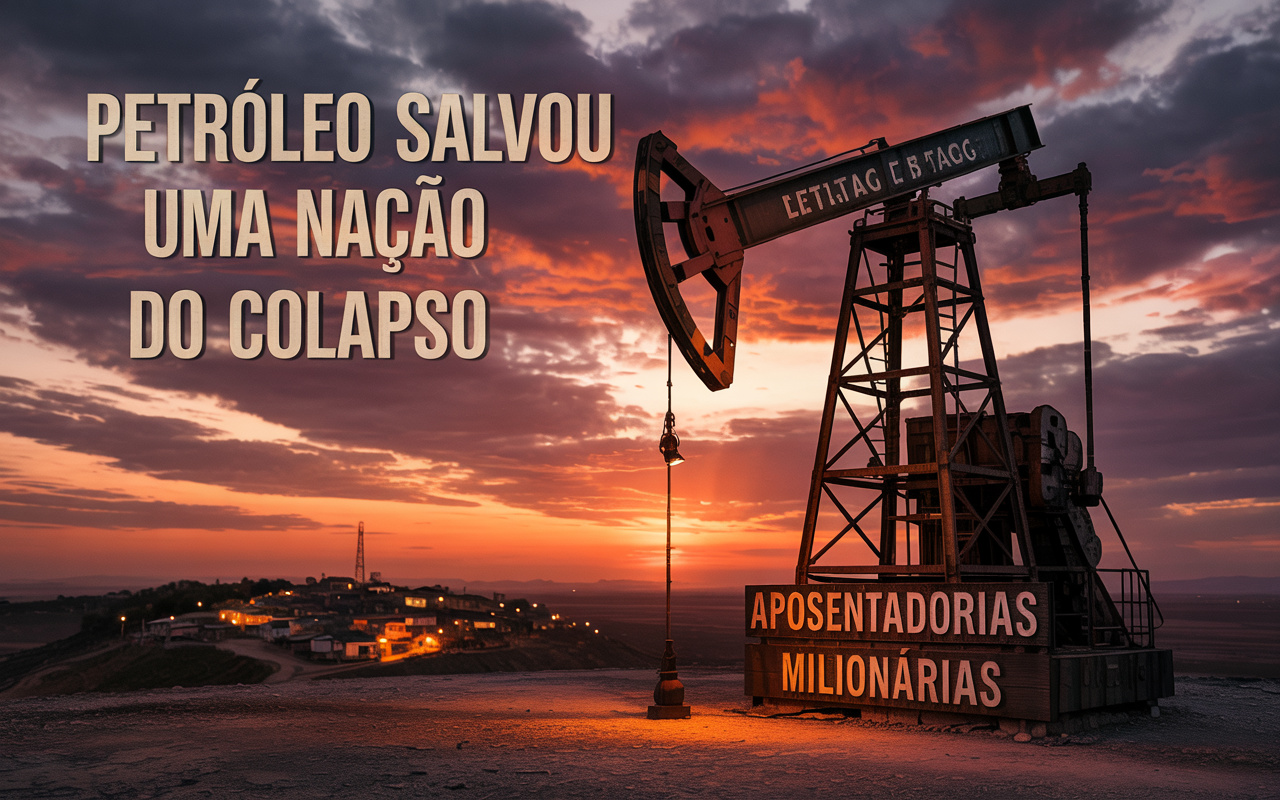
From Poor Deserts to Trillion-Dollar Funds: See How Emirates, Saudi Arabia, and Norway Used Oil to Avoid Collapse and Secure Million-Dollar Pensions.
Imagine a country surrounded by desert, with little water, poor infrastructure, and a stagnant economy. A place where life expectancy was low, opportunities were scarce, and most of the population depended on livestock, fishing, or subsistence farming. Now, imagine that this same country, two decades later, became synonymous with luxury, stability, and generous pensions funded by a public fund that grows even when the wells run dry. Sounds like fiction? This is the real story of how oil saved entire nations from collapse and transformed their underground wealth into security for future generations. From the United Arab Emirates to Norway, passing through Saudi Arabia’s silent transition, what these countries have in common is the ability to transform a geological curse — the excess of crude oil — into a strategic asset to reinvent their existence.
United Arab Emirates: From Fishing Villages to Global Luxury Hub with the Oil Market
In the 1960s, the Emirates did not exist as a unified country. They were known as the “Trucial States,” a collection of small emirates governed by local sheikhs, mostly living off pearl fishing and coastal navigation. Dubai, for example, was just a village in the desert with fewer than 60,000 inhabitants.
The discovery of large reserves of oil and natural gas in Abu Dhabi, Ras Al Khaimah, and Dubai completely changed the country’s trajectory. With a long-term vision, local leaders — especially Sheikh Zayed bin Sultan Al Nahyan — made an unusual decision: to use oil not only to build infrastructure but to create a sovereign fund that would ensure wealth even after the wells ran dry.
-
A study confirms that the natural gas sector will reduce greenhouse gas emissions in Brazil by 0.5% and accelerate the energy transition by 2026.

-
Petrobras implements a severe adjustment and confirms a 55% increase in the price of aviation kerosene with a proposal for installment payments for the companies.

-
The rise in oil prices could ensure an extra revenue of R$ 100 billion for the Federal Government, indicates a recent economic study.

-
Naturgy begins an investment of R$ 1.6 million to expand the gas network in Niterói and benefit thousands of new residences and businesses.

Today, this fund — the Abu Dhabi Investment Authority (ADIA) — is one of the largest in the world, with assets estimated at over US$ 800 billion. It funds everything from free education, cutting-edge public health, pensions for all local citizens, and still has funds left to invest in global companies like SpaceX, Uber, and real estate in Manhattan.
Most impressively: less than 30% of the Emirates’ economy today comes from oil. The rest comes from tourism, technology, trade, and financial services. The country managed to use oil wealth as a trampoline — and not as a crutch.
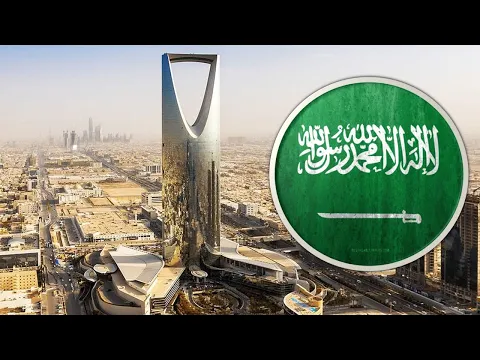

Saudi Arabia: From Extreme Dependence to Billion-Dollar Transition with Oil
For decades, Saudi Arabia was the classic example of a “petroleum state.” With about 17% of the world’s known reserves, the country financed almost everything — from public salaries to energy subsidies — with oil money. When prices were high, the kingdom swam in surpluses. When the barrel fell, the deficit exploded.
The turning point came with the oil crisis in 2014, which exposed the fragility of a model based solely on the export of crude oil. That’s when Vision 2030 was born, an ambitious strategy led by Crown Prince Mohammed bin Salman to diversify the economy, create private sector jobs, and build a new Saudi Arabia.
The project includes megacities like NEOM, which will be entirely powered by renewable energy, industrial parks, venture capital funds, and even luxury tourism in the desert. All of this is funded by a sovereign fund, the Public Investment Fund (PIF), which already manages more than US$ 900 billion in assets — including stakes in soccer clubs, artificial intelligence companies, and Silicon Valley startups.
More recently, the PIF has also begun investing in green energy, critical mining, and military technology, transforming oil revenue into a vector for sovereignty and strategic security.
Norway: The Cold Miracle That No One Expected
But if there is one example that redefines the use of oil in a peaceful and socially responsible manner, it is Norway. One of the most egalitarian countries in the world, with a population of about 5.5 million, Norway underwent a silent transformation after discovering oil fields in the North Sea in the 1970s.
Unlike Arab countries, Norway has no desert or monarchy. What it has is an exemplary public management mentality. From the beginning, the country treated oil as a good belonging to the entire population — and not to the government of the moment. It created strict laws, prohibited the excessive use of oil revenue in the current budget, and in 1990, founded the Government Pension Fund Global.

Today, this fund — which invests in companies like Apple, Microsoft, and Coca-Cola — is the largest sovereign fund in the world, with over US$ 1.6 trillion in assets. It guarantees million-dollar pensions, economic stability, and immunity against global crises. Even more impressively: Norway is a leader in energy transition, using its oil profits to invest in offshore wind energy, carbon capture, and electric transportation.
It is one of the only countries in the world where oil financed the overcoming of oil itself.
What Could Brazil Learn?
Brazil is also an oil powerhouse — with large reserves in the pre-salt, record production, and a strong presence of Petrobras on the global stage. But there are still doubts as to whether the country is following a path of sustainable wealth or just experiencing cycles of boom and recession based on barrel prices.
Meanwhile, the examples from Norway, Saudi Arabia, and the Emirates show that the secret lies not in oil itself, but in the long-term strategy. It’s not about extracting more — but about turning that wealth into social security, technological independence, and funds that protect the country against the volatile tides of the international market.
The creation of a well-managed sovereign fund, shielded from short-term political interests and focused on pensions, technology, and energy transition, could place Brazil on another level. With the world moving towards new matrices, the time to act is now — before the age of oil ends.









Seja o primeiro a reagir!