





 Portuguese
  English
  Spanish
  4 min of reading
  3 comments


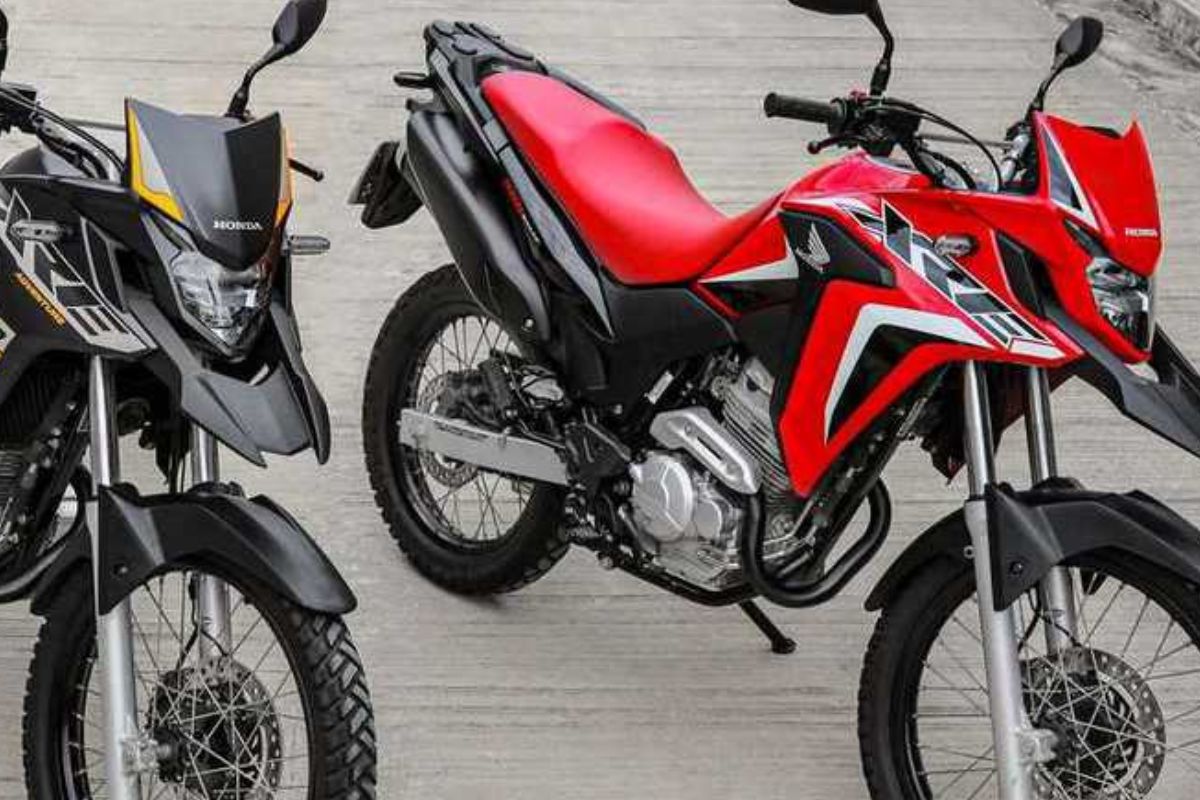


A Design Flaw in the 300cc Engines of the Honda XRE 300, Which Primarily Affected the Non-Flex Models, Caused Microcracks in the Cylinder Head, Power Loss, and a Huge Headache for Thousands of Owners.
The Honda XRE 300, since its launch, has become one of the most popular and desired motorcycles in Brazil. However, its journey has been marked by a chronic problem that turned into the biggest nightmare for its owners: cracks in the engine cylinder head. The defect, which also affected the CB 300R, was particularly notorious in models manufactured before 2016.
The flaw, characterized by the emergence of microcracks in the cylinder head, led to compression leaks, loss of power, and, in the worst cases, an expensive repair that tarnished Honda’s reputation for reliability. The issue became so well-known that workshops specialized in the repairs, and the manufacturer itself had to redesign the component in the following years.
What Was the Chronic Flaw That Haunted the Honda XRE 300 and the CB 300R?
The central problem was the development of microcracks in the 300cc engine cylinder head. These small cracks appeared in high-stress areas, such as around the spark plug hole.
-
According to an analysis by NASA, only one human-made structure is visible from space, and it is not the Great Wall of China or the Pyramids of Egypt.
-
After 377 years of history, the Brazilian Army will have its first female general: Colonel Claudia Cacho has been promoted to brigadier general by Lula and will receive the sword and command baton this Wednesday in Brasília.

-
A Mercado Livre customer opened their package and found 32 resumes of people looking for jobs crumpled as protective paper inside the box, exposing names, addresses, documents, and phone numbers of dozens of candidates.

-
Iceberg A23a, one of the largest in the world, is undergoing accelerated collapse and may disappear: what explains the end of the ice giant?


Although both models were affected, the flaw seemed to be more common in the non-Flex versions, that is, those powered solely by gasoline.
When cracks emerged, the sealing of the combustion chamber was compromised. This caused a leak in the engine’s compression, resulting in a noticeable loss of power and difficulty in starting the engine.
The problem became so widespread that, by mid-2018, a single specialized workshop had already reported repairing over 2,300 cylinder heads.
Why Did the Cylinder Head of the 300cc Engines Crack?

Experts and mechanics point to a combination of factors as the cause of the flaw. The main theory is that engine overheating, caused by a very lean air-fuel mixture, was the main culprit.
This calibration, possibly adopted by Honda to meet the PROMOT 3 emission standards that came into effect in 2009, generates higher temperatures in the combustion chamber.
This high temperature, combined with a possible design defect in the original cylinder head, which had insufficient thickness or excessive rigidity, created the perfect conditions for the emergence of cracks due to thermal stress.
The fact that the problem was less frequent in Flex models reinforces this theory, as ethanol has the ability to cool the engine more during combustion.
How to Identify Compression Loss and Engine Failure
The emergence of cracks in the Honda XRE 300 cylinder head generated a series of symptoms that could appear gradually. Being alert to them was crucial for early diagnosis.
Power Loss: the motorcycle became visibly weaker, having difficulty accelerating and maintaining speed.
Starting Difficulty: the engine took longer to start, especially when cold, a classic symptom of low compression.
Irregular Idle: the engine could not maintain a stable RPM when stopped.
“Hissing” Sound: in some cases, a characteristic hissing could be heard, indicating gas leakage through the cracks.
The definitive diagnosis was usually made with a compression or cylinder leak test at a workshop.
Honda’s Response: The Design Changes That Solved the Problem Starting in 2016
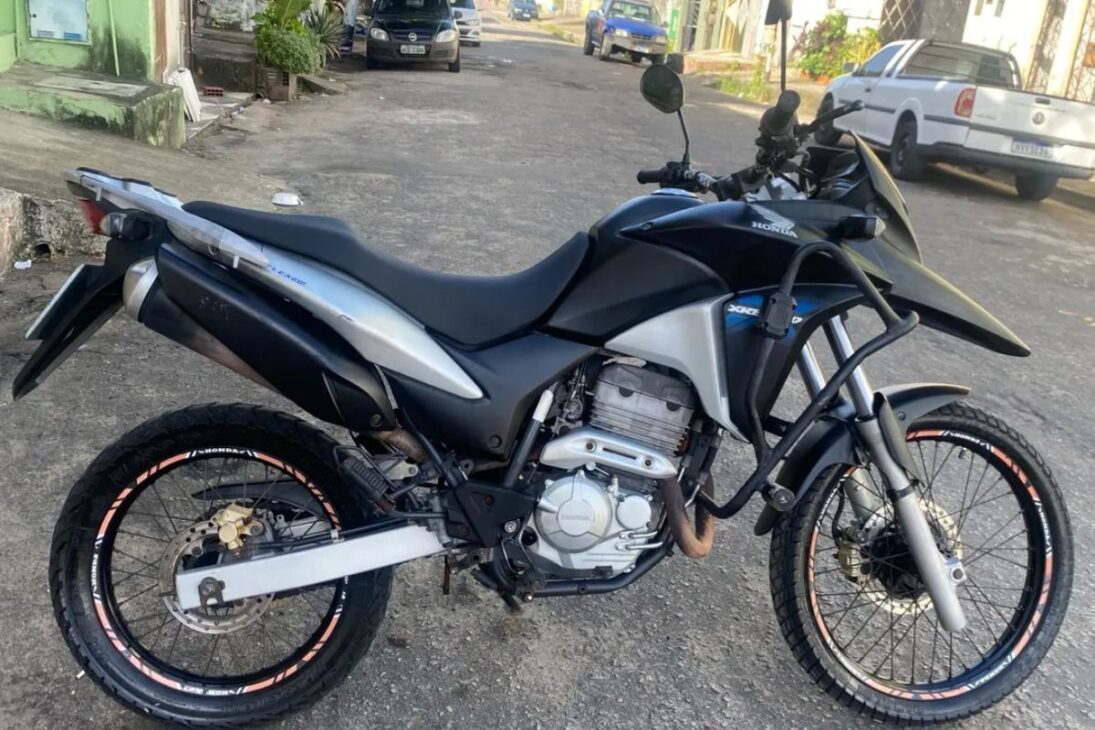
In light of the notoriety of the problem, Honda made a significant modification to the cylinder head design for engines manufactured starting in 2016. Although there was no official recall for older models, the new part, with the code 12010-KWT-D20, became the definitive solution.
The main improvements in the redesigned cylinder head were:
Thicker Material: Honda doubled the reinforcement and increased the thickness of the material in critical areas to better withstand thermal stress.
Thin Spark Plug: the spark plug thread was changed from 12mm to 10mm, and Iridium plugs were used, allowing more material around the hole and better heat dissipation.
Improved Cooling: ducts were added for dedicated airflow to cool the cylinder head area.
Reports from owners and mechanics confirm that, after these changes, the chronic problem of cracks was effectively resolved in the newer models.
The Cost of Repair and the Impact on the Used Market
For owners of a Honda XRE 300 pre-2016, the issue with the cylinder head represented a significant loss. The cost to replace the faulty component with Honda’s redesigned original kit, including parts and labor, could easily range from R$ 2,800 to R$ 4,000.
Considering that the value of a 2016 XRE 300 in the FIPE table is about R$ 18,500, the repair represented a significant portion of the motorcycle’s value.
This stigmatized the older models in the used market. Today, when purchasing an XRE or CB 300 manufactured before 2016, it is essential to demand from the seller proof, with an invoice, that the cylinder head has been replaced with Honda’s updated version to avoid future problems.








Uma verdadeira vergonha para HONDA e engeinharia saber do defeito e nao abrir recal falta de resposabilidade com os proprietarios
Querem ser felizes, esquece Honda e vão pra Yamaha. A primeira é montadora, já a segunda é fabricante de motos, onde a qualidade de suas peças são é bem superiores. Quem disse isso pra mim foi um mecânico preparador de motos.
Dai eu , que gosto de deixar minha moto mais bonita nao tem peças tao bonitas igual a honda tem diferenciadas , se for uma pessoa que gosta de futucar o motor quase nao tem recurso além da moto dependendo doque for nao aceita preparação basica” ,e fora uma peça por exemplo caixa de direção , a original estraga tu poe uma paralera pior pq a original é mais de 500 conto