





 Portuguese
  English
  Spanish
  4 min of reading
  0 comments


How To Divide A Salary Of R$ 3 Thousand Simply: See How Much To Allocate For Fixed Expenses, Leisure, Emergency, And Investments.
With the cost of living rising and the budget tight, understanding how to divide a salary of R$ 3 thousand can make all the difference at the end of the month.
The proposal below presents a practical division that can help with financial organization, highlighting fixed expenses, variable expenses, and the beginning of building an emergency fund.
The strategy follows a simple logic. First, separate the essentials, such as bills, groceries, and rent. Then, anticipate the expenses that vary each month.
-
The Federal Revenue issues a good alert for Brazilian taxpayers: 60.9% are already using the pre-filled tax return, automatic refunds via Pix reach millions, and the government plans for a fully automated income tax in the coming years.

-
India announces a plan of $3.06 billion to bring aviation to forgotten regions: 100 new airports, $1.07 billion in subsidies, and regional routes guaranteed for 10 years, from 2026 to 2036, away from the centers.

-
Brazil blocked a proposal from the United States at the WTO that would make the exemption from tariffs on digital products like streaming and ebooks permanent, favoring American tech giants at the expense of developing countries.

-
IPTU exemption for seniors in 2026: see how to secure the benefit.

Finally, allocate a portion, even if small, for the future. This includes an emergency fund and, subsequently, investments.
Fixed Expenses: The Biggest Burden On The Budget
The majority of the salary should be dedicated to fixed expenses. These are the expenses that do not change frequently and are essential for daily maintenance.
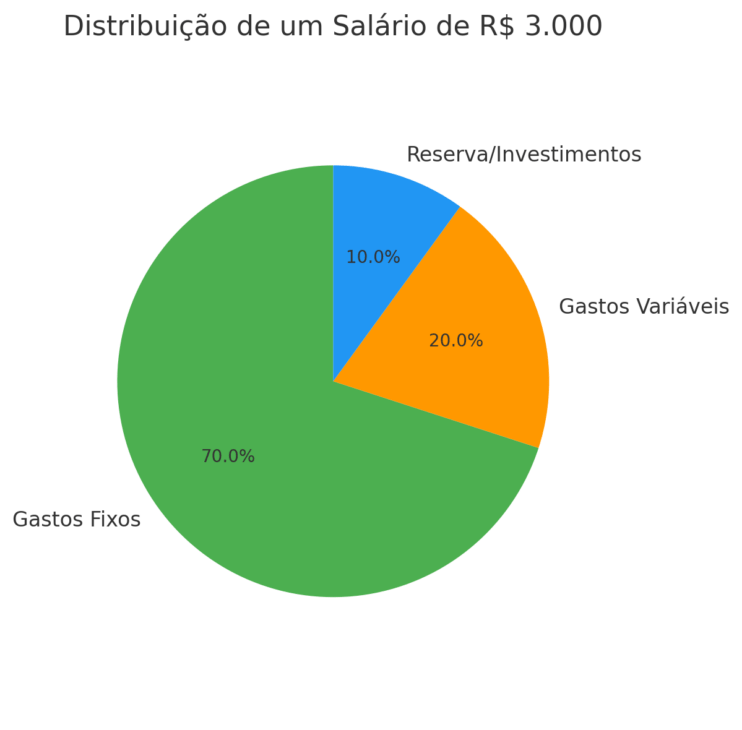
In this example, the recommendation is to use 70% of the salary, which equates to R$ 2,100, for these expenses.
This category includes utility bills, rent, transportation, groceries, and other monthly commitments that cannot be avoided.
These are expenses that require priority and often have a defined due date. For this reason, they need to be at the top of the list.
Even if it seems heavy, allocating this amount helps ensure stability. Knowing that this part is committed makes it easier to see what is left and plan other expenses more clearly. It is the foundation to avoid going into the red before the end of the month.
Variable Expenses: What Changes Each Month
The second part of the budget involves what are called variable expenses. In this example, they account for 20% of the salary, or R$ 600.
Here, the expenses related to leisure, streaming services, and also the so-called “frivolities” — impulse purchases, outings, meals outside the home, among others, come into play.
These expenses are important for maintaining quality of life and well-being, but they need to be controlled.
Without limits, they can compromise the budget and hinder the formation of a reserve or the payment of essential bills.
This group also includes unplanned expenses. An unexpected repair, a medical appointment outside the plan, or any emergency that requires a quick outlay.
For this reason, even though they are variable, these expenses should be closely monitored. A good tip is to write down everything spent in this category to avoid surprises at the end of the month.
Emergency Fund And Investment: Thinking About The Future
Finally, the 10% remaining of the salary, which corresponds to R$ 300, should be allocated to building an emergency fund. This is the step that many people overlook, but it makes all the difference in the medium and long term.
The emergency fund acts as a financial cushion. It is used to cover unforeseen events without resorting to loans or debt.
It can be a layoff, a health problem, or any situation that affects income or requires an immediate expense.
The guidance is to start slow, with what is possible, and maintain regularity. The accumulated amount should ideally reach a total that covers three to six months of fixed expenses. In the case of this example, it would mean saving between R$ 6,300 and R$ 12,600.
Only after completing this reserve can the R$ 300 per month be redirected to investments. The aim here is to make the money work, creating new sources of security for the future. It is at this stage that one begins to discuss financial applications.
The Importance Of Control
Even though it is just an example, this salary division model helps create a starting point. The proposal here is clear: understand where the money is going. Each person has a different reality, but the concept applies to any salary range.
Knowing how much is spent on bills, how much goes to leisure, and how much can be saved is the first step towards a balanced financial life. Many do not know exactly how much they spend on apps, dining out, or small purchases, which impairs overall budget control.
Another important point is to have discipline. It is of no use to set up a spreadsheet or follow an ideal division for just one month. Control must be continuous. Small habit changes, such as avoiding impulse purchases and canceling rarely used services, already help maintain balance.
Personalization Is Essential
Each reality requires adjustments. It will not always be possible to strictly follow the 70%, 20%, and 10% division. The important thing is to understand the logic and adapt according to needs and possibilities.
There are months when variable expenses may be lower, creating room to save more. In others, emergencies may require adjustments.
The most relevant thing is to be aware of each expense. The proposed division serves as a simple reference that can be adapted. The important thing is to keep an attentive eye and seek balance, without neglecting leisure, but also without compromising the future.
Knowing how to manage a salary of R$ 3 thousand is not just a matter of numbers. It is an exercise in awareness and responsibility.
Even with little, it is possible to start building a reserve, avoid debt, and improve the relationship with money. And it all starts with a simple question: where is my money going?









Seja o primeiro a reagir!