





 Portuguese
  English
  Spanish
  4 min of reading
  0 comments


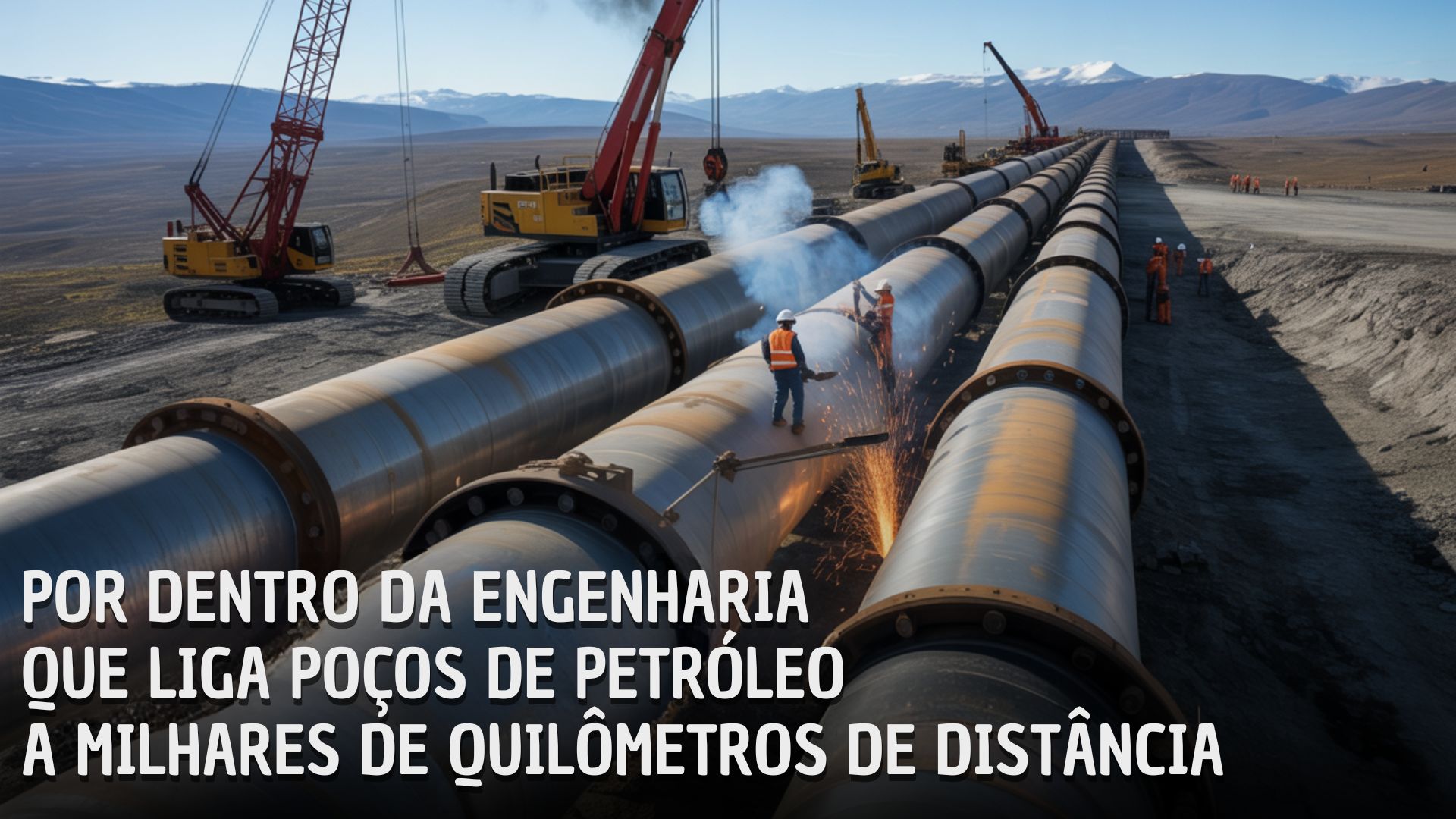
Understand How Pipelines Are Built To Transport Oil Over Long Distances. From Welding To Pressure Testing, Each Stage Requires Precision Engineering And Technical Rigor.
Pipelines are essential structures for transporting oil and its derivatives between production fields, refineries, and consumer centers. In Brazil and around the world, they form true underground and underwater networks that cross continents and seas. But how are pipelines built? The process involves a series of technical, environmental, and operational steps, from route selection to final safety testing.
Employing cutting-edge technology, heavy engineering, and environmental care, the construction of these systems requires specialized labor and extensive planning. Each section of pipeline must withstand high pressures and resist corrosion for decades of continuous operation.
How Pipelines Are Built – Planning Is The First Step
Before any pipe is placed in the ground, the project undergoes a detailed study phase. Engineers analyze topography, soil type, presence of protected areas, proximity to communities, and geological risks. The pipeline route must minimize environmental impacts and avoid unstable areas.
-
Lula reveals a masterstroke by Petrobras to undo a deal made by Bolsonaro, which involves the return of an important refinery that currently produces less than half of what was expected and makes Brazil dependent on international diesel.
-
A study confirms that the natural gas sector will reduce greenhouse gas emissions in Brazil by 0.5% and accelerate the energy transition by 2026.

-
Petrobras implements a severe adjustment and confirms a 55% increase in the price of aviation kerosene with a proposal for installment payments for the companies.

-
The rise in oil prices could ensure an extra revenue of R$ 100 billion for the Federal Government, indicates a recent economic study.

Additionally, technical and economic feasibility studies are conducted, which consider the volume of oil to be transported, material costs, and maintenance over the years. The choice of pipe diameter, installation depth, and pumping points are also part of this initial planning.
Ground Is Prepared Before The Installation Of The Pipes
After project approval, the ground is cleared and prepared. In urban or forested areas, this process may include removing vegetation, opening trails, and leveling. In the pipeline corridors, called “easement strips,” excavators dig trenches deep enough to protect the pipes from external damage.
In more complex cases, such as river crossings or mountainous regions, engineers rely on methods such as directional drilling or underground tunnels to avoid environmental interference and ensure the stability of the pipeline.
Steel Pipes Are Welded On Site
Pipelines are made of high-strength carbon steel pipes, usually ranging from 16 to 48 inches in diameter. These pipes arrive ready in segments, are aligned along the trench, and then are welded one by one. Each weld undergoes rigorous inspections, such as ultrasonic tests or X-rays, to ensure there are no structural failures.
After welding, the joints are coated with anti-corrosive materials, and the pipe receives external protection, usually made with polymers. In regions where the soil is highly corrosive or saline, cathodic protection systems are also installed to prevent damage over time.
Coating, Backfilling, And Safety Testing
With the welded and coated pipes, they are placed in the trench and covered with the removed soil. The land restoration aims to return the area as close as possible to its original conditions, always respecting environmental measures.
Before being released for operation, the pipeline undergoes hydrostatic tests. In this stage, the pipes are filled with water and subjected to pressures higher than normal operating pressure to check for leaks, cracks, or defects at critical points.
Continuous Monitoring After Construction
Even after construction, the pipeline continues to be monitored by automated systems that check internal pressure, temperature, and flow. In strategic sections, sensors detect suspicious variations, indicating possible leaks or blockages.
The responsible company conducts periodic inspections with equipment called “smart pigs” — robots that travel inside the pipes analyzing wall thickness, corrosion, and other risk factors.
This control system is essential to ensure the safety of nearby communities, protect the environment, and avoid economic losses related to oil or refined product leaks.
Pipelines In Brazil: Strategic Structure For The Sector
In Brazil, the pipeline network is primarily operated by Transpetro, a subsidiary of Petrobras. The network links offshore platforms, refineries, petrochemical hubs, and distribution areas. Key examples include the São Paulo–Brasília Pipeline (OSBRA) and the ORBIG Pipeline, which connects refineries in Rio de Janeiro to the interior of the country.
The construction of new pipelines is considered a strategic priority, as it reduces transportation costs by truck and ship, decreases emissions of polluting gases, and improves safety in the flow of oil and its derivatives.
How Are Pipelines Built In Sensitive Areas?
In environmentally sensitive regions, such as ecological reserves or indigenous lands, the procedures are more stringent. The construction may require specific environmental licensing, monitoring by environmental agencies, and environmental compensations.
The use of less invasive techniques, such as horizontal directional drilling (HDD), allows the installation of pipes under rivers and roads without altering the surface. These methods also reduce visual impact and construction time in urban areas.
Precision Engineering And Complex Logistics
The construction of pipelines involves large-scale logistics, from the transport of pipes to the coordination among welding, excavation, inspection, and covering teams. Each stage is timed to ensure efficiency, avoid delays, and meet safety technical standards.
Although it is an invisible process for most of the population, pipelines are critical infrastructure for the energy sector. Understanding how pipelines are built helps to appreciate the importance of these systems in fuel supply and the functioning of the economy.








Seja o primeiro a reagir!