





 Portuguese
  English
  Spanish
  3 min of reading
  0 comments


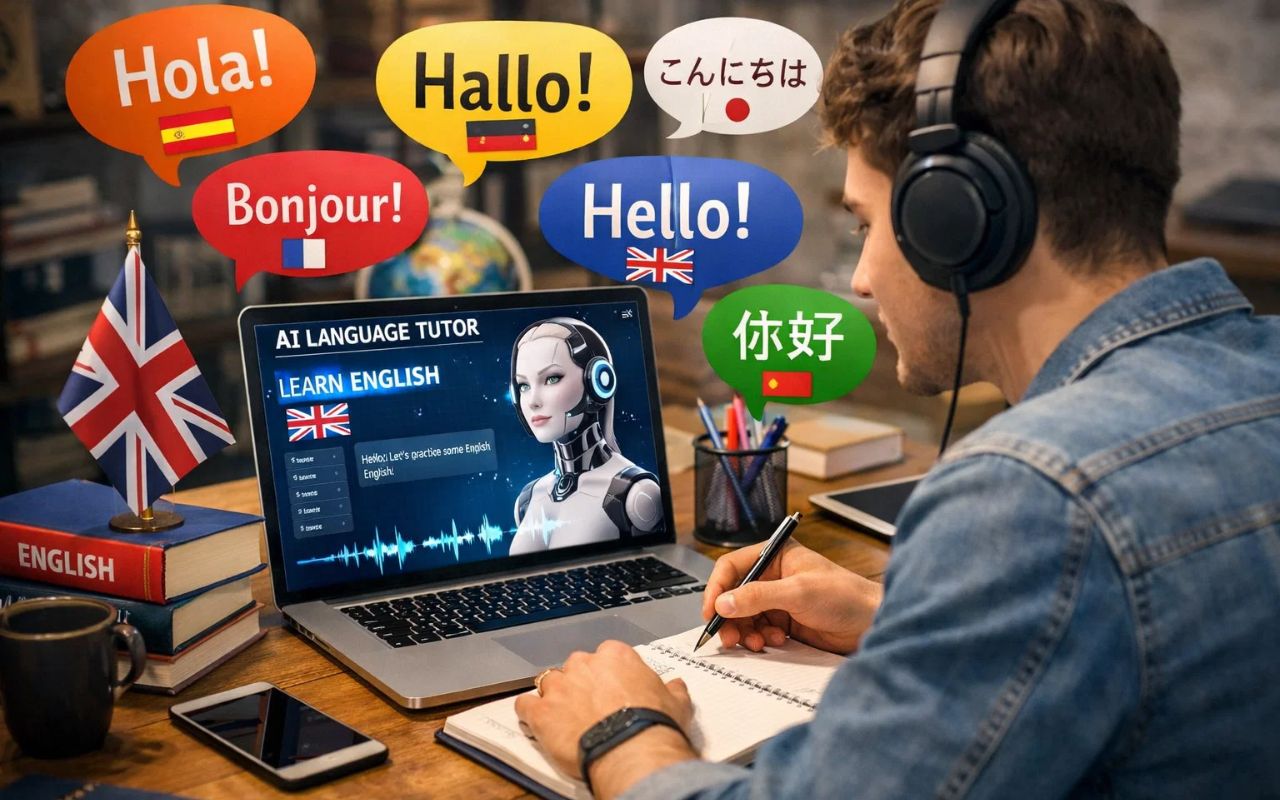
Discover How to Use AI to Enhance Your Language Studies with Five Effective Strategies, from Tools like NotebookLM to Real-Time AI Conversation Training.
Have you ever wondered how to use AI to learn languages faster and more efficiently? Technology and education experts say that artificial intelligence tools are transforming the way students improve vocabulary, pronunciation, and listening comprehension.
These solutions use advanced algorithms to adapt materials to each student’s level and make studies more interactive.
The technology is available on mobile phones and computers, providing continuous support without replacing in-person classes but complementing traditional learning.
-
Artificial intelligence is skyrocketing energy consumption, raising emissions from tech giants and pushing Google, Microsoft, and Meta closer to natural gas.

-
Mercor paid $1.5 million per day for doctors, lawyers, and former Goldman Sachs bankers to teach artificial intelligence to do their jobs, and in 17 months, it went from zero to $500 million in annual revenue while its own contractors accelerated the replacement of their own work.

-
Casio Unveils Moflin, Robotic Pet With Artificial Intelligence Designed To Provide Emotional Comfort And Simulate A Permanent Affectionate Bond

-
Google Maps Revolutionizes GPS Navigation With Gemini Artificial Intelligence, Ask Maps Feature, and Advanced 3D Visualization for Route and Travel Planning


The goal is to create a smoother, more flexible, and effective study routine for those wanting to master a new language.
With practical applications ranging from generating personalized content to simulating real conversation situations, these tools expand the possibilities for those studying English, Spanish, French, or other foreign languages.
They are intuitive solutions, ideal for both beginners and more advanced students looking to improve their fluency.
AI That Transforms Your Materials into Interactive Study
One of the most efficient ways to use AI to improve your language studies is through platforms like NotebookLM, which accepts different content formats — such as PDFs, website links, and videos — and organizes them into personalized study guides.
This tool goes beyond a common translator: it creates summaries, keyword diagrams, and even converts texts into audio, making revision easier while you are on the go.
This way, learning shifts from being passive to becoming a more dynamic experience.
Learning with Images from Your Daily Life
You can also use AI to study languages by analyzing photos you take in your daily life.
By sending images to tools like ChatGPT or Google Lens, simply ask the AI to identify items in the photo and generate sentences in the language being studied.
This technique helps in building contextualized vocabulary and improves the visual memorization of words and expressions.
Simulating Real Conversation Situations
For those seeking fluency, one of the most effective ways to use AI to master languages is to create dialogues that simulate everyday contexts, such as ordering a coffee or answering immigration questions.
These simulations allow training of natural responses and receiving personalized feedback on word choices and communication clarity.
Therefore, this practice prepares the student for real situations without needing to leave home.
Fluent Real-Time Conversation with AI
Tools like Gemini Live and ChatGPT’s Voice Mode allow you to use AI to practice real-time conversation — a step beyond traditional study.
In these sessions, you speak with the AI in real time, receiving pronunciation and rhythm corrections, as if you were conversing with a fluent person.
This type of practice is especially useful for improving confidence when speaking in another language.
Revising and Improving Writing
Finally, another powerful way to use AI to master languages is with tools like Grammarly, which go beyond spell checking.
They can rewrite paragraphs, suggest tone and style improvements, and provide performance metrics that help track your progress over time.
This detailed feedback is essential for those wanting to develop their writing more sophistically.
Why Is AI Changing Language Study?
Experts say that the techniques for using AI to learn languages do not replace the role of human teachers but expand access to personalized, interactive, and practical practices.
With these tools, students can fill gaps that often exist in conventional courses, such as conversation practice, immediate feedback, and continuous revision.
As technology continues to evolve, it becomes an increasingly valuable ally for those seeking new personal, professional, or cultural opportunities through language learning.
With information from CanalTech.









Seja o primeiro a reagir!