





 Portuguese
  English
  Spanish
  3 min of reading


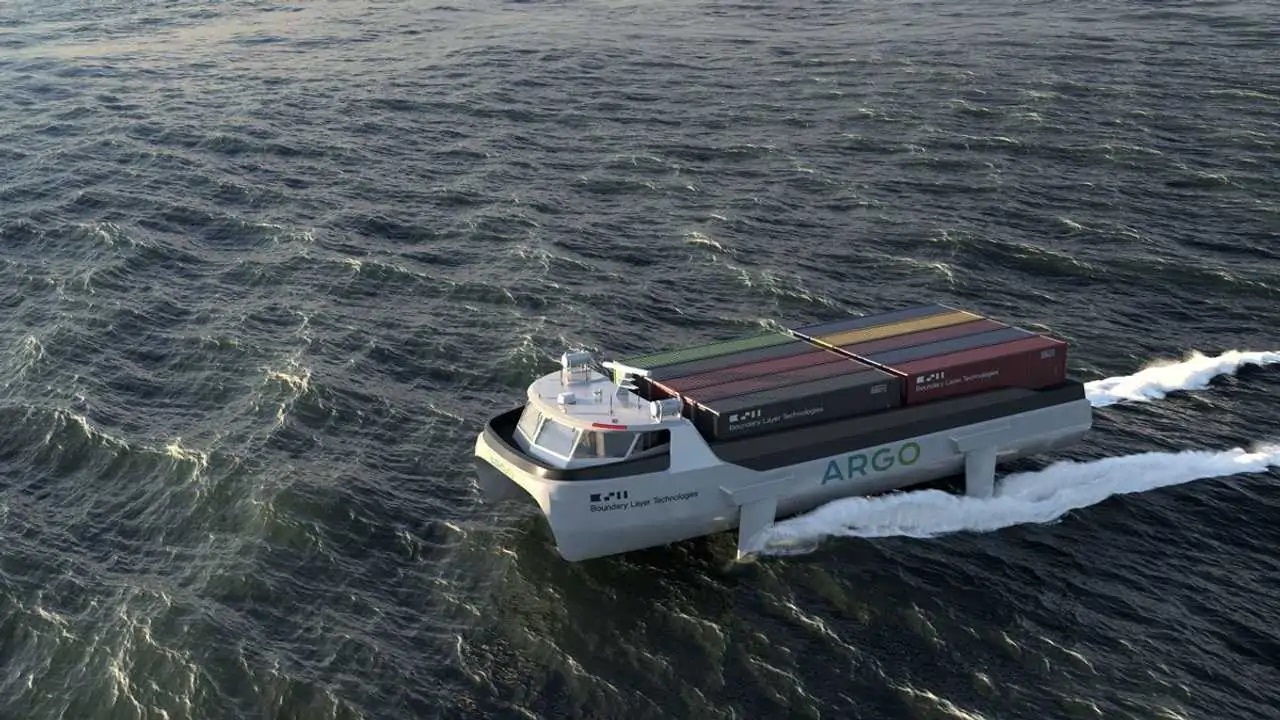
The Responsible Company Is Already Making It Possible to Put the Hydrogen-Powered Hydrofoil at the Disposal of Cargo Transport by Sea in 2024
The company Boundary Layer Technologies, located in California, instead of building a ship, chose to work on the development of a hydrogen-powered hydrofoil. The hydrofoil, named Argo, is set to arrive with the promise of revolutionizing cargo transport by sea, with the goal of replacing air transport, at least on intra-Asian commercial routes.
Also Read
- Meet Destinus, the Hydrogen-Powered Hypersonic Airplane Capable of Transporting Cargo Between Continents in Less Than Two Hours
- Airbus Partners to Utilize A380 and Test Hydrogen-Powered Direct Combustion Engine
- Meet the Hydrogen-Powered Bike That Travels 300 km on Just 2 Bottles of Water
- The U.S. Is About to Develop the First Hydrogen and High-Efficiency Steam Engine for Commercial Aviation
- Yamaha and Toyota Launch the World’s First Hydrogen-Powered Eight-Cylinder “V” Engine
Meet the Hydrogen-Powered Hydrofoil Argo
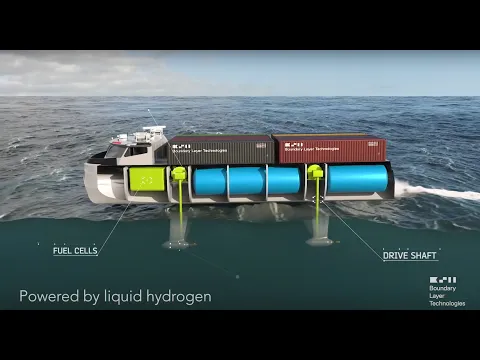

According to data from the company, the Argo hydrofoil has a cruising speed capability that can reach 40 knots (74 km/h), meaning that the hydrofoil can be up to twice as fast as a conventional cargo ship.
In this aspect alone, it can significantly help reduce transportation costs, even with the fact that transport time on a cargo plane remains quite long.
-
Europe is trying to create an ammonia-powered marine engine without auxiliary fuel, which could unlock the race for giant emission-free ships. The technology aims to eliminate one of the biggest obstacles to clean maritime propulsion.
-
A 4,500-ton frigate with just over 100 crew members, state-of-the-art radar, and cruise missiles is being touted as the new standard of naval warfare in the 21st century.
-
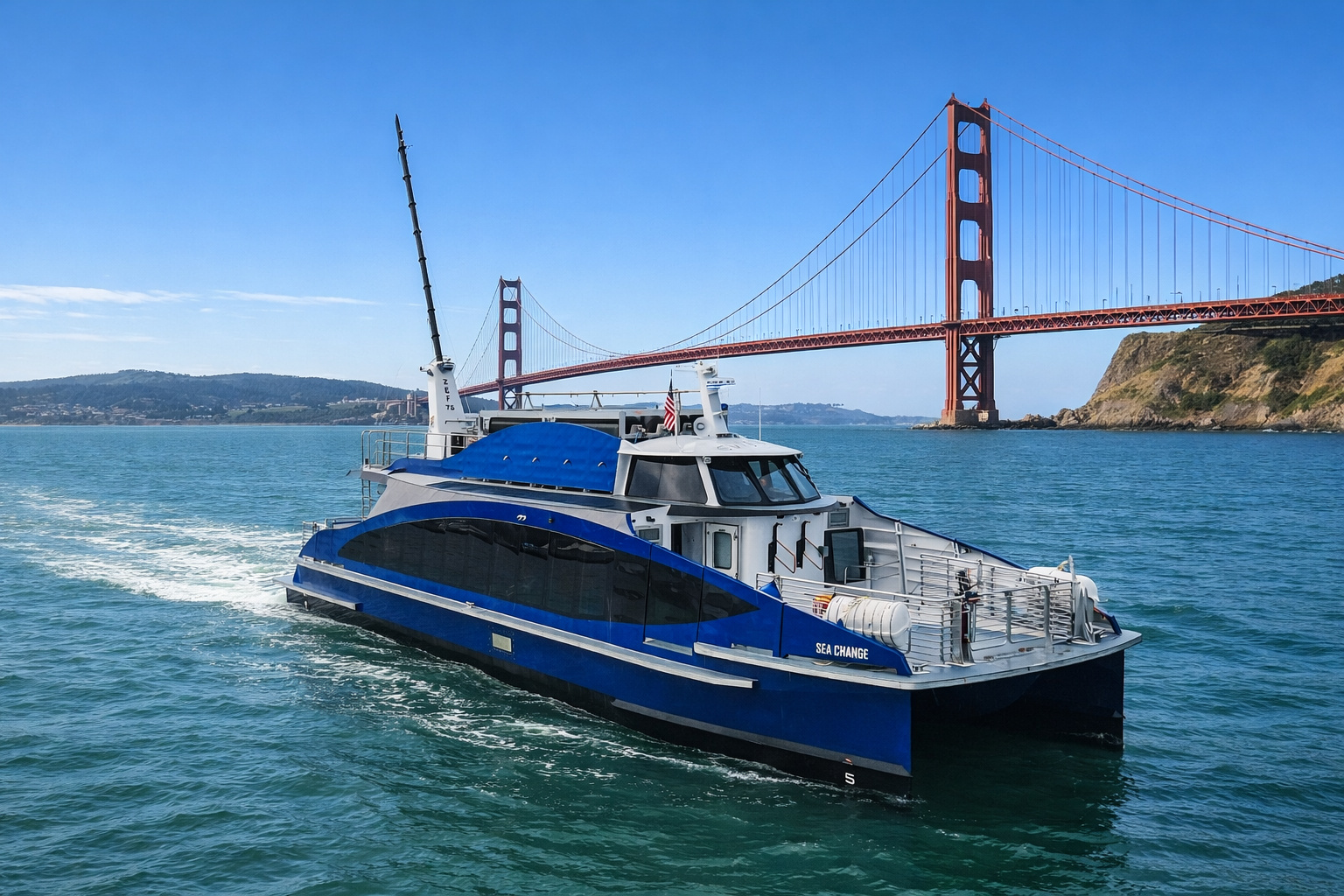
The first commercial hydrogen-powered ferry enters operation in the U.S., eliminates the use of diesel, uses fuel cells to generate clean energy on board, and transforms San Francisco Bay into a landmark of the new era of emission-free navigation.
-
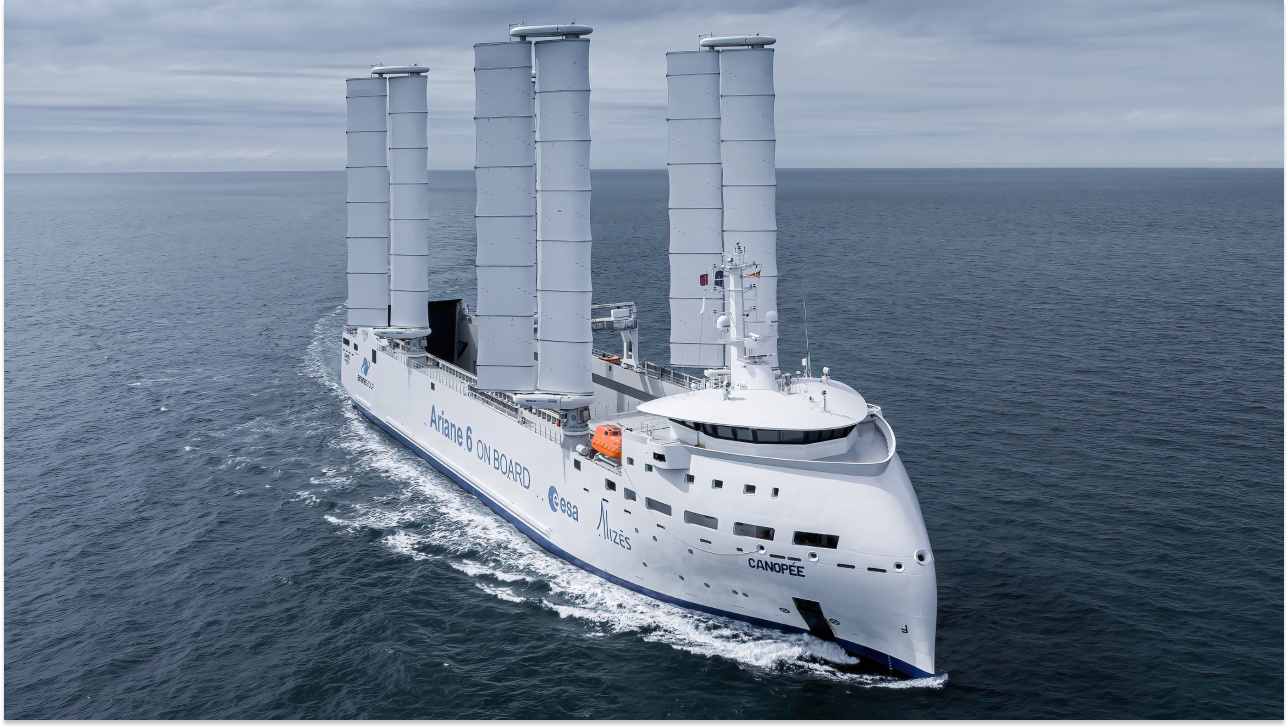
With a length of 121 meters and four rigid sails of 36 meters that automatically rotate to capture the wind, Canopée is the world’s first hybrid industrial cargo ship powered by wind, used to transport rockets and reduce fuel consumption by up to 30% on transoceanic routes.

However, this only occurs during the actual journey, because the complementary logistics of transport are much simpler. The hydrofoil also has a range of 1,500 nautical miles (2,780 km) and a cargo capacity of up to 200 tons.
Hydrogen Hydrofoil Dimensions
The Argo is about 33.5 meters long, making it very small compared to the largest cargo transport ship in the world, which is the OOCL Hong Kong, measuring about 400 meters in length and able to accommodate up to 20,000 containers.
According to Boundary Layer Technologies CEO Ed Kearney, the reduced size and cargo capacity can cut the turnaround time from 3 days to only 2 hours, while also allowing docking anywhere. This enables the Argo hydrofoil to tackle ports that are often very congested, while simultaneously triggering a kind of competition with air cargo travel times.
Technical Specifications of Argo and Upcoming Steps for the Company
As previously mentioned, the Argo is 33.5 meters long, can reach speeds of up to 40 knots (74 km/h), has a range of 1,500 nautical miles (2,780 km), a capacity of up to 200 tons, and is powered by hydrogen.
So far, Boundary Layer Technologies has already managed to complete the development of some key components for the hydrofoil’s operation. However, the goal is to conduct large-scale tests, but only by the end of 2023, aiming to enable a new cargo transport service in the Asian continent by mid-2024. However, the company is still seeking a partnership.
According to Per Karsten Stolle, strategic consultant for the startup, after hearing feedback from clients about combining a zero-emission transport solution and expense reduction, this is a turning point that could help achieve climate goals. Looking ahead, Boundary Layer Technologies is working on the construction of a larger vessel, aimed at a transpacific service mission. According to the company, there is a letter of intent for 180 million dollars with the digital freight forwarder Flexport.









Seja o primeiro a reagir!